
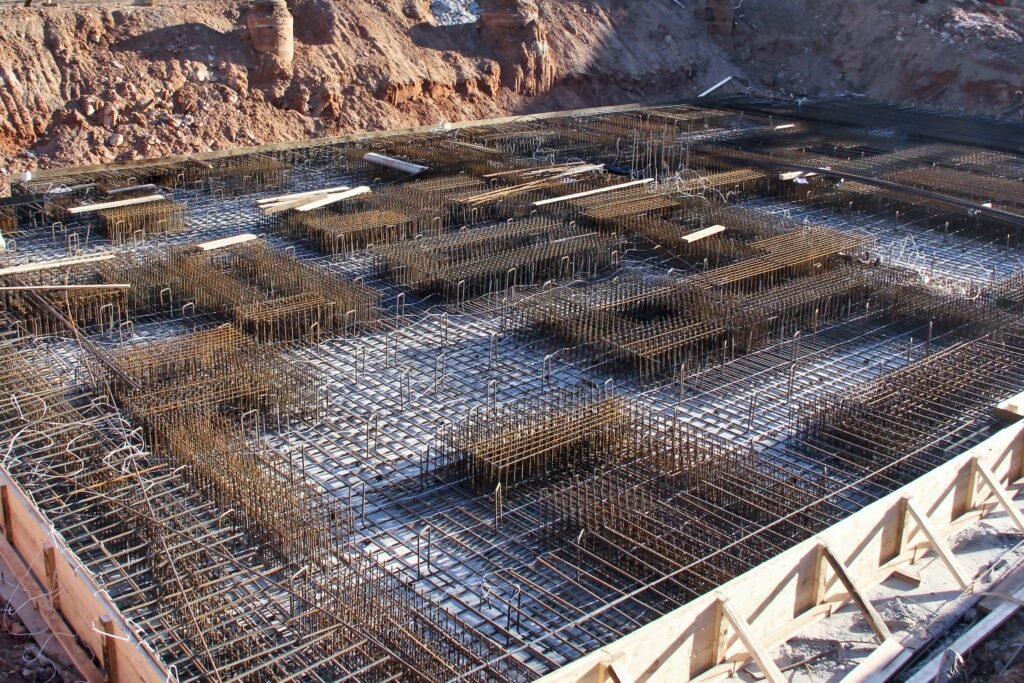
🔹Rafting in Construction: What Is Raft Foundation (Rafting)?
A raft foundation is a large reinforced concrete slab that supports the entire structure and spreads loads evenly over weak or variable soil.
Used where soil bearing capacity is low
Supports closely spaced columns
Reduces differential settlement
Common in basements and high-load buildings
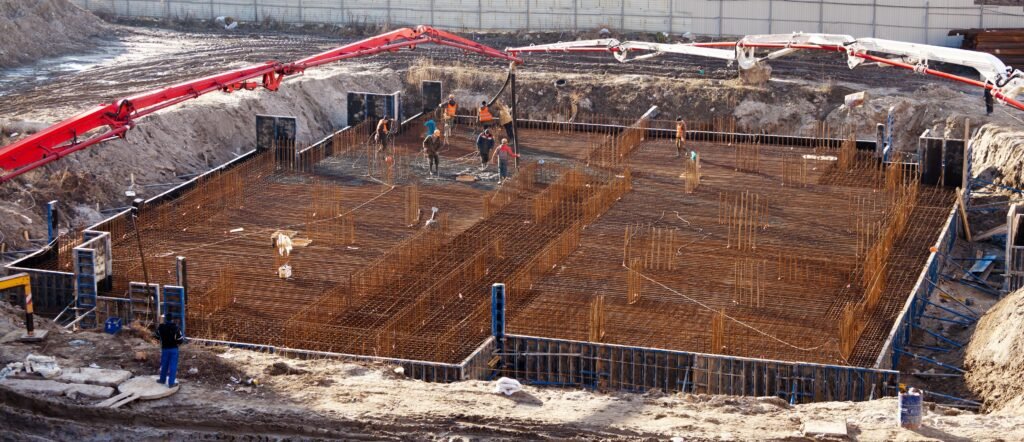
🔹Rafting in Construction: Why Rafting Is Important in Construction
Rafting improves structural stability and long-term safety by distributing loads uniformly.
Minimizes cracks and uneven settlement
Increases foundation stability
Suitable for seismic and weak-soil areas
Reduces risk of foundation failure
🔹Rafting in Construction: Step-by-Step Raft Foundation Construction
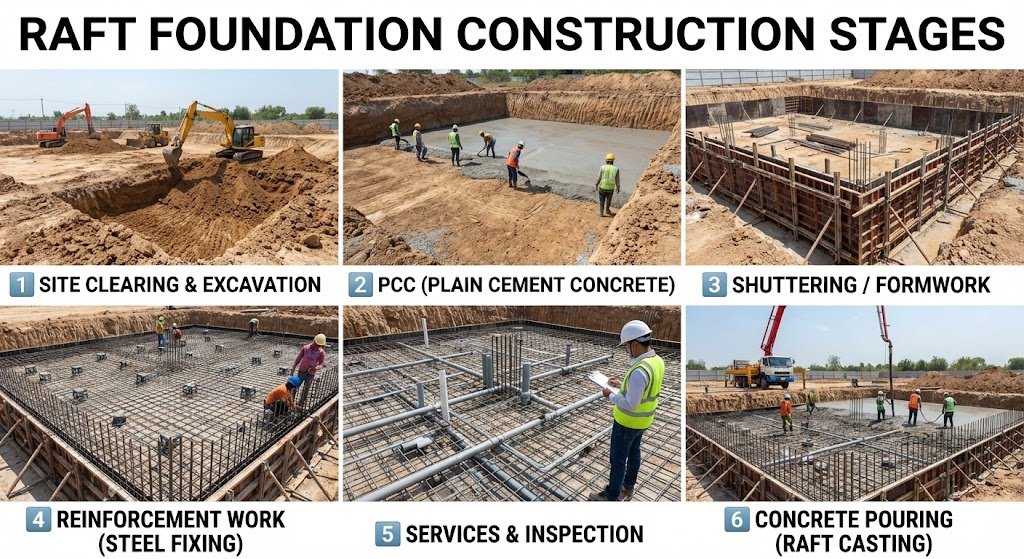
Rafting follows a planned sequence to ensure strength and safety.
Soil investigation and design approval
Excavation to required depth
PCC (50–100 mm) for clean base
Waterproofing or polythene sheet
Bottom and top reinforcement fixing
Formwork installation
Continuous concreting with vibration
Proper curing (7–14 days)
🔹Rafting in Construction: Typical Measurements (General Range)
Actual sizes depend on design, but common ranges are used on sites.
Raft thickness: 300–1000 mm
Reinforcement spacing: 150–300 mm c/c
Concrete grade: M25–M35
Clear cover: 75 mm bottom / 50 mm top
Excavation depth: 1–3 meters
🔹Rafting in Construction: Potential Hazards During Rafting
Rafting involves high-risk activities at foundation level.
Excavation collapse or cave-in
Falls into open excavations
Rebar cuts and impalement
Formwork collapse
Cement burns and skin irritation
Electric shock from vibrators
Heat stress and poor visibility
🔹 Rafting in Construction: Control Measures (Safety Actions)
Effective controls reduce accidents and delays.
Excavation shoring or proper sloping
Barricading and warning signage
PPE: helmet, gloves, safety shoes, goggles
Rebar caps on exposed steel
Safe access ladders and lighting
Equipment inspection and earthing
Emergency response plan
🔹 Rafting in Construction: Duties of a Safety Officer During Rafting
The safety officer ensures safe execution at every stage.
Review risk assessment and method statement
Conduct toolbox talks before work
Monitor excavation stability and access
Ensure safe rebar and formwork practices
Supervise concreting and electrical safety
Enforce PPE and site discipline
Report and stop unsafe acts
These duties align with guidance from the International Labour Organization and Occupational Safety and Health Administration for construction and excavation safety.