
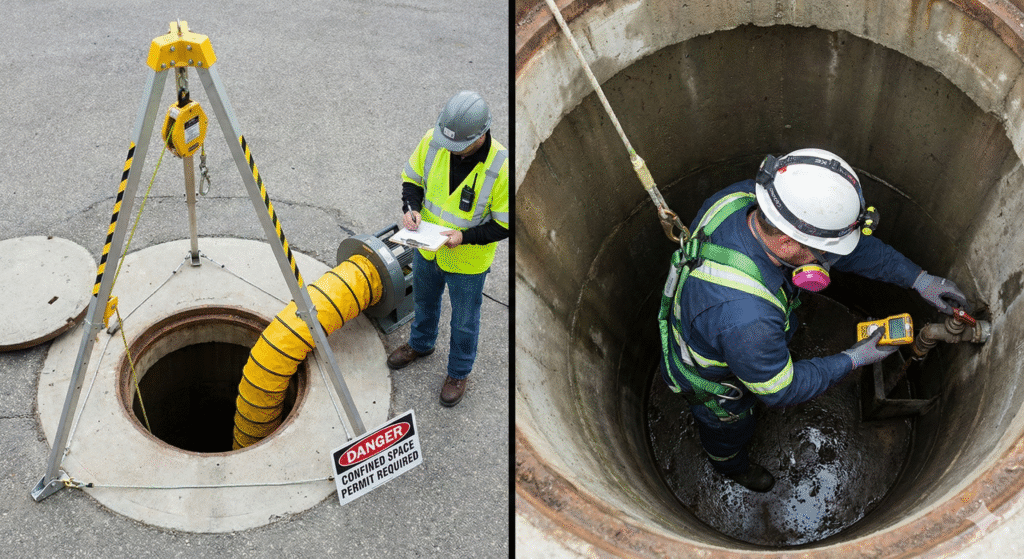
Confined spaces are among the most underestimated yet dangerous work environments across industries. They exist in almost every sector and are routinely entered for cleaning, inspection, maintenance, and repair work. Because these tasks often appear simple or repetitive, workers frequently underestimate the risks involved.
Despite regulations and awareness campaigns, confined spaces continue to cause serious injuries and fatalities every year. The primary reason is not the absence of rules, but the failure to identify, control, and communicate hazards before entry.
Key Points to Understand
Confined spaces exist in nearly all industries
Routine work creates false confidence
Hidden hazards cause sudden fatalities
Lack of planning is the main cause of incidents
What Is a Confined Space?
A confined space is not defined by size alone, but by its design, access, and intended use. A common misconception is that confined spaces are small; in reality, large tanks, silos, and underground chambers may also qualify.
According to OSHA, a confined space:
Is large enough for a worker to enter and perform work
Has limited or restricted entry and exit
Is not designed for continuous human occupancy
May contain serious hazards
This definition helps identify spaces that can become life-threatening without warning.
Permit-Required Confined Space (PRCS)
A confined space becomes a permit-required confined space when it contains hazards capable of causing serious injury or death. These hazards are often invisible and may develop suddenly, making uncontrolled entry extremely dangerous.
Permit systems exist to ensure hazards are identified, tested, and controlled before entry is allowed.
Examples of Permit-Required Hazards
Toxic or flammable atmospheres
Oxygen deficiency or enrichment
Engulfment by liquids or solids
Mechanical, electrical, or thermal hazards
Why Confined Spaces Are So Dangerous
Confined spaces are hazardous because conditions can change rapidly and silently. Poor ventilation allows gases to accumulate and oxygen levels to fall without warning. Workers often have limited mobility and no quick escape route.
In many cases, victims collapse before realizing danger exists. Rescue operations are complex and frequently result in additional fatalities.
Main Reasons for High Risk
Poor or no natural ventilation
Rapid atmospheric changes
Limited escape routes
Delayed or unsafe rescue access
Industries Where Confined Spaces Are Common
Confined spaces are found across nearly every sector. Because they are common, they are often overlooked during risk assessments, increasing the likelihood of incidents.
Industries with Frequent Confined Spaces
Oil & Gas: tanks, separators, pipelines
Manufacturing: boilers, reactors, silos
Construction: manholes, shafts, trenches
Water & Wastewater: sewers, wet wells
Agriculture: grain bins, manure pits
Each industry presents unique hazards that must be assessed individually.
Role of the Safety Officer in Confined Space Work
The safety officer plays a critical role in preventing confined space incidents. Their responsibility begins before entry and continues until work is completed.
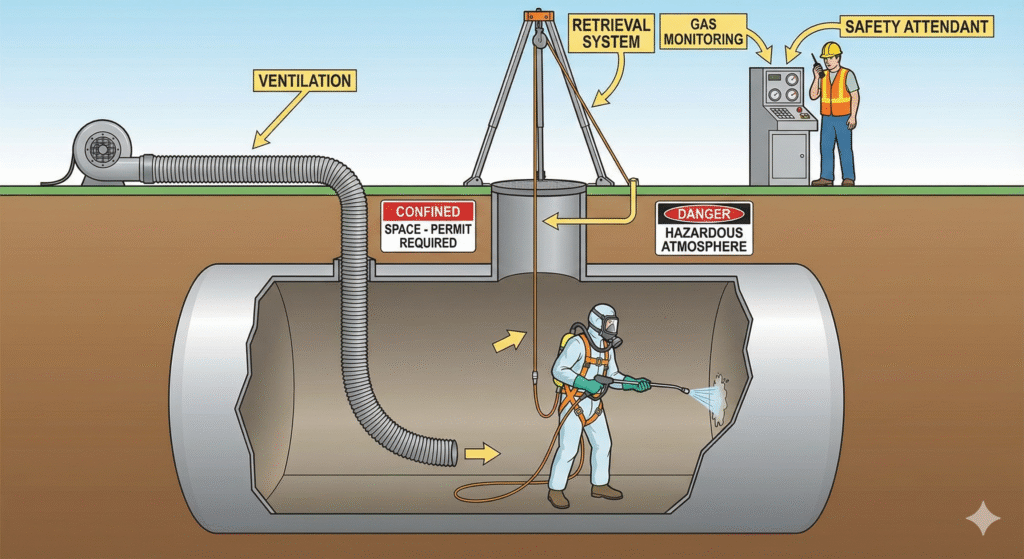
Key Responsibilities
Identifying confined and permit-required spaces
Conducting risk assessments
Ensuring permits and atmospheric testing
Monitoring work activities and compliance
Preparing emergency and rescue arrangements
Strong safety leadership prevents shortcuts that often lead to fatal outcomes.
Required Documentation Before Entry
Documentation is a powerful control measure. It ensures hazards are recognized, controls are implemented, and responsibilities are clearly defined. Many fatal incidents occurred simply because documentation was missing or incomplete.
Mandatory Documents
Confined Space Entry Permit
Atmospheric testing records
Risk assessment or JSA
Lockout–Tagout and isolation certificates
Emergency and rescue plan
Training and competency records
Pre-entry toolbox talk record
Entry must never be permitted without verified documentation.
Common Hazards in Confined Spaces
Confined space hazards are often invisible and underestimated. Atmospheric hazards remain the leading cause of fatalities worldwide, frequently combined with other risks.
Typical Hazards
Oxygen deficiency or enrichment
Toxic gases (H₂S, carbon monoxide, ammonia)
Flammable vapors
Engulfment hazards
Mechanical and electrical energy
Heat stress and inadequate lighting
Incident History and Losses
Confined space accidents continue to occur despite clear regulations. Many incidents happen during short-duration tasks where risk is assumed to be low. Untrained rescue attempts often result in multiple fatalities from a single event.
Common Incident Patterns
No permit or gas testing
Short routine tasks
Unplanned rescue attempts
Multiple fatalities in one incident
Key Lessons from Confined Space Accidents
Investigations repeatedly show the same failures: procedures exist but are ignored, risk assessments are incomplete, and productivity pressure overrides safety.
Critical Lessons Learned
Never enter without a permit
Always test the atmosphere
Never attempt untrained rescue
Maintain continuous supervision
Safety must override productivity
Conclusion
Confined spaces are not merely enclosed areas, they are high-risk environments where minor mistakes can lead to fatal consequences. Effective confined space safety depends on hazard awareness, proper documentation, trained supervision, and strict procedural discipline.
Confined space safety is not just about regulatory compliance; it is about protecting human life.