
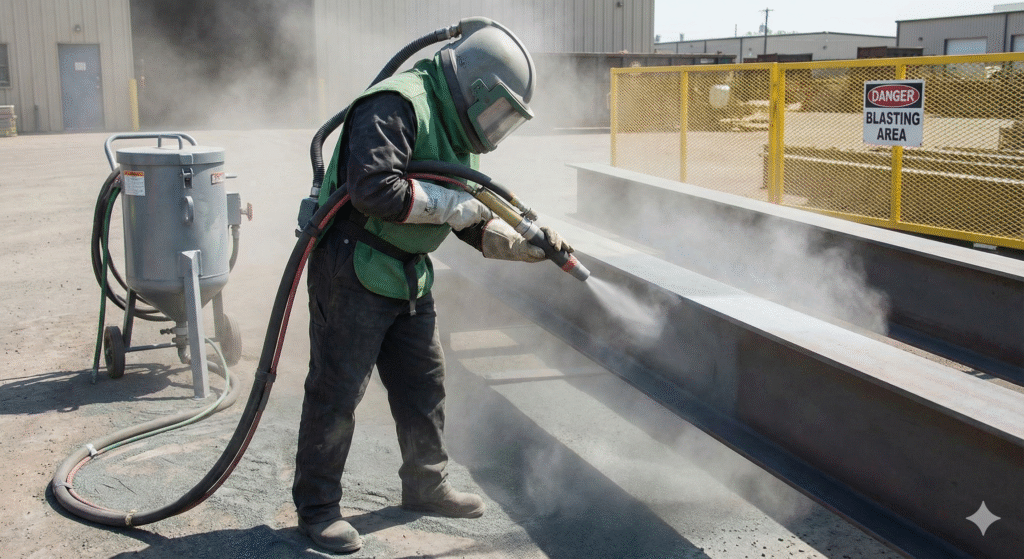
Sandblasting, also known as abrasive blasting, is a critical surface preparation process used in multiple industries. It involves forcibly propelling abrasive materials at high pressure to clean, smooth, roughen, or remove coatings such as rust, paint, oil, or scale. Modern practices often use safer abrasives like steel grit, garnet, or aluminum oxide instead of natural sand.
In simple terms:
Sandblasting = high-pressure cleaning and surface preparation for painting, coating, welding, or inspection.
Why Sandblasting Is Important
Proper surface preparation directly affects:
- Coating adhesion and durability
- Structural strength and integrity
- Corrosion protection
- Inspection accuracy and quality assurance
⚠️ Poor sandblasting can lead to peeling coatings, premature corrosion, and structural failures. It is essential for construction, industrial maintenance, and quality engineering projects.
Industries Where Sandblasting Is Common
- Construction & steel fabrication
- Oil & gas plants
- Shipyards and marine industry
- Power plants, bridges, tanks, and pipelines
- Automotive and heavy equipment
- MEP & industrial plant maintenance
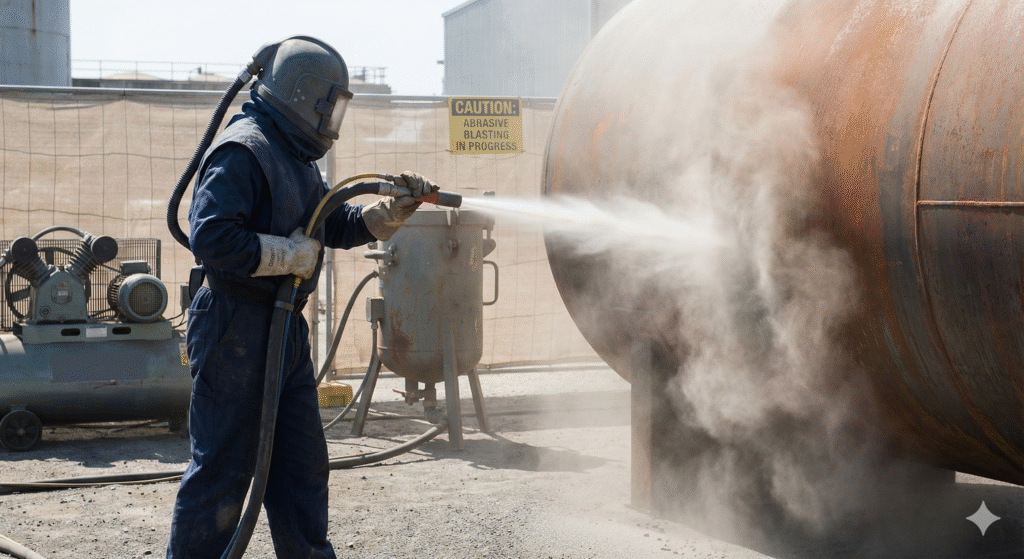
Types of Sandblasting / Abrasive Blasting
1. Dry Sandblasting
- Abrasive propelled with compressed air
- High dust generation
- Used for steel structures, tanks, and pipelines
2. Wet Sandblasting
- Abrasive mixed with water
- Reduces airborne dust
- Ideal for areas requiring dust control
3. Vacuum Blasting
- Abrasive and dust immediately collected
- Cleaner, controlled method
- Used in confined or sensitive spaces
4. Shot Blasting
- Steel shots or grit, usually machine-operated
- Common in factories, workshops, and precast plants
Sandblasting Hazards
Sandblasting is high-risk and can cause serious injuries or long-term health issues:
- Respiratory hazards (silica dust exposure)
- Silicosis and other lung diseases
- Eye and face injuries
- Skin abrasions and cuts
- High noise exposure
- Flying abrasive particles
- Dust reducing visibility
- Fire or explosion (flammable residues)
- Heat stress from PPE
- Ergonomic strain
⚠️ Exposure to respirable crystalline silica is a leading long-term health hazard.
Control Measures for Sandblasting Hazards
Engineering Controls
- Use non-silica abrasives
- Wet or vacuum blasting
- Local exhaust ventilation
- Enclosed blasting chambers
Administrative Controls
- Risk assessment & method statement
- Permit-to-work systems
- Restricted access & barricading
- Warning signage
- Trained operators only
- Health surveillance & job rotation
Personal Protective Equipment (PPE)
- Air-fed blasting helmet
- Respiratory protection
- Blast suit & gloves
- Safety boots
- Hearing protection
- Eye & face protection
⚠️ PPE is the last line of defense, not the first.
Step-by-Step Sandblasting Process (Safe Method)
- Planning & Preparation: Review drawings, identify hazards, select abrasives, prepare the area
- Equipment Inspection: Check machines, hoses, compressors, emergency shut-offs
- Area Isolation: Barricade zone, stop unauthorized entry, protect nearby equipment
- PPE & Air Supply Check: Inspect helmet, breathing air, and all PPE
- Sandblasting Operation: Maintain pressure, distance, angle; avoid directing abrasive at people
- Inspection & Cleaning: Check surface profile, remove residual abrasive, safe waste disposal
- Post-Work Activities: Decontaminate, clean PPE, perform health checks if needed
Safety Standards & Regulations
Sandblasting safety is governed by global standards and regulations:
- OSHA: Abrasive Blasting & Silica Exposure
- HSE (UK): Control of Substances Hazardous to Health (COSHH)
- ILO: Occupational health protection
- SSPC / ISO: Surface preparation standards
Following these standards ensures worker safety, regulatory compliance, and quality output.