
Introduction
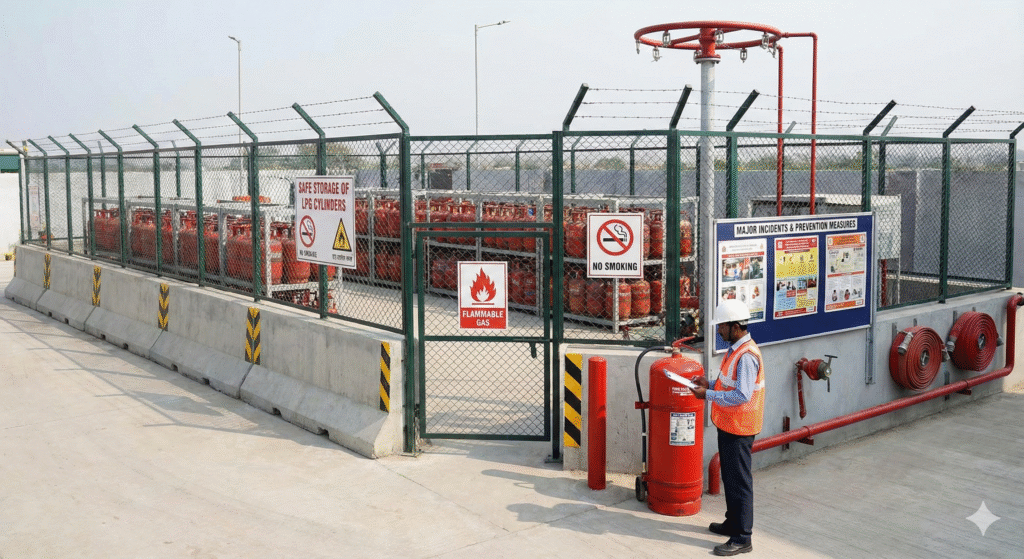
Liquefied Petroleum Gas (LPG) is widely used in domestic, commercial, and industrial applications due to its efficiency and portability. However, LPG is highly flammable, and when stored or handled incorrectly, it can lead to serious fires, explosions, fatalities, and major property losses. Many past accidents clearly show that poor storage practices are one of the leading causes of LPG-related disasters.
Nature and Risk of LPG
LPG is stored as a liquid under pressure and rapidly expands into gas when released. Because it is heavier than air, leaked gas can settle at low levels such as floors, drains, or basements, creating an explosive atmosphere even far from the leak source.
Key risk characteristics include:
- Rapid vaporization after release
- Wide flammable range
- High explosion potential in confined areas
- Increased severity when exposed to heat
Losses Associated with LPG Cylinder Accidents
LPG cylinder incidents often result in multi-dimensional losses, affecting people, property, and operations. These losses are not limited to the immediate blast area and may extend to neighboring structures.
Typical losses include:
- Human losses: fatalities, severe burns, long-term injuries
- Property losses: collapsed buildings, fires, damaged equipment
- Operational losses: shutdown of facilities, loss of business continuity
- Social impact: displacement of families, public fear, legal consequences
Even a single cylinder failure can cause losses worth millions due to fire spread and structural damage.
Common Causes Leading to LPG Incidents
Most LPG cylinder accidents are preventable. Investigations repeatedly show that failures usually occur due to unsafe storage, poor equipment condition, or human error.
Major contributing factors:
- Storage of cylinders indoors or in basements
- Use of damaged or expired cylinders
- Faulty regulators, hoses, or valves
- Illegal refilling and poor-quality cylinders
- Lack of ventilation and gas detection
- Ignition sources near leaking gas
Preventive Measures for Safe LPG Storage
Storage and Location Controls
Safe storage begins with proper location and layout. Cylinders should always be stored in a way that allows leaked gas to disperse safely.
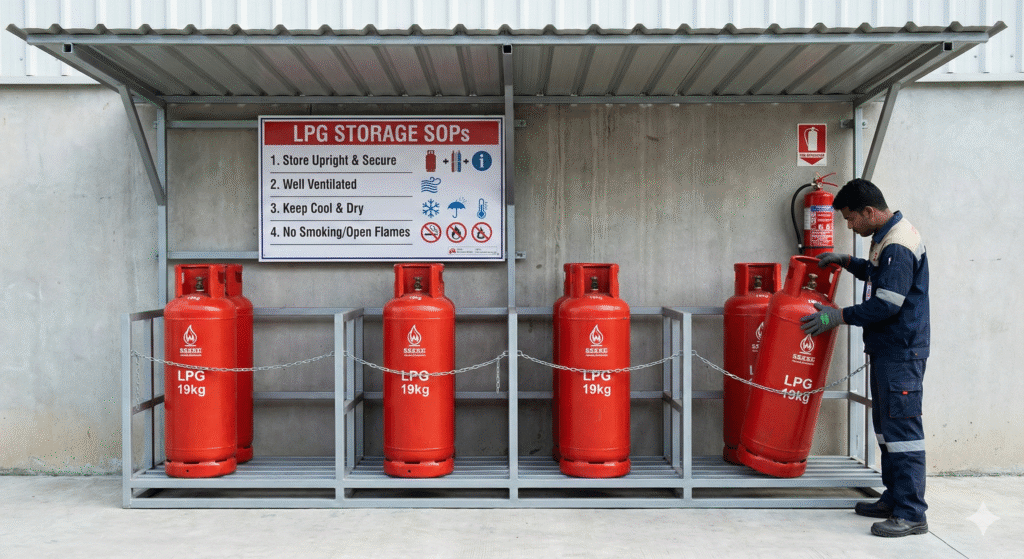
- Store LPG cylinders outdoors only
- Ensure adequate natural ventilation
- Keep away from:
- Doors and windows
- Drains, pits, and basements
- Heat sources and open flames
- Store cylinders upright and secured
Handling and Equipment Safety
Proper handling and maintenance significantly reduce the likelihood of leaks.
- Inspect cylinders regularly for dents, corrosion, or leaks
- Check valves, regulators, and hoses before use
- Conduct leak tests using soap solution
- Never drop, roll, or drag cylinders
- Replace defective components immediately
Ignition Source Control
Because LPG ignites easily, controlling ignition sources is critical.
- Enforce no smoking near storage areas
- Prohibit hot work close to LPG cylinders
- Use suitable electrical equipment where gas is present
- Display warning and hazard signage
Emergency Preparedness
Preparedness limits damage when incidents occur.
- Provide dry powder fire extinguishers
- Train workers and occupants on emergency response
- Ensure quick access to shut-off valves
- Display emergency contact numbers
- Practice evacuation procedures
Past LPG Cylinder Incidents
Several serious LPG cylinder incidents worldwide demonstrate the consequences of unsafe storage and handling:
- 2022–2025 | Punjab, Pakistan:
Over 488 LPG-related incidents, resulting in 25 fatalities and 240+ injuries, mainly due to substandard cylinders and unsafe practices. - 11/01/2026 | Islamabad, Pakistan:
A residential LPG cylinder explosion killed 8 people, including newlyweds, and caused partial building collapse. - 09/10/2025 | Ayodhya, India:
Indoor LPG cylinder explosion killed 5 people and destroyed a two-storey house. - 19/11/1984 | San Juanico, Mexico:
One of the world’s worst LPG disasters, killing 500–600 people and injuring thousands due to massive LPG explosions.
These incidents clearly show that small leaks combined with poor storage can escalate into catastrophic events.
References for Further Reading
- National and international LPG accident investigation reports
- Fire and explosion safety guidance from regulatory authorities
- LPG supplier safety manuals and cylinder handling instructions
- Historical case studies on LPG fires and explosions
- Workplace fire safety and hazardous substance management guidelines