
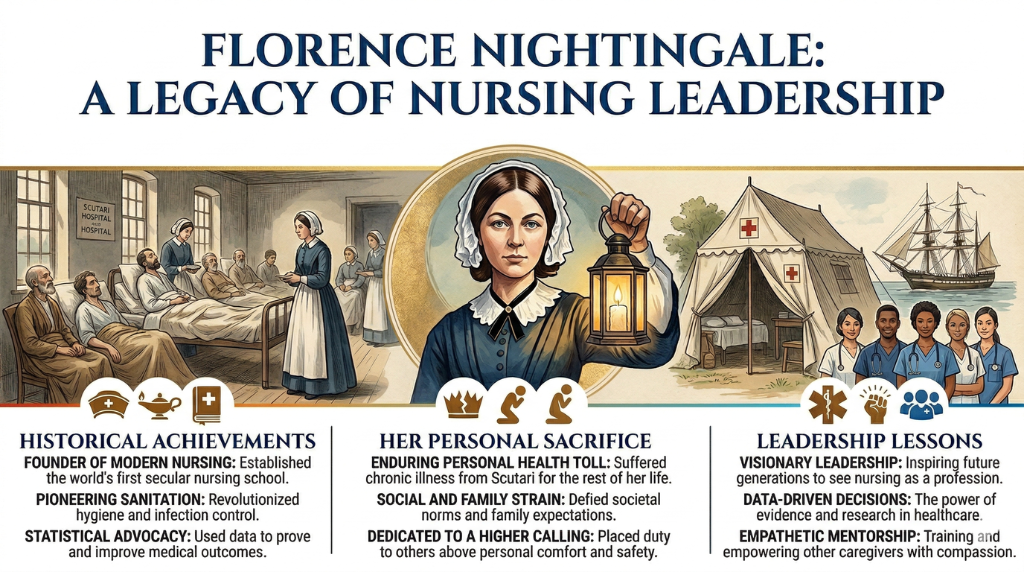
Florence Nightingale, widely regarded as the founder of modern nursing, remains one of the most influential figures in global healthcare history. Born in 1820, at a time when women were discouraged from professional careers, Nightingale challenged social norms and devoted her life to public service, healthcare reform, and leadership grounded in discipline and evidence.
Her most defining contribution came during the Crimean War (1853–1856), where she led nursing efforts in British military hospitals. Confronted with appalling sanitary conditions, overcrowding, and preventable deaths, Nightingale implemented strict hygiene measures, improved ventilation, organized patient care, and ensured proper nutrition. These reforms drastically reduced mortality rates and demonstrated that poor sanitation, not battlefield injuries, was the leading cause of death among soldiers.
Beyond bedside care, Nightingale revolutionized healthcare management through data. She pioneered the use of statistical analysis and visual diagrams to present clear evidence to policymakers, proving that systematic reforms could save lives. Her work laid the foundation for evidence-based decision-making in healthcare and public health.
In 1860, she established the Nightingale Training School for Nurses in London, formalizing nursing education and setting professional standards that became a global benchmark. This initiative transformed nursing into a respected profession rooted in ethics, competence, and discipline.
Nightingale’s achievements came at significant personal sacrifice. She defied family expectations, endured long-term illness caused by relentless work, and chose service over personal comfort and marriage. Despite declining health, she continued advising governments and institutions on hospital design, sanitation, and health policy for decades.
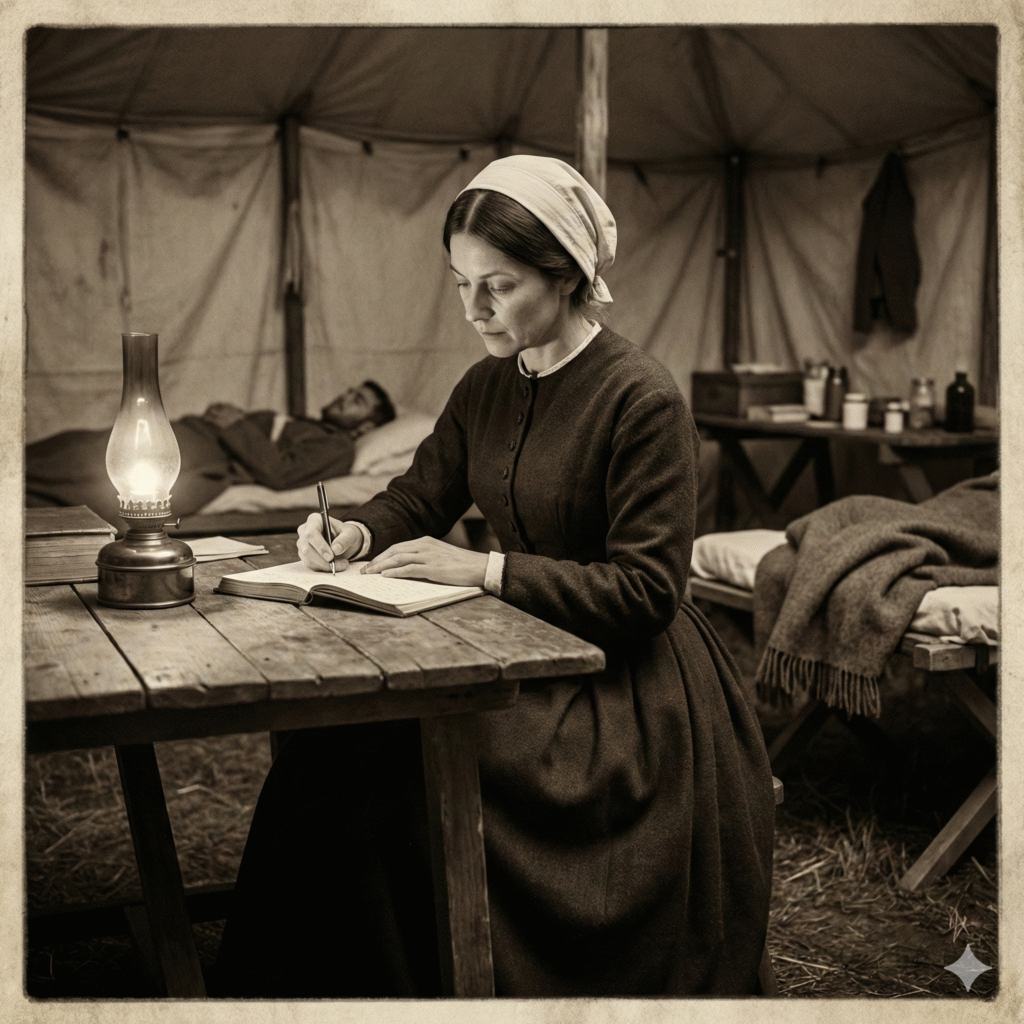
As a leader, Florence Nightingale demonstrated authority and resilience in male-dominated systems, influencing military commanders and government officials through facts, results, and moral clarity. Her leadership combined compassion with accountability, proving that effective leadership transcends gender.
Today, her legacy extends beyond healthcare. Principles she championed prevention over reaction, data-driven safety, training and competence, and leadership through service remain directly relevant to modern health, safety, and environmental practices across industries.
Florence Nightingale’s life stands as a powerful reminder that lasting change is driven by courage, discipline, and commitment to human welfare. Her story continues to inspire healthcare professionals, safety practitioners, and leaders worldwide to place people, prevention, and integrity at the center of their work.