
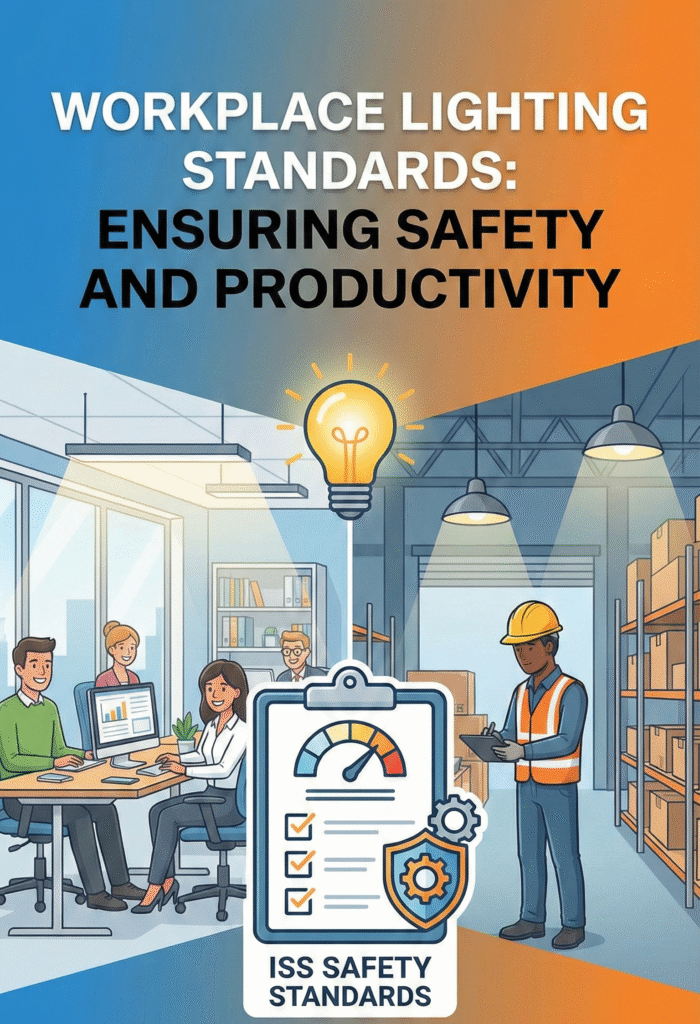
Proper lighting is a crucial yet often overlooked aspect of workplace health, safety, and productivity. Poor lighting can lead to accidents, visual fatigue, decreased efficiency, and long-term eye strain. NEBOSH IDIP Level 6 emphasizes lighting as part of the broader work environment management for occupational safety. Here’s what you need to know.
1️⃣ Importance of Adequate Workplace Lighting
Safety: Insufficient or uneven lighting increases the risk of slips, trips, and falls. Hazards like stairs, wet floors, or obstacles become harder to detect in poorly lit areas.
Productivity: Workers perform tasks more accurately when lighting is appropriate for the activity. For example, assembly or inspection work requires brighter, focused lighting.
Health: Poor lighting can cause eye strain, headaches, and fatigue. Glare or flickering lights contribute to discomfort and can indirectly increase error rates.
2️⃣ Types of Lighting in Workplaces
Natural Lighting:
Daylight is the most effective source of light and helps maintain circadian rhythms.
NEBOSH recommends designing workplaces to maximize natural light without causing glare.
Artificial Lighting:
General Lighting: Illuminates the entire workspace uniformly.
Task Lighting: Focused on specific tasks requiring precision, such as detailed inspections or laboratory work.
Emergency Lighting: Ensures safe evacuation during power failures or emergencies.
3️⃣ Recommended Lighting Levels
According to NEBOSH IDIP Level 6 standards (aligned with BS EN 12464-1 and ILO recommendations):
Area/Task Type – Recommended Illuminance (Lux)
Offices/Computer Work – 300–500 Lux
Industrial Assembly/Inspection – 500–1000 Lux
Warehouses/Storage – 100–300 Lux
Corridors/Walkways – 100–200 Lux
Emergency Routes – ≥50 Lux (minimum for safe evacuation)
⚠Note: Lux is a unit measuring the intensity of light over a surface. Consistent levels prevent eye strain and accidents.
4️⃣ Key Lighting Principles
Uniformity: Avoid areas with strong shadows or bright spots. Uneven lighting can create hidden hazards.
Glare Reduction: Position lights to minimize reflections and direct glare on screens or work surfaces.
Color Rendering Index (CRI): Ensure CRI >80 for tasks requiring color differentiation.
Maintenance: Regular cleaning of light fixtures and timely replacement of lamps to maintain effective illuminance.
Emergency Preparedness: Emergency lighting should be tested regularly, with backup power available for at least 90 minutes.
5️⃣ Legal and Regulatory References
NEBOSH IDIP Level 6: Focuses on risk assessment and the management of the work environment, highlighting lighting as a critical factor for occupational safety.
Occupational Safety and Health Regulations: Many countries mandate adequate lighting as part of general workplace safety standards.
ISO 8995/EN 12464: Sets benchmarks for illuminance and uniformity in various workplace tasks.
6️⃣ Practical Recommendations for Employers
Conduct lighting audits regularly to assess compliance with recommended standards.
Combine natural and artificial lighting for optimal energy efficiency and worker comfort.
Implement task-specific lighting for detailed operations.
Train staff to report lighting faults immediately to prevent accidents.
Plan emergency lighting drills to ensure employees are familiar with evacuation routes.