
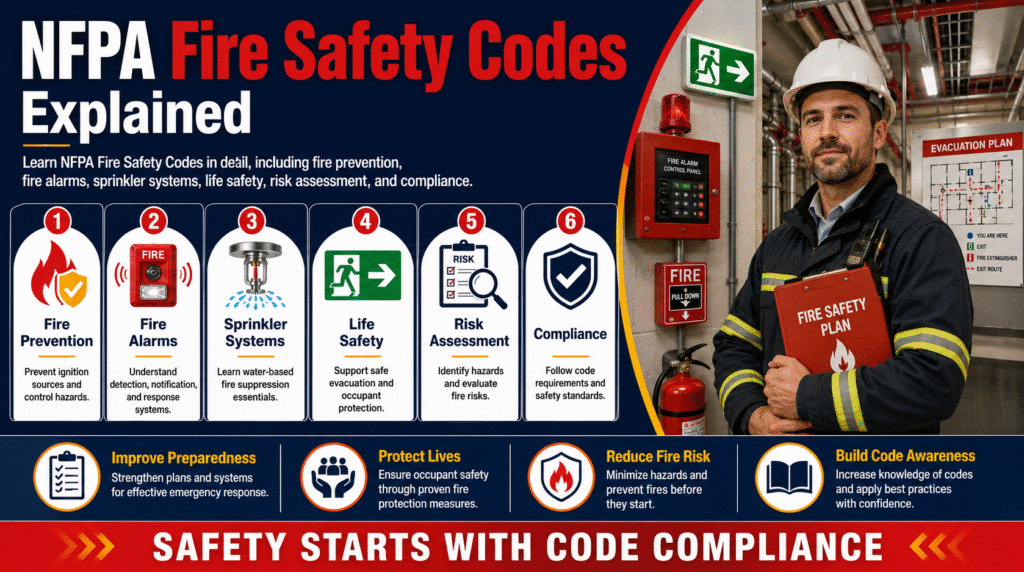
NFPA Fire Safety Codes: A Complete Guide to Fire Prevention and Life Safety
Introduction
Fire is one of the most dangerous hazards that can affect people, businesses, industries, and communities. Every year, thousands of fire incidents result in fatalities, severe injuries, property damage, environmental impacts, and financial losses. While many fires are preventable, they often occur due to unsafe practices, inadequate fire protection systems, poor maintenance, lack of emergency preparedness, and insufficient awareness among occupants. To address these challenges and create safer environments, the National Fire Protection Association (NFPA) developed a comprehensive set of fire safety codes and standards that are recognized and adopted worldwide.
NFPA Fire Safety Codes provide guidance on every aspect of fire safety, from building design and fire prevention to emergency response and life safety. These codes are used by safety professionals, engineers, architects, facility managers, fire departments, government agencies, and organizations seeking to establish effective fire protection programs. Understanding NFPA codes is essential because they provide proven methods for preventing fires, protecting lives, reducing property damage, and ensuring safe evacuation during emergencies.
Understanding NFPA and Its Role in Fire Safety
The National Fire Protection Association, commonly known as NFPA, was established in 1896 with the mission of reducing the global burden of fire and other hazards. Over the years, NFPA has become one of the most respected organizations in the field of fire protection and life safety. It develops codes and standards through collaboration with industry experts, engineers, researchers, fire service professionals, government representatives, and safety specialists.
NFPA standards are based on scientific research, real-world incident investigations, engineering principles, and lessons learned from major fire disasters. These standards provide practical solutions that help organizations identify hazards, implement controls, improve emergency preparedness, and protect occupants from fire-related risks. The influence of NFPA extends far beyond the United States, as many countries adopt or reference NFPA standards when developing their own fire safety regulations.
Importance of NFPA Fire Safety Codes
Fire safety codes play a critical role in protecting lives and property. Without standardized fire protection requirements, organizations would have inconsistent safety measures, increasing the likelihood of fire incidents and emergency response failures. NFPA codes establish clear expectations for fire prevention, fire detection, fire suppression, evacuation planning, and emergency management.
The implementation of NFPA standards helps organizations reduce the likelihood of fire incidents while improving their ability to respond effectively when emergencies occur. These codes ensure that buildings are designed with fire safety considerations, emergency exits remain accessible, fire protection systems function properly, and occupants receive adequate protection. The ultimate goal is to minimize injuries, fatalities, and property damage while enhancing overall resilience against fire emergencies.
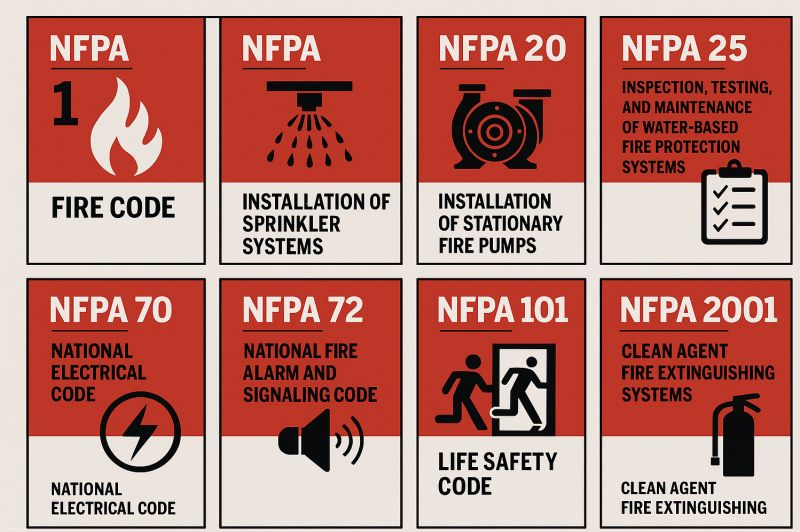
NFPA 1 Fire Code
NFPA 1, commonly known as the Fire Code, is one of the most comprehensive fire safety documents available. It provides a unified approach to fire prevention and fire protection by addressing a wide range of hazards and operational requirements. The code applies to both new and existing buildings and covers issues such as fire department access, hazardous materials, fire protection systems, emergency planning, occupancy safety, and maintenance practices.
The Fire Code emphasizes the importance of identifying fire hazards before they result in incidents. It encourages organizations to conduct inspections, maintain fire protection equipment, control ignition sources, and implement effective fire prevention measures. Through its comprehensive requirements, NFPA 1 helps create safer environments for occupants while supporting emergency responders during fire incidents.
NFPA 101 Life Safety Code
NFPA 101, known as the Life Safety Code, focuses primarily on protecting people during emergencies. Unlike many fire protection standards that emphasize property protection, NFPA 101 prioritizes human life and safe evacuation. The code establishes requirements for building design, occupancy classification, means of egress, emergency lighting, fire barriers, smoke protection, and emergency planning.
One of the most important concepts within NFPA 101 is the provision of safe and unobstructed escape routes. During a fire emergency, occupants must be able to quickly locate exits and evacuate without encountering obstacles. The code requires buildings to provide adequate exits, clear signage, emergency illumination, and appropriate occupancy management. These measures significantly improve survival rates during fire emergencies and help prevent tragic outcomes caused by blocked exits or inadequate evacuation arrangements.
NFPA 10 Portable Fire Extinguishers
Portable fire extinguishers are often the first tools used to combat small fires before they grow into major emergencies. NFPA 10 establishes detailed requirements regarding the selection, installation, inspection, maintenance, and use of fire extinguishers. The effectiveness of a fire extinguisher depends not only on its availability but also on its suitability for the specific type of fire hazard present.
The standard recognizes that different classes of fires require different extinguishing agents. A fire involving ordinary combustible materials presents different challenges than a fire involving flammable liquids, energized electrical equipment, or combustible metals. NFPA 10 ensures that organizations select the correct extinguishers for their hazards and maintain them in a ready-to-use condition. Regular inspections and maintenance are essential because an extinguisher that fails during an emergency can have devastating consequences.
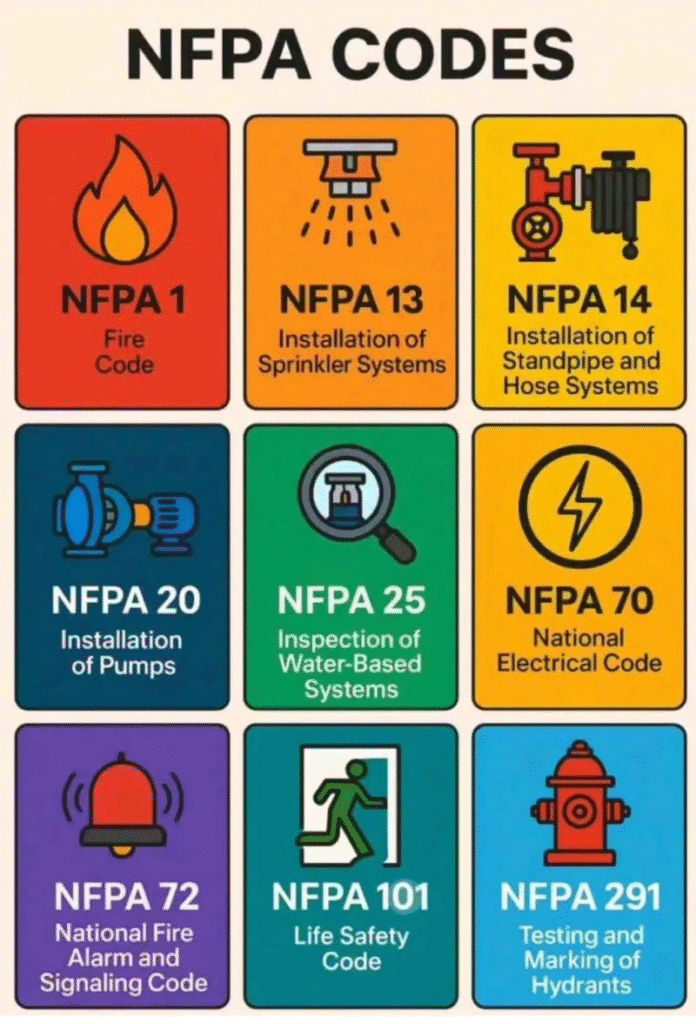
NFPA 13 Installation of Sprinkler Systems
Automatic sprinkler systems are among the most effective fire protection technologies ever developed. NFPA 13 provides detailed requirements for designing and installing sprinkler systems that can control or suppress fires during their early stages. By detecting heat and releasing water directly onto the fire, sprinkler systems significantly reduce fire growth and improve occupant safety.
Many people mistakenly believe that all sprinkler heads activate simultaneously during a fire. In reality, sprinkler systems are designed so that only the sprinkler heads exposed to sufficient heat will operate. This targeted response minimizes water damage while effectively controlling the fire. Buildings protected by properly designed sprinkler systems experience lower fire losses, reduced property damage, and significantly fewer fire-related fatalities.
NFPA 25 Inspection, Testing, and Maintenance of Fire Protection Systems
Fire protection systems cannot provide reliable protection if they are not properly maintained. NFPA 25 establishes requirements for inspecting, testing, and maintaining water-based fire protection systems, including sprinkler systems, standpipes, fire pumps, and water storage tanks. The purpose of the standard is to ensure that these systems remain operational and capable of performing their intended functions during emergencies.
Over time, fire protection equipment can deteriorate due to corrosion, mechanical damage, environmental conditions, or lack of maintenance. Regular inspections help identify deficiencies before they compromise system performance. By following NFPA 25 requirements, organizations can maintain confidence that their fire protection systems will operate effectively when needed most.
NFPA 70 National Electrical Code
Electrical hazards are among the leading causes of fires in residential, commercial, and industrial environments. NFPA 70, commonly known as the National Electrical Code, provides requirements for the safe installation and maintenance of electrical systems. The code addresses electrical wiring, grounding, overcurrent protection, equipment installation, and safe electrical practices.
Electrical fires often result from overloaded circuits, damaged wiring, improper installations, poor maintenance, and equipment failures. NFPA 70 helps prevent these incidents by establishing engineering requirements that reduce ignition risks. Compliance with the National Electrical Code contributes significantly to overall fire safety and helps protect both people and property from electrical hazards.
NFPA 72 National Fire Alarm and Signaling Code
Early detection is one of the most critical factors in fire safety. NFPA 72 establishes requirements for fire alarm systems, emergency communication systems, and notification technologies that provide early warning during emergencies. The code covers smoke detectors, heat detectors, fire alarm control panels, emergency voice communication systems, and monitoring arrangements.
The primary purpose of fire alarm systems is to alert occupants quickly so they can evacuate safely before conditions become life-threatening. Early warning also allows emergency responders to initiate firefighting operations sooner, increasing the likelihood of controlling the fire before extensive damage occurs. Reliable fire alarm systems save lives by providing valuable time during emergency situations.
NFPA 30 Flammable and Combustible Liquids Code
Many industrial and commercial operations involve the storage, handling, and use of flammable liquids. These substances can create significant fire and explosion hazards if not properly managed. NFPA 30 establishes requirements for the safe storage and handling of flammable and combustible liquids to reduce ignition risks and minimize the consequences of accidental releases.
The code addresses storage arrangements, container requirements, ventilation systems, spill control measures, fire protection systems, and operational procedures. Organizations working with fuels, solvents, chemicals, paints, and similar materials rely heavily on NFPA 30 to maintain safe operations and prevent catastrophic incidents.
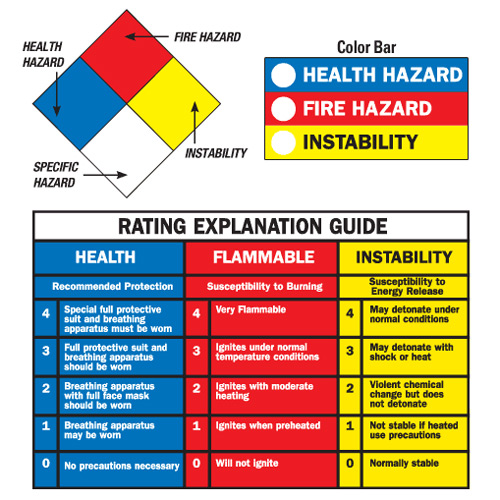
NFPA 704 Hazard Identification System
Emergency responders must quickly understand the hazards associated with chemicals present at an incident scene. NFPA 704 provides a standardized hazard identification system commonly known as the Fire Diamond. This visual system communicates information regarding health hazards, flammability hazards, reactivity hazards, and special hazards.
The Fire Diamond allows firefighters and emergency personnel to rapidly assess risks and select appropriate response strategies. By providing critical hazard information at a glance, NFPA 704 improves emergency response effectiveness and enhances responder safety during hazardous materials incidents.
Fire Risk Assessment According to NFPA Principles
Fire risk assessment is a systematic process used to identify hazards, evaluate risks, and implement control measures. NFPA principles emphasize the importance of understanding how fires start, how they spread, and how they can be controlled or prevented. A comprehensive fire risk assessment examines ignition sources, combustible materials, building characteristics, occupancy patterns, and existing protection measures.
Organizations that conduct thorough fire risk assessments are better equipped to prioritize resources, address vulnerabilities, and improve overall fire safety performance. Risk assessments provide the foundation for effective fire prevention programs and support continuous improvement efforts.
Fire Prevention Through NFPA Compliance
Fire prevention is the most effective method of reducing fire-related losses. NFPA codes emphasize proactive measures that eliminate hazards before fires occur. Effective fire prevention involves proper housekeeping, safe storage of combustible materials, electrical safety, equipment maintenance, smoking controls, hot work management, and employee awareness.
Organizations that prioritize fire prevention create safer environments and significantly reduce the likelihood of emergencies. Prevention efforts not only protect lives but also reduce operational disruptions, financial losses, and reputational damage associated with fire incidents.
Fire Safety Training and Emergency Preparedness
Even the most advanced fire protection systems cannot replace knowledgeable and well-trained personnel. NFPA standards recognize that employee awareness and preparedness are essential components of effective fire safety programs. Training helps individuals recognize hazards, understand emergency procedures, operate fire extinguishers, and respond appropriately during incidents.
Emergency preparedness involves developing evacuation procedures, conducting drills, establishing communication systems, and coordinating with emergency responders. Regular training and exercises ensure that occupants understand their roles and responsibilities, reducing confusion and panic during actual emergencies.
Benefits of Implementing NFPA Fire Safety Codes
Organizations that implement NFPA Fire Safety Codes experience numerous benefits beyond regulatory compliance. Effective fire protection programs improve life safety, reduce fire losses, enhance business continuity, lower insurance costs, strengthen organizational reputation, and support long-term operational sustainability. Employees and occupants gain confidence knowing that appropriate measures are in place to protect them during emergencies.
The adoption of NFPA standards demonstrates a commitment to safety excellence and responsible risk management. It reflects an organization’s dedication to protecting people, property, and the environment while maintaining high standards of operational performance.
Conclusion
NFPA Fire Safety Codes represent the global benchmark for fire prevention, fire protection, and life safety. Through comprehensive requirements addressing building design, fire detection, fire suppression, emergency planning, electrical safety, hazardous materials management, and occupant protection, these codes provide a proven framework for reducing fire risks and improving emergency preparedness. Organizations that understand and implement NFPA standards are better positioned to prevent fires, protect lives, minimize losses, and create safer workplaces and communities. In a world where fire hazards remain a constant threat, NFPA codes serve as essential tools for achieving excellence in fire safety management.