

A Complete Guide to Risk Assessment and Risk Management
Introduction
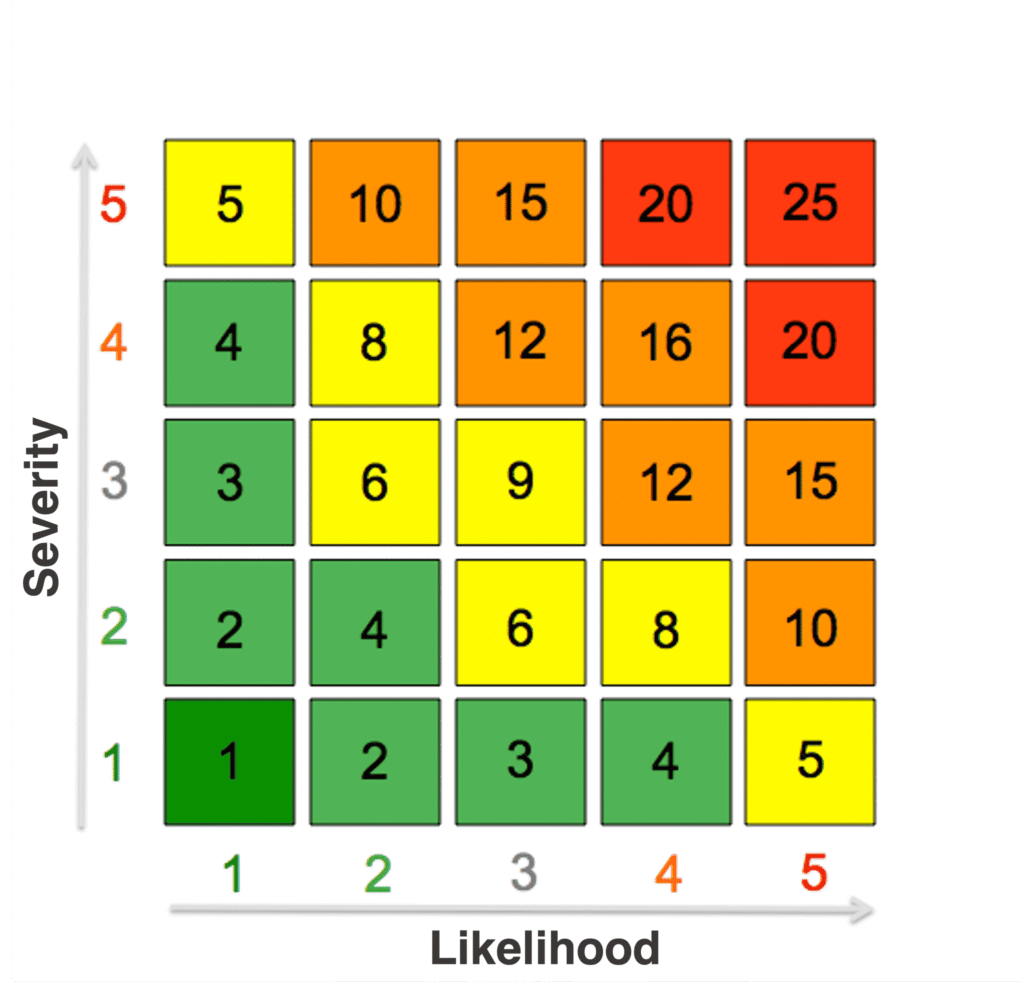
A Risk Matrix is one of the most widely used tools in occupational health and safety, risk management, project management, construction, manufacturing, oil and gas, and many other industries. It helps organizations identify, evaluate, and prioritize workplace risks by considering two key factors: the likelihood of an incident occurring and the severity of its consequences.
Every workplace contains hazards that can potentially cause injuries, illnesses, environmental damage, property loss, or operational disruptions. The purpose of a risk matrix is to provide a structured and systematic method for evaluating these hazards and determining which risks require immediate attention and control measures.
A risk matrix transforms complex risk information into a visual format that is easy to understand and communicate. Safety professionals, managers, supervisors, and workers use risk matrices to make informed decisions about hazard control, resource allocation, and safety improvements. By using a risk matrix, organizations can focus their efforts on the most significant risks and create safer working environments.
What is a Risk Matrix?
A Risk Matrix is a graphical tool used to determine the level of risk associated with a particular hazard. It combines the probability or likelihood of an event occurring with the severity or consequence of that event. The intersection of these two factors produces a risk rating that indicates whether the risk is low, medium, high, or extreme.
The matrix allows organizations to compare different hazards and prioritize them based on their potential impact. Instead of relying on assumptions or personal opinions, the risk matrix provides a more objective approach to risk assessment. This helps organizations allocate resources effectively and implement appropriate control measures where they are needed most.
Risk matrices are commonly used during risk assessments, safety inspections, job safety analyses, hazard identification studies, permit-to-work systems, and safety management system reviews.
Understanding Risk
Risk is the combination of the likelihood that a hazardous event will occur and the severity of the consequences if it does occur. In simple terms, risk answers two important questions: How likely is this hazard to cause harm, and how serious would the harm be if it happened?
For example, a wet floor in an office may have a relatively high chance of causing someone to slip, but the resulting injury may be minor. On the other hand, working at height without fall protection may have a lower probability of occurrence but could result in fatal consequences. The risk matrix helps organizations compare these situations and determine which risks require greater attention.
Understanding risk is essential because not all hazards present the same level of danger. Some risks can be accepted with routine controls, while others require immediate corrective action to prevent serious incidents.
Components of a Risk Matrix
The risk matrix is built around two fundamental components: likelihood and severity. These components work together to determine the overall risk level associated with a hazard.
Likelihood
Likelihood refers to the probability that a hazardous event will occur. It assesses how often an incident might happen based on factors such as workplace conditions, exposure frequency, equipment reliability, employee behavior, and historical incident data.
Likelihood is usually categorized into several levels ranging from rare to almost certain. A hazard that has never occurred and is highly unlikely to happen may be classified as rare, while a hazard that occurs frequently or is expected to happen regularly may be classified as almost certain.
When assessing likelihood, organizations should consider actual workplace conditions rather than assumptions. Factors such as employee competence, environmental conditions, maintenance practices, and operational procedures can significantly influence the probability of an incident.
Severity
Severity refers to the potential consequences of a hazardous event. It evaluates the extent of harm that could result if the hazard materializes.
Consequences may include injuries, fatalities, occupational illnesses, environmental damage, property destruction, equipment failures, production losses, or reputational harm. Severity levels typically range from insignificant to catastrophic.
An insignificant consequence may involve a minor injury requiring basic first aid, while a catastrophic consequence could involve multiple fatalities, major environmental damage, or complete facility destruction.
Assessing severity requires consideration of the worst credible outcome rather than the most common outcome. This ensures that organizations adequately prepare for serious incidents.
How a Risk Matrix Works
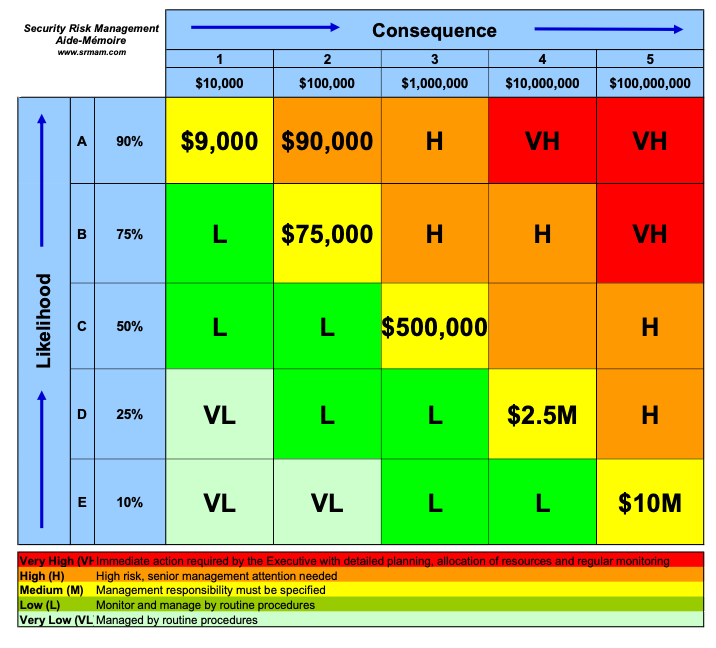
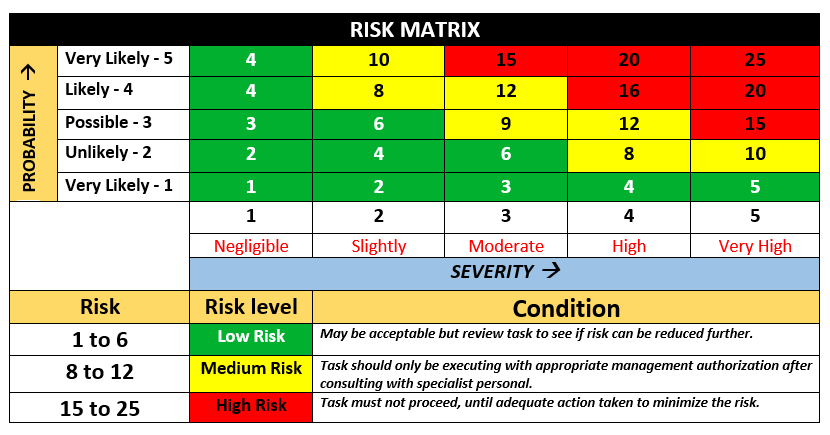
A risk matrix combines likelihood and severity scores to calculate an overall risk rating. Each hazard is assigned a likelihood score and a severity score. These scores are then matched within the matrix to determine the level of risk.
For example, a hazard with a high likelihood and high severity would typically result in an extreme risk rating. Such risks require immediate attention and implementation of robust control measures.
Conversely, a hazard with low likelihood and low severity would likely result in a low-risk rating. While control measures may still be necessary, the urgency and resource requirements would generally be lower.
This systematic approach helps organizations prioritize actions based on actual risk levels rather than subjective perceptions.
Risk Matrix Categories
Most risk matrices classify risks into categories such as low, medium, high, and extreme.
Low risks are generally considered acceptable and may require routine monitoring and standard control measures. While these risks should not be ignored, they typically do not pose significant threats to people or operations.
Medium risks require management attention and implementation of reasonable control measures. These risks may not require immediate action but should be addressed within an appropriate timeframe.
High risks represent significant threats that require urgent intervention. Additional controls should be implemented promptly to reduce the risk to an acceptable level.
Extreme risks are unacceptable and require immediate action. Work activities associated with extreme risks should often be stopped until effective control measures are implemented and the risk is reduced.
Importance of Risk Matrices in Workplace Safety
Risk matrices play a crucial role in modern safety management systems. They help organizations identify hazards systematically, evaluate risks consistently, and prioritize safety improvements effectively.
One of the greatest benefits of a risk matrix is that it provides a common language for discussing risk throughout an organization. Workers, supervisors, managers, and safety professionals can use the same framework to understand hazards and communicate risk levels.
Risk matrices also support compliance with legal and regulatory requirements. Many occupational health and safety regulations require organizations to conduct risk assessments and implement suitable control measures. The risk matrix provides a structured method for fulfilling these obligations.
Furthermore, risk matrices help organizations allocate resources efficiently. By identifying high-priority risks, management can focus time, money, and effort where they will have the greatest impact on safety performance.
Risk Matrix in Hazard Identification
Hazard identification is the first step in risk assessment. Before risks can be evaluated, hazards must be recognized and documented.
A risk matrix assists in hazard identification by providing a framework for evaluating each identified hazard. Once hazards are identified, organizations can assess their likelihood and severity to determine overall risk levels.
Common workplace hazards include slips, trips, falls, electrical hazards, chemical exposures, confined spaces, moving machinery, manual handling activities, and fire hazards. Each hazard can be evaluated using the risk matrix to determine appropriate control measures.
Risk Control Measures
The primary purpose of risk assessment is not merely to identify risks but to control them effectively. Once risks have been evaluated using the risk matrix, organizations must implement measures to reduce risk levels.
The hierarchy of controls provides a structured approach to risk reduction. Elimination is considered the most effective control because it removes the hazard entirely. Substitution involves replacing a hazardous process or substance with a safer alternative. Engineering controls isolate people from hazards through physical modifications. Administrative controls focus on procedures, training, supervision, and work practices. Personal protective equipment serves as the final line of defense when other controls cannot fully eliminate risks.
The risk matrix helps determine the urgency and extent of control measures required for different hazards.
Applications of Risk Matrices
Risk matrices are used across numerous industries and operational environments. Construction companies use them to assess risks associated with working at height, excavation activities, lifting operations, and heavy equipment. Manufacturing facilities apply risk matrices to evaluate machinery hazards, chemical exposures, and production processes.
Oil and gas organizations use risk matrices extensively for process safety management, hazardous material handling, and emergency planning. Healthcare facilities assess risks related to infection control, patient handling, and medical equipment. Offices use risk matrices to evaluate ergonomic hazards, electrical safety, and emergency preparedness.
The versatility of risk matrices makes them valuable tools in virtually every industry.
Limitations of Risk Matrices
Although risk matrices are highly useful, they are not without limitations. Risk assessments rely on human judgment, which can introduce subjectivity. Different assessors may assign different likelihood or severity ratings to the same hazard.
Risk matrices also simplify complex situations into numerical scores, which may not fully capture all aspects of risk. Therefore, organizations should use risk matrices as decision-support tools rather than relying on them exclusively.
Effective risk management requires professional judgment, experience, consultation with workers, and continuous review of workplace conditions.
Best Practices for Using Risk Matrices
Organizations should ensure that risk assessments are conducted by competent personnel who understand workplace hazards and operational processes. Employees should be involved in the assessment process because they often possess valuable knowledge regarding workplace conditions.
Risk assessments should be reviewed regularly, particularly when changes occur in equipment, processes, personnel, legislation, or environmental conditions. Documentation should be maintained to demonstrate compliance and support continuous improvement efforts.
Most importantly, organizations should treat risk assessment as an ongoing process rather than a one-time activity. Workplace conditions evolve continuously, and risk management systems must adapt accordingly.
Conclusion
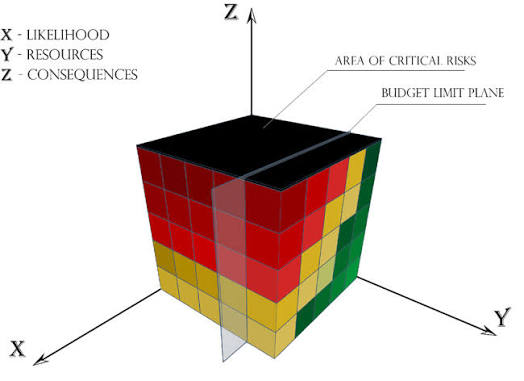
The Risk Matrix is a powerful and practical tool for identifying, evaluating, and managing workplace risks. By combining likelihood and severity, organizations can prioritize hazards, allocate resources effectively, and implement appropriate control measures. A well-designed risk matrix supports informed decision-making, enhances workplace safety, improves regulatory compliance, and contributes to a stronger safety culture. While no risk assessment tool is perfect, the risk matrix remains one of the most valuable resources available for protecting people, assets, and organizational performance.