A Complete Guide to Identifying and Eliminating Workplace Problems
Introduction
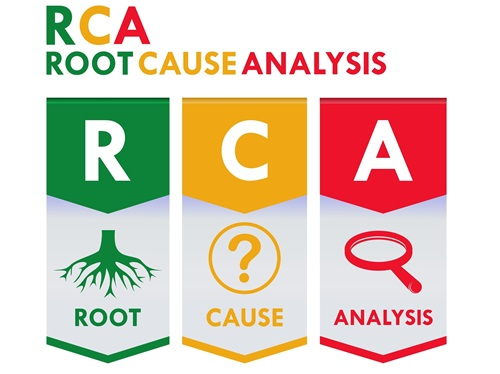
Root Cause Analysis (RCA) is one of the most important problem-solving and incident investigation methodologies used in modern organizations. It is a systematic process designed to identify the fundamental causes of incidents, accidents, failures, defects, near misses, operational disruptions, quality issues, and safety concerns. Rather than focusing solely on the immediate causes or symptoms of a problem, Root Cause Analysis seeks to uncover the underlying factors that allowed the issue to occur in the first place.
In occupational health and safety, Root Cause Analysis plays a critical role in preventing incidents from recurring. Every accident, near miss, equipment failure, environmental event, or operational disruption has one or more underlying causes. If organizations only address the visible symptoms of a problem, the same incident is likely to occur again. However, when the root causes are identified and eliminated, organizations can achieve long-term improvements in safety, productivity, quality, and operational performance.
Root Cause Analysis is widely used across industries including construction, manufacturing, oil and gas, healthcare, aviation, logistics, mining, power generation, chemical processing, and transportation. It provides a structured framework for understanding why problems occur and what actions are required to prevent recurrence.
Understanding the Concept of Root Cause Analysis
The concept of Root Cause Analysis is based on the principle that every problem has one or more underlying causes. The visible event or incident is often only the final outcome of a chain of contributing factors. These factors may include human errors, equipment failures, inadequate procedures, insufficient training, poor supervision, management weaknesses, environmental conditions, communication failures, or organizational deficiencies.
For example, if a worker slips on a wet floor and sustains an injury, the immediate cause may be the slippery surface. However, the root causes may include inadequate housekeeping procedures, lack of spill management systems, insufficient supervision, poor hazard reporting processes, or ineffective safety inspections. Unless these deeper issues are identified and corrected, similar incidents may continue to occur.
Root Cause Analysis helps organizations move beyond superficial explanations and focus on systemic improvements that create lasting safety and operational benefits.
Importance of Root Cause Analysis
Root Cause Analysis is essential because it allows organizations to learn from failures and prevent future incidents. Without RCA, organizations often treat symptoms rather than addressing the actual source of the problem. This results in repeated accidents, recurring equipment failures, operational inefficiencies, increased costs, and ongoing safety risks.
A comprehensive Root Cause Analysis improves workplace safety by identifying hazards and weaknesses before they result in serious consequences. It also enhances operational reliability, improves product quality, reduces downtime, minimizes financial losses, and strengthens organizational resilience.
In addition to safety benefits, RCA supports regulatory compliance and demonstrates a commitment to continuous improvement. Many international standards, including ISO 45001, ISO 9001, and ISO 14001, encourage organizations to investigate incidents thoroughly and identify root causes as part of their management systems.
Objectives of Root Cause Analysis
The primary objective of Root Cause Analysis is to identify and eliminate the underlying causes of problems so that they do not occur again. This objective extends beyond simply understanding what happened. RCA seeks to determine why the problem occurred, what conditions allowed it to develop, and what changes are required to prevent recurrence.
Another important objective is organizational learning. Every incident provides valuable information about weaknesses within systems, processes, and controls. By analyzing these weaknesses, organizations can improve performance and strengthen their management systems.
Root Cause Analysis also aims to improve decision-making by providing accurate information regarding failures and their causes. This allows management to allocate resources effectively and implement targeted improvements that deliver meaningful results.
Types of Causes Identified During Root Cause Analysis
Root Cause Analysis often identifies multiple layers of causation. Problems rarely result from a single factor. Instead, incidents typically develop through a combination of immediate causes, contributing causes, and root causes.
Immediate causes are the direct actions or conditions that trigger an event. Examples include unsafe acts, equipment malfunctions, or hazardous conditions present at the time of the incident.
Contributing causes are factors that increase the likelihood of the incident occurring. These may include inadequate training, poor communication, insufficient supervision, or environmental conditions.
Root causes are the deepest underlying factors that create conditions where immediate and contributing causes can exist. These often involve organizational systems, management decisions, policy deficiencies, or failures in risk management processes.
Understanding the relationship between these different levels of causation is essential for effective problem-solving and prevention.
The Root Cause Analysis Process
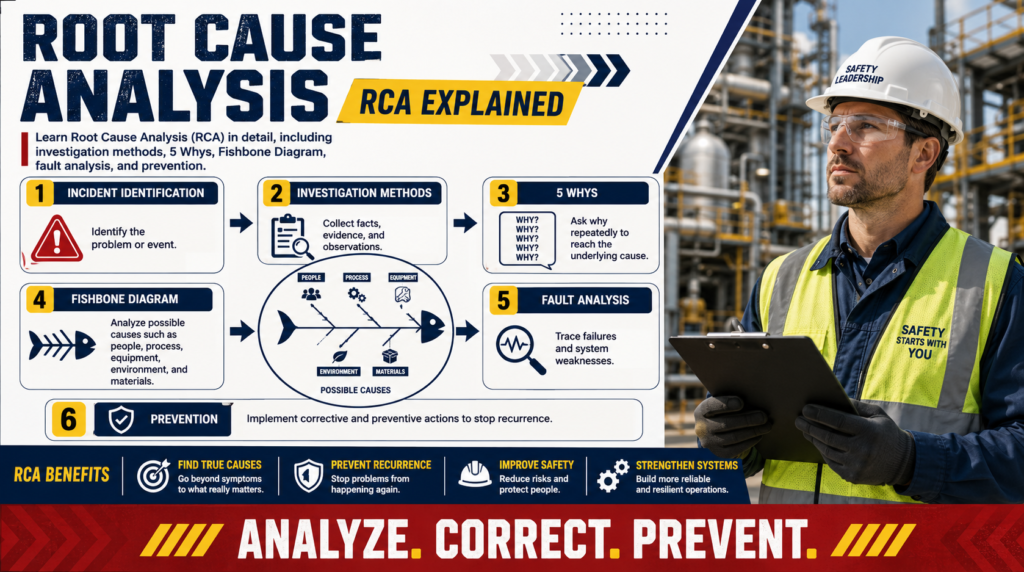
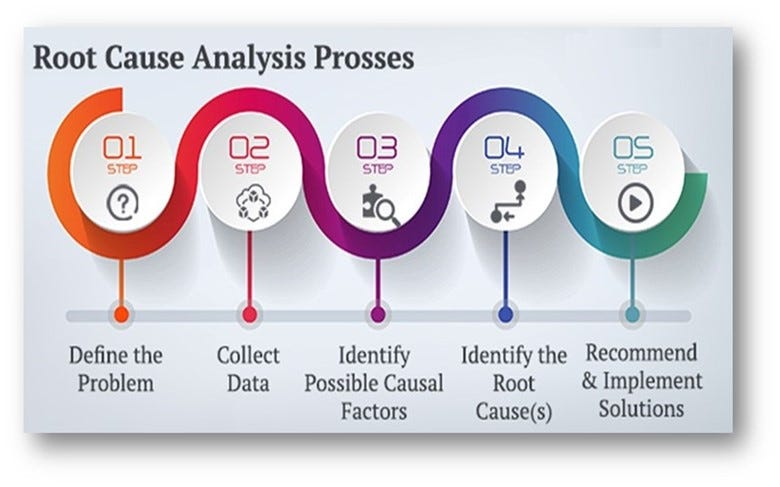
The Root Cause Analysis process begins with clearly defining the problem. Organizations must understand exactly what occurred, when it occurred, where it occurred, and who was affected. Accurate problem definition establishes the foundation for the entire investigation.
Once the problem is defined, investigators gather information from multiple sources including witness statements, photographs, inspection records, maintenance logs, training records, procedures, and physical evidence. Comprehensive data collection ensures that analysis is based on facts rather than assumptions.
The next stage involves identifying causal factors and reconstructing the sequence of events. Investigators examine what happened before, during, and after the incident to understand how various factors interacted.
Following this analysis, root causes are identified using structured methodologies and analytical tools. Once root causes are determined, corrective and preventive actions are developed to eliminate or control the identified weaknesses.
Finally, corrective actions are implemented, monitored, and reviewed to ensure effectiveness and long-term improvement.
The 5 Whys Technique
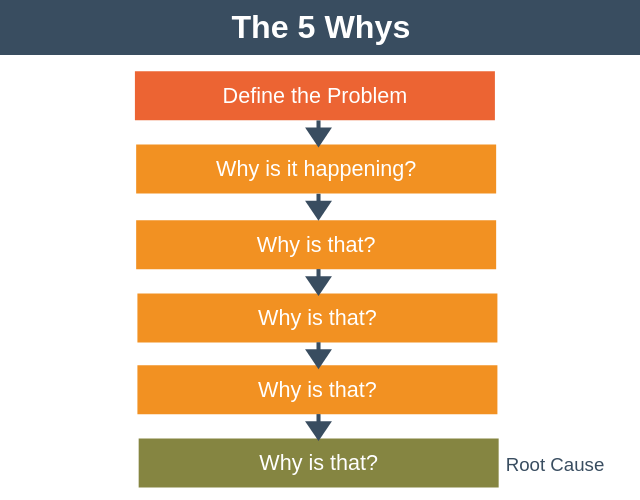
One of the most widely used Root Cause Analysis tools is the 5 Whys technique. This method involves repeatedly asking the question “Why?” until the underlying cause of a problem is identified.
The process begins with the incident itself and progressively explores deeper levels of causation. Each answer becomes the basis for the next question. Through this iterative approach, investigators move beyond immediate causes and uncover systemic issues.
The simplicity of the 5 Whys technique makes it highly effective for many workplace problems. It encourages critical thinking and helps organizations avoid superficial explanations.
However, the effectiveness of this technique depends on accurate information and objective analysis. Investigators must ensure that each answer is supported by evidence rather than assumptions.
Fishbone Diagram Analysis
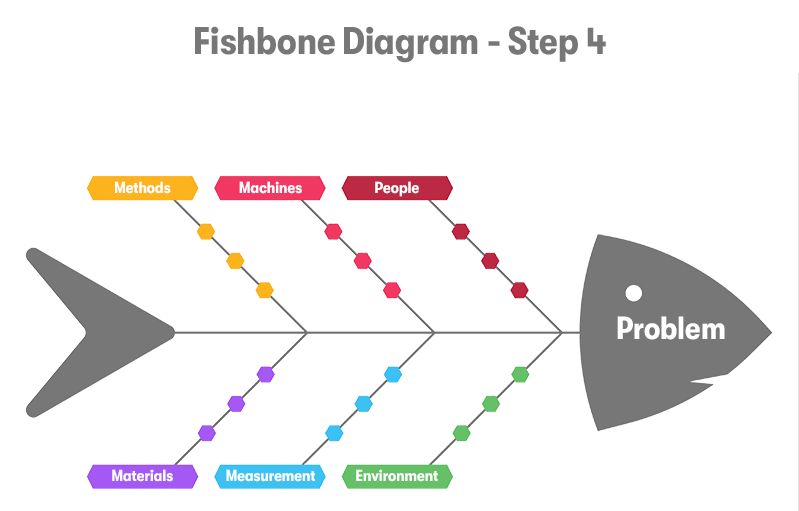
The Fishbone Diagram, also known as the Ishikawa Diagram or Cause-and-Effect Diagram, is another popular RCA tool. It provides a visual framework for identifying and organizing potential causes of a problem.
The diagram categorizes causes into major groups such as people, equipment, methods, materials, environment, and management. Each category is then examined in detail to identify contributing factors.
This structured approach encourages comprehensive analysis and helps investigators consider multiple perspectives. It is particularly useful for complex problems involving numerous interacting factors.
The Fishbone Diagram promotes teamwork and collaboration because it allows multiple stakeholders to contribute ideas and insights during the analysis process.
Fault Tree Analysis
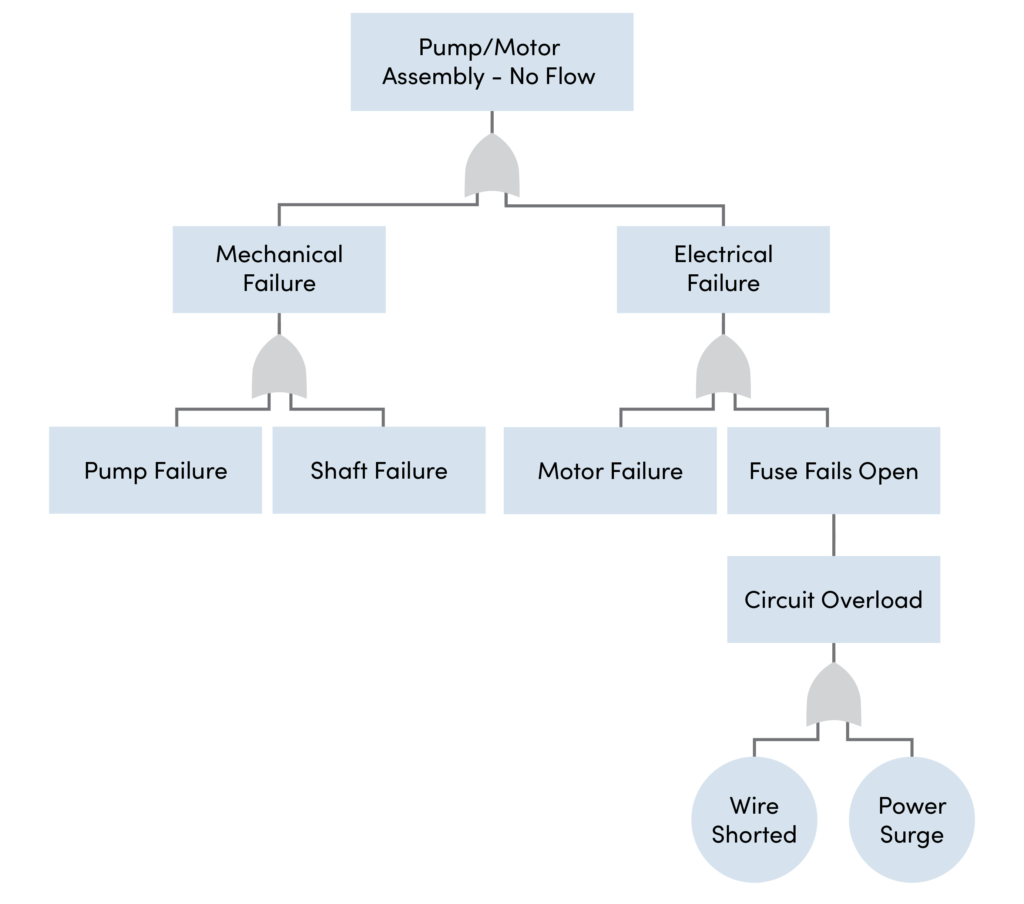
Fault Tree Analysis is a systematic and graphical method used to identify the combinations of failures that can lead to an undesired event. It begins with a specific problem and works backward to identify all possible contributing causes.
The analysis uses logical relationships to show how different failures interact and combine to produce an incident. This approach is particularly valuable in high-risk industries such as aviation, nuclear power, chemical processing, and oil and gas operations.
Fault Tree Analysis helps organizations understand complex systems and identify vulnerabilities that may not be immediately apparent through simpler investigation methods.
Human Factors in Root Cause Analysis
Human factors play a significant role in many workplace incidents and operational failures. However, modern safety management recognizes that human error is rarely the true root cause of a problem.
People operate within systems, procedures, environments, and organizational cultures that influence their decisions and behaviors. Factors such as fatigue, stress, workload, distractions, inadequate training, poor communication, and unclear procedures can significantly affect performance.
Root Cause Analysis examines these underlying influences rather than simply blaming individuals. By addressing system weaknesses, organizations can reduce the likelihood of human errors and improve overall performance.
Root Cause Analysis in Incident Investigation
Incident investigation and Root Cause Analysis are closely connected. While incident investigation focuses on understanding what happened, RCA focuses on understanding why it happened.
A thorough investigation collects evidence and reconstructs events, while Root Cause Analysis identifies the deeper organizational and systemic factors responsible for the incident.
Together, these processes help organizations learn from failures and implement meaningful improvements that prevent recurrence.
Corrective and Preventive Actions
The ultimate purpose of Root Cause Analysis is to develop effective corrective and preventive actions. Corrective actions address existing deficiencies, while preventive actions focus on reducing future risks.
Actions may include engineering improvements, equipment upgrades, procedural revisions, training programs, enhanced supervision, management system improvements, or organizational changes.
Effective actions should address root causes directly rather than merely treating symptoms. They should also be practical, measurable, achievable, and sustainable over time.
Organizations must monitor implementation and evaluate effectiveness to ensure that improvements deliver the intended results.
Benefits of Root Cause Analysis
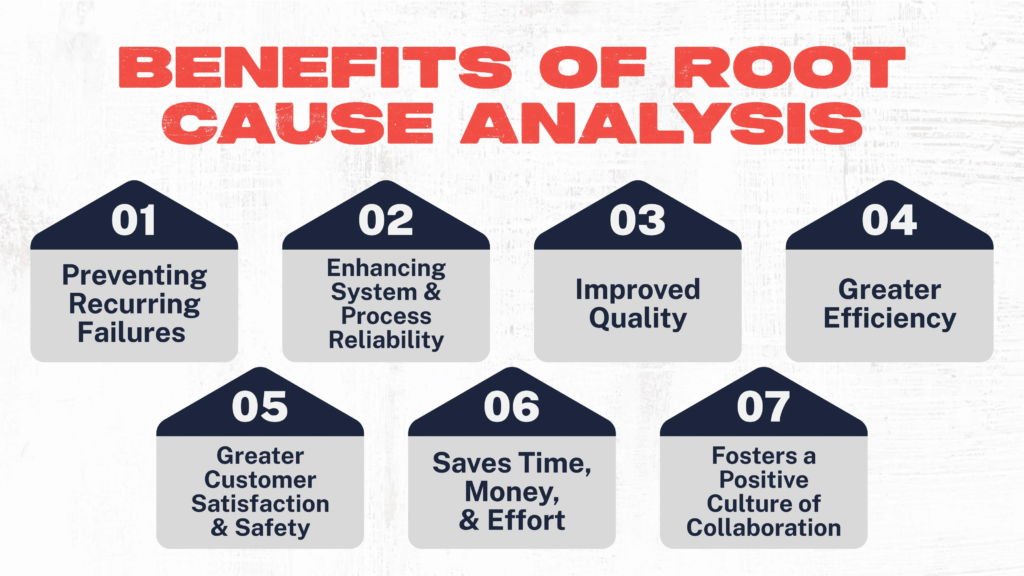
Organizations that effectively implement Root Cause Analysis experience numerous benefits. They achieve lower accident rates, improved safety performance, reduced operational disruptions, enhanced reliability, better quality outcomes, and stronger regulatory compliance.
RCA also contributes to cost reduction by minimizing losses associated with accidents, equipment failures, production downtime, and corrective rework. Furthermore, it supports continuous improvement by encouraging learning, accountability, and proactive problem-solving.
Perhaps most importantly, Root Cause Analysis strengthens organizational culture by promoting transparency, collaboration, and a commitment to preventing future failures.
Challenges in Root Cause Analysis
Despite its benefits, Root Cause Analysis can present challenges. Inadequate data, limited resources, lack of expertise, time constraints, and organizational resistance can affect the quality of investigations.
Another common challenge is the tendency to stop analysis too early and accept superficial explanations. Effective RCA requires persistence, critical thinking, and a willingness to examine deeper organizational issues.
Organizations must provide training, leadership support, and appropriate resources to ensure successful implementation of Root Cause Analysis programs.
Root Cause Analysis and Continuous Improvement
Continuous improvement depends on an organization’s ability to learn from both successes and failures. Root Cause Analysis provides a structured mechanism for capturing lessons learned and transforming them into actionable improvements.
By systematically identifying and eliminating underlying causes, organizations strengthen their systems, improve risk management, and enhance overall performance. This continuous learning process creates safer workplaces, more reliable operations, and greater organizational resilience.
Root Cause Analysis is not simply an investigation tool; it is a strategic approach to long-term improvement and operational excellence.
Conclusion
Root Cause Analysis is one of the most valuable methodologies available for understanding and preventing workplace problems. By focusing on underlying causes rather than symptoms, organizations can identify weaknesses within systems, processes, equipment, supervision, and management practices. Through systematic investigation, evidence-based analysis, and effective corrective actions, RCA helps prevent recurrence, improve safety performance, enhance operational reliability, and support continuous improvement. Organizations that embrace Root Cause Analysis create stronger safety cultures, achieve better business outcomes, and develop the resilience needed to succeed in increasingly complex and demanding environments.