

1. Introduction: Active and Reactive Monitoring
A strong health and safety management system does more than respond to accidents. It also checks, on a planned basis, whether controls, procedures and day-to-day working practices are operating effectively before something goes wrong.
This is where active and reactive monitoring work together. Active monitoring looks for weaknesses before an incident occurs, while reactive monitoring learns from accidents, incidents, near misses and other events that have already happened. Used together, they help organizations identify gaps, take corrective action and strengthen overall safety performance.
| ACTIVE Check before harm Inspections, sampling, audits and system checks. | REACTIVE Learn after events Investigations, near misses, complaints and trend analysis. | TOGETHER Close the loop Correct gaps, verify actions and drive continuous improvement. |
2. What Is Active Monitoring?
Active monitoring is the proactive checking of health and safety performance. Its purpose is to identify hazards, weaknesses and deviations from agreed standards before they lead to injury, ill health, damage or other loss.
Typical active monitoring activities include:
• Safety inspections
• Workplace tours
• Safety sampling
• Health and safety audits
• Equipment and system checks
• Checking employee compliance with safe working procedures
Practical example
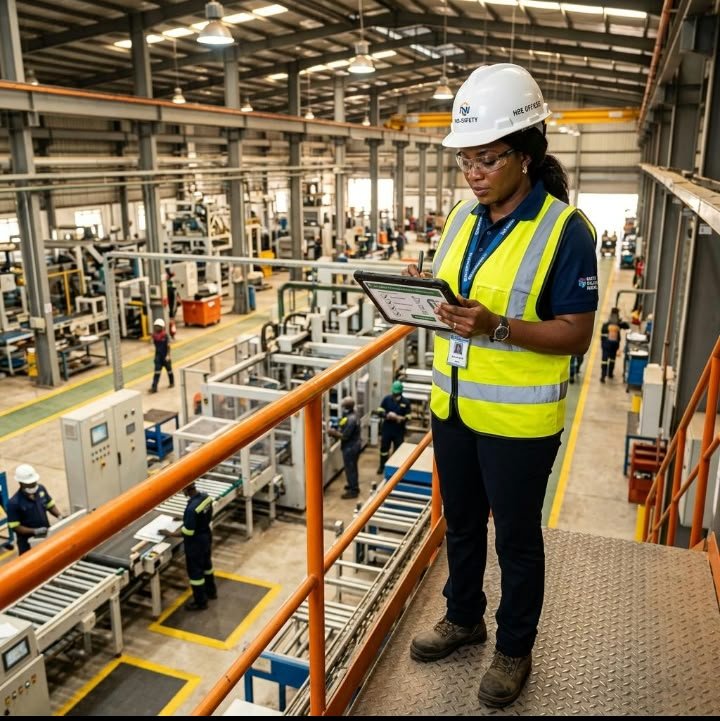
A safety officer carries out a scheduled workplace tour to confirm that workers are using the required PPE, emergency exits are clear, machine guards are in place and any previously identified actions have been completed.

3. What Is Reactive Monitoring?
Reactive monitoring reviews information after an unwanted event or a sign of failure has occurred. It is used to understand what happened, why it happened and what must change to reduce the chance of recurrence.
Reactive monitoring may include reviewing:
• Accidents
• Near misses
• Incidents
• Cases of work-related ill health
• Safety complaints
• Property or equipment damage
The purpose is not simply to record an event. A useful reactive process investigates immediate and underlying causes, identifies contributing factors, assigns corrective actions and checks that lessons are applied across the organization where relevant.


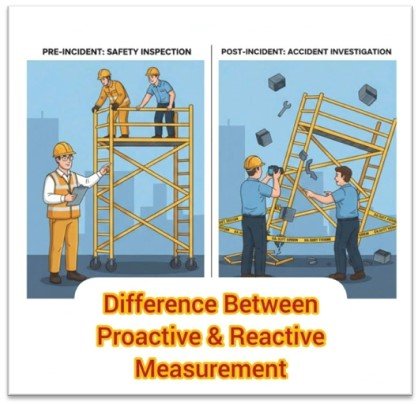
Figure 02(b):Accident and incident reporting and investigation are core reactive monitoring activities.
4. Performance Standards:
For monitoring to be meaningful, organizations need clear performance standards against which actual workplace performance can be measured. Standards turn broad safety expectations into observable, measurable requirements.
A useful performance standard helps answer the question:
“Are we achieving the level of health and safety performance that we expect?”
Standards may relate to workplace conditions, procedures, employee behaviour, equipment, control measures, inspection frequency, training, response times and completion of corrective actions.
Actual performance can then be compared with the expected standard. Any gap should trigger proportionate action, a responsible owner and a realistic completion date.
5. Examples of Active Monitoring:
Common active monitoring activities include:
• Safety tours
• Workplace audits
• Checking safety procedures
• Reviewing control measures
• Checking whether corrective actions have been completed
• Monitoring compliance with workplace instructions
• Checking equipment and safety systems
These activities provide early warning of deviations from expected standards, allowing problems to be corrected before they develop into serious events.
5.1 Safety Inspections:
Safety inspections are a structured way of checking the workplace for unsafe conditions, unsafe practices and failures in existing controls. Effective inspections focus on both physical conditions and how work is actually being carried out.
An inspection may check:
• Workplace conditions
• Machinery and equipment
• Fire safety arrangements
• Emergency exits
• Personal protective equipment
• Housekeeping
• Safe working practices
• Control measures
The aim is not simply to find faults. Inspection findings should be prioritized according to risk and converted into corrective actions that are tracked to completion.
5.2 General Workplace Inspections:
General workplace inspections provide a broader review of health and safety arrangements across an area, department or site.
Rather than focusing on one hazard, they can consider four practical areas:
Plant — machinery, equipment and tools.
Premises — buildings, floors, access routes, lighting, ventilation and housekeeping.
People — behaviour, competence, supervision and safe working practices.
Procedures — safe systems of work, instructions, permits, emergency arrangements and control measures.
5.3 Safety Sampling:
Safety sampling is a focused active-monitoring technique. Instead of checking every activity or condition, a sample of selected areas, behaviours or safety requirements is observed and compared with a defined standard.
For example, an organization may sample:
• Use of personal protective equipment
• Housekeeping standards
• Emergency arrangements
• Safe working procedures
• Machine guarding
• Permit-to-work compliance
The results can be converted into a simple compliance percentage or trend and used to target improvement where performance is weakest.
5.4 Turning Active Monitoring into Improvement:
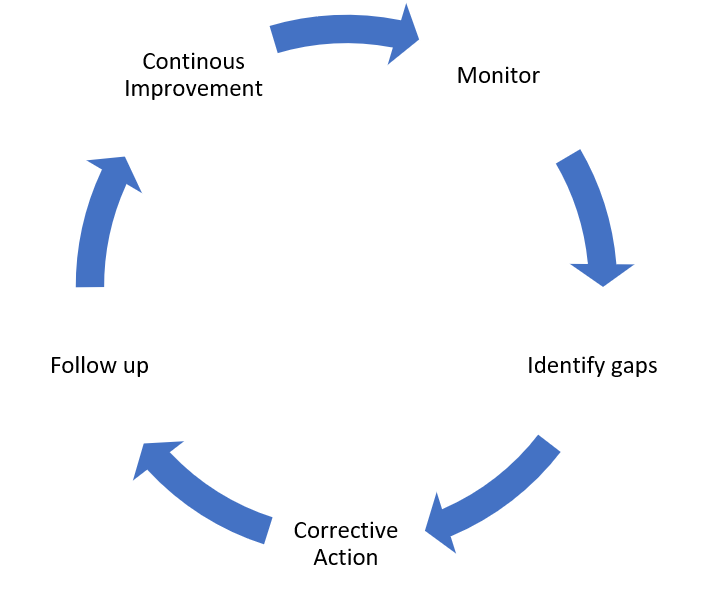
Active monitoring should not end when a checklist is completed. Findings need to be recorded, prioritized, assigned, corrected and then verified. Repeated findings should trigger a review of the underlying control rather than another short-term fix.
6. Reactive Monitoring in Practice:
Reactive monitoring focuses on evidence that a control, system or behaviour has already failed, or may be beginning to fail. The value comes from learning from that evidence and preventing repetition.
Useful sources of reactive information include:
• Accidents
• Incidents
• Near misses
• Work-related ill health
• Safety complaints
• Equipment or property damage
• Sickness and absence information
• Previous investigation findings
The information should be reviewed for immediate causes, underlying causes, recurring patterns and wider organizational lessons. Corrective actions should address root causes where possible, not only the visible outcome.
6.1 Safety Statistics and Trends:
Statistics are an important part of reactive monitoring because they help organizations understand past safety performance and identify recurring patterns over time.
Organizations may monitor information such as:
• Number of accidents
• Number of incidents
• Number of near misses
• Lost-time injuries
• Work-related ill-health cases
• Absence trends
• Property damage cases
• Accident frequency or rates
• Recurring types of incidents
One commonly used lagging indicator is the Lost Time Accident Frequency Rate (LTAFR). Because organizations and regulators may use different exposure-hour factors, the basis of calculation should always be stated clearly and applied consistently.
Typical formula: LTAFR = (number of lost-time injuries × chosen hours factor) ÷ total hours worked. A factor such as 100,000 or 1,000,000 hours may be used depending on the reporting standard.
6.2 Reactive Monitoring Process
Reactive monitoring should go beyond recording an accident or incident. Information should be investigated, analyzed for trends, converted into corrective and preventive actions, communicated to relevant people and followed up to confirm that the actions are effective.

7. Why Both Approaches Matter:
Active and reactive monitoring are both essential to effective health and safety management. They provide different but complementary views of performance: one shows whether controls are working before harm occurs, while the other shows what can be learned when something has already gone wrong.
| Aspect | Active Monitoring | Reactive Monitoring |
| Timing | Before an incident or loss | After an incident, near miss or sign of failure |
| Main purpose | Prevent problems and confirm controls are working | Learn from events and prevent recurrence |
| Typical examples | Inspections, audits, safety sampling, equipment checks | Investigations, complaints, absence data, incident statistics |
| Indicator type | Mostly leading indicators | Mostly lagging indicators |
| Best use | Early warning and assurance | Learning, trend analysis and corrective action |
Active Monitoring — Prevent Problems
Active monitoring identifies hazards, weaknesses and control failures before they result in an unwanted event. Inspections, safety sampling, audits and performance checks provide leading information that supports early corrective action.
Reactive Monitoring — Learn from Events
Reactive monitoring examines accidents, incidents, near misses, ill-health cases, complaints and damage after they occur. Investigation and trend analysis help explain what went wrong and what should change.
Together — Continuous Improvement
Using both approaches gives an organization a more complete picture of safety performance. Active monitoring helps prevent problems; reactive monitoring helps the organization learn from problems and test whether its controls are strong enough.
Together, they create a feedback loop: set standards, monitor performance, learn from failures, take action, verify effectiveness and continuously improve.
| Key principle: Monitor against clear standards, act on what you find, and always verify that corrective actions are effective. |
8. Conclusion:
Effective workplace safety requires more than responding to accidents. Active monitoring helps identify hazards, weaknesses and gaps before they lead to harm, while reactive monitoring helps organizations learn from accidents, incidents, near misses and other signs of failure.
When both approaches are used together, organizations can understand trends, strengthen controls, focus resources on the most important risks and measure whether improvement actions are actually working.
The objective is straightforward: prevent what can be prevented, learn from what has happened and keep improving the way work is managed.
9. Practical Checklist for Managers:
• Define clear safety standards and measurable expectations.
• Schedule inspections, tours, sampling and other proactive checks.
• Encourage prompt reporting of accidents, incidents and near misses.
• Assign corrective actions to named owners and track them to completion.
• Review leading and lagging indicators together to confirm improvement.