
& VULNERABLE WORKERS
A practical approach to inclusive workplace safety
Introduction
Special Cases, inexperinced workers and Vulnerability wokers: Not every worker faces workplace hazards in the same way. Age, experience, pregnancy, disability, language, health, working alone, or unfamiliarity with a site can change how a person is exposed to risk and how quickly they can respond in an emergency.Special Cases, inexperinced workers, Vulnerable workers are people who may have a higher likelihood of being harmed.
A strong health and safety system therefore looks beyond generic controls. It asks what each worker needs to understand the hazard, perform the task safely, and reach help when something goes wrong.
| Core principle Vulnerability can be temporary, permanent, or situation-specific. The goal is not to label people as “unsafe”; it is to design controls that work for real people in real working conditions. |
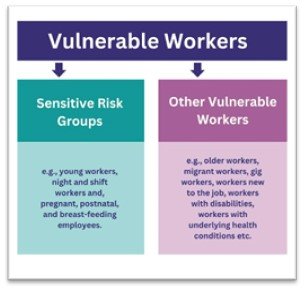
Who Are Vulnerable Workers?
Vulnerable workers are people who may have a higher likelihood of being harmed, or who may require additional support because of personal circumstances or the nature of their work.
| Young or inexperienced May not yet recognize hazards or understand the consequences of unsafe actions. | Pregnant workers & new mothers Some tasks, exposures or working patterns may need to be reviewed as circumstances change. |
| Workers with disabilities May need adapted workstations, accessible routes, warning systems or emergency support. | Older workers Individual capability and work demands should be considered rather than assumptions based on age. |
| Temporary, agency & new workers Often unfamiliar with the site, equipment, local rules and reporting arrangements. | Migrant or language-barrier workers Safety information may need simpler wording, visual cues, demonstrations or translation. |
| Lone workers May have no one nearby to provide immediate assistance if an incident occurs. | Contractors Can be at risk when they are unfamiliar with site-specific hazards and procedures. |
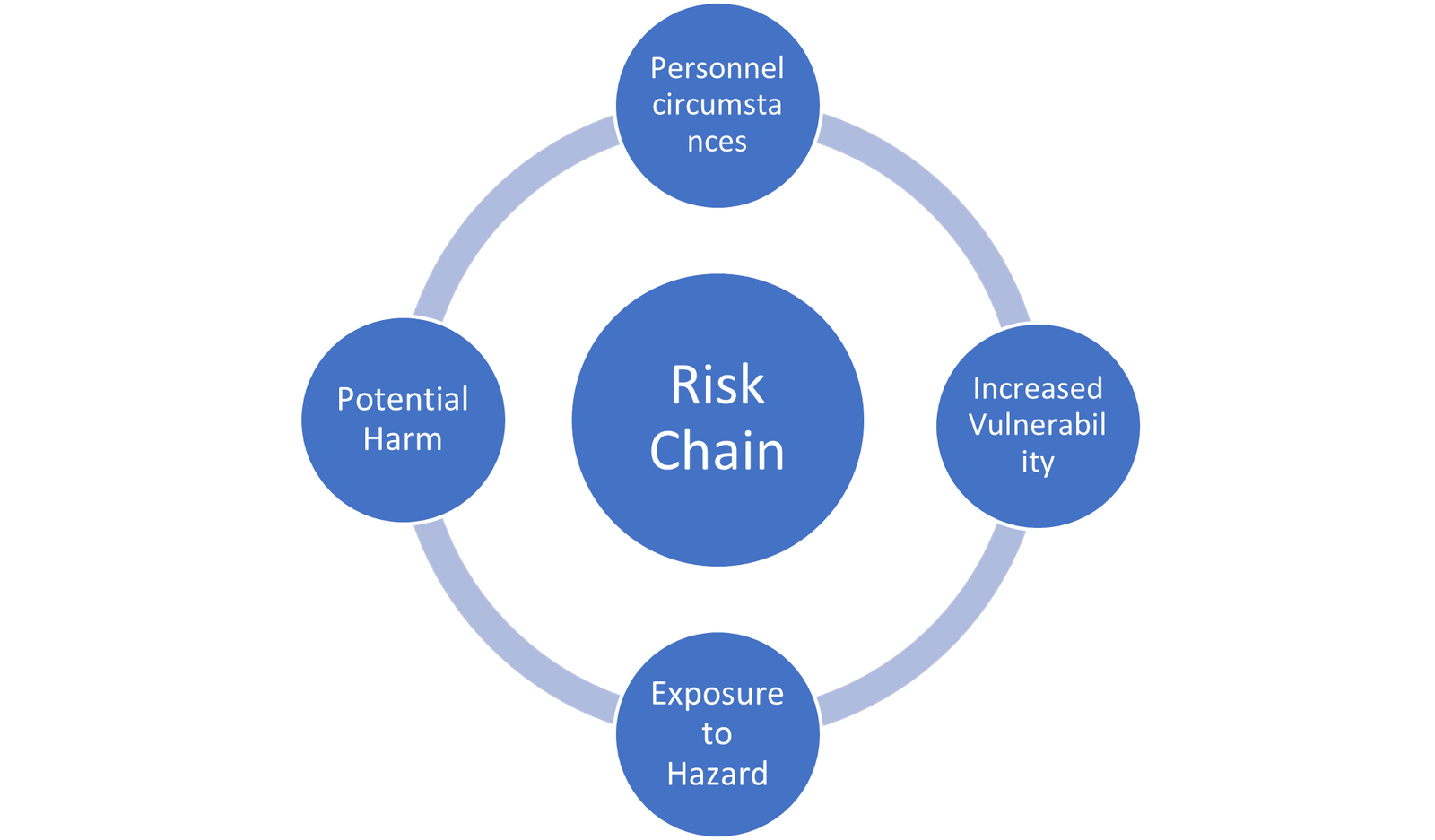
Why Can the Risk Be Greater?
Several factors can increase the likelihood or severity of workplace harm.
For example, a new employee may not yet understand workplace procedures or recognize hazards. A worker with a language barrier may misunderstand an emergency instruction, while a worker with a physical limitation may require an adapted workstation or emergency evacuation arrangement.
Some common contributing factors include:
Lack of experience → Poor hazard recognition → Increased exposure → Higher risk
Other factors may include:
- Inappropriate work equipment
- Poor communicationLimited supervisionUnfamiliarity with emergency proceduresPhysical or sensory limitationsInappropriate work equipment
02 EXPERIENCE, INDUCTION AND SUPERVISION:
Young and Inexperienced Workers
Young workers and new employees may lack the experience needed to identify hazards or judge the consequences of unsafe actions. They may also be less confident about asking questions or reporting unsafe conditions.
| Before work starts Provide a proper induction, explain key hazards and show the worker where to get help. | During the task Give practical training, clear instructions and close supervision where the risk requires it. |
| Check understanding Ask the worker to explain or demonstrate the safe method rather than relying only on a signature. | Build reporting confidence Make it clear that stopping work, asking a question or reporting a concern is expected—not discouraged. |
Temporary, Agency and New Workers
Temporary and agency workers can face extra risk because they may be unfamiliar with the workplace layout, machinery, site-specific hazards, emergency arrangements, reporting procedures and local safety rules.
Give the same standard of safety information as permanent staff.
Provide site induction before the worker starts the task.
Explain task-specific hazards, controls and prohibited activities.
Confirm who supervises the worker and how incidents or defects are reported.
Reinforce emergency arrangements, including alarms, escape routes and assembly points.
| Practical check If a worker is new to the job, ask: “What could they reasonably not know yet?” Then make that information visible, practical and easy to verify. |
03 HEALTH, PREGNANCY AND ACCESSIBILITY:
Pregnant Workers and New Mothers
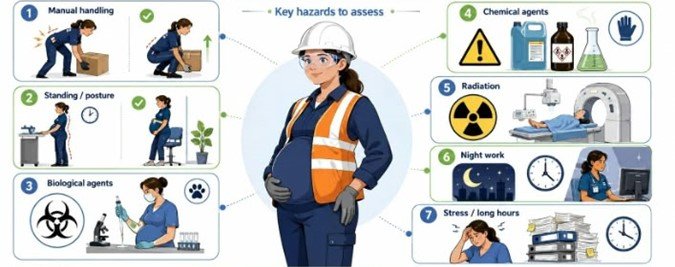
Pregnancy can change a worker’s exposure to certain workplace hazards. Depending on the job, manual handling, awkward postures, prolonged standing, chemicals, heat, radiation, biological agents or long working hours may require additional consideration.
The existing risk assessment should be reviewed to decide whether additional controls or reasonable adjustments are needed. The aim is not to automatically remove a person from work, but to control relevant risks appropriately.
Adjust working conditions where needed.
Temporarily change tasks when a specific exposure cannot be controlled adequately.
Reduce exposure to relevant hazards.
Provide suitable rest arrangements.
Review the assessment again if circumstances change.
Workers with Disabilities or Medical Limitations
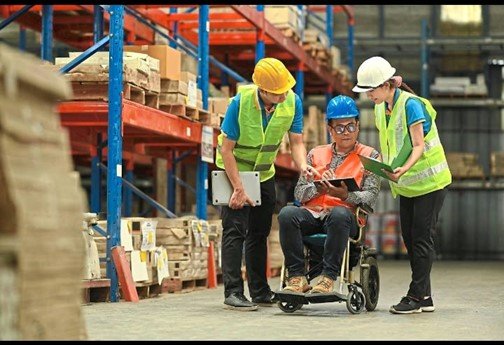
A disability or medical condition does not automatically mean that a person cannot safely perform a job. The better question is: what adjustments or controls can make the work safer and more accessible?
| Workstation Adapt layout, reach distances, seating or controls to suit the worker and task. | Access Keep routes and facilities usable; remove barriers that could delay normal work or evacuation. |
| Equipment Use modified or suitable equipment where a standard arrangement creates avoidable risk. | Warnings Consider visual, audible or other warning methods where one signal may not reach everyone. |
| Emergency support Plan practical assistance in advance rather than improvising during an emergency. | Work method Adjust the sequence, pace or method where it achieves the same task more safely. |
| Avoid assumptions Risk assessment should focus on the worker’s actual needs and the demands of the task. Individual discussion is more useful than making decisions based only on a label or diagnosis. |
Language and Communication Barriers:
Safety information is only useful when workers can understand and act on it.
Where workers have limited understanding of the workplace’s main language, employers should consider:
- Simple and clear language
- Visual safety signs
- Demonstrations
- Translated information where necessary
- Multilingual emergency instructions
- Checking workers’ understanding
Simply providing a written safety document does not guarantee that the worker understands it.
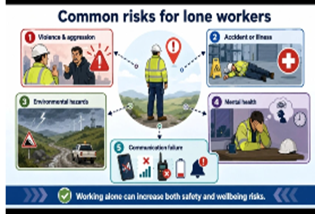
Lone Workers:
Lone workers may face hazards without having another person nearby to provide immediate assistance.
Examples include security personnel, maintenance workers, delivery workers and employees working outside normal hours.
Controls can include:
- Communication systems
- Regular check-ins
- Emergency contact arrangements
- Suitable training
- Location monitoring where appropriate
- Procedures for responding to missed check-ins
A lone-working risk assessment should consider what could go wrong and how quickly assistance can reach the worker.
Emergency Preparedness:
Emergency arrangements should also consider vulnerable workers.
A workplace should ask:
- Can everyone hear the alarm?
- Can everyone understand the emergency instructions?
- Can everyone reach the assembly point safely?
- Does anyone require assistance during evacuation?
- Are emergency routes accessible?
- Are suitable arrangements in place for lone workers?
Emergency plans should be practical, tested and communicated, rather than existing only as written documents,
Employer’s Responsibility:
Employers have a responsibility to provide a workplace where risks are properly identified and controlled.
This involves:
🔍 Identify workers who may require additional consideration
📋 Assess their specific risks
🛠️ Control the hazards appropriately
🗣️ Communicate procedures clearly
👀 Monitor whether controls are effective
🔄 Review arrangements when circumstances change,
Conclusion:
Vulnerable workers may face additional challenges, but these risks can often be effectively managed through proper risk assessment, suitable controls, effective training, communication and supervision.
A truly effective safety system does not ask whether a worker can simply “fit” into existing arrangements. It asks whether the workplace can be adapted to control the risks faced by its people.
Safe workplaces are inclusive workplaces — because effective safety means protecting everyone.