
1. Introduction (Push and Pull Signs):
Push and Pull Signs: Safety signs play an important role in maintaining a safe working environment. Push and Pull signs are commonly installed on doors to indicate the correct opening direction.
These signs help prevent accidents, reduce confusion and ensure the safe movement of employees, visitors and customers in workplaces and public buildings.
2. What Are Push and Pull Signs?
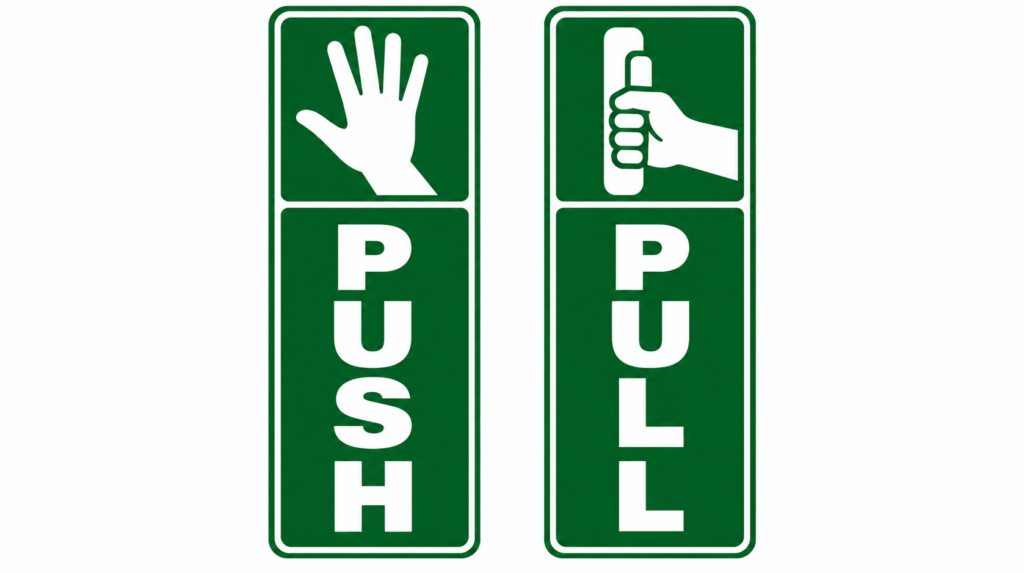
Push and Pull signs are instructional signs that guide people on how to open doors correctly and safely.
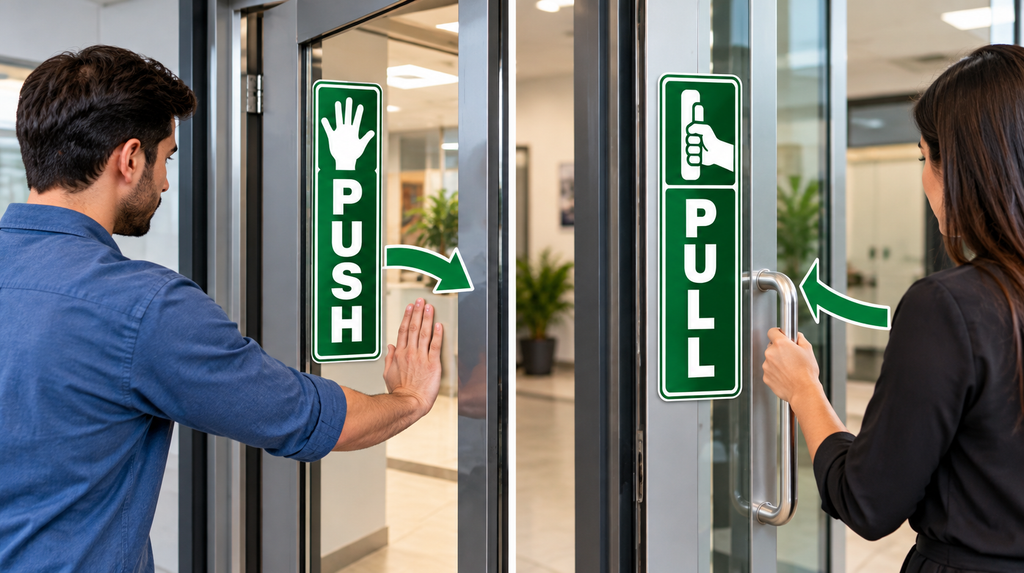
– Push Sign: Indicates that a door should be opened by applying force away from the person. It is commonly used on doors that open outward from the user’s position.
– Pull Sign: Indicates that a door should be opened by pulling it towards the person. It helps prevent unnecessary force and incorrect door operation.
These signs usually contain clear text or symbols for easy identification.
3. Purpose and Benefits:
– Accident Prevention: Reduces the risk of collisions, injuries and other accidents caused by opening doors incorrectly.
– Clear Communication: Provides simple instructions that help employees and visitors understand the correct opening direction.
– Workplace Safety: Promotes safe and organized movement, especially in areas with frequent pedestrian traffic.
– Damage Prevention: Prevents excessive force on door handles, hinges and frames, reducing maintenance costs.
– Improved Accessibility: Clear instructions help users identify the correct door-opening method, although accessible door design is also essential.
4. Areas of Use:
– Offices: Ensures safe and convenient movement of employees and visitors between rooms and departments.
– Hospitals: Helps patients, healthcare workers and visitors operate doors safely in busy areas.
– Factories: Provides clear door-opening instructions to workers in industrial environments.
– Shopping Malls: Reduces confusion and supports smooth pedestrian movement in crowded entrances and exits.
– Warehouses: Helps workers safely operate doors while moving between storage and working areas.
5. Potential Hazards:
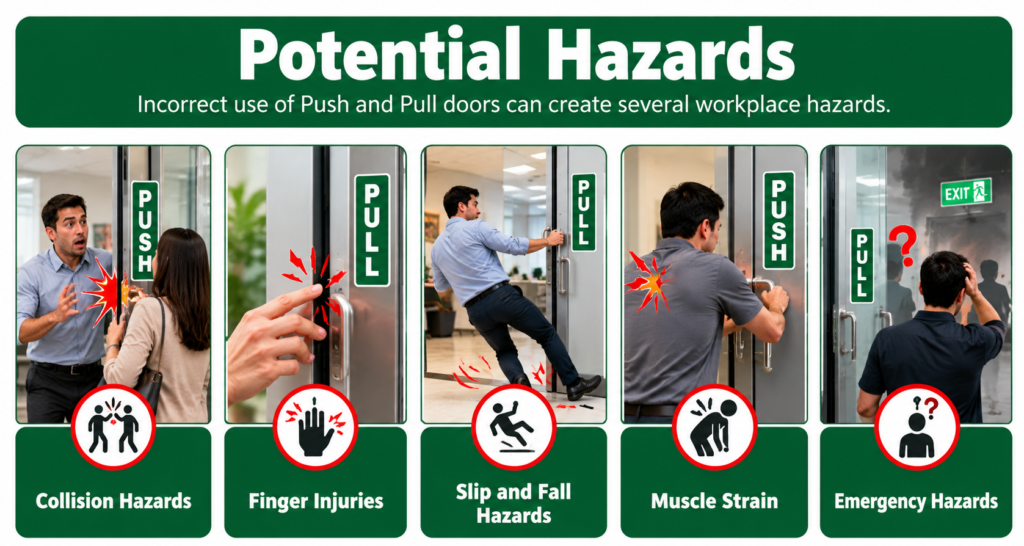
Incorrect use of Push and Pull doors can create several workplace hazards.
– Collision Hazards: Opening doors suddenly may cause collisions with people standing or walking nearby.
– Finger Injuries: Hands or fingers may become trapped between doors and frames, causing painful injuries.
– Slip and Fall Hazards: Applying excessive force to a heavy or stuck door may cause a person to lose balance.
– Muscle Strain: Repeatedly pushing or pulling heavy doors can cause strain to the arms, shoulders and back.
– Emergency Hazards: Incorrect or unclear door signs may create confusion and delay evacuation during emergencies.
6. Safety Precautions:
Proper safety measures should be followed to prevent door-related accidents.
– Proper Signage: Install clear, visible and correctly positioned Push and Pull signs on doors.
– Regular Inspection: Inspect door handles, hinges and closing mechanisms to identify damage or defects.
– Safe Operation: Open doors slowly and carefully, especially in crowded areas or locations with limited visibility.
– Clear Access: Keep entrances, exits and doorways free from obstacles to ensure safe movement.
– Employee Awareness: Educate employees about correct door operation and the importance of following safety signs.
– Emergency Safety: Ensure emergency exit doors meet applicable fire safety requirements and remain accessible.
7. Importance in Emergency Situations:
Push and Pull signs can support safe movement during emergencies when used alongside proper emergency exit signage.
– Safe Evacuation: Clear door-opening instructions help people operate doors correctly while leaving a building.
– Reduced Confusion: Proper signage helps prevent unnecessary delays and supports organized evacuation.
– Emergency Exit Compliance: Exit doors must meet applicable fire and building safety regulations, including requirements for opening direction and emergency operation.
– Unobstructed Exits: Emergency exit routes and doors must remain clear and accessible at all times.
Important: Push and Pull signs are not substitutes for approved emergency exit signs or compliant emergency exit hardware.
8- Proper Placement and Visibility of Signs:
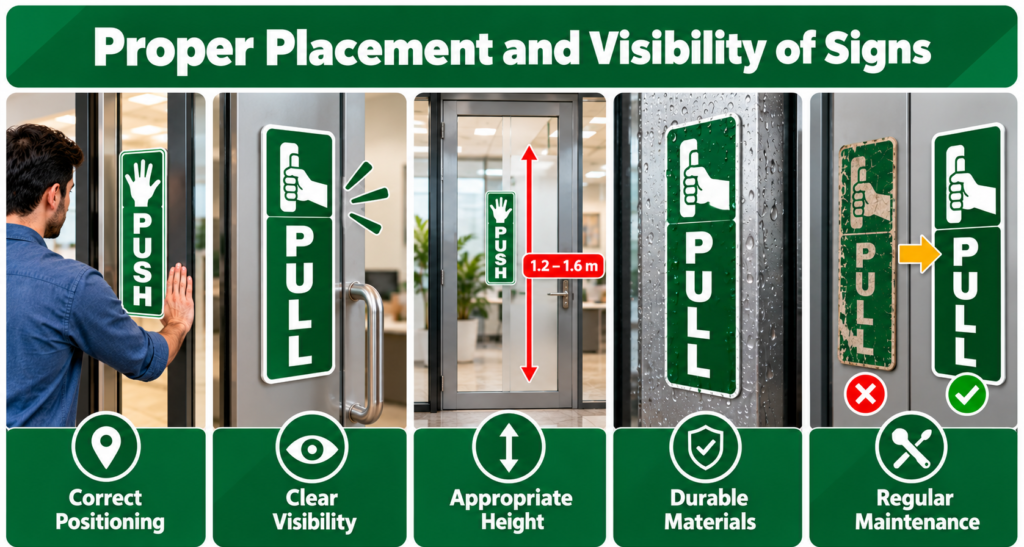
Correct placement and visibility of Push and Pull signs are essential for effective safety communication.
Correct Positioning: Signs should be installed on the appropriate side of the door to indicate the correct opening direction.
Clear Visibility: Signs must be easily visible and readable to prevent confusion and incorrect door operation.
Appropriate Height: Signs should be positioned at a suitable height for easy identification by users.
Durable Materials: Signs should be made from materials that resist fading, moisture and regular wear.
Regular Maintenance: Damaged, faded or missing signs should be replaced promptly to maintain workplace safety.
9. Conclusion:
Push and Pull signs are simple but effective instructional signs that contribute to workplace safety. They provide clear door-opening instructions, reduce the risk of accidents and help prevent injuries and property damage.
Proper installation, regular maintenance and employee awareness are essential for their effectiveness. Following appropriate safety practices helps organizations maintain a safer and more organized working environment.