
1. Introduction (Isolation in Industry):
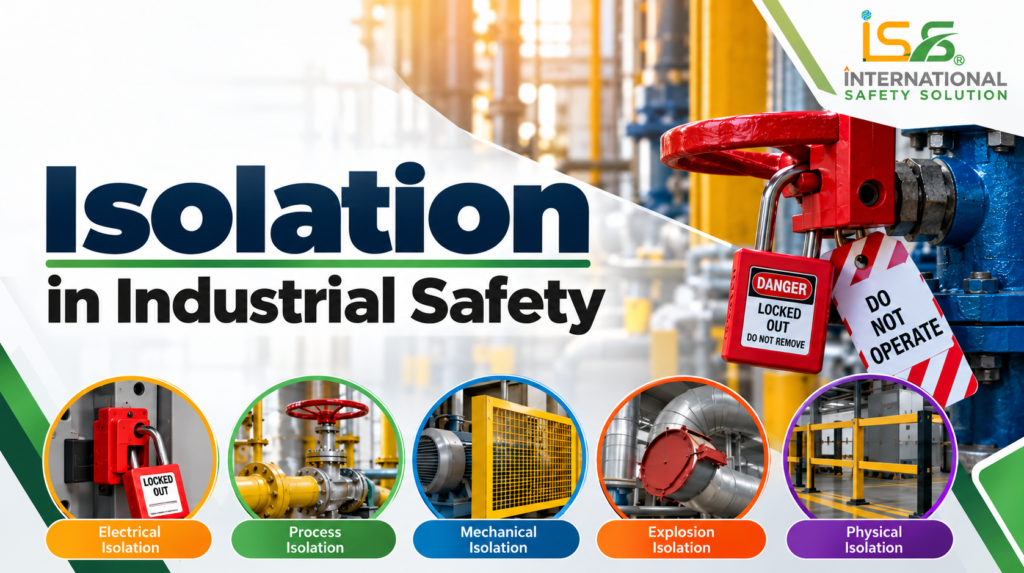
Isolation in Industry: Isolation is an essential safety measure used in industries to separate hazardous energy, equipment, materials or processes from workers and surrounding areas. It helps prevent accidents, equipment damage, fires and explosions during industrial operations and maintenance activities.
2. What Is Isolation?
Isolation is the process of separating or controlling hazardous energy, substances or equipment to prevent unintended exposure, activation or the spread of dangerous conditions.
Key Objectives:
- Prevent accidental equipment startup.
- Protect workers from hazardous energy.
- Control the movement of dangerous substances.
- Limit the spread of fire and explosions.
- Support safe maintenance and industrial operations.
3. Main Methods of Isolation
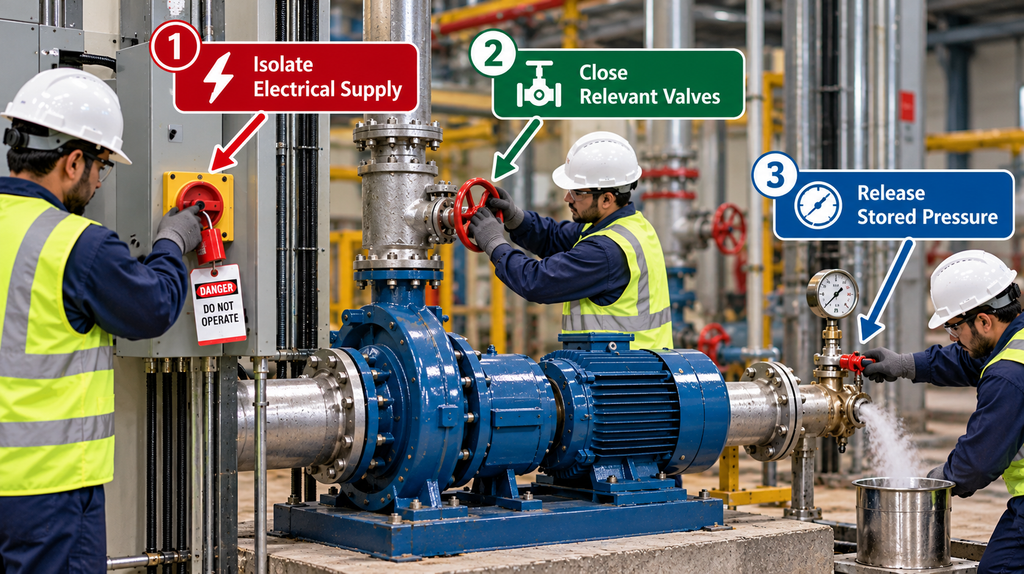
Industrial isolation can be achieved through different methods depending on the hazard.
| Isolation Method | Purpose |
|---|---|
| Electrical Isolation | Disconnects equipment from electrical energy |
| Mechanical Isolation | Prevents movement or operation of machinery |
| Process Isolation | Separates hazardous fluids, gases or chemicals |
| Physical Isolation | Uses barriers or separation to restrict exposure |
| Thermal Isolation | Reduces unwanted heat transfer or exposure |
| Explosion Isolation | Prevents explosion propagation between connected equipment |
4. Active vs. Passive Isolation
| Parameter | Active Isolation | Passive Isolation |
|---|---|---|
| Operation | Detection and activation | Physical or mechanical response |
| Sensors | Usually required | Generally not required |
| Power Supply | Usually required | Generally not required for protective action |
| Examples | Fast-acting valves, chemical barriers | Isolation flap valves, approved passive barriers |
| Maintenance | Detection and activation testing | Mechanical inspection and servicing |
| Application | Engineered automatic safety systems | Suitable passive protection systems |

5. Common Industrial Isolation Techniques
- Lockout/Tagout (LOTO): Secures hazardous energy sources against unintended re-energization.
- Valve Isolation: Controls or blocks hazardous fluid and gas flow.
- Blind Flange / Spade Isolation: Provides positive physical separation within suitable piping systems.
- Double Block and Bleed: Uses two isolation valves and an intermediate bleed arrangement, subject to process-specific suitability.
- Machine Guarding and Barriers: Separates personnel from moving machinery and other hazards.
- Explosion Isolation: Uses approved active or passive devices to stop explosion propagation.
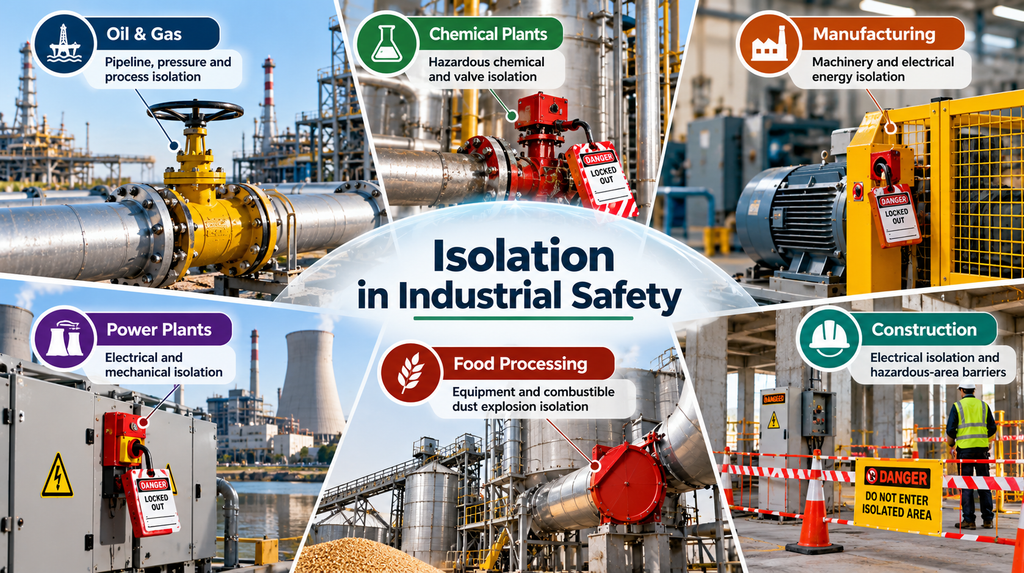
6. Industrial Applications
| Industry | Isolation Application |
|---|---|
| Oil & Gas | Pipeline, pressure and process isolation |
| Chemical Plants | Hazardous chemical and valve isolation |
| Manufacturing | Machinery and electrical energy isolation |
| Power Plants | Electrical and mechanical isolation |
| Food Processing | Equipment and combustible dust explosion isolation |
| Construction | Electrical isolation and hazardous-area barriers |
7. Factors Affecting Isolation Selection:
Effective isolation depends on several important factors:
- Hazard Type: Electrical, mechanical, chemical, thermal or explosion.
- Energy Level: Voltage, pressure, temperature and stored energy.
- Equipment Design: Accessibility, configuration and connection points.
- Exposure Risk: Potential harm to workers or nearby equipment.
- Isolation Reliability: Ability to maintain safe separation.
- Safety Requirements: Applicable standards and manufacturer instructions.

8. Inspection & Safety Measures
- Identify all hazardous energy sources before work.
- Select the correct isolation method for the task.
- Shut down equipment following approved procedures.
- Apply appropriate locking, tagging or physical isolation measures.
- Release or secure stored energy where required.
- Verify effective isolation before starting work.
- Inspect protective devices and maintain proper records.
- Restore equipment only through an authorized procedure.
9. Relevant Safety Standards
| Standard | Application |
|---|---|
| OSHA 29 CFR 1910.147 | Control of hazardous energy (LOTO) |
| NFPA 70E | Electrical safety in the workplace |
| ISO 14118 | Prevention of unexpected machinery startup |
| NFPA 69 | Explosion prevention systems, including explosion isolation |
10. Conclusion
Isolation is a fundamental part of industrial safety that helps protect workers, equipment and facilities from hazardous energy and dangerous processes. Different isolation methods—including electrical, mechanical, process and explosion isolation—provide protection against specific workplace hazards.
Active and passive systems offer additional engineered protection in suitable applications. Proper selection, verification, inspection and maintenance are essential for reliable isolation.
Safety Today | Strong & Secure Tomorrow
International Safety Solution (ISS) — Promoting Safe Industrial Practices.