
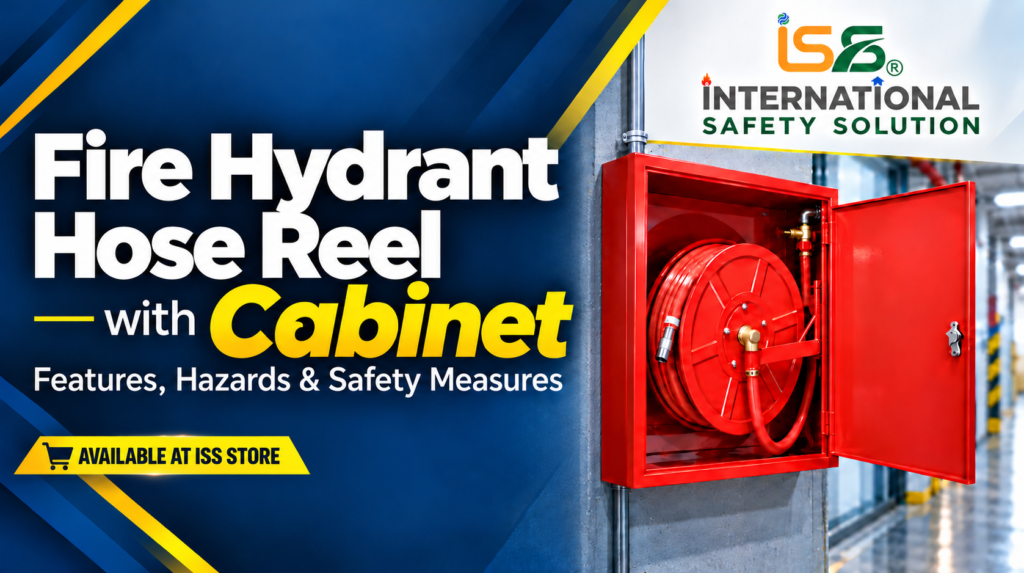
🛒 FIRE HOSE REEL WITH CABINET — AVAILABLE AT ISS STORE
Fire Hose Reel with cabinet provides an accessible water supply for controlling small fires involving suitable combustible materials. The reel stores the hose neatly, while the cabinet helps protect the equipment from dust, accidental damage and unauthorized interference.
However, installing a cabinet alone does not ensure fire readiness. Correct positioning, a reliable water supply, regular maintenance and trained personnel are essential.
1. What Is a Fire Hose Reel with Cabinet?
A fire hose reel is a fixed firefighting device connected to a building’s water supply. Its hose can be unwound to direct water toward a small fire.
The cabinet houses the reel and associated equipment in a designated location. Unlike a portable water extinguisher, the hose reel can supply water continuously while an adequate water supply remains available. It is intended for small fires involving materials such as paper, wood and textiles.
A hose reel and a fire hydrant outlet are different devices. A cabinet may contain a hose reel, a hydrant outlet or both; the contents and specifications should be checked before selection.
2. Main Components and Their Functions
| Component | Purpose |
|---|---|
| Hose Reel Drum | Stores the hose and allows controlled unwinding. |
| Hose | Carries water from the supply to the nozzle. |
| Control Nozzle | Controls the discharge of water. |
| Supply Valve | Controls water entering the hose reel. |
| Cabinet | Houses and helps protect the equipment. |
| Mounting Assembly | Secures the reel and cabinet to a suitable supporting surface. |
| Signage and Instructions | Help users locate the equipment and understand its operation. |

Hose length, diameter, operating pressure and cabinet dimensions vary by model and should be confirmed from the manufacturer.
3. Common Workplace Applications
| Workplace | Typical Fire Hazards Relevant to Hose Reel Selection |
|---|---|
| Warehouses | Cardboard cartons, wooden pallets and paper packaging. |
| Textile Facilities | Fabrics, cotton and other combustible stock. |
| Offices | Paper records and wooden furnishings. |
| Shopping Malls | Combustible retail stock and packaging. |
| Manufacturing Facilities | Suitable solid combustible materials in production or storage areas. |
Suitability depends on the actual hazards, building layout and fire protection design. The presence of ordinary combustibles does not automatically make water safe where electrical equipment, chemicals or flammable liquids are also involved.
4. Key Benefits
- Accessible Firefighting Equipment: Provides a fixed, identifiable location for trained responders.
- Organized Hose Storage: Keeps the hose arranged and helps prevent tangling.
- Protective Housing: Reduces exposure to accidental contact and everyday contamination.
- Water Availability: Supports sustained application where the supply and system remain adequate.
- Workplace Preparedness: Complements alarms, extinguishers, evacuation arrangements and staff training.
A hose reel forms part of a wider fire safety system; it does not replace other equipment required for different hazards.
5. Hazards and Preventive Measures
Hazards can arise from incorrect use, poor installation, equipment defects and blocked access.
| Hazard | Possible Consequence | Preventive Measure |
|---|---|---|
| Use on energized electrical equipment | Electric shock or electrocution. | Do not apply water; follow the emergency plan and use equipment suitable for the hazard. |
| Use on flammable liquids or hot cooking oil | Burning material may spread or splash. | Select firefighting equipment specifically suitable for the material. |
| Blocked cabinet access | Delays in reaching or deploying the hose. | Keep stock, furniture and pallets clear of the cabinet. |
| Cabinet door cannot open fully | Hose deployment becomes difficult. | Provide adequate door clearance and check it during inspections. |
| Damaged or leaking hose | Reduced water delivery and wet floors. | Report defects and arrange repair or replacement by a competent technician. |
| Kinked or tangled hose | Restricted flow or difficulty advancing the hose. | Store it correctly and check that it deploys freely. |
| Inadequate water pressure or flow | Ineffective firefighting performance. | Arrange system testing against the approved design and manufacturer’s requirements. |
| Loose mounting or corrosion | Equipment movement, detachment or injury. | Inspect supporting surfaces, fixings and cabinet condition. |
| Hose across a walkway | Trips and interference with evacuation. | Keep escape routes usable and avoid obstructing evacuating occupants. |
| Hose through a fire doorway | Prevents the fire door from closing. | Avoid arrangements that compromise fire compartmentation. |
| Smoke, heat or a growing fire | Burns, smoke inhalation or entrapment. | Withdraw immediately and evacuate. |
| Untrained use or delayed evacuation | Incorrect actions and prolonged exposure. | Train designated personnel and establish clear limits for intervention. |

Fire service guidance specifically warns against water use on electrical fires. Government guidance also highlights the risk of deployed hoses preventing fire doors from closing and encouraging people to fight a fire for too long.
6. Installation and Positioning
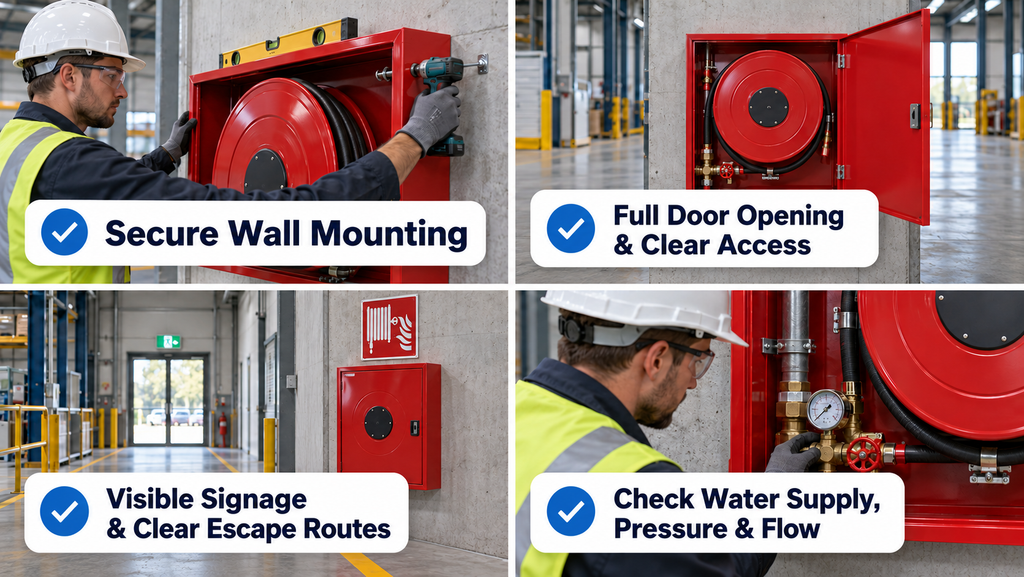
Installation should be planned and completed by competent personnel according to the approved fire protection design.
Key considerations include:
- Secure Support: Fix the cabinet and reel to a surface capable of supporting their operating loads.
- Correct Orientation: Position the reel so the hose can unwind without catching on the cabinet or nearby objects.
- Clear Access: Allow the cabinet door to open fully.
- Suitable Coverage: Assess the actual hose route around partitions, storage and machinery.
- Reliable Water Supply: Confirm the required flow and pressure through testing.
- Visible Identification: Provide clear signage and readable instructions.
- Safe Escape Routes: Avoid positioning or hose routes that obstruct exits or fire doors.
An accessible cabinet with a fully opening door is a practical requirement for effective deployment.
7. Inspection and Maintenance
Routine Visual Checks
Check that:
- The cabinet remains accessible and clearly identified.
- The door, hinges and handle operate properly.
- The hose and nozzle show no obvious damage.
- Connections have no visible leaks.
- The reel and cabinet remain securely mounted.
- Instructions and service information are readable.
Professional Servicing
A competent technician should assess hose condition, valve and nozzle operation, reel movement, mounting integrity and water delivery. Defects, repairs and test results should be recorded.
Follow the manufacturer’s instructions and applicable local requirements for servicing intervals. UK government guidance recommends regular visual checks and more formal maintenance at least annually; this is a reference point rather than a universal local requirement.
After use, arrange inspection and restoration to service before treating the equipment as ready again.
8. Safe Use and Emergency Priorities
When fire is discovered, raise the alarm, notify the emergency response team and begin the workplace evacuation procedure.
Only trained, authorized personnel should consider using a hose reel when:
- The fire is small and involves suitable materials.
- Conditions remain tenable, without dangerous smoke or heat.
- A clear escape route remains available.
- The workplace emergency plan permits intervention.
Follow the operating instructions for the installed model. If the fire grows, water delivery is inadequate or escape becomes uncertain, stop and evacuate. Staff expected to use hose reels need appropriate training.
9. Practical Workplace Example
Packaging Warehouse Inspection
During a routine inspection, a supervisor finds cartons blocking a hose reel cabinet. The door opens only halfway, and a connection shows signs of leakage.
Corrective actions:
- Move the cartons and mark a clear access area.
- Restore full cabinet-door movement.
- Report the leak and arrange competent repair.
- Check hose deployment and water delivery during servicing.
- Update the inspection record and brief warehouse staff.
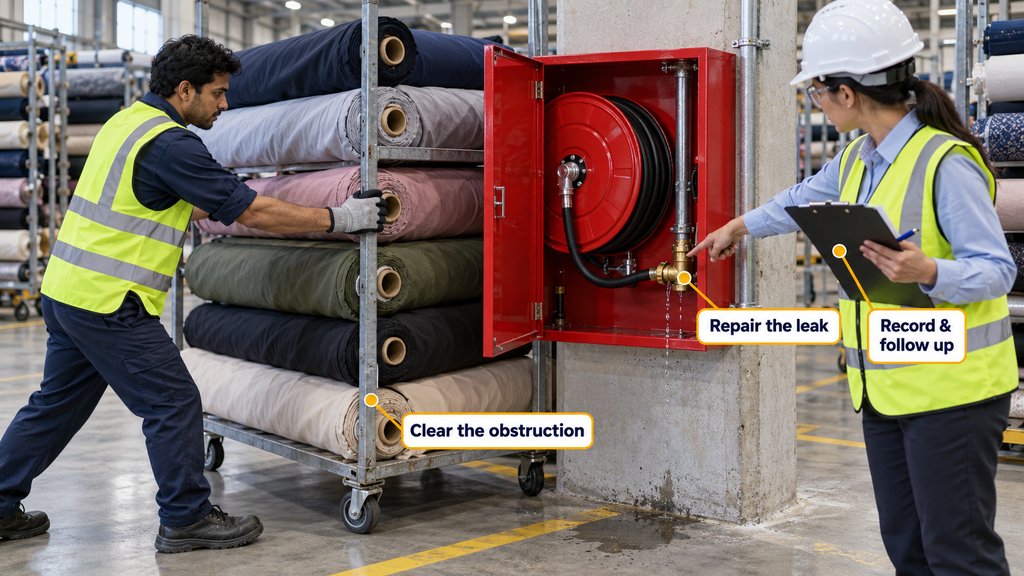
This example shows why equipment availability must be checked in practice: a visible cabinet may still be difficult to access or unfit for use.
10. Choosing the Right Equipment
Before purchasing, confirm the hose specifications, cabinet dimensions, mounting arrangement, water supply compatibility and required product documentation. Selection should suit the site’s hazards and fire protection design.
Contact International Safety Solution (ISS) for product specifications and availability.
Safety Today | Strong & Secure Tomorrow