
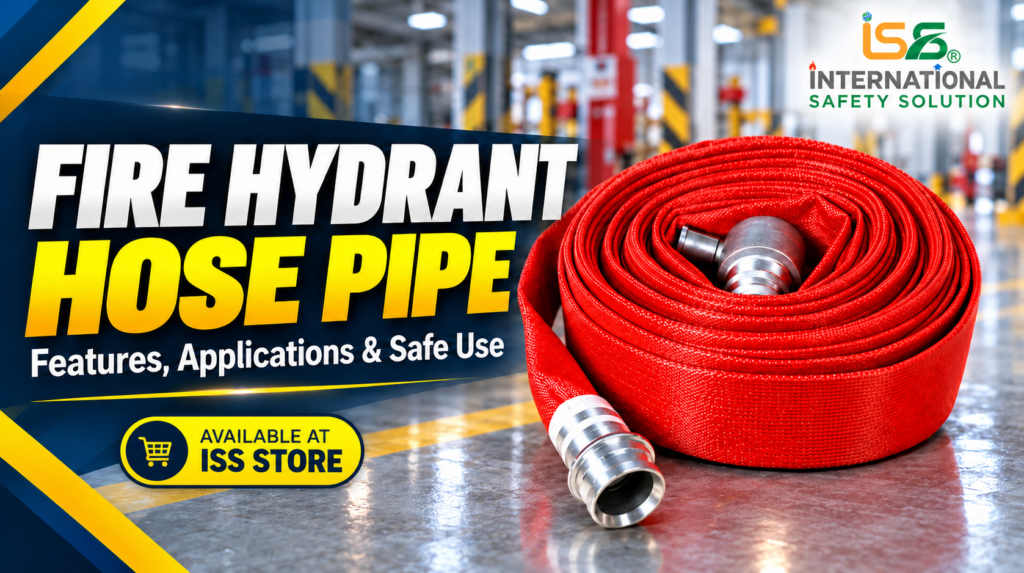
🛒 Fire Hydrant Hose Pipe – Available at ISS Store
A fire hydrant hose pipe carries water from a suitable hydrant or standpipe outlet to a firefighting nozzle. It helps trained personnel direct water towards a fire while keeping a working distance from the affected area.
In factories, warehouses and commercial buildings, having a hose available is only part of preparedness. Its condition, compatibility, accessibility and correct operation also matter.
What Is a Fire Hydrant Hose Pipe?
A fire hydrant hose pipe is a flexible hose used to deliver firefighting water. Many are layflat hoses, which flatten when empty and can be rolled for storage.
Metal couplings connect the hose to compatible equipment. The complete arrangement usually includes a water supply, hydrant valve, hose and suitable nozzle.
A layflat hydrant hose differs from a hose reel: a hose reel normally holds a semi-rigid hose on a rotating drum, while a layflat hose is deployed from its stored roll or rack.
Main Components:
| Component | Purpose |
|---|---|
| Hose body | Carries water from the outlet to the nozzle. |
| Couplings | Connect the hose to compatible outlets, nozzles or other hose sections. |
| Coupling seals | Help prevent leakage at connections. |
| Nozzle or branch pipe | Directs and controls the water discharge. |

Key Features & Benefits:
- Flexible handling: Allows deployment along suitable access routes.
- Compact storage: Layflat construction can be rolled when empty.
- Connectable design: Compatible couplings allow connection to firefighting equipment.
- Directed water delivery: A suitable nozzle helps trained operators control the discharge.
Hose length, diameter, working pressure and coupling type must match the installed system. These specifications should be verified before purchase or use.
Common Applications:
Fire hydrant hoses form part of firefighting arrangements in:
- Factories and industrial facilities.
- Warehouses and distribution centres.
- Shopping malls and commercial buildings.
- Hospitals, campuses and large institutional premises.
Their suitability depends on the building’s firefighting system and the hazards present.
Common Hazards & Preventive Measures:
| Hazard | Preventive Measure |
|---|---|
| Damaged hose or leaking connections | Inspect the hose, couplings and seals; remove defective equipment from service. |
| Sudden movement or nozzle reaction | Use trained personnel, secure handling and controlled valve operation. |
| Kinks or sharp bends | Lay out the hose carefully and keep its route clear. |
| Trips and blocked escape routes | Manage the hose route and maintain safe evacuation access. |
| Incompatible connections or pressure | Verify coupling compatibility and equipment pressure ratings. |
| Use on an unsuitable fire | Confirm the extinguishing method suits the hazard before deployment. |

Water must not be directed onto energized electrical equipment. It may also spread burning flammable liquids or react dangerously with certain materials.
Inspection & Maintenance:
Routine visual checks should cover:
- Cuts, abrasion, cracking, burns or other visible damage.
- Loose, damaged or corroded couplings.
- Missing, worn or damaged seals.
- Signs of leakage, contamination or deterioration.
- Clear access to the hose and associated firefighting equipment.

After use, the hose should be cleaned, drained, dried and stored according to the manufacturer’s instructions. Inspection, servicing and pressure testing should follow the applicable requirements and be carried out by competent personnel.
A visual check alone does not confirm that a hose will perform correctly under pressure.
Practical Example: Warehouse Hose Inspection:
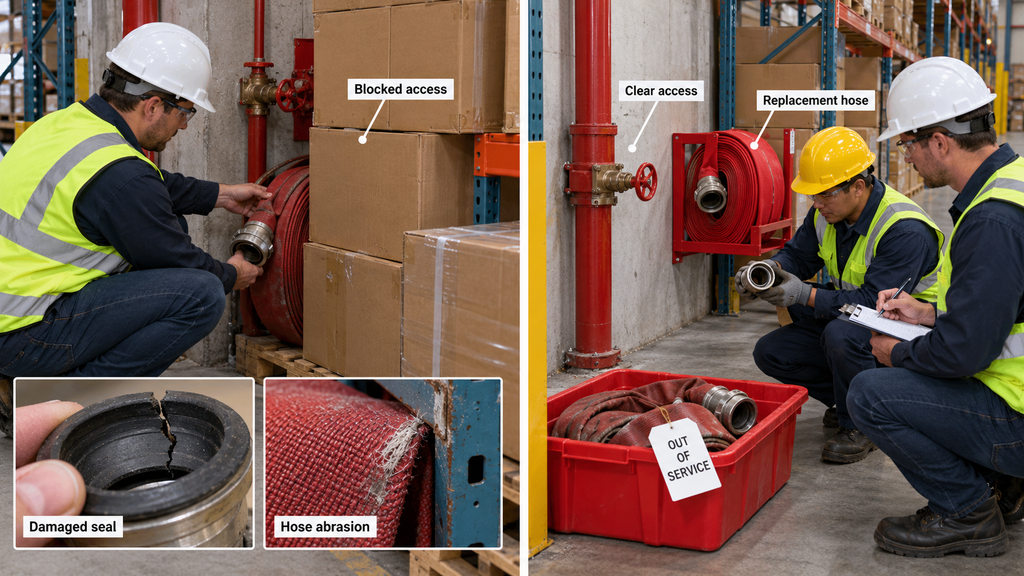
During a warehouse inspection, a supervisor finds a rolled hydrant hose behind stored cartons. One coupling seal is damaged, and the hose shows abrasion where it has rubbed against a metal edge.
Although the hose is present, these defects could delay deployment and cause leakage during an emergency.
Corrective actions:
- Clear access to the hose and hydrant outlet.
- Remove the defective hose from service and arrange a suitable replacement.
- Have competent personnel assess the damage and replace defective components.
- Verify compatibility and complete the required testing before returning it to service.
- Record the findings and improve storage to prevent further damage.
Safe Use During an Emergency
Raise the alarm and follow the site’s emergency plan first. Evacuation should proceed without delay.
Only trained, authorized personnel should deploy a hydrant hose when conditions allow safe intervention. They should maintain an escape route, use suitable equipment and withdraw if smoke, heat or fire growth makes the situation unsafe.
Choose the Right Hose for Your System
Before selecting a fire hydrant hose, confirm its diameter, length, pressure rating, coupling type and compatibility with the existing system. Proper selection and maintenance help ensure the equipment is ready when needed.
Contact ISS for product specifications and compatibility information.
Safety Today | Strong & Secure Tomorrow