
Introduction: Why Understanding Safety Risks Matters
Workplace safety is not just about responding to accidents after they happen. It is about identifying potential risks, understanding why equipment and systems fail, and implementing preventive measures before an incident occurs.
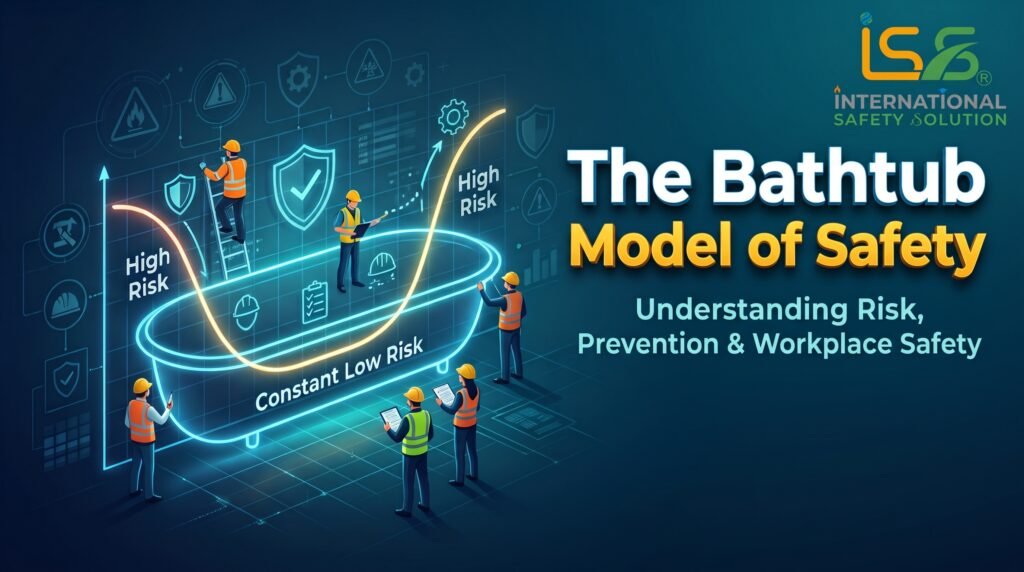
One important concept in reliability engineering is the Bathtub Model of Safety, commonly known as the Bathtub Curve. It illustrates how the failure rate of equipment, machinery, and technical systems changes throughout their operational life.
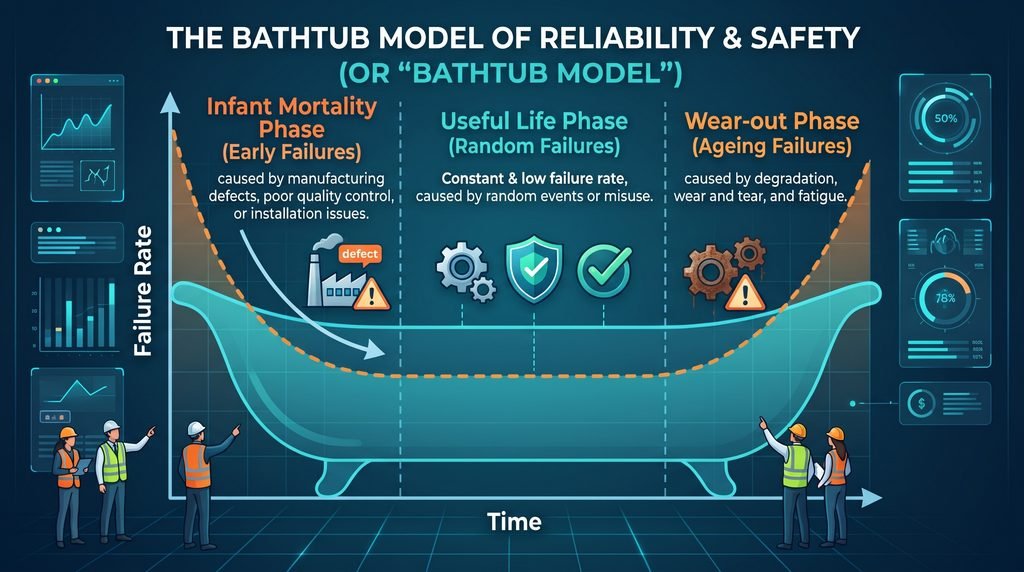
The model gets its name from the shape of its graph, which resembles a bathtub. It explains three important stages of equipment reliability: early-life failures, normal operational life, and end-of-life deterioration.
Understanding this model helps organizations develop better maintenance strategies, improve equipment reliability, minimize operational risks, and create safer working environments.
1. What Is the Bathtub Model of Safety?
The Bathtub Model of Safety is based on the bathtub-shaped failure-rate curve used in reliability engineering. It explains how the likelihood of equipment failure changes over time.
The model divides an asset’s operational life into three main phases:
- Early Failure Stage: Equipment may experience a higher failure rate because of manufacturing defects, installation problems, or commissioning errors.
- Useful Life Stage: Equipment operates relatively consistently, with failures generally occurring due to unexpected events or operating conditions.
- Wear-Out Stage: Equipment becomes older, components deteriorate, and the likelihood of failure increases.
This model is particularly useful in industries where machinery, equipment, and technical systems play an important role in daily operations and workplace safety.
It helps safety professionals understand that equipment reliability requires attention throughout its entire lifecycle, not just when a problem becomes visible.
2. Understanding the Three Stages of the Bathtub Model
Stage 1: Early Failure – Identifying Initial Risks
The first stage represents the beginning of an equipment’s operational life. During this period, the failure rate may initially be high but generally decreases as defects are identified and corrected.
Early failures can occur because of:
- Manufacturing defects and poor-quality components.
- Incorrect equipment installation.
- Improper equipment configuration.
- Inadequate testing and commissioning.
- Incorrect operating procedures.
- Lack of employee training.
- Failure to follow manufacturer instructions.
Practical Workplace Example:
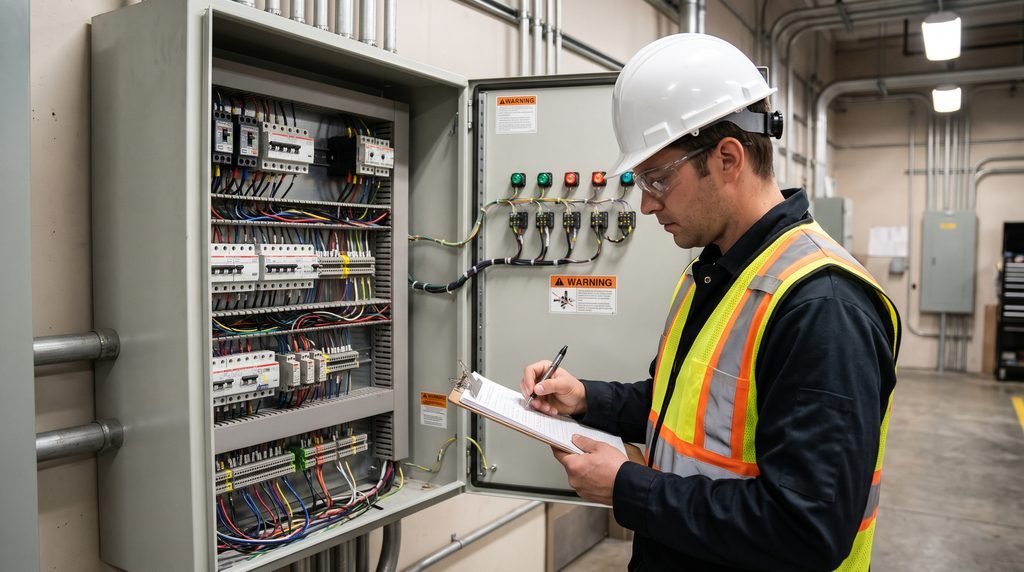
Imagine a manufacturing facility that has recently installed new industrial machinery. During the initial operation, employees notice unusual vibrations, inconsistent performance, and unexpected shutdowns.
Upon inspection, the maintenance team discovers that certain components were incorrectly fitted during installation.
If these issues had remained unnoticed, they could have resulted in equipment damage, operational disruptions, or potential workplace hazards.
How Can Organizations Prevent Early Failures?
- Conduct detailed installation inspections.
- Use quality-tested equipment and components.
- Perform commissioning and functional testing.
- Verify equipment settings and configurations.
- Train employees on proper equipment operation.
- Maintain installation and inspection records.
The primary objective of this stage is to identify and eliminate defects before they become serious safety hazards.
Stage 2: Useful Life – Maintaining Consistent Safety Performance
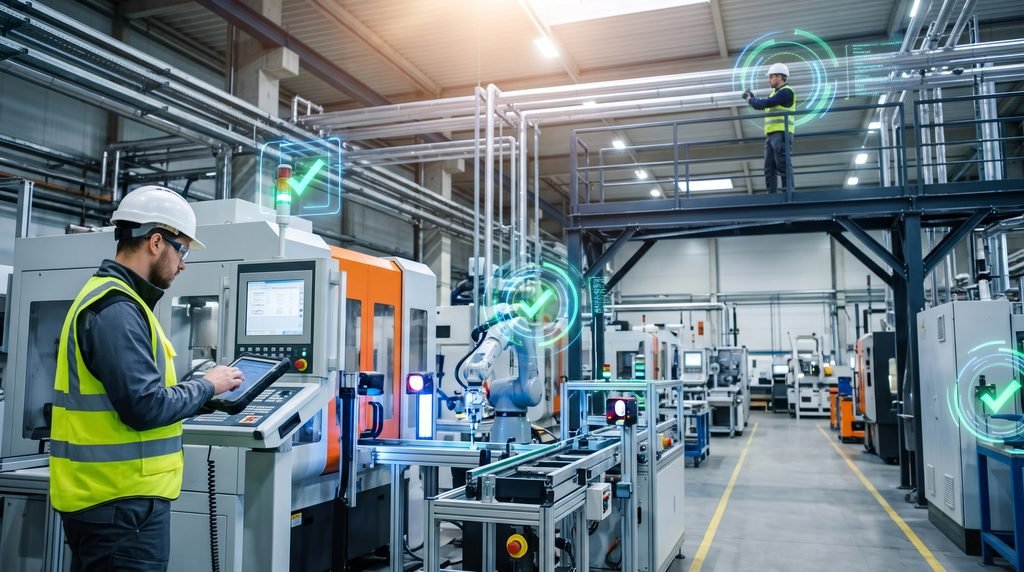
The second stage is known as the useful life or stable operational phase.
During this period, equipment generally operates reliably, and the failure rate remains relatively constant. However, this does not mean that equipment is completely free from risks.
Unexpected failures can still occur due to:
- Electrical fluctuations.
- Improper equipment usage.
- Environmental conditions.
- Overloading of machinery.
- Human error.
- External damage.
- Inadequate routine inspections.
Practical Workplace Example:
Consider a manufacturing company where industrial machinery has been operating successfully for several years.
Although the equipment appears to be in good condition, employees begin noticing occasional overheating and unusual sounds during operation.
These warning signs may indicate developing mechanical problems.
If the organization ignores these issues, a minor fault could eventually cause an unexpected breakdown or create a dangerous working condition.
How Can Organizations Maintain Safety During This Stage?
- Schedule regular equipment inspections.
- Implement preventive maintenance programs.
- Conduct periodic safety audits.
- Monitor equipment performance.
- Maintain proper operating procedures.
- Provide regular employee safety training.
- Record and investigate equipment faults.
The main objective is to maintain reliable performance and prevent unexpected failures from creating dangerous situations.
Stage 3: Wear-Out – Preventing Equipment Deterioration

The third stage represents the period when equipment begins to deteriorate due to aging, repeated use, and environmental exposure.
As equipment approaches the end of its service life, the failure rate may increase significantly.
Common reasons for equipment deterioration include:
- Corrosion and rust.
- Mechanical wear and tear.
- Electrical insulation deterioration.
- Damaged components.
- Material fatigue.
- Exposure to heat, moisture, and dust.
- Aging equipment.
- Lack of proper maintenance.
Practical Workplace Example:
Imagine a factory that continues using industrial machinery beyond its recommended service life.
Over time, its mechanical components begin wearing out, the machine becomes less efficient, and unexpected breakdowns become more frequent.
If management continues operating the equipment without proper inspection or replacement, the risk of workplace incidents may increase.
How Can Organizations Prevent Wear-Out Failures?
- Replace outdated or damaged equipment.
- Follow manufacturer-recommended service intervals.
- Conduct detailed condition assessments.
- Monitor signs of deterioration.
- Maintain equipment replacement schedules.
- Upgrade outdated systems when necessary.
- Remove defective equipment from service when required.
The objective of this stage is to prevent aging equipment from becoming a threat to employees, facilities, and business operations.
3. Why Is the Bathtub Model Important for Workplace Safety?
The Bathtub Model provides organizations with a structured way to understand equipment reliability and plan safety measures throughout an asset’s operational life.
Its importance includes the following:
1. Early Identification of Safety Risks
Organizations can identify installation defects, equipment weaknesses, and operational problems before they result in serious incidents.
2. Better Preventive Maintenance
Understanding equipment failure patterns helps organizations plan inspections, servicing, repairs, and replacements more effectively.
3. Reduced Equipment Downtime
Regular maintenance and timely replacement reduce unexpected breakdowns and interruptions to business operations.
4. Improved Workplace Safety
Maintaining equipment reliability helps reduce the possibility of mechanical failures, equipment malfunctions, and avoidable workplace hazards.
5. Better Safety Planning
The model encourages organizations to consider equipment condition, operational age, and potential failure risks when developing safety policies.
6. Protection of People and Property
Maintaining reliable equipment helps reduce exposure to avoidable hazards and supports a safer working environment.
4. Practical Application of the Bathtub Model in Industrial Environments
The principles of the Bathtub Model can be applied to different types of industrial equipment, machinery, and workplace operations.
For example, consider a manufacturing facility that operates heavy machinery throughout the day.
During the initial stage, management focuses on proper installation, testing, and identifying manufacturing defects.
During the useful life stage, the organization conducts routine inspections, monitors equipment performance, and follows preventive maintenance schedules.
As the machinery becomes older, management pays closer attention to component deterioration, increased maintenance requirements, and signs of wear and tear.
When the equipment reaches a condition where continued operation becomes unreliable or unsafe, the organization arranges appropriate repairs, upgrades, or replacement.
This approach demonstrates how understanding the three stages of the Bathtub Model can help businesses maintain equipment reliability while reducing operational and workplace safety risks.
5. How to Implement the Bathtub Model in Your Organization
Organizations can use the principles of the model to develop a structured equipment safety and reliability program.
Here are seven practical steps:
Step 1: Identify Critical Equipment
Prepare an inventory of important workplace assets, including machinery, tools, electrical equipment, and other operational systems.
Step 2: Assess Equipment Condition
Inspect equipment to identify installation defects, operational problems, damage, and signs of aging.
Step 3: Understand Potential Failure Causes
Determine whether problems are related to manufacturing defects, improper installation, operational stress, human error, or equipment deterioration.
Step 4: Develop a Preventive Maintenance Schedule
Create a maintenance plan based on manufacturer recommendations, equipment condition, operating environment, applicable regulations, and risk assessment.
Step 5: Conduct Regular Safety Inspections
Inspect critical equipment and document findings to ensure that defects are identified and corrected promptly.
Step 6: Replace Unsafe or Outdated Equipment
Do not continue operating equipment that is damaged, unreliable, or unsuitable for safe operation.
Step 7: Monitor and Improve Safety Performance
Review inspection reports, equipment failures, maintenance records, and incident trends to continuously improve workplace safety.
6. Common Mistakes Organizations Should Avoid
Even organizations with established safety policies can make mistakes that compromise equipment reliability.
Some common mistakes include:
- Installing equipment without proper testing.
- Ignoring minor equipment faults.
- Delaying scheduled maintenance.
- Using low-quality replacement components.
- Operating outdated equipment.
- Failing to maintain inspection records.
- Depending entirely on emergency repairs.
- Assuming that equipment is safe simply because it is operational.
A proactive safety approach requires continuous monitoring, professional inspections, and timely corrective action.
7. Best Practices for Long-Term Workplace Safety
To achieve sustainable workplace safety, organizations should follow a proactive approach rather than waiting for equipment to fail.
The following practices can make a significant difference:
- Prioritize prevention over emergency response.
- Inspect critical equipment regularly.
- Follow manufacturer maintenance recommendations.
- Train employees in workplace safety procedures.
- Maintain accurate equipment records.
- Replace damaged and outdated components.
- Conduct periodic risk assessments.
- Encourage employees to report unusual equipment behavior.
- Review maintenance performance regularly.
- Work with qualified safety professionals when necessary.
Remember that workplace safety is a continuous responsibility. Every piece of equipment must be properly installed, inspected, maintained, and replaced when necessary.
Conclusion: Build a Safer Workplace Through Proactive Safety Management
The Bathtub Model of Safety highlights an important principle: equipment reliability changes throughout its operational life.
From early installation defects to unexpected operational failures and eventual equipment deterioration, every stage requires an appropriate safety and maintenance strategy.
Organizations that understand these stages can make better maintenance decisions, reduce equipment-related risks, improve operational reliability, and protect their employees and valuable assets.
Safety should never be treated as a one-time inspection or maintenance activity. It is an ongoing commitment to prevention, protection, and continuous improvement.
Investing in proactive safety management today can help create a safer and more secure workplace tomorrow.