
1.Introduction
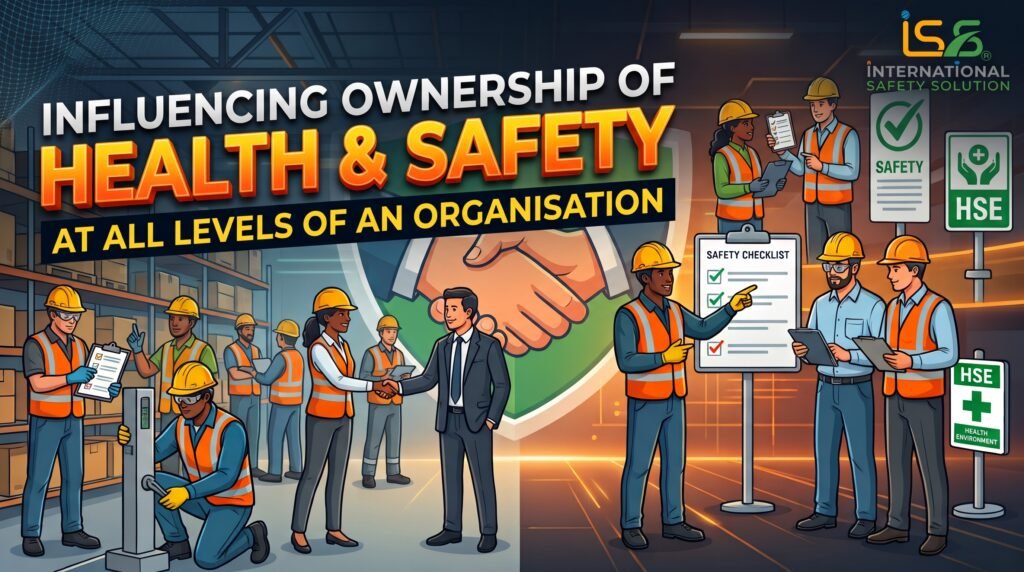
Health and Safety Ownership is essential for developing a positive workplace safety culture and ensuring that every individual within an organisation takes responsibility for preventing workplace incidents. Health and safety should never be considered the sole responsibility of the Health and Safety (HSE) Department. Instead, it must become an integral part of organisational values, leadership decisions, daily operations, and employee behaviour.
Health and Safety professionals play a significant role in influencing ownership by engaging employees, encouraging management accountability, promoting consultation, establishing effective feedback mechanisms, and building strong relationships with organisational stakeholders.
When employees, supervisors, managers, contractors, and senior leaders actively participate in health and safety activities, organisations become better equipped to identify hazards, control risks, improve safety performance, and prevent workplace accidents.
Developing Health and Safety Ownership requires more than implementing policies and procedures. It involves creating an environment where everyone understands their responsibilities, feels empowered to raise concerns, and actively contributes to continuous improvement.
This blog explores how Health and Safety professionals can influence ownership at every organisational level, the importance of participation, management accountability, consultation, and feedback, and the benefits of engaging with stakeholders.
2. Understanding Health and Safety Ownership
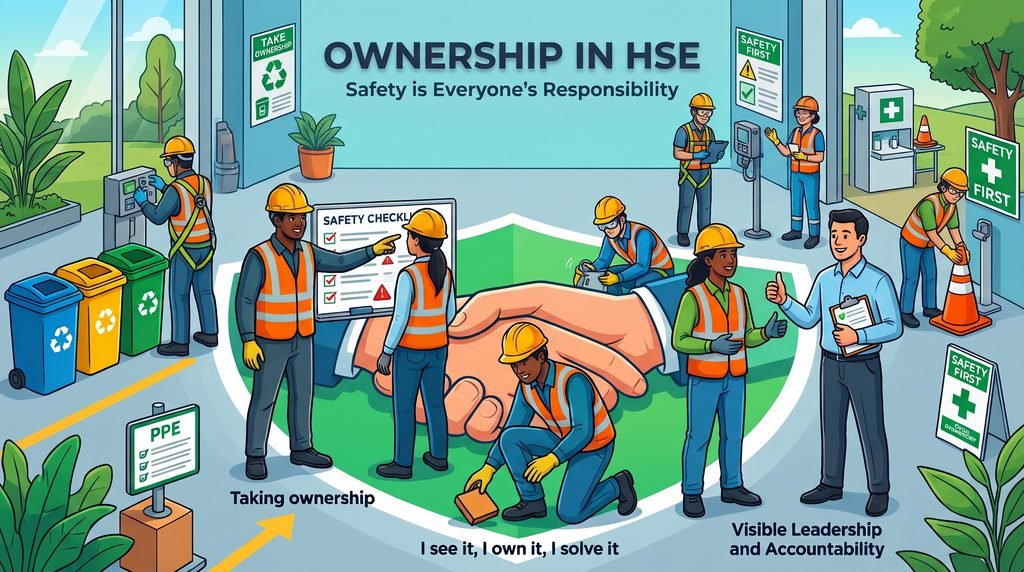
Health and Safety Ownership refers to the commitment of individuals and teams to take responsibility for maintaining safe working conditions and ensuring that health and safety requirements are integrated into everyday activities.
It means that employees do not simply follow safety instructions because management requires them to do so. Instead, they understand the importance of safe behaviour and willingly contribute to preventing workplace hazards.
In an organisation with strong health and safety ownership:
- Senior management demonstrates visible commitment to safety.
- Managers and supervisors take responsibility for safety performance within their departments.
- Employees actively identify and report workplace hazards.
- Contractors follow organisational safety procedures.
- Workers participate in risk assessments and safety discussions.
- Everyone understands their individual health and safety responsibilities.
- Safety improvements are continuously encouraged and monitored.
The ultimate objective is to move from a compliance-based safety culture towards an ownership-based safety culture, where individuals demonstrate personal responsibility and collective commitment.
3. Why Is Health and Safety Ownership Important?
Establishing health and safety ownership is important because workplace safety cannot be achieved through the efforts of one department alone. Every organisational level influences how safety policies are implemented and how risks are controlled.
When health and safety becomes everyone’s responsibility, organisations can achieve several improvements.
3.1 Improved Safety Culture
A strong ownership culture encourages employees to consider safety in their everyday decisions rather than treating it as an additional task. This promotes safe working practices and positive attitudes towards risk management.
3.2 Reduction in Workplace Accidents
Employees who take responsibility for safety are more likely to identify hazards, report unsafe conditions, and follow established control measures, helping reduce workplace incidents.
3.3 Better Employee Engagement
When employees feel that their opinions matter and their contributions are valued, they become more willing to participate in safety initiatives.
3.4 Stronger Leadership Commitment
Health and safety ownership encourages managers to demonstrate leadership through their actions, decisions, resource allocation, and accountability.
3.5 Continuous Improvement
Involving individuals from different organisational levels provides valuable feedback and practical knowledge that can be used to improve existing safety management arrangements.
4. Key Approaches to Influencing Health and Safety Ownership
Health and Safety professionals can influence organisational ownership through four important approaches: participation, management accountability, consultation, and feedback.
4.1 Participation
Participation involves actively engaging employees at all levels in health and safety activities, including hazard identification, risk assessment, workplace inspections, incident investigations, and the development of safety procedures.
When employees participate in safety-related decisions, they develop a stronger sense of responsibility towards their own safety and the safety of others.
How Health and Safety Professionals Can Encourage Participation:
- Involve employees in workplace inspections and hazard identification.
- Encourage workers to report near misses, unsafe acts, and unsafe conditions.
- Establish safety committees with representatives from different departments.
- Involve employees in risk assessments and the development of safe systems of work.
- Encourage participation in toolbox talks and safety campaigns.
- Involve workers in incident investigations and lessons-learned discussions.
- Recognise employees who actively contribute to workplace safety improvements.
Practical Example:
In a manufacturing facility, machine operators are encouraged to participate in risk assessments before new machinery is introduced. Their practical experience helps identify operational hazards that may not be immediately obvious to management or external safety professionals.
This involvement increases employee confidence and encourages ownership of the control measures developed.
4.2 Management Accountability
Management accountability means ensuring that managers and supervisors accept responsibility for implementing, monitoring, and improving health and safety performance within their respective areas of control.
Health and Safety ownership cannot be established if senior management considers safety exclusively the responsibility of the HSE Department.
Health and Safety professionals must influence management to demonstrate visible leadership and take responsibility for safety outcomes.
How Health and Safety Professionals Can Promote Management Accountability:
- Encourage senior management to establish clear health and safety objectives.
- Assign specific safety responsibilities to managers and supervisors.
- Include health and safety performance indicators in management reviews.
- Ensure adequate resources are allocated for safety improvements.
- Encourage management participation in workplace safety inspections.
- Monitor the completion of corrective and preventive actions.
- Hold managers accountable for addressing identified safety deficiencies.
- Promote visible leadership through management safety visits and engagement.
- Integrate health and safety considerations into operational and business decisions.
Practical Example:
A warehouse manager is made responsible for ensuring that forklift operations comply with established traffic management procedures. Regular inspections, incident reviews, and performance monitoring help ensure that safety responsibilities are fulfilled.
Management accountability ensures that safety is incorporated into everyday operational decisions rather than being treated as a separate HSE activity.
4.3 Consultation
Consultation involves seeking employees’ views, opinions, and suggestions before making decisions that may affect their health and safety.
It provides an opportunity for workers and management to communicate openly, discuss workplace hazards, and contribute to decisions regarding safety arrangements.
Consultation is particularly important because employees performing daily operational tasks often have valuable practical knowledge about workplace risks.
How Health and Safety Professionals Can Facilitate Consultation:
- Conduct regular safety meetings with employees and management.
- Consult workers before introducing new equipment or work procedures.
- Seek employee input when developing risk assessments.
- Discuss proposed workplace changes that may affect safety.
- Establish effective communication channels between workers and management.
- Involve employee representatives in health and safety committees.
- Encourage open discussions without fear of blame or retaliation.
- Consider employee suggestions when reviewing existing safety procedures.
Practical Example:
Before introducing a new chemical substance into a production process, management consults employees and HSE professionals to discuss exposure risks, handling procedures, storage requirements, and necessary control measures.
This allows employees to understand the potential risks and contribute to developing practical preventive arrangements.
4.4 Feedback
Feedback is the process of communicating information about health and safety performance, addressing employee concerns, and informing stakeholders about actions taken to improve workplace safety.
Employees are more likely to participate in safety initiatives when they know their concerns are being heard and acted upon.
Without effective feedback, workers may lose confidence in reporting systems and become less motivated to contribute to safety improvements.
How Health and Safety Professionals Can Establish Effective Feedback Mechanisms:
- Communicate the results of workplace inspections.
- Inform employees about actions taken following hazard reports.
- Share lessons learned from incidents and near misses.
- Provide regular updates on health and safety performance.
- Recognise and appreciate employee safety suggestions.
- Inform employees when corrective actions have been completed.
- Use noticeboards, digital platforms, meetings, and safety briefings to communicate improvements.
- Encourage two-way communication between management and employees.
- Review employee feedback to identify recurring safety concerns.
Practical Example:
An employee reports a damaged electrical cable through the workplace hazard reporting system. The maintenance team replaces the cable, and the HSE Department communicates the corrective action to the employee and relevant department.
This creates confidence in the reporting process and encourages further participation.
5. Benefits of Health and Safety Professionals Engaging with Stakeholders
Stakeholder engagement is an essential responsibility of Health and Safety professionals. Stakeholders may include senior management, employees, supervisors, contractors, suppliers, regulatory authorities, clients, and other relevant parties.
Effective engagement enables Health and Safety professionals to influence decisions, build cooperation, address concerns, and ensure that health and safety objectives are understood and supported throughout the organisation.
5.1 Builds a Positive Health and Safety Culture
Engaging with stakeholders encourages shared responsibility and develops an organisational culture in which everyone recognises their contribution to workplace safety.
5.2 Increases Employee Ownership
When employees are involved in safety decisions, they become more committed to implementing procedures and identifying workplace hazards.
5.3 Improves Communication and Collaboration
Regular interaction between HSE professionals, management, and employees improves information sharing and reduces communication gaps.
5.4 Supports Better Decision-Making
Stakeholder engagement provides access to practical knowledge, technical expertise, and operational experience, helping organisations make informed safety decisions.
5.5 Strengthens Management Commitment
Engaging senior management helps demonstrate the business and moral importance of health and safety, encouraging leadership support and resource allocation.
5.6 Improves Hazard Identification and Risk Control
Employees, contractors, and supervisors have different perspectives on workplace activities. Their involvement can help identify hazards that may otherwise remain unnoticed.
5.7 Encourages Continuous Improvement
Stakeholder feedback helps identify weaknesses in existing safety arrangements and provides opportunities to improve policies, procedures, and control measures.
5.8 Reduces Workplace Incidents and Accidents
Better communication, employee involvement, and effective safety controls contribute to reducing unsafe conditions, incidents, injuries, and occupational illnesses.
5.9 Enhances Legal and Regulatory Compliance
Engagement helps ensure that relevant stakeholders understand their legal duties and cooperate in meeting applicable health and safety requirements.
5.10 Strengthens Trust and Professional Relationships
Open communication and consistent follow-up build trust between HSE professionals, employees, contractors, and management.
5.11 Improves Organisational Reputation
A strong safety culture demonstrates organisational commitment to employee welfare, responsible operations, and professional standards, enhancing stakeholder confidence.
5.12 Supports Business Continuity and Productivity
Effective stakeholder engagement helps prevent disruptions caused by workplace incidents, equipment damage, unsafe practices, and regulatory non-compliance.
6. Strategies Health and Safety Professionals Can Use to Influence Ownership
Influencing health and safety ownership requires strong communication, interpersonal, leadership, and negotiation skills. HSE professionals must understand organisational priorities and use appropriate influencing techniques to gain support from different stakeholders.
The following strategies can help establish a sustainable ownership culture.
6.1 Demonstrate the Business Benefits of Safety
Present health and safety improvements in terms of their benefits to employees and the organisation. Explain how effective risk management can reduce downtime, equipment damage, compensation costs, and operational disruption.
6.2 Lead by Example
HSE professionals should demonstrate the behaviours they expect from others. Consistently following safety procedures and actively participating in workplace safety activities helps build credibility.
6.3 Communicate According to the Audience
Different stakeholders have different responsibilities and priorities. Senior management may focus on organisational performance, while employees may be more concerned with practical workplace hazards.
Communication should therefore be adapted to the audience.
6.4 Recognise Positive Contributions
Recognising employees and teams for good safety practices encourages participation and reinforces positive behaviour.
6.5 Use Evidence to Influence Decisions
Incident reports, inspection findings, audit results, risk assessments, and performance indicators provide evidence that can support recommendations for safety improvements.
6.6 Build Strong Working Relationships
Developing professional relationships with managers, supervisors, employees, and contractors makes it easier to discuss safety concerns and gain cooperation.
6.7 Encourage Open Communication
Create an environment where employees can report hazards, discuss concerns, and suggest improvements without fear of unfair blame.
6.8 Monitor and Review Progress
Establish measurable safety objectives, review performance regularly, and communicate improvements to relevant stakeholders.
7. Challenges in Establishing Health and Safety Ownership
Although stakeholder engagement and employee participation provide significant benefits, HSE professionals may encounter several challenges when influencing organisational behaviour.
| Common challenge | Recommended approach |
| Lack of management commitment | Present evidence and demonstrate business benefits |
| Employee resistance | Encourage involvement and explain the purpose of safety measures |
| Poor communication | Establish regular two-way communication channels |
| Limited financial resources | Prioritise risks and justify necessary investment |
| Lack of safety awareness | Provide relevant training and practical guidance |
| Blame culture | Encourage fair reporting and learning from incidents |
| Conflicting operational priorities | Integrate safety into operational planning |
| Lack of follow-up | Assign responsibilities and monitor corrective actions |
Overcoming these challenges requires patience, consistency, professional credibility, and the ability to influence people at different organisational levels.
8. Measuring the Effectiveness of Health and Safety Ownership
Organisations should monitor whether their efforts to develop health and safety ownership are producing meaningful improvements.
Some useful performance indicators include:
- Employee participation in safety meetings.
- Number of hazards and near misses reported.
- Percentage of corrective actions completed on time.
- Management participation in safety inspections.
- Employee feedback and safety satisfaction surveys.
- Participation in risk assessments.
- Completion of safety training programmes.
- Results of workplace inspections and audits.
- Improvements in incident and injury trends.
Both leading and lagging indicators should be considered.
Leading indicators measure proactive safety activities, such as inspections, training, and employee participation. Lagging indicators measure outcomes, such as injuries, incidents, and lost-time accidents.
Using both provides a more balanced understanding of organisational safety performance.
9. Conclusion: Making Health and Safety Everyone’s Responsibility
Influencing ownership of health and safety at all organisational levels is essential for building a strong and sustainable safety culture.
Health and Safety professionals must move beyond simply enforcing rules and procedures. Their role should include influencing behaviour, engaging stakeholders, encouraging employee participation, strengthening management accountability, facilitating consultation, and establishing effective feedback systems.
When employees are actively involved, managers accept responsibility, and stakeholders work collaboratively, health and safety becomes an integral part of organisational decision-making and daily operations.
True Health and Safety Ownership is achieved when everyone understands their responsibilities, actively contributes to risk prevention, and recognises that safety is a shared organisational commitment.
The ultimate goal is not simply to create a workplace where people follow safety rules, but to develop an organisation where people genuinely believe in safety, take responsibility for it, and continuously work towards improvement.
Recommended Further Reading and References
For additional technical and professional understanding, consider the following resources:
- ISO 45001:2018 – Occupational Health and Safety Management Systems, particularly Clause 5 (Leadership and Worker Participation).
- ILO-OSH 2001 – Guidelines on Occupational Safety and Health Management Systems.
- HSE UK – Worker Involvement in Health and Safety.
- HSE UK – Leadership and Worker Engagement.
- https://learner.internationalsafetysolution.com/blogs/health-safety-professionals-change-management/