
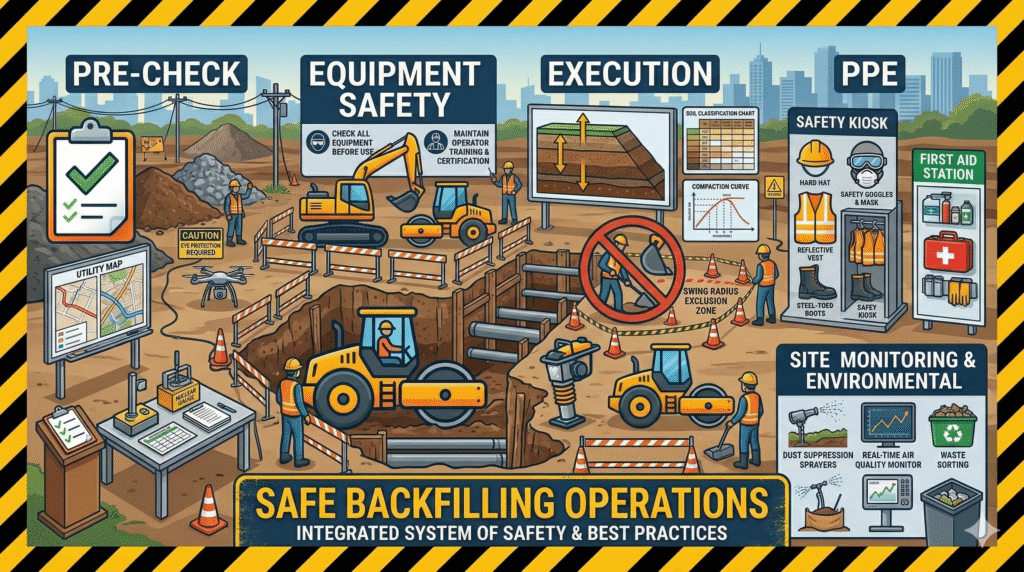
Backfilling is a common activity in construction that involves refilling soil or other suitable material into an excavation after completing work such as foundations, pipelines, or underground utilities. While backfilling helps restore ground level and support structures, it can also introduce several safety hazards if not managed properly. Effective planning and adherence to safety practices recommended by organizations such as Occupational Safety and Health Administration are essential to protect workers and maintain site stability.
Understanding Backfilling Work
Backfilling typically takes place after excavation and installation activities. The process includes placing soil or selected material back into a trench or foundation area and compacting it in layers to ensure stability.
This process may involve heavy equipment such as excavators, loaders, dump trucks, and compactors, which can create additional safety risks for workers if proper precautions are not followed.
Major Hazards Associated with Backfilling
- Trench Collapse or Soil Failure
One of the most serious hazards during backfilling is trench or soil collapse. Unstable soil conditions can cause the sides of an excavation to fall inward, potentially burying workers or damaging installed utilities.
Control Measures
Workers should not remain inside the trench during backfilling operations.
Proper shoring, shielding, or trench boxes should be used where required.
Soil conditions must be inspected by a competent person before work begins.
Excavation safety procedures must be followed throughout the process.
- Struck-by Moving Machinery
Backfilling operations often involve heavy machinery such as loaders, excavators, and dump trucks. Workers working nearby may be struck by moving equipment if communication and control systems are not in place.
Control Measures
Establish clear equipment operating zones.
Use a trained signalman or banksman to guide machinery.
Ensure machinery is equipped with reverse alarms and warning lights.
Workers should wear high-visibility safety vests.
- Damage to Underground Utilities
Excavation areas may contain underground utilities such as electrical cables, gas pipelines, and water lines. Backfilling operations using heavy machinery can accidentally damage these services.
Control Measures
Identify underground utilities before work begins using drawings or detection equipment.
Clearly mark the locations of all services.
Use manual backfilling when working close to sensitive utilities.
Supervise work through a competent person.
- Poor Compaction and Ground Settlement
Improper compaction of backfill material can lead to ground settlement. This may result in structural damage to foundations, roads, or surrounding buildings.
Control Measures
Backfill material should be placed in layers of approximately 150–300 mm.
Each layer should be properly compacted using suitable equipment.
Quality checks or compaction tests should be conducted where required.
- Dust Exposure
Backfilling activities often generate dust, especially in dry weather conditions. Dust exposure can cause respiratory irritation, eye discomfort, and reduced visibility on site.
Control Measures
Apply water spraying to control dust generation.
Provide workers with appropriate respiratory protection if necessary.
Maintain good housekeeping to reduce loose dust on the site.
- Slips, Trips, and Falls
Loose soil, uneven surfaces, and scattered materials around excavation areas increase the risk of slips, trips, and falls.
Control Measures
Maintain clean and organized work areas.
Ensure proper lighting for visibility.
Keep walking paths clear of obstacles.
Workers should wear safety footwear with anti-slip soles.
- Manual Handling Injuries
Workers may need to handle tools, equipment, or materials during backfilling. Improper lifting techniques can lead to muscle strain or back injuries.
Control Measures
Use mechanical equipment whenever possible.
Train workers in safe manual handling techniques.
Avoid lifting loads that exceed safe limits.
Importance of Safe Backfilling Practices
Properly managed backfilling is essential for both safety and structural integrity. Poor backfilling practices can result in accidents, equipment damage, or long-term structural problems. Therefore, it is important to implement proper planning, risk assessment, and supervision before and during backfilling activities.
Following recognized safety practices and standards helps ensure that construction work is completed efficiently while protecting workers and infrastructure.
✅ Conclusion
Backfilling is a critical stage in construction projects. Although it may appear simple, it carries several potential hazards such as trench collapse, equipment accidents, utility damage, and dust exposure. By implementing proper control measures, training workers, and maintaining effective supervision, organizations can significantly reduce risks and ensure safe and successful construction operations.