
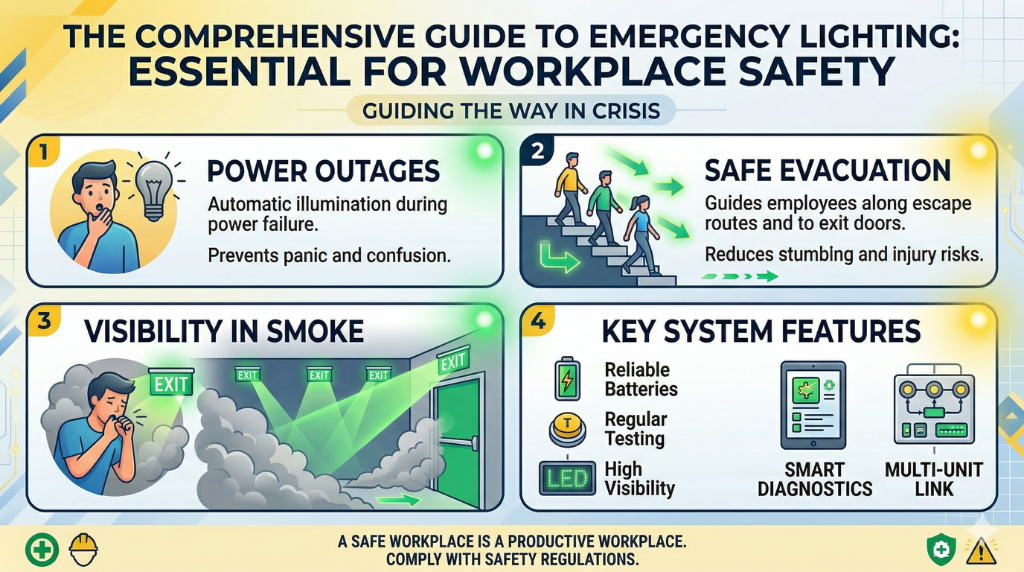
An emergency lighting system is a critical life safety component in any workplace. It ensures visibility during power failures, fires, or any emergency where normal lighting fails. Without proper illumination, evacuation becomes disorganized, increasing the risk of injuries and fatalities.
What is an Emergency Lighting System?
Emergency lighting is a backup lighting arrangement that automatically activates when the main power supply is interrupted. It typically includes exit signs, emergency escape route lighting, open area (anti-panic) lighting, and high-risk task area lighting. These systems are usually powered by batteries or generators to ensure uninterrupted operation.
Importance of Emergency Lighting
1. Safe Evacuation
During emergencies such as fire or power outages, visibility is severely reduced. Emergency lighting guides occupants safely toward exits, reducing panic and confusion.
2. Prevention of Accidents
Dark environments increase the likelihood of slips, trips, and falls. Emergency lighting minimizes such risks by illuminating pathways, stairs, and obstacles.
3. Compliance with Safety Standards
International standards mandate emergency lighting in workplaces. Non-compliance can result in legal penalties and increased liability.
4. Support for Emergency Response
Emergency responders rely on proper lighting to carry out rescue and firefighting operations efficiently.
5. Business Continuity
In certain industries, emergency lighting allows critical operations to continue safely until systems are shut down properly.
Key Standards and Regulations
🔹 NFPA 101 (Life Safety Code)
Requires emergency lighting for means of egress
Minimum illumination: 1 foot-candle (10.8 lux) along escape routes
Duration: at least 90 minutes backup power
🔹 OSHA
Mandates clearly visible and illuminated exit routes
Emergency lighting must be reliable and regularly tested
🔹 ISO 30061
Provides guidelines for emergency lighting performance and installation
Focuses on visibility, reliability, and maintenance
🔹 BS 5266
Widely adopted standard for emergency lighting design and installation
Covers testing, maintenance, and illumination levels
Types of Emergency Lighting
1. Escape Route Lighting
Ensures that evacuation routes such as corridors, stairways, and exits are clearly visible.
2. Open Area Lighting (Anti-Panic Lighting)
Installed in large spaces to prevent panic and enable occupants to move safely toward exits.
3. High-Risk Task Area Lighting
Used in areas where dangerous processes are carried out, allowing safe shutdown of equipment.
Testing and Maintenance Requirements
Regular inspection is essential to ensure system reliability:
Daily/Weekly: Visual inspection of indicators
Monthly: Functional test (short duration)
Annually: Full discharge test (90 minutes)
Battery and components should be replaced as per manufacturer guidelines
Failure to maintain the system can lead to system failure during critical situations.
Common Workplace Applications
Factories and industrial plants
Offices and commercial buildings
Hospitals and healthcare facilities
Warehouses and logistics centers
Educational institutions
Conclusion
Emergency lighting is not just a regulatory requirement, it is a lifesaving system. Compliance with standards like NFPA 101 and OSHA ensures that workplaces are prepared for unforeseen emergencies. Proper design, installation, and maintenance of emergency lighting systems significantly reduce risks and protect lives.