

Scenario-Based Exam
Total Marks: 100
Passing Marks: 45
Exam Type: 100% scenario-based
NEBOSH IGC Success Guide:
Step 1: Reading & Understanding the Scenario
- Read the scenario carefully 2–3 times.
- First reading: get a general idea of the organization.
- Second reading: focus on hazards, processes, and incidents.
- Third reading: understand the flow, positive/negative points, and clues for each task.
- Break the scenario into logical parts:
- Introduction: Define your role, nature of the organization, floor/facility layout, number of workers, and nature of work.
- Activities: Describe main operations or processes.
- Current Practices: Explain what is being done, what is missing, and unsafe acts/conditions.
- Incident/Near Miss: Identify an accident or unsafe act, first aid response, losses, penalties, and whether incident investigation was conducted.
- Use Highlighting Technique:
- Keep two highlighters.
- Green: Positive points or good practices.
- Yellow: Negative points or gaps in safety.
- These highlights help you structure answers and focus on key areas.
NEBOSH IGC Success Guide:
Step 2: Writing Your Tasks (Answering Questions)
- Word Count & Marks Correlation:
- NEBOSH marks are allocated based on points.
- Rule of thumb: 30 words per mark.
- Example: Task carries 10 marks → 10 × 30 = 300 words.
- Answer Structure:
- Use short paragraphs (2–3 lines each).
- Include technical terminology: hazards, risk, control measures, hierarchy of controls, near miss, unsafe act, PPE, safe system of work, etc.
- Avoid general words like “danger” or generic headings. Customize headings based on scenario.
- Use bullets if scenario requires.
- Connect every point to the scenario and standards (ILO, HSE, NFPA, OSHA).
- Reference & Standards:
- Always include references at the end of the section.
- Example: “ILO R164, Article 10 & 16; HSE Managing the Impact of Change; NEBOSH Guidelines.”
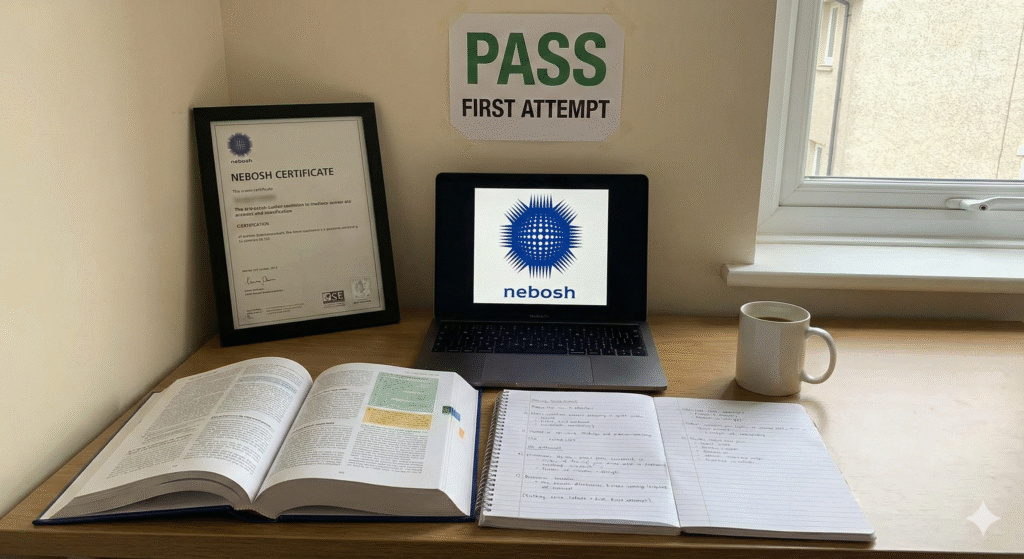
Step 3: Task-Wise Tips & Techniques
1. Employer Obligations (Article 10 & 16, ILO R164)
- Identify employer duties in scenario.
- Link each obligation with specific scenario gaps.
- Provide control measures or corrective actions.
- Example: Training, provision of PPE, monitoring worker health.
2. Managing the Impact of Change
- Describe organizational changes or process changes.
- Identify hazards arising from change.
- Recommend risk assessment & consultation with workers.
3. Safety Culture
- Highlight positive practices (green) and weak areas (yellow).
- Describe leadership commitment, worker engagement, reporting culture, communication, and continuous improvement.
4. Moral, Legal, and Financial Implications
- Moral: Injury prevention, worker wellbeing.
- Legal: Compliance with ILO, OSHA, NEBOSH, local laws.
- Financial: Losses, insurance claims, penalties, operational downtime.
5. Hierarchy of Controls
- Apply Elimination → Substitution → Engineering → Administrative → PPE.
- Always connect control measures to scenario hazards.
- Avoid generic suggestions; show practical implementation.
6. Permit to Work (PTW)
- Identify high-risk tasks in scenario.
- Mention who authorizes, checks, and monitors PTW.
- Example: Hot work, electrical maintenance, confined spaces.
7. Audit
- Identify internal or external audits required.
- Highlight gaps detected in scenario.
- Suggest audit frequency, checklist, and corrective actions.
8. Incident Investigation
- Identify incident type, cause, unsafe act/condition.
- Describe first aid, investigation process, root cause analysis.
- Recommend corrective/preventive actions.
9. Contractor Management
- Identify contractor activities in scenario.
- Highlight training, supervision, permit requirements, coordination with employer.
- Apply risk assessment and hierarchy of controls for contractors.
Step 4: Key Exam-Day Techniques
- Customize Every Answer:
- Avoid copying from books, notes, or peers.
- AI content is too general; use your own words and scenario context.
- Headings & Subheadings:
- Use unique, scenario-specific headings.
- Avoid generic titles like “Safety Measures.”
- Highlighting Helps Answering:
- Green points → write what is already good.
- Yellow points → explain gaps, risks, and required controls.
- Word Allocation:
- Use 30 words per mark.
- Example: 5 marks → 150 words → ~5 short paragraphs of 2–3 lines.
- Technical Words:
- Hazards, risks, controls, unsafe acts/conditions, near miss, hierarchy of controls, PTW, audit, safety culture, first aider, incident investigation.
- References:
- Always attach relevant standards or laws at the end of each section.
- Example: ILO R164 Article 10 & 16; NEBOSH Guidelines; ISO 45001.
Step 5: Last-Minute Tips
- Read scenario 2–3 times before starting answers.
- Highlight positive/negative points for clarity.
- Plan your word count per task.
- Write short, scenario-linked paragraphs.
- Use technical terms instead of general words.
- Customize headings and points for each task.
- Cite standards for extra marks.
- Stay calm and manage time efficiently.