

PEEPs, or Personal Emergency Evacuation Plans, are individualized plans designed to help people safely evacuate a building during emergencies such as fires, gas leaks, power failures, or other incidents requiring immediate evacuation.
In modern workplaces, PEEPs ensure that everyone—regardless of mobility limitations, temporary injuries, disabilities, or health conditions—can evacuate safely and efficiently. They are a critical part of inclusive emergency planning and legal duty of care.
This article explains what PEEPs are, why they are essential, and how they work in real workplace situations.
What Is a PEEP?
A PEEP (Personal Emergency Evacuation Plan) is a documented, person-specific emergency plan that details how an individual will evacuate safely during an emergency.
Unlike a general Emergency Evacuation Plan (EEP), which applies to all occupants, a PEEP focuses on one person’s specific needs, limitations, and evacuation method.
Why Workplaces Need PEEPs
Workplaces often include people who may face difficulties during evacuation, such as:
- Wheelchair users or people with reduced mobility
- Employees with hearing or visual impairments
- Individuals with respiratory or medical conditions
- Pregnant staff
- Employees recovering from injury or surgery
- Elderly workers or visitors
Without a PEEP, these individuals may be placed at serious risk during emergencies.
Many workplace safety regulations require employers to make reasonable arrangements to ensure that all occupants can evacuate safely, not just those who can use stairs or move quickly.
How PEEPs Work in Workplaces
PEEPs are practical, site-specific tools integrated into workplace fire and emergency management systems. They typically follow these steps:
1. Identify Who Needs a PEEP
Individuals who may need a PEEP are identified through:
- Self-disclosure
- Induction and onboarding processes
- Medical updates after injury or health changes
This process must always respect confidentiality and dignity.
2. Assess Individual Needs
A confidential assessment determines:
- What prevents normal evacuation (stairs, speed, hearing, vision, breathing)
- The person’s usual work location
- Relevant emergency scenarios (fire, power failure, gas leak, etc.)
3. Select an Evacuation Method
Based on the assessment, a suitable evacuation method is chosen, such as:
- Evacuation chair for stair descent
- Buddy system with trained colleagues
- Refuge area with two-way communication
- Assisted walking where limited mobility exists
4. Define the Escape Route
Each PEEP clearly specifies:
- Which exit or stairwell to use
- Location of evacuation equipment
- Final assembly point
This removes confusion during real emergencies.
5. Assign Responsibilities
Specific trained personnel—such as fire wardens or supervisors—are assigned to:
- Assist the individual
- Operate evacuation equipment
- Communicate with emergency responders if required
6. Provide Training and Drills
Training and regular drills ensure that:
- Staff are competent and confident
- Equipment is used correctly
- Actions become automatic during high-stress situations
7. Review and Update the PEEP
PEEPs must be reviewed and updated when:
- Workplace layout changes
- The individual’s condition changes
- Lessons are learned from drills or incidents
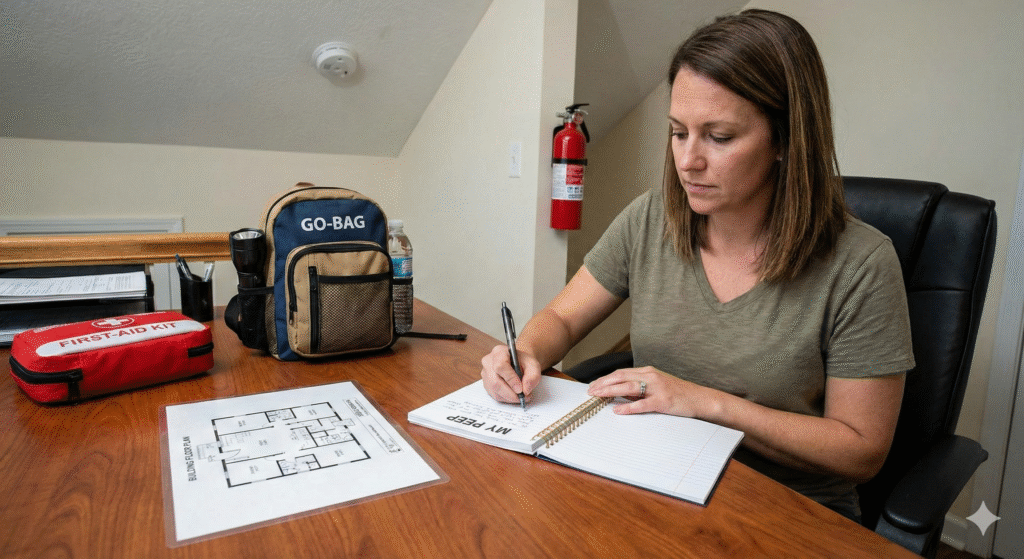
Example of a PEEP in Practice
Scenario:
An employee on the third floor uses a wheelchair.
PEEP Details:
- Evacuation Method: Evacuation chair
- Route: Stairwell B → Ground floor exit
- Assistants: Two trained fire wardens
- Equipment: Evacuation chair stored near Stairwell B
- Assembly Point: Main parking area
During an Emergency:
Alarm activates → fire wardens assist the employee → transfer to evacuation chair → descend stairs → exit building → report at assembly point.
This approach ensures evacuation is planned, practiced, and safe.
What a Good PEEP Should Contain
A well-designed PEEP includes:
- Individual’s work location
- Nature of limitation (temporary or permanent)
- Evacuation method and route
- Names and roles of helpers
- Required equipment
- Communication arrangements
- Training and review schedule
Why PEEPs Are Critical for Workplace Safety
PEEPs:
- Protect lives during emergencies
- Demonstrate employer duty of care
- Support legal and regulatory compliance
- Prevent exclusion or discrimination
- Reduce panic and improve evacuation efficiency
Key Message
PEEPs (Personal Emergency Evacuation Plans) turn generic evacuation procedures into life-saving, individual solutions.
In workplaces, they ensure that no employee, visitor, or contractor is left behind when seconds matter most.