
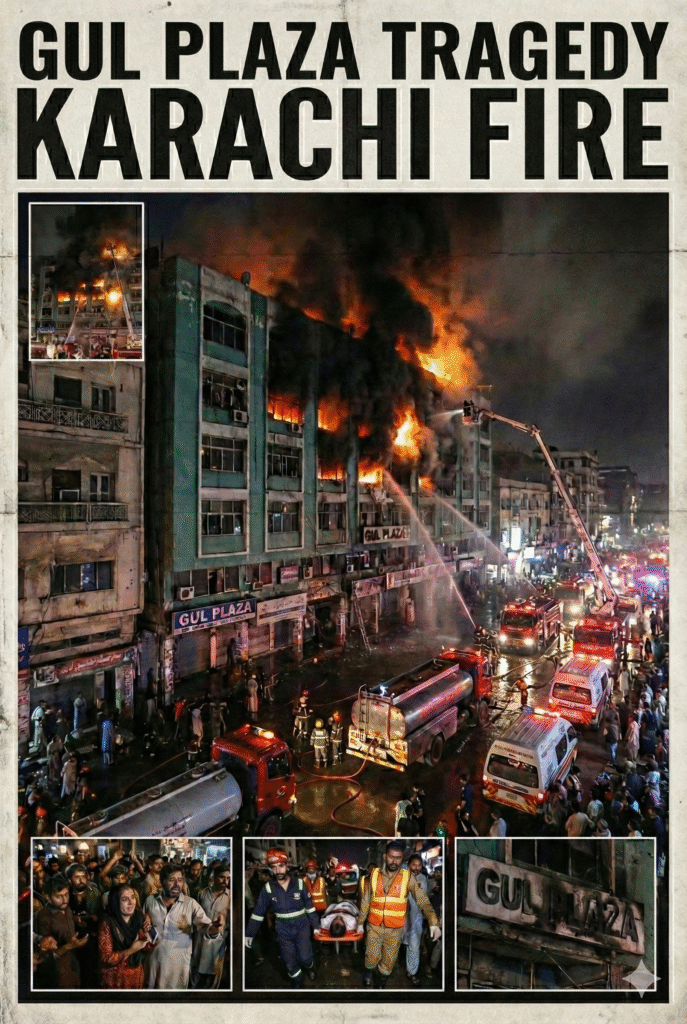
Karachi’s Gul Plaza Inferno: Human Loss, Economic Ruin, and a Wake-Up Call on Safety
The Gul Plaza Tragedy: A Nation in Sorrow
On the night of 17–18 January 2026, a catastrophic fire erupted at Gul Plaza, a bustling multi-story shopping centre on M.A. Jinnah Road in Karachi, Pakistan’s largest city and economic heart. What began as a routine evening quickly turned into a nightmare no family, no shopkeeper, no worker, could have foreseen.
The blaze, fed by flammable goods stored inside—clothes, plastics, cosmetics and household items—escalated beyond control within minutes. Fire crews battled the inferno that raged for over 30 hours, reducing the structure to charred ruins and collapsing sections of the building, even as temperatures remained extreme.
Why It Happened: A Short Circuit in a Powder-Keg
Early investigations suggest the fire may have started from a short circuit in a shop, possibly near flammable storage, which the building’s infrastructure was ill-prepared to contain. Dense smoke, lack of internal fire suppression systems, poor ventilation and the sheer volume of combustible goods turned a small spark into a massive blaze.
Traders and witnesses point to long-standing negligence: exposed wiring, tangled cables, no sprinklers or alarms, obstructed pathways, and zero emergency preparedness. Many buildings like Gul Plaza superficially satisfy official registration but lack real safety safeguards.
Human Loss: The Numbers That Break the Heart
The human cost of this tragedy is still unfolding, but the figures already scar the nation’s conscience:
Confirmed deaths: At least 14 people have been found lifeless in the debris, including brave firefighters who entered the building risking their lives.
Missing persons: Over 60 individuals remain unaccounted for, feared trapped under rubble or lost among the charred remnants.
Injuries: More than 20–30 people are reported injured, many suffering from smoke inhalation and burns.
These are not mere statistics—they are sons and daughters, brothers and sisters, shop owners and daily wage earners whose futures were extinguished within hours. Their families wait in agony, hoping for signs of life that may never come.
Economic Ruin in Digits
Gul Plaza was home to roughly 1,200 shops—a market hub supporting thousands of livelihoods. Within hours, years of toil, savings, capital and family investment turned to ash:
Estimated financial losses: Roughly Rs2 billion to Rs2.5 billion in goods, capital and rebuilding costs.
Direct impact: Hundreds of traders have lost everything—stock, inventory, cash and future earnings.
Employment impact: Thousands of workers and dependents now face unemployment and uncertainty.
One shopkeeper told community members he lost almost 1.5 crore rupees in goods and inventory—a lifetime’s labor gone in smoke.
Government Response: Too Little, Too Late?
Official statements express grief and promises of support. Sindh’s Chief Minister pledged compensation and ordered inquiries, while federal leaders affirmed assistance.
Yet on the ground, frustrations mount:
Rescue teams reportedly faced delays in response, hampered by traffic and lack of equipment.
Critics say fire safety enforcement was lax at best, inspections sporadic, and accountability absent.
Families and traders accuse authorities of photo ops rather than swift action.
This gap between official rhetoric and lived reality deepens the collective pain of a city that again mourns avoidable loss.
If You Gamble With Safety, You Bet Your Life
The Gul Plaza tragedy screams a bitter truth: when we gamble with safety, we bet our lives. This is not hyperbole—it is lived experience.
Buildings with no fire exits, no alarms, no suppression systems, and ignored electrical hazards are ticking time bombs. Each incident chips away at public trust. How many more tragedies will it take before safety is treated with urgency and respect?
We Stand at a Crossroads
Today, we are standing at a crossroads:
Do we accept avoidable tragedy as normal?
Do we wait for the next blaze, another collapse, another life lost?
Or do we finally act with seriousness—in enforcement, in training, in infrastructure, in inspection?
We cannot build a safer future with hollow words. What has happened at Gul Plaza must be a turning point.

Are These Incidents Manageable? Yes, With Action.
A corrective action plan must include:
Mandatory Safety Audits: Every commercial building must undergo certified fire and safety audits annually.
Fire Suppression & Detection Systems: Sprinklers, alarms and accessible fire hose reels must be installed and maintained.
Clear Evacuation Routes: All emergency exits must be free from obstruction and clearly marked.
Professional Fire Brigade Training: Equip and train firefighters with modern tools, gear and rapid response protocols.
Electrical Safety Standards: Enforce regulations on wiring, load management and licensed electrical installations.
Trader & Worker Awareness Programs: Educate all stakeholders on basic fire prevention and emergency response.
Insurance & Financial Protection: Encourage mandatory business insurance to protect livelihoods in catastrophes.