
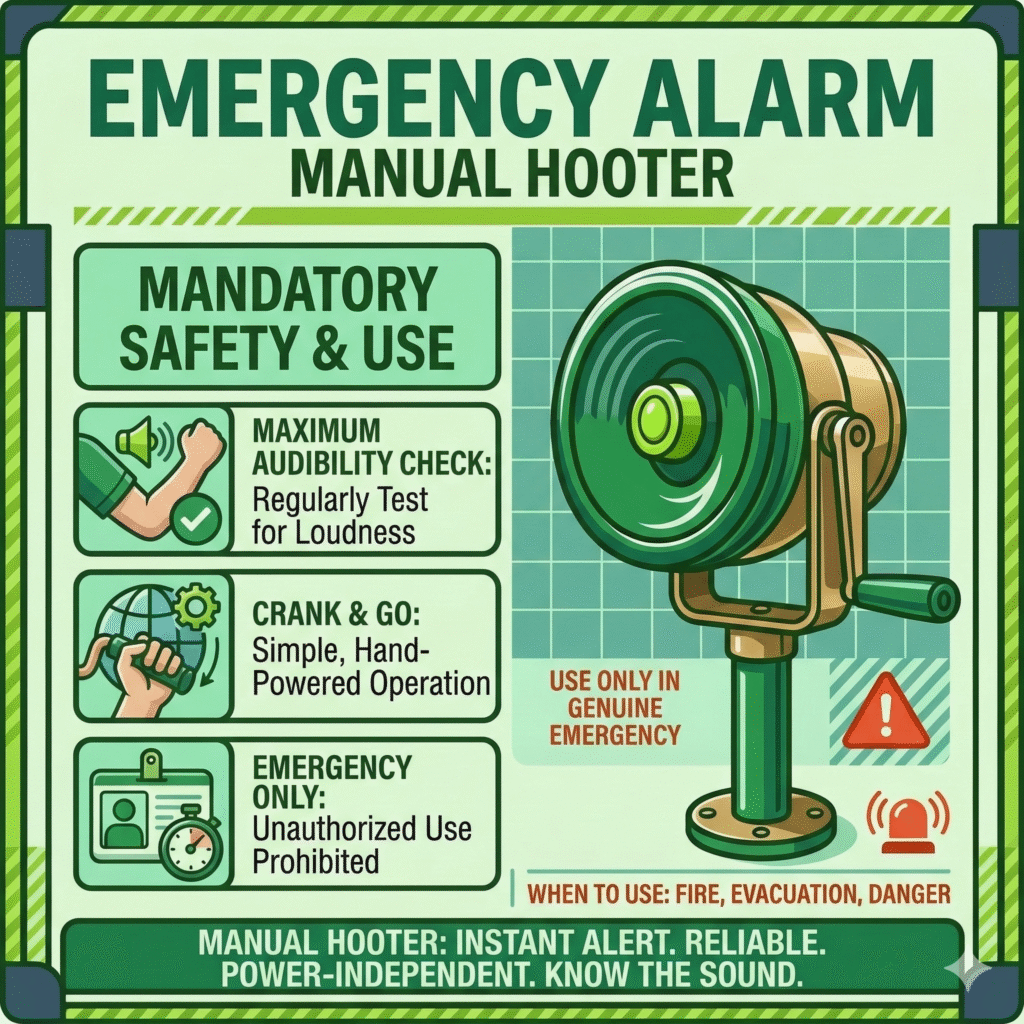
A manual hooter is an audible fire alarm notification device that produces a loud warning sound (typically 85–120 dB) to alert occupants during emergencies such as fire, gas leaks, or evacuation situations.
In technical terms, it is part of a Fire Alarm System (FAS) and functions as an audible signaling appliance.
It is commonly connected to:
- Fire Alarm Control Panel (FACP)
- Manual Call Point (MCP)
- Smoke/Heat Detectors
- Gas Detection Systems
Why Manual Hooter Is Used in Industries
1. Immediate Audible Warning
Industrial environments are usually noisy due to machines, compressors, and turbines. A high-decibel hooter ensures the alarm is clearly heard across large production areas and multiple floors.
2. Fast Evacuation
The hooter alerts workers instantly, allowing them to stop operations and evacuate quickly. Early warning reduces response time and prevents escalation during industrial fire incidents.
3. Legal and Code Compliance
Fire safety regulations and international codes require audible alarm devices as part of life safety systems in buildings and industrial facilities.
Key standards include:
- National Fire Protection Association
- International Code Council
These organizations require approved notification appliances in buildings.
4. Emergency Communication System Integration
Manual hooters are often integrated with:
- Public Address Systems
- Fire Alarm Panels
- Emergency Shutdown Systems (ESD)
- Gas Detection Systems
How a Manual Hooter Works During an Emergency (Step-by-Step)
Step 1: Fire or Incident Occurs
A detection device identifies the hazard:
- Smoke detector senses smoke
- Heat detector senses temperature rise
- Gas detector senses a gas leak
- Or a manual call point is pressed
Step 2: Signal to Fire Alarm Control Panel (FACP)
The signal is sent to the Fire Alarm Control Panel, which processes:
- Zone location
- Device activated
- Alarm verification (if programmed)
Step 3: Panel Activates Hooter Circuit
The panel energizes the sounder or notification appliance circuit (NAC) and supplies voltage, usually 24V DC.
Step 4: Manual Hooter Produces Loud Sound
The hooter generates either:
- Continuous tone
- Temporal pattern (commonly the 3-pulse fire alarm pattern)
Step 5: Evacuation and Emergency Response
Workers:
- Stop operations
- Follow emergency exit routes
- Move to the assembly point
Emergency response teams then begin firefighting or emergency control procedures.
Where Manual Hooters Are Installed in Industries
1. Near Exits
Installed near emergency exits, staircases, and corridors to alert people during evacuation.
2. Production Areas
Workshop floors, machinery areas, and high-risk operational zones where audible alarms must overcome machinery noise.
3. Warehouse Areas
Large warehouses require multiple hooters spaced appropriately to ensure full sound coverage.
4. Control Rooms
Installed near electrical panel rooms and operational control stations.
5. High-Risk Zones
Boiler rooms, generator rooms, and chemical storage areas.
Standards That Require Manual Hooters
NFPA 72 – National Fire Alarm and Signaling Code
Published by the National Fire Protection Association.
This standard requires audible notification appliances and specifies:
- Sound level 15 dB above ambient noise
- Minimum 75 dB in sleeping areas
- Temporal-3 alarm pattern for fire alarms.
International Building Code (IBC)
Issued by the International Code Council.
It requires fire alarm systems with audible notification devices in industrial occupancies.
Local Civil Defense Requirements
Many countries, including Pakistan, UAE, and Saudi Arabia, require approved sounders compliant with NFPA standards.
EN Standards
European systems follow EN 54-3 for fire alarm sounders.
Technical Specifications of a Manual Hooter
- Voltage: 12V or 24V DC
- Sound Level: 85–120 dB
- Material: ABS or Metal
- Protection Rating: IP54 / IP65 (industrial environments)
- Tone Type: Continuous or Pulsed
Manual Hooter vs Siren vs Sounder
| Device | Purpose |
|---|---|
| Manual Hooter | Basic audible alarm |
| Siren | Higher-pitch alarm often used outdoors |
| Sounder | Advanced programmable audible device |
| Sounder with Strobe | Audible + visual alert |
In noisy industrial environments, sounders with strobes are often preferred to ensure both audible and visual warning.
Important Design Considerations for Industry
HSE professionals should ensure:
- Proper sound level calculation is conducted
- No audible dead zones exist
- Alarm sound is clearly heard above machinery noise
- System is connected to backup battery power
- Alarm devices are tested weekly or monthly
- System is integrated with the emergency evacuation plan
Summary
A manual hooter is a critical life-safety device used in industrial fire alarm systems to provide audible warning during emergencies. It ensures early notification, supports safe evacuation, and helps organizations comply with international safety codes such as NFPA 72, IBC, and local civil defense regulations.