
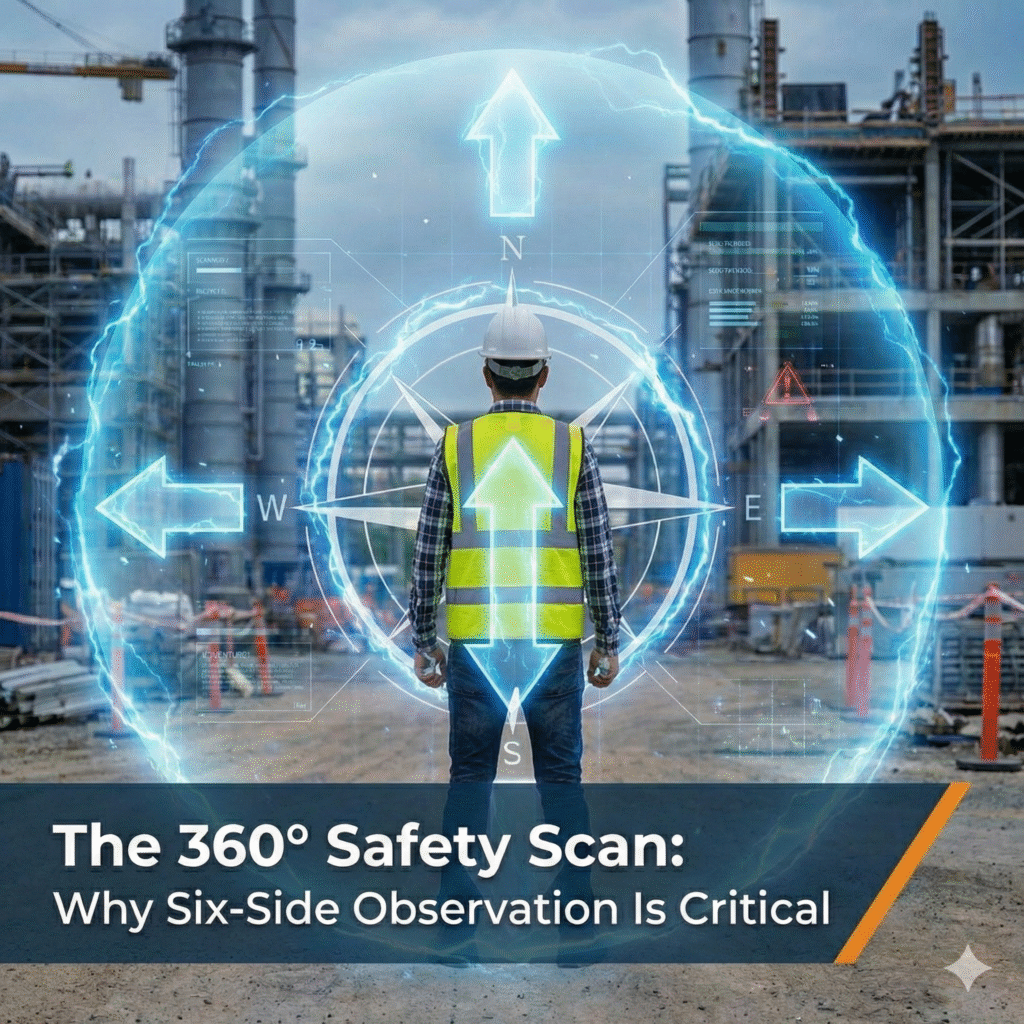
Many incidents happen because a worker or inspector focuses only on what is in front.
Experienced HSE professionals are trained to scan all directions before declaring an area safe.
1️⃣ Front – Immediate Task Hazard
This includes:
Moving machinery
Rotating parts
Hot surfaces
Chemical handling
Vehicle movement
Most people focus only here — which is incomplete.
2️⃣ Back – Hidden or Blind Spot Risk
Hazards behind workers include:
Forklifts reversing
Falling objects
Electrical panels
Open pits
Suspended loads
Many struck-by incidents happen from rear exposure.
3️⃣ Left and Right – Peripheral Hazards
Side hazards include:
Co-workers entering danger zone
Material stacking instability
Side-mounted rotating shafts
Lateral vehicle movement
Edge protection gaps
This is where situational awareness plays a major role.
4️⃣ Up – Overhead Hazards
Often ignored but highly dangerous:
Overhead cranes
Suspended loads
Falling tools
Weak scaffolding boards
Overhead power lines
Fire sprinkler damage
Many fatal incidents occur due to falling objects.
5️⃣ Down – Ground-Level Risks
Slip, trip, and fall hazards are common:
Oil spills
Uneven flooring
Open trenches
Trailing cables
Sharp objects
Ground hazards are statistically among the most frequent injury causes.
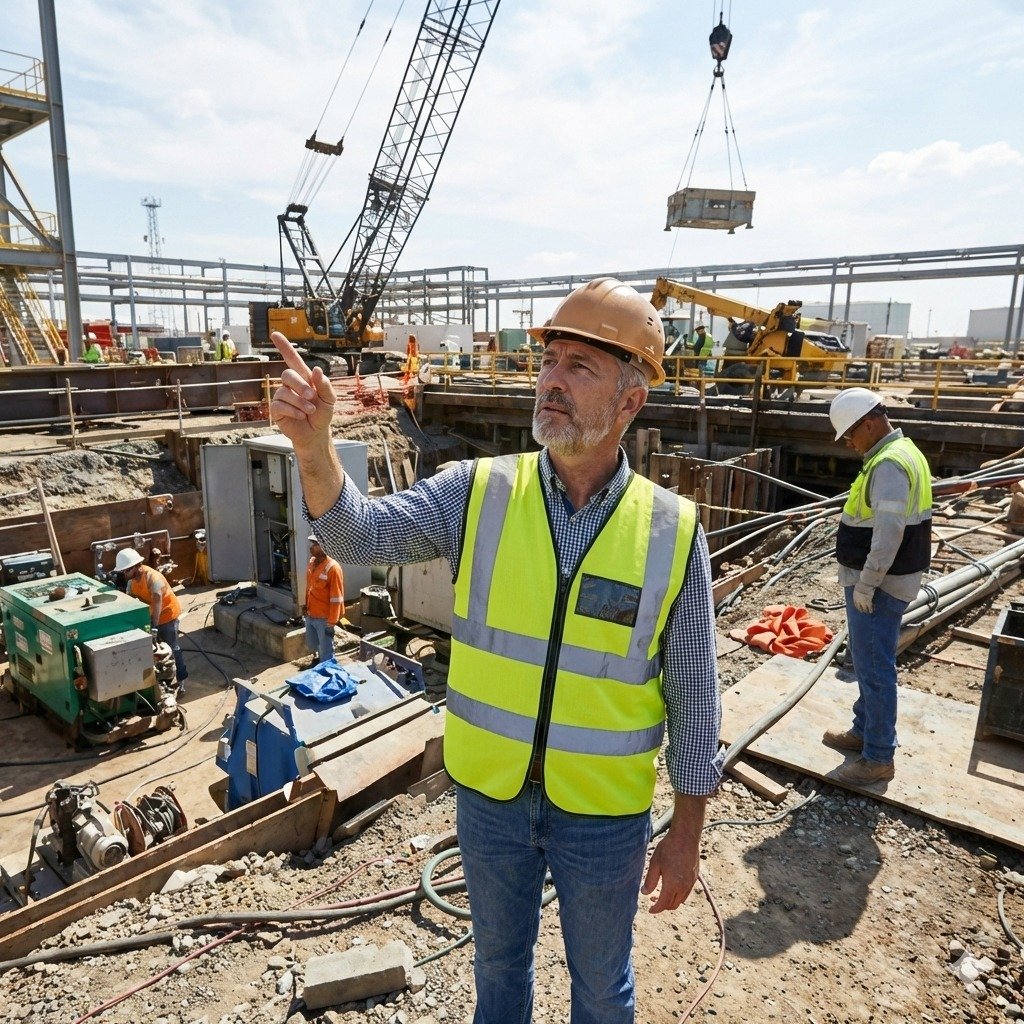
How Six-Side 360° Supports HSE Professionals
Reduces Blind Spots: Prevents tunnel vision during inspections.
Improves Risk Anticipation: Encourages thinking beyond immediate task.
Enhances Job Safety Analysis (JSA): Ensures hazards are identified in all directions.
Strengthens Dynamic Risk Assessment: Particularly important in construction and confined spaces.
Prevents “Front-Only Thinking”: Many accidents happen because workers only check forward.
Relationship with Sigma and Safety Systems
While Six Sigma focuses on process variation reduction, 360° physical scanning focuses on field-level hazard visibility.
One improves systems. The other improves awareness. Both are essential.
Practical Example
A worker checks machine front panel (safe). But fails to:
Check overhead crane movement
Notice oil behind him
See exposed wiring on right side
Detect open pit on left
Result → Incident despite “checking”.
This is why experienced professionals say:
“Stop. Look 360°. Then act.”
Conclusion
360° in safety has two meanings:
Multi-directional physical hazard scanning (six sides)
Multi-level organizational feedback
For HSE professionals, six-side observation:
Improves inspection quality
Reduces incident probability
Enhances situational awareness
Builds professional judgment.