
Working at Height

Complete Safety Guide for Hazard Control and Prevention Introduction Working at Height refers to any task where a person could fall from one level to another and suffer injury. It is one of the most critical and high-risk activities in occupational health and safety because even a relatively small fall can result in serious injury […]
Risk Matrix

A Complete Guide to Risk Assessment and Risk Management Introduction A Risk Matrix is one of the most widely used tools in occupational health and safety, risk management, project management, construction, manufacturing, oil and gas, and many other industries. It helps organizations identify, evaluate, and prioritize workplace risks by considering two key factors: the likelihood […]
NFPA FIRE SAFETY CODES
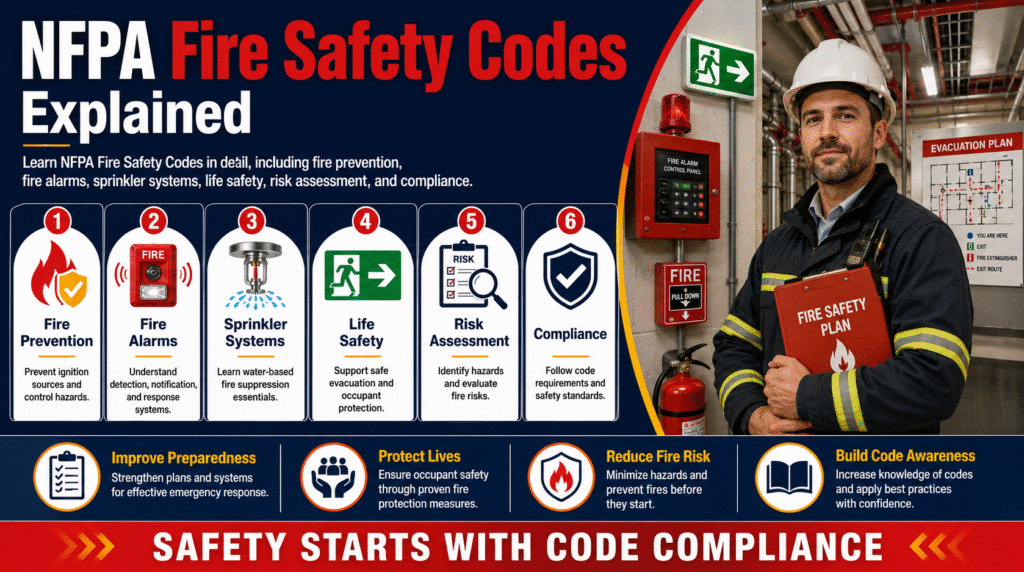
NFPA Fire Safety Codes: A Complete Guide to Fire Prevention and Life Safety Introduction Fire is one of the most dangerous hazards that can affect people, businesses, industries, and communities. Every year, thousands of fire incidents result in fatalities, severe injuries, property damage, environmental impacts, and financial losses. While many fires are preventable, they often […]
Spill Kit: The Complete Guide to Spill Control, Hazard Management, Environmental Protection, and Workplace Safety

Introduction to Spill Kit Spill kit in modern industries, workplaces frequently handle various liquids such as oils, fuels, lubricants, chemicals, solvents, paints, acids, alkalis, and other hazardous substances. These materials are essential for production, maintenance, transportation, and operational activities; however, they also present significant risks when accidentally released into the workplace. A leak from a […]
Overhead Power Line Safety: Minimum Clearance Distance Chart for Worksites
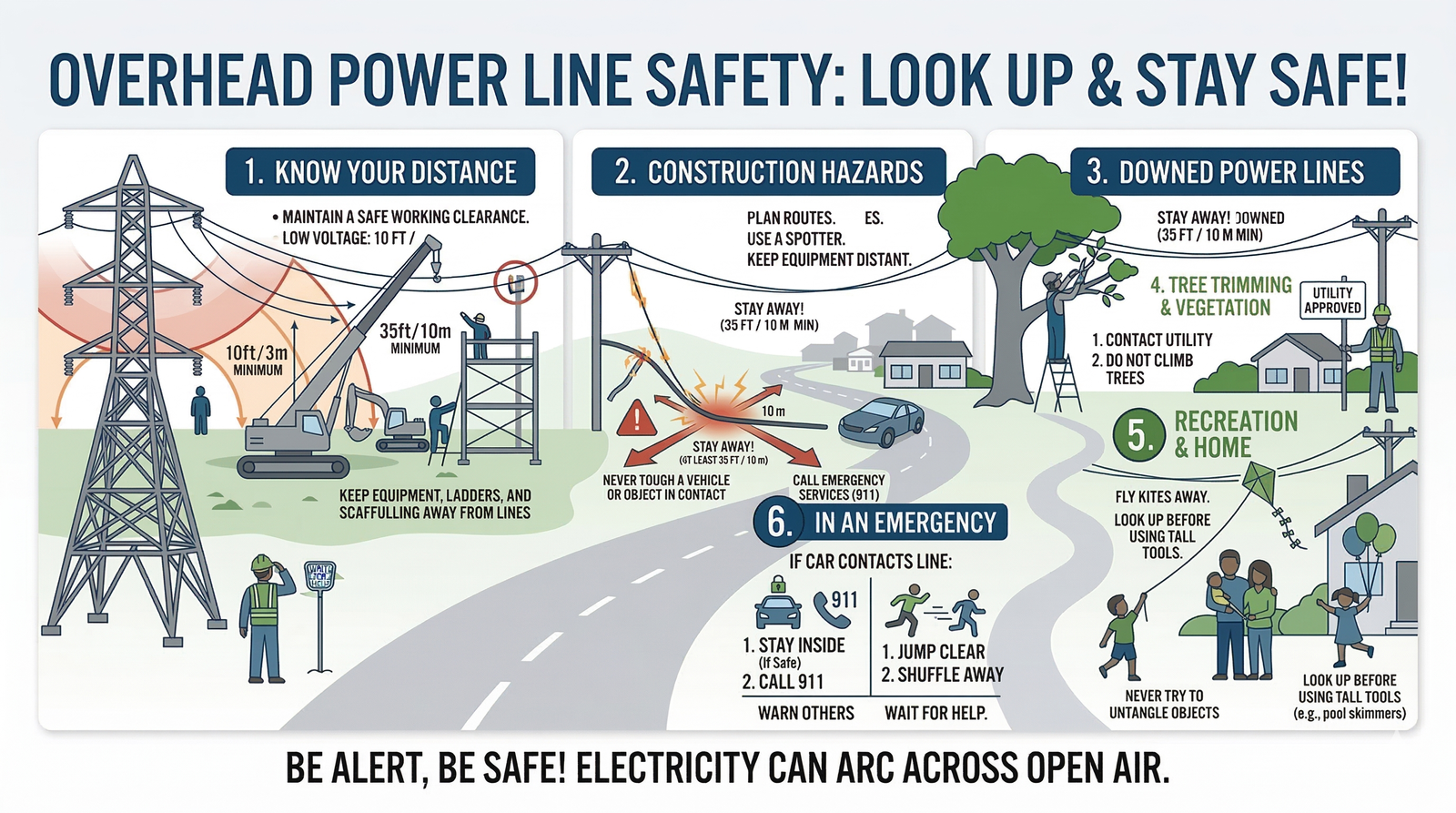
Essential Guidance for Construction & Industrial Worksites Overhead power lines are one of the most dangerous hazards on construction sites, warehouses, factories, and maintenance areas. Contact with energized lines can cause electrocution, severe burns, fires, equipment damage, or fatalities. Many serious incidents occur when workers operate cranes, dump trucks, scaffolding, ladders, or excavators near power […]
Excavation Safety Guide: Sloping, Benching, Shoring, and Shielding Explained
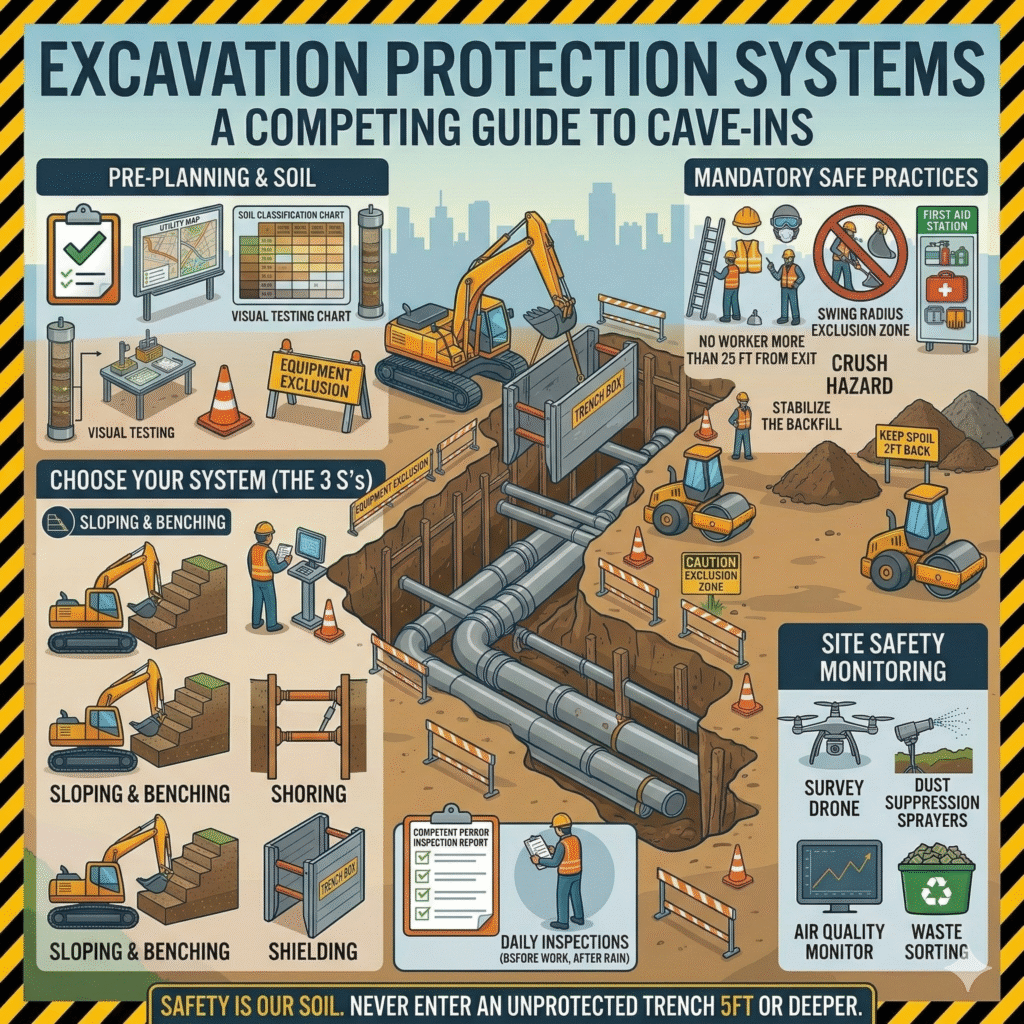
Excavation work creates serious hazards such as trench collapse, falling materials, and equipment accidents. Therefore, protective systems are used to prevent soil collapse and protect workers inside excavations or trenches. Safety authorities such as Occupational Safety and Health Administration recommend several protection methods for excavation work. Below are the main excavation protection systems used in […]
Backfilling in Construction: Major Hazards, Safety Risks, and Control Measures
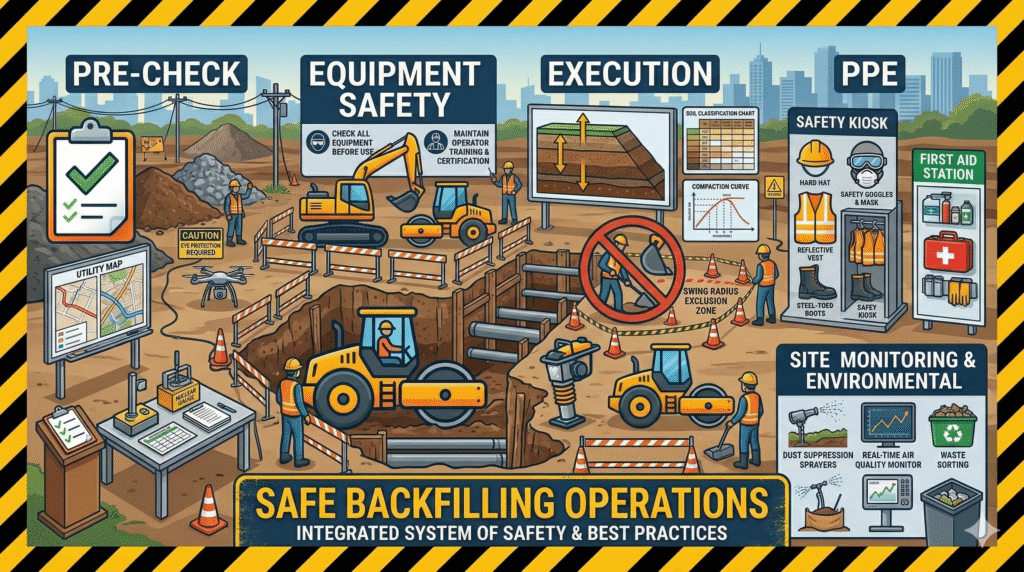
Backfilling is a common activity in construction that involves refilling soil or other suitable material into an excavation after completing work such as foundations, pipelines, or underground utilities. While backfilling helps restore ground level and support structures, it can also introduce several safety hazards if not managed properly. Effective planning and adherence to safety practices […]
Fishbone Model for RCA – Case Application on Rana Plaza Collapse
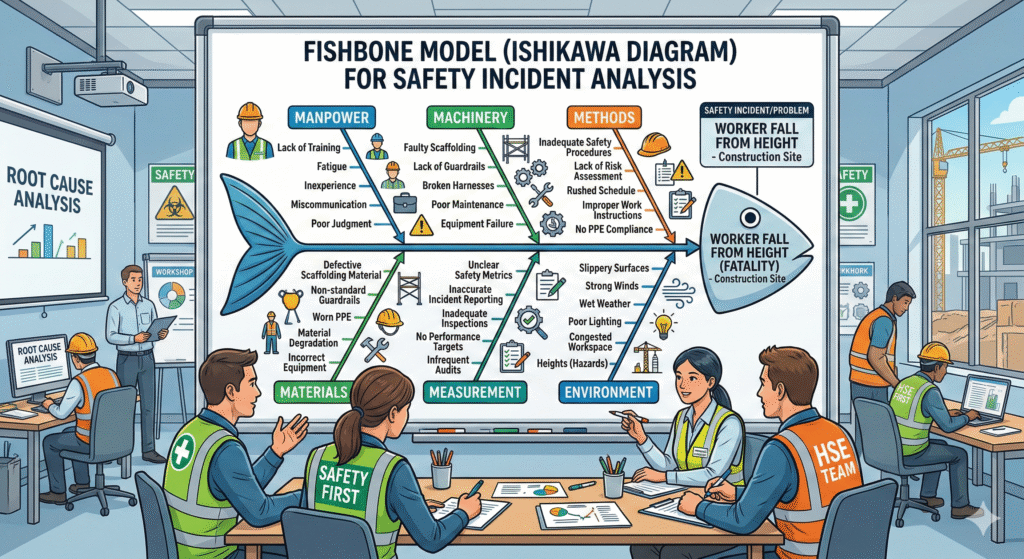
The Fishbone Diagram (also called Ishikawa Diagram or Cause-and-Effect Diagram) is a structured Root Cause Analysis (RCA) tool used to systematically identify, categorize, and analyze contributing factors of a failure event. In high-risk industries such as construction, manufacturing, and occupational safety, the Fishbone model prevents superficial conclusions and forces investigation into systemic weaknesses. The collapse […]
Concrete Transit Mixer (CTM): Types, Working, Hazards, and Construction Safety Guide
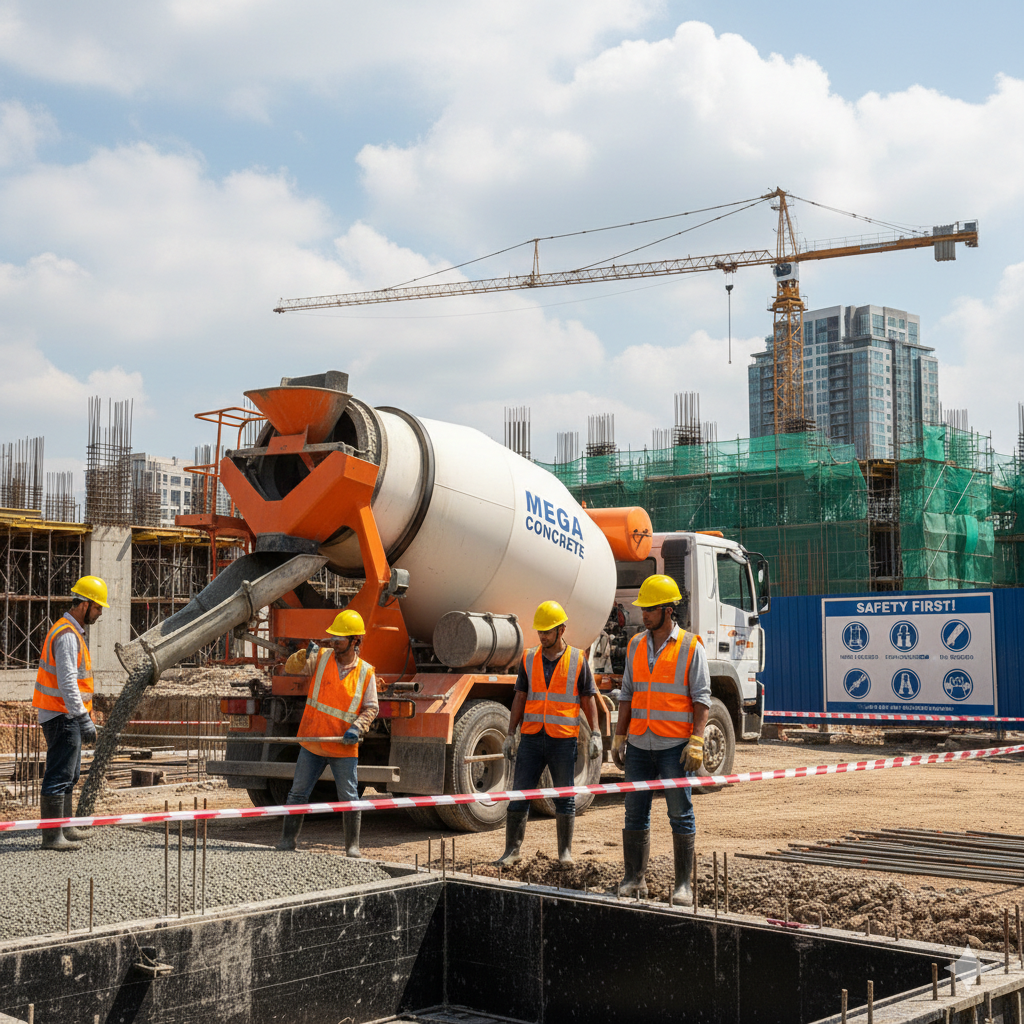
A Concrete Transit Mixer (CTM) is a specialized mobile vehicle designed to mix and transport ready-mix concrete from a batching plant to a construction site. The rotating drum ensures the concrete remains uniform, workable, and free from segregation or premature setting during transportation. CTMs play a critical role in maintaining construction quality, productivity, and schedule […]
Protection Used in Excavation: Hazards, Standards, and Best Safety Practices
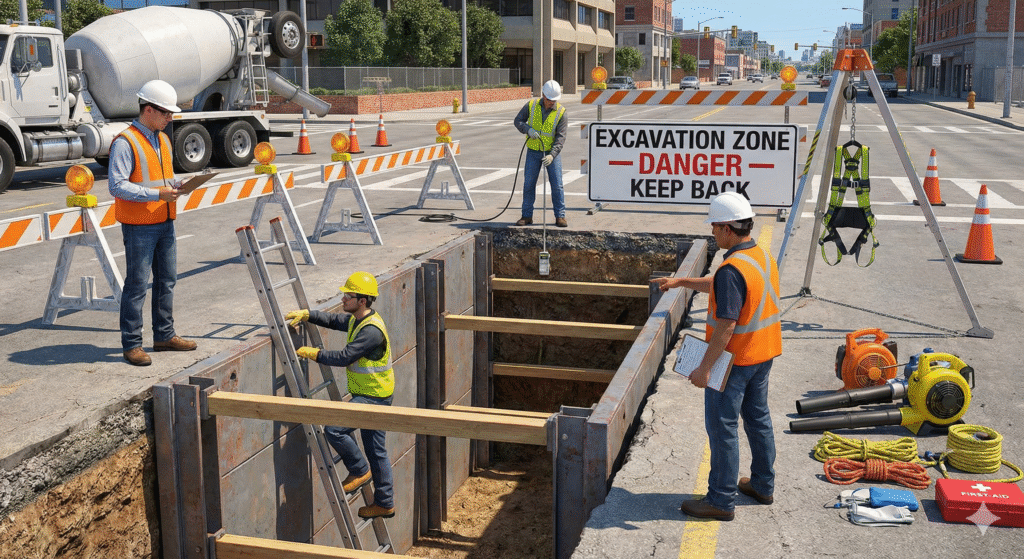
Excavation work is one of the highest-risk construction activities due to the potential for ground collapse, falls, engulfment, and striking utilities. Protective systems in excavation are engineering and administrative controls designed to prevent injury, fatalities, and property damage. International standards require that excavations deeper than specific limits must be protected using approved methods based on […]