
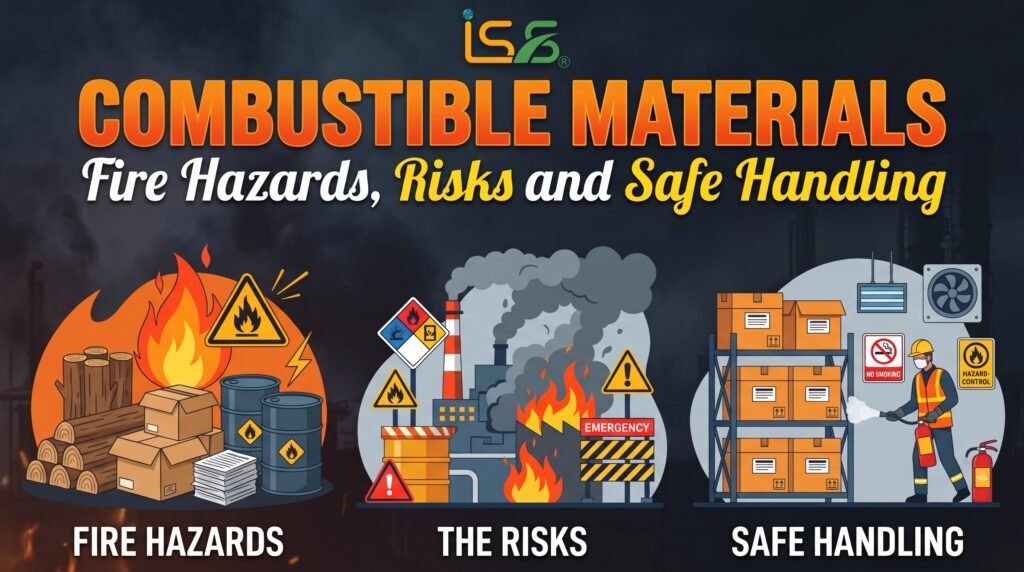
1. Introduction to Combustible Materials
Combustible materials are substances that can catch fire and burn when exposed to sufficient heat or an ignition source under suitable conditions. Understanding combustible materials is essential for workplace fire prevention, particularly in industries involving chemical manufacturing, processing, storage, transportation and material handling. The presence of combustible materials can create significant fire hazards, especially when appropriate storage, handling and housekeeping procedures are not implemented.
Combustible materials include various organic chemicals, carbon-based substances, sulfur-containing materials and other industrial products. Some of these substances can burn in solid form, while finely divided materials may create additional hazards when dust becomes suspended in the air. Consequently, identifying combustible materials, understanding their physical properties and implementing appropriate control measures are important responsibilities for employers and health and safety professionals.
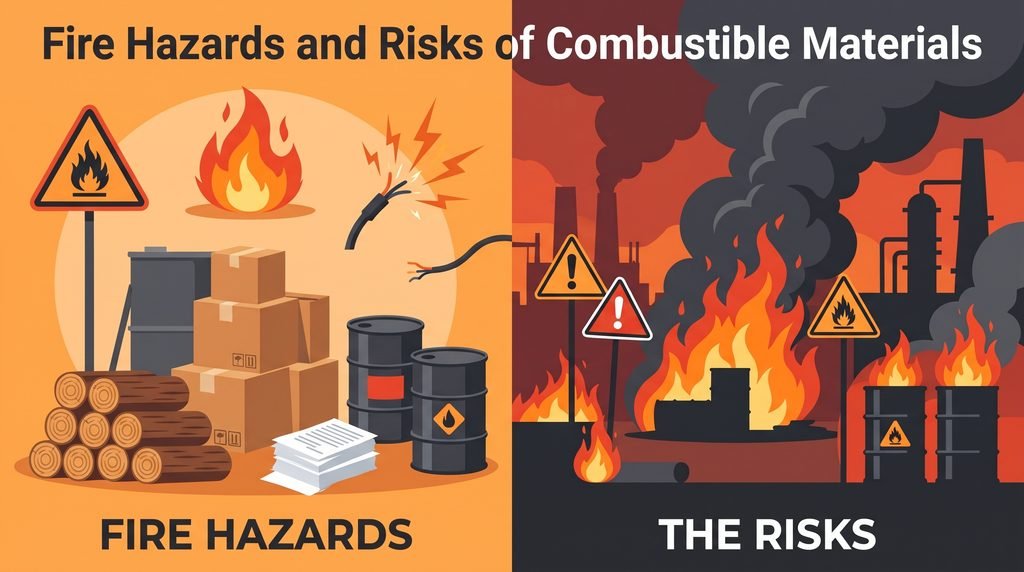
In industrial environments, combustible materials may be present as powders, granules, solids or other forms. Their behaviour during combustion depends on factors such as particle size, temperature, concentration, ventilation and the presence of ignition sources. Effective management of combustible materials requires a systematic approach to hazard identification, risk assessment, safe storage and fire prevention.
2. Understanding Combustible Materials and Their Fire Hazards
Essentially, organic chemicals are combustible. Storage practices for these substances generally follow the precautions applied to other combustible solid materials.
The fire hazards associated with combustible materials can vary according to their composition and physical characteristics. Certain materials can ignite readily, while others may require higher temperatures or specific conditions before combustion occurs.
One important concern is the formation of combustible dust. When finely divided combustible materials become suspended in the air, they may create an explosive atmosphere if the concentration and ignition conditions are suitable.
For example, carbon black and lamp black can create specific fire hazards during manufacturing, processing, packaging and storage. Dust accumulation, inadequate ventilation, inappropriate handling and uncontrolled ignition sources can increase the likelihood of an incident.
The main hazards associated with combustible materials include:
- Fire resulting from contact with ignition sources.
- Rapid combustion of finely divided combustible substances.
- Dust cloud ignition and potential explosions.
- Generation of smoke and harmful combustion products.
- Heat accumulation during storage.
- Fire propagation through accumulated combustible deposits.
Understanding these hazards helps organisations establish effective fire prevention and emergency response arrangements.
3. Common Examples of Combustible Materials
Different combustible materials have different physical properties and fire characteristics. Some examples discussed in chemical storage and handling guidance include the following.
3.1 Carbon Black
Carbon black is widely used in the manufacturing of rubber and plastic products, particularly tyres.
It is manufactured through the decomposition of acetylene, incomplete combustion of natural gas or a mixture of natural gas and liquid hydrocarbons, or by cracking hydrocarbon vapour in the absence of air.
One of the main hazards associated with carbon black occurs immediately following its manufacture, when bags of the finished product may contain red-hot carbon particles.
Although carbon black absorbs oxygen, it can develop a slow-smouldering condition. To prevent this hazard, carbon black should be stored in a separate warehouse before shipment.
It is important to establish that carbon black has cooled thoroughly and been properly aired before storage. The material may also generate heat in the presence of oxidising oils.
3.2 Lamp Black
Lamp black is produced by burning low-grade heavy oils or similar carbonaceous materials with insufficient air.
It is used in various industrial applications, including the production of pigments and other carbon-based products.
Lamp black can present fire hazards because it adsorbs gases to a considerable degree and may ignite spontaneously when freshly bagged.
The possibility of dust explosions is increased by the presence of unconsumed oil adhering to the carbon.
Therefore, lamp black should be thoroughly cooled before packaging and stored in a cool, dry area away from oxidising materials.
3.3 Lead Sulfocyanate
Lead sulfocyanate burns slowly and decomposes when heated.
Its decomposition produces substances that may include highly toxic and flammable carbon disulfide, together with other harmful combustion products.
The presence of such materials requires careful consideration during storage, handling and emergency planning.
Workers should avoid uncontrolled exposure and follow the relevant safety data sheet, workplace procedures and appropriate protective measures.
3.4 Nitroaniline
Nitroaniline is a combustible solid that melts at approximately 295°F (146°C) and has a flash point of approximately 390°F (199°C).
In the presence of moisture, it may interact with nitrate-containing organic materials, potentially resulting in spontaneous ignition.
Its storage and handling should therefore be managed according to its documented chemical properties and compatibility requirements.
3.5 Nitrochlorobenzene
Nitrochlorobenzene is a solid material at ordinary temperatures.
When heated, it gives off flammable vapours, creating additional fire hazards.
Appropriate temperature control, ventilation and safe storage arrangements are important when handling this material.
3.6 Sulfides
Certain sulfide compounds are combustible and may produce hazardous combustion products.
Examples include:
Antimony Pentasulfide: This substance can ignite readily and is hazardous when in contact with oxidising materials. Contact with strong acids can produce hydrogen sulfide, which is a highly toxic gas.
Phosphorus Pentasulfide: This substance can ignite readily. In the presence of moisture, heat may be generated, and its combustion can produce toxic sulfur dioxide and other hazardous products. Contact with water can also produce hydrogen sulfide.
Phosphorus Sesquisulfide: This material has a relatively low ignition temperature and is readily ignited. It is considered highly flammable and can produce toxic sulfur dioxide during combustion.
Potassium Sulfide and Sodium Sulfide: These compounds are moderately flammable solids. Burning can produce toxic sulfur dioxide, while contact with acids can release toxic hydrogen sulfide.
These examples demonstrate why the chemical properties of combustible materials must be understood before storage, handling or emergency response activities are undertaken.
3.7 Sulfur
Sulfur is a yellow solid or powder at ordinary temperatures. Depending on its purity, it melts at approximately 234°F (112°C) and boils at approximately 832°F (444°C).
Sulfur is combustible, and its vapour can form explosive mixtures with air.
Finely divided sulfur dust also presents an explosion hazard that requires control during storage and handling. Dust clouds may ignite at temperatures considerably higher than those required for the ignition of settled dust deposits.
Sulfur may contain varying amounts of hydrocarbons depending on its source. These hydrocarbons can react with molten sulfur to form combustible and highly toxic hydrogen sulfide.
During combustion, sulfur produces large quantities of sulfur dioxide, a toxic, irritating and suffocating gas. This gas can affect the eyes and respiratory system and make firefighting operations more difficult.
Sulfur should be stored and handled under controlled conditions, with appropriate ventilation and measures to prevent dust accumulation.
3.8 Naphthalene
Naphthalene is combustible in both solid and liquid forms.
Naphthalene vapours and dust can form explosive mixtures with air. Consequently, appropriate precautions are necessary during its storage, transfer and handling.
Preventing dust accumulation and controlling ignition sources are important measures for reducing associated fire and explosion risks.
4. Major Fire and Explosion Hazards Associated with Combustible Materials
Combustible materials can create different types of workplace fire hazards depending on their physical form and the conditions under which they are handled.
Dust Explosion Hazards
Certain combustible materials become particularly hazardous when processed into fine powders.
When combustible dust becomes suspended in the air at an appropriate concentration, the presence of an ignition source may trigger a flash fire or explosion.
The accumulation of dust on equipment, floors, ceilings and other surfaces can also increase the quantity of combustible material available during an incident.
Ignition Sources
Common ignition sources include:
- Open flames and smoking.
- Electrical sparks and defective equipment.
- Hot surfaces and overheated machinery.
- Friction and mechanical sparks.
- Welding and cutting operations.
- Static electricity generated during material transfer.
Identifying and controlling ignition sources is a fundamental requirement for managing combustible material hazards.
Toxic Combustion Products
The combustion of certain chemical materials can release harmful gases and smoke.
For example, sulfur combustion produces sulfur dioxide, while certain sulfide compounds may produce hydrogen sulfide under specific conditions.
These substances can create serious risks for workers and emergency responders. Fire risk assessments must therefore consider both the fire itself and the potential effects of combustion products.
5. Safe Storage and Handling of Combustible Materials
Effective storage and handling arrangements are essential for reducing the likelihood of fires involving combustible materials.
Organisations should establish suitable procedures based on the properties of each substance, its quantity, storage conditions and potential interactions with other materials.
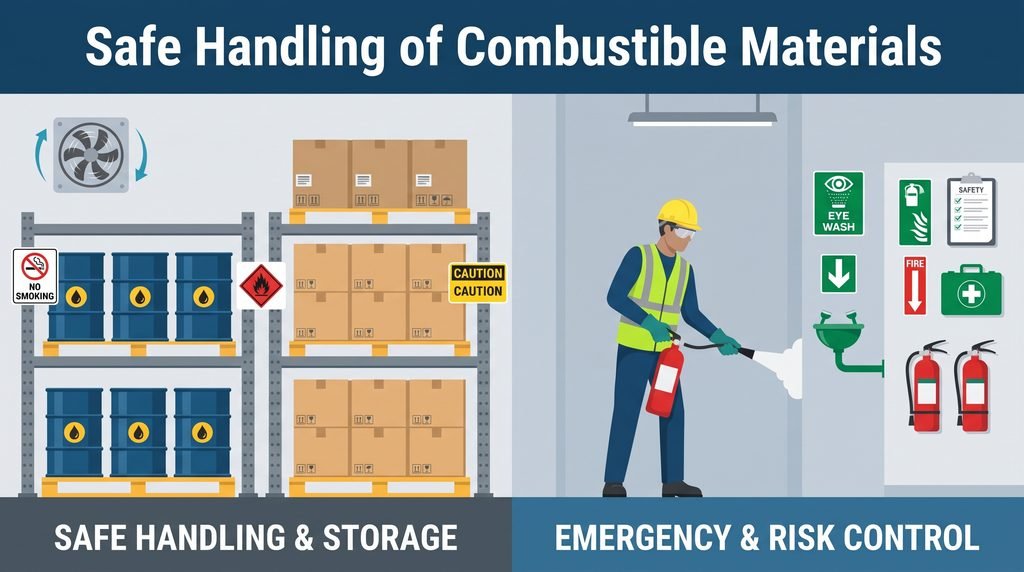
Important precautions include:
1. Appropriate Storage Facilities
Combustible materials should be stored in designated areas suitable for their physical and chemical properties. Storage facilities should be maintained to prevent unnecessary exposure to heat, ignition sources and other conditions that could initiate combustion.
2. Temperature Control
Certain materials can develop heat during manufacturing, processing or storage. Materials such as carbon black should be allowed to cool thoroughly before packaging and storage.
3. Dust Accumulation Control
Accumulated combustible dust should be removed through appropriate cleaning methods. Compressed air should not be used where it could disperse dust and create a hazardous airborne cloud.
4. Ventilation
Suitable ventilation should be provided where required to prevent the accumulation of hazardous vapours and combustion products.
5. Ignition Source Control
Smoking, open flames, sparks and uncontrolled hot work should be prohibited in designated combustible material storage and handling areas.
6. Chemical Information and Labelling
Safety Data Sheets (SDS) should be readily available to provide information about material properties, fire hazards, safe handling, storage conditions and emergency precautions.
7. Good Housekeeping
Workplaces should maintain clean and organised storage areas. Accumulated combustible residues, dust and waste should be managed through regular inspection and housekeeping arrangements.
6. Fire Prevention and Control Measures
Fire prevention measures should be developed according to the specific characteristics of the combustible materials present in the workplace.
The following controls can help reduce the likelihood and consequences of fire incidents:
- Conduct a suitable and sufficient fire risk assessment.
- Identify combustible materials and determine their relevant fire characteristics.
- Control the quantity of combustible materials kept in operational areas.
- Maintain suitable separation between incompatible or hazardous materials.
- Prevent dust accumulation through effective housekeeping.
- Ensure electrical equipment is appropriate for the hazardous area classification where applicable.
- Implement hot work permit procedures.
- Provide suitable fire detection and protection arrangements.
- Maintain emergency exits and access routes.
- Train employees in fire prevention and emergency procedures.
Firefighting Considerations
Firefighting methods must be selected according to the specific material involved. An extinguishing agent suitable for one combustible substance may be unsuitable for another.
For example, the reference material highlights the importance of water application and avoiding the disturbance of sulfur dust during firefighting operations.
Emergency responders should consult the relevant Safety Data Sheets, site emergency plans and specialist firefighting guidance before selecting an extinguishing method.
Where toxic combustion products or explosion hazards are present, trained emergency personnel should assess the situation and use appropriate respiratory and protective equipment.
7. Responsibilities of Health and Safety Professionals
Health and safety professionals play an important role in controlling the risks associated with combustible materials.
Their responsibilities include:
- Identifying combustible materials throughout the workplace.
- Evaluating fire and explosion risks through suitable risk assessments.
- Reviewing chemical storage and handling arrangements.
- Ensuring appropriate segregation and storage conditions.
- Monitoring housekeeping and dust control practices.
- Reviewing the effectiveness of fire prevention measures.
- Arranging employee training and awareness programmes.
- Coordinating with emergency response teams.
- Reviewing incidents and implementing corrective actions.
A proactive approach helps organisations identify weaknesses in existing safety arrangements and continuously improve their fire prevention systems.
8. Conclusion
Combustible materials present significant fire and explosion hazards across a wide range of industrial operations. Their risks depend on chemical composition, physical characteristics, storage conditions and exposure to potential ignition sources.
From carbon black and lamp black to sulfur, sulfides and other combustible chemicals, each material requires an understanding of its specific properties and appropriate safety precautions.
Effective management of combustible materials involves suitable risk assessments, controlled storage, ignition source management, dust prevention, proper housekeeping and employee training.
By implementing these measures, organisations can reduce the likelihood of workplace fires, protect employees and property, and strengthen their overall fire safety management systems.
Read about Safe Storage and Handling of Chemicals: Hazards and Prevention: https://learner.internationalsafetysolution.com/study-material/storage-and-handling-of-chemicals/
9. Suggested Further Reading and External References
The following authoritative resources provide additional information about combustible materials, combustible dust, fire prevention and safe handling practices.
- Health and Safety Executive (HSE) – Safe Handling of Combustible Dusts (HSG103)
https://www.hse.gov.uk/PuBns/books/hsg103.htm
Guidance on preventing and mitigating dust explosions and fires. - Occupational Safety and Health Administration (OSHA) – Combustible Dust: An Explosion Hazard
https://www.osha.gov/combustible-dust
Explains combustible dust hazards, industrial examples and prevention measures. - OSHA – Hazard Communication Guidance for Combustible Dusts
https://www.osha.gov/publications/3371combustible-dust
Provides guidance on hazard communication, dust characteristics and appropriate protective measures. - Canadian Centre for Occupational Health and Safety (CCOHS) – Combustible Dust
https://www.ccohs.ca/oshanswers/chemicals/combustible_dust.html
Covers combustible dust identification, ignition control, housekeeping and safe storage. - HSE – Preventing Dust Explosions in the Food Industry
https://www.hse.gov.uk/food/safety-hazards/dustexplosion.htm
Explains how to control fire and explosion hazards associated with dusty and powdered materials.
10. Textbook Reference
John A. Davenport – Chapter 4: Storage and Handling of Chemicals, particularly the section on Combustible Chemicals, including Carbon Black, Lamp Black, Lead Sulfocyanate, Nitroaniline, Nitrochlorobenzene, Sulfides, Sulfur and Naphthalene (pages 7-47 and 7-48).