
Introduction
Storage and Handling of Chemicals is an essential part of workplace health and safety management, particularly in industries where hazardous, combustible, reactive and toxic substances are used or stored. Improper chemical storage can result in fires, explosions, toxic releases, environmental contamination and serious injuries to workers.
Chemicals are widely used across manufacturing, construction, laboratories, warehouses, healthcare and industrial operations. Although many chemicals provide important benefits, their hazardous properties can create significant risks when they are incorrectly handled, stored or transported.
Effective chemical safety requires an understanding of chemical properties, compatibility, storage conditions, ignition sources, ventilation requirements and emergency response arrangements. Particular attention must be given to oxidizing chemicals, combustible substances, organic and inorganic peroxides, nitrates and other reactive materials.
This guide explains the major principles of Storage and Handling of Chemicals, highlighting common chemical hazards, fire and explosion risks, preventive measures and emergency control arrangements that organisations should implement to protect workers, facilities and the surrounding environment.
1. Understanding Chemical Hazards in the Workplace
Before establishing chemical storage arrangements, organisations must understand the physical, chemical and toxicological properties of the substances they handle.
Chemical hazards may include:
- Flammability: Chemicals that can ignite easily and contribute to fire development.
- Oxidizing properties: Substances that support or intensify combustion by providing oxygen or promoting oxidation.
- Reactivity: Chemicals that may react violently with other substances, water, air or heat.
- Toxicity: Substances that can cause harmful health effects through inhalation, ingestion or skin contact.
- Corrosivity: Chemicals that can damage skin, eyes, equipment and storage containers.
- Explosive properties: Substances capable of producing sudden pressure, heat and energy release under certain conditions.
A chemical’s hazard classification should be established using its Safety Data Sheet (SDS), manufacturer information and applicable chemical classification requirements.
Understanding these properties allows organisations to select appropriate storage locations, containers, protective equipment and emergency arrangements.
2. Principles of Safe Chemical Storage
Effective Storage and Handling of Chemicals begins with a systematic storage strategy. Chemicals should not simply be arranged according to convenience or available space. Their compatibility, physical condition and potential reactions must determine where and how they are stored.
2.1 Chemical Segregation
Segregation is one of the most important principles of chemical storage safety.
Incompatible chemicals should be separated to prevent dangerous reactions resulting from leaks, spills, container failures or accidental mixing.
For example:
- Oxidizing agents should be separated from combustible and flammable materials.
- Acids should be segregated from incompatible alkalis and other reactive substances.
- Water-reactive chemicals should be protected from moisture and water exposure.
- Reactive chemicals should be stored according to their specific compatibility requirements.
Segregation can involve separate storage cabinets, dedicated storage rooms, physical barriers, fire-resistant compartments or appropriate separation distances.
The required level of segregation depends on the chemical quantities, hazard characteristics, container conditions and applicable standards.
2.2 Protection Against Physical Damage
Chemical containers must be suitable for the substances they hold.
Physical damage during transportation, handling or storage can cause leaks, spills and dangerous chemical releases.
Organisations should:
- Use chemically compatible storage containers.
- Protect containers from impact and mechanical damage.
- Avoid overloading storage shelves and racks.
- Secure containers against falling or overturning.
- Inspect containers regularly for corrosion, leakage and deterioration.
- Provide suitable secondary containment where required.
Damaged containers should be managed through approved procedures by competent personnel.
2.3 Hazard Identification and Labelling
All chemical storage areas should have appropriate hazard identification and warning signs.
Chemical labels should clearly communicate relevant hazards, including flammability, toxicity, corrosivity and oxidizing properties.
A suitable chemical identification system helps workers and emergency responders recognise the substances involved and select appropriate precautions.
The NFPA 704 hazard identification system is one recognised approach for communicating chemical hazards to emergency responders.
Chemical inventories should also be maintained and kept up to date. Safety Data Sheets must be accessible to workers who need information about chemical hazards, safe handling, storage and emergency measures.
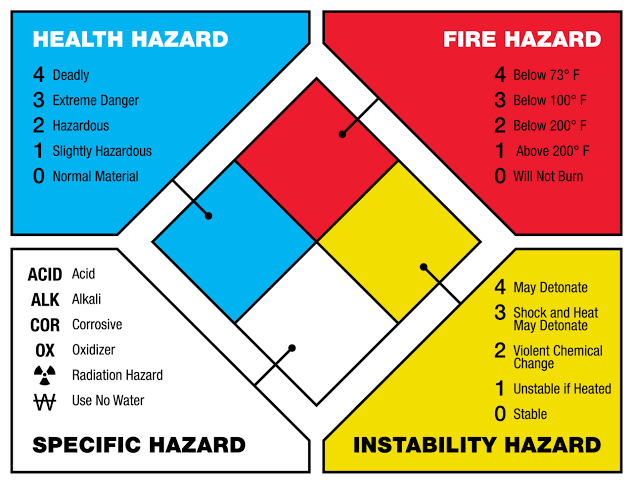
Further reading reference https://learner.internationalsafetysolution.com/blogs/nfpa-704-diamond-complete-guide-for-workplace-safety/
3. Storage of Oxidizing Chemicals
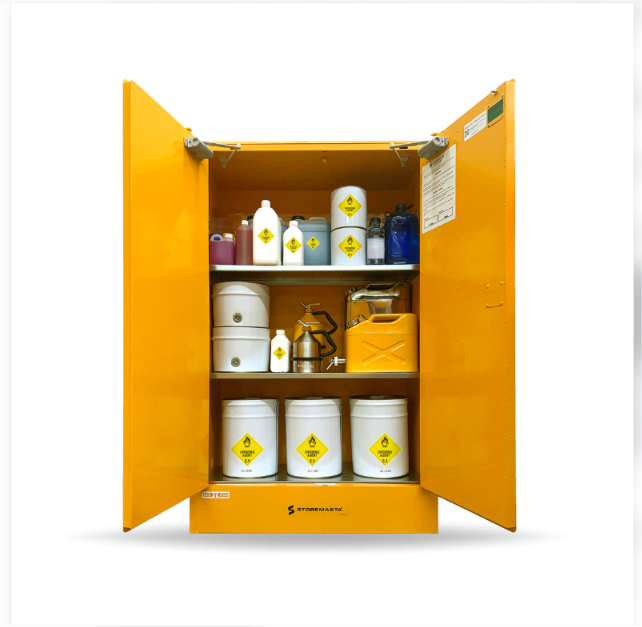
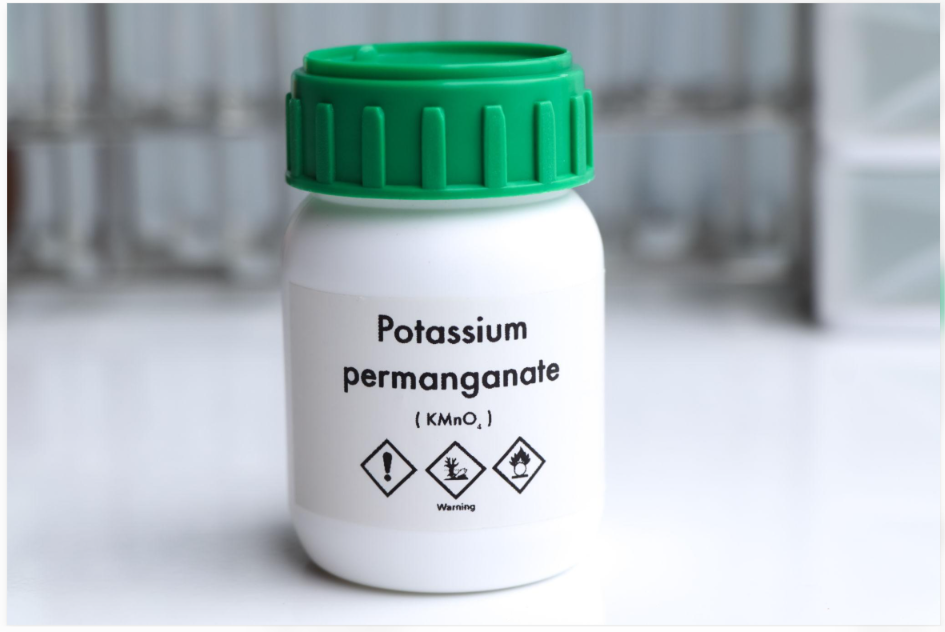
Oxidizing chemicals are substances that can intensify combustion by supplying oxygen or promoting oxidation reactions.
Although some oxidizing chemicals are not themselves combustible, they can significantly increase the severity of fires involving nearby combustible materials.
Examples include certain nitrates, chlorates, perchlorates, permanganates and inorganic peroxides.
3.1 Main Hazards of Oxidizing Chemicals
Oxidizing substances may create serious fire and explosion hazards when they come into contact with incompatible materials.
Important risks include:
- Rapid intensification of existing fires.
- Violent reactions with combustible organic materials.
- Increased fire severity due to oxygen release.
- Explosive reactions when mixed with incompatible substances.
- Dangerous decomposition caused by heat or contamination.
Oxidizers should therefore be stored separately from combustible materials, oils, grease, organic substances and other incompatible chemicals.
3.2 Safe Storage Requirements
The following precautions should be considered:
- Store oxidizers in designated and properly identified storage areas.
- Keep them away from combustible and flammable substances.
- Protect them from contamination.
- Maintain appropriate temperature and environmental conditions.
- Use compatible containers and storage equipment.
- Prevent contact with incompatible materials.
- Establish inspection and inventory procedures.
Storage arrangements must be based on the specific chemical’s SDS and applicable requirements rather than assuming all oxidizers have identical properties.
4. Storage and Handling of Combustible Chemicals
Combustible chemicals can burn when exposed to sufficient heat and an ignition source.
Many organic chemicals are combustible, and their storage requirements may resemble those applied to other combustible materials.
One example discussed in chemical safety literature is carbon black, which is used in manufacturing rubber and plastic products, including tyres.
Carbon black can present fire and dust-related hazards depending on its physical form and handling conditions.
Important Preventive Measures
- Keep combustible chemicals away from ignition sources.
- Control hot work and other activities that could generate sparks.
- Maintain good housekeeping in storage and processing areas.
- Prevent the accumulation of combustible dust.
- Use suitable containers and packaging.
- Provide appropriate fire protection systems.
- Establish procedures for controlling spills and accidental releases.
Organisations should also assess the potential for dust explosions where combustible powders are handled.
5. Storage and Handling of Nitrates
Nitrates are important industrial chemicals used in various applications, including fertiliser manufacturing and other industrial processes.
However, some nitrate compounds can present significant fire and explosion hazards, particularly when contaminated with combustible materials or exposed to unsuitable conditions.
5.1 Fire and Explosion Hazards
Certain nitrates can support combustion and release oxygen when heated.
Their hazards may increase when they become mixed with:
- Organic materials.
- Combustible packaging.
- Oils and other incompatible substances.
- Contaminants introduced during handling or storage.
Ammonium nitrate is a particularly important example because under certain conditions it can become involved in severe fires and explosions.
5.2 Safe Storage Practices
Organisations handling nitrate compounds should:
- Maintain clean and dedicated storage areas.
- Prevent contamination with incompatible substances.
- Use suitable storage containers and packaging.
- Control exposure to excessive heat.
- Maintain appropriate separation from combustible materials.
- Establish procedures for handling damaged or contaminated products.
Storage and emergency arrangements should follow the relevant chemical-specific regulations and technical guidance.
6. Storage of Inorganic Peroxides
Inorganic peroxides are another important group of chemicals that require special attention because of their oxidizing and reactive properties.
Some inorganic peroxides can release oxygen when heated and may react violently with combustible materials.
Examples include certain barium, sodium, potassium and strontium peroxide compounds.
Potential Hazards
- Release of oxygen during decomposition.
- Increased combustion intensity.
- Violent reactions with incompatible substances.
- Fire and explosion hazards resulting from contamination.
- Dangerous reactions when exposed to unsuitable environmental conditions.
Preventive Measures
Inorganic peroxides should be stored according to their specific compatibility and stability requirements.
Storage areas should be protected from contamination, excessive heat and incompatible substances. Containers should be inspected regularly, and workers should receive appropriate training.
7. Chemical Toxicity and Occupational Health Risks
Chemical toxicity is an important consideration in both routine chemical handling and emergency response.
A chemical fire or explosion may release toxic substances and harmful products of combustion, creating serious risks for workers, firefighters and nearby communities.
Exposure can occur through:
- Inhalation of toxic gases, vapours and fumes.
- Skin contact with hazardous substances.
- Accidental ingestion.
- Contact with contaminated surfaces or equipment.
7.1 Preventing Chemical Exposure
Employers should implement appropriate controls to minimise exposure.
These may include:
- Enclosed handling systems.
- Local exhaust ventilation.
- Suitable respiratory protective equipment.
- Chemical-resistant gloves and protective clothing.
- Restricted access to hazardous storage areas.
- Worker training and exposure monitoring where necessary.
Respiratory protective equipment should be selected according to the chemical hazard and exposure assessment.
7.2 Emergency Response to Toxic Chemical Releases
Emergency arrangements should identify the actions required following a chemical leak, spill, fire or explosion.
Workers must understand evacuation procedures, emergency communication arrangements and reporting requirements.
Only trained and appropriately equipped emergency responders should undertake hazardous chemical intervention.
Where toxic atmospheres may be present, suitable respiratory protection and specialist emergency response arrangements are essential.
8. Fire Control Methods for Chemical Storage Areas
Fire control arrangements for chemical storage facilities require careful planning because conventional firefighting methods may not be suitable for every chemical.
The selection of extinguishing agents depends on:
- The chemical involved.
- Its physical state.
- Its reactivity.
- Its toxicity.
- Expected products of combustion.
- The potential for violent reactions with water or other extinguishing agents.
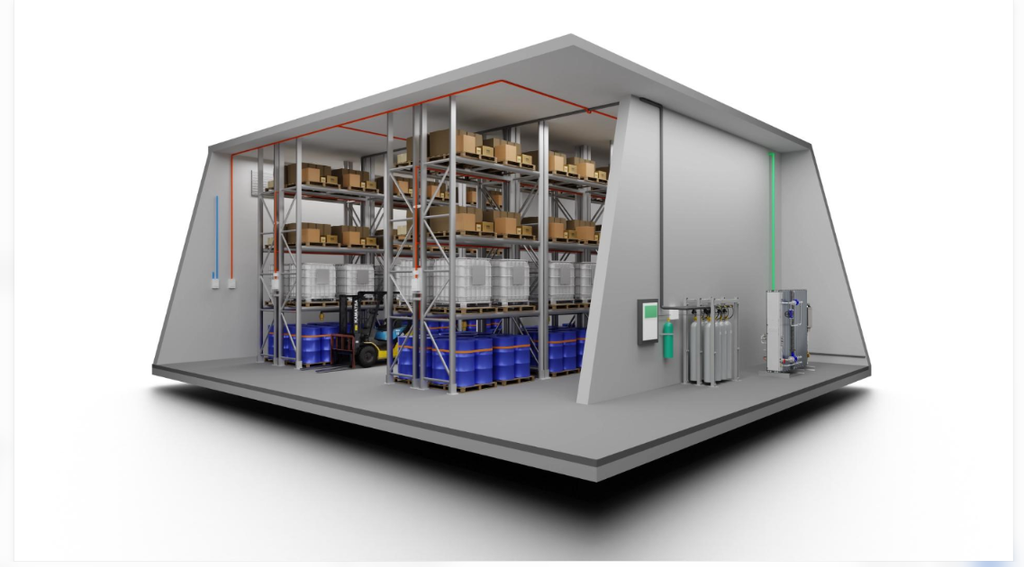
8.1 Automatic Fire Protection Systems
Automatic fire protection systems can help control or suppress fires in chemical storage facilities.
However, the system must be specifically designed for the materials being stored.
Important considerations include:
- Chemical compatibility with extinguishing agents.
- Maximum storage quantities.
- Storage configuration and container arrangements.
- Potential contamination from firewater runoff.
- Risks of violent reactions during firefighting.
8.2 Manual Firefighting Considerations
Manual firefighting in chemical storage areas can be extremely dangerous.
Firefighters must consider the possibility of toxic smoke, chemical reactions, container rupture and explosions.
Where hazardous chemical exposure or explosion risks exist, firefighting may need to be conducted remotely or from a protected location.
The decision to use a particular extinguishing agent must be based on the chemical-specific emergency response guidance.
Important: Water, dry chemical agents and other extinguishing methods are not universally suitable for chemical fires. Some reactive chemicals can react dangerously with water or other firefighting substances.
9. Chemical Storage Risk Assessment
A chemical storage risk assessment helps organisations identify hazards and determine appropriate control measures.
A systematic assessment should consider:
| Assessment Area | Key Considerations |
| Chemical identification | Chemical names, properties and hazard classifications |
| Compatibility | Potential reactions between stored substances |
| Storage conditions | Temperature, ventilation and environmental exposure |
| Container integrity | Leakage, corrosion and physical damage |
| Fire and explosion | Ignition sources, combustible materials and reactive chemicals |
| Worker exposure | Inhalation, skin contact and ingestion risks |
| Emergency arrangements | Spill response, evacuation and firefighting procedures |
Risk assessments should be reviewed whenever new chemicals are introduced, storage arrangements change or incidents reveal weaknesses in existing controls.
10. Roles and Responsibilities in Chemical Safety Management
Effective chemical safety requires cooperation between management, supervisors, safety professionals and workers.
Management responsibilities:
- Provide suitable chemical storage facilities.
- Ensure compliance with applicable legislation.
- Allocate resources for appropriate control measures.
- Establish emergency response arrangements.
Supervisors’ responsibilities:
- Monitor chemical storage and handling activities.
- Ensure workers follow approved procedures.
- Report unsafe conditions.
- Verify that inspections are completed.
Workers’ responsibilities:
- Follow chemical handling procedures.
- Use appropriate PPE.
- Maintain good housekeeping.
- Report leaks, spills and damaged containers.
- Participate in chemical safety training.
Clear communication and accountability help ensure that chemical safety arrangements are implemented consistently throughout the organisation.
11. Relevant Standards and Guidance
Organisations should consult applicable national regulations and recognised technical standards when developing chemical storage and handling arrangements.
Some useful references include:
- NFPA 400 – Hazardous Materials Code: Provides requirements and guidance for hazardous materials, including storage and handling considerations. https://www.nfpa.org/codes-and-standards/nfpa-400-standard-development/400
- NFPA 704 – Standard System for the Identification of the Hazards of Materials for Emergency Response: Provides a hazard identification system for emergency responders. https://www.nfpa.org/codes-and-standards/nfpa-704-standard-development/704
- OSHA Hazard Communication Standard: Addresses chemical hazard communication, labelling and Safety Data Sheets in the United States.
- Globally Harmonized System (GHS): Provides an internationally recognised framework for classification and communication of chemical hazards.
- Safety Data Sheets (SDS): Provide chemical-specific information about hazards, handling, storage and emergency measures.
The applicable edition and local legal requirements should always be verified before implementing technical controls.
Conclusion
Safe Storage and Handling of Chemicals is essential for preventing workplace fires, explosions, toxic exposures and environmental incidents. Organisations must understand the properties of chemicals, identify incompatible substances and establish suitable storage arrangements based on the hazards involved.
Particular attention should be given to oxidizing chemicals, combustible substances, nitrates, inorganic peroxides and toxic materials because their interactions and decomposition characteristics can create serious emergency situations.
By implementing effective segregation, hazard identification, appropriate containers, risk assessments, worker training and suitable fire protection arrangements, organisations can significantly improve chemical safety.
Chemical safety is not simply about storing substances correctly; it is about understanding their behaviour, anticipating potential hazards and maintaining effective controls throughout their entire lifecycle.
Suggested Reading and Further Study
For readers preparing for professional health and safety qualifications, particularly the NEBOSH International Diploma, the following reference provides additional technical knowledge about chemical storage and handling.
Recommended Study Reference
Book: RRC International – NEBOSH International Diploma Study Text (DI1)
Section: Section 7 – Storage and Handling of Materials
Chapter: Chapter 4 – Storage and Handling of Chemicals
Author: John A. Davenport
Suggested Reading Pages: 7-43 to 7-48