
Introduction to Evacuation Plan
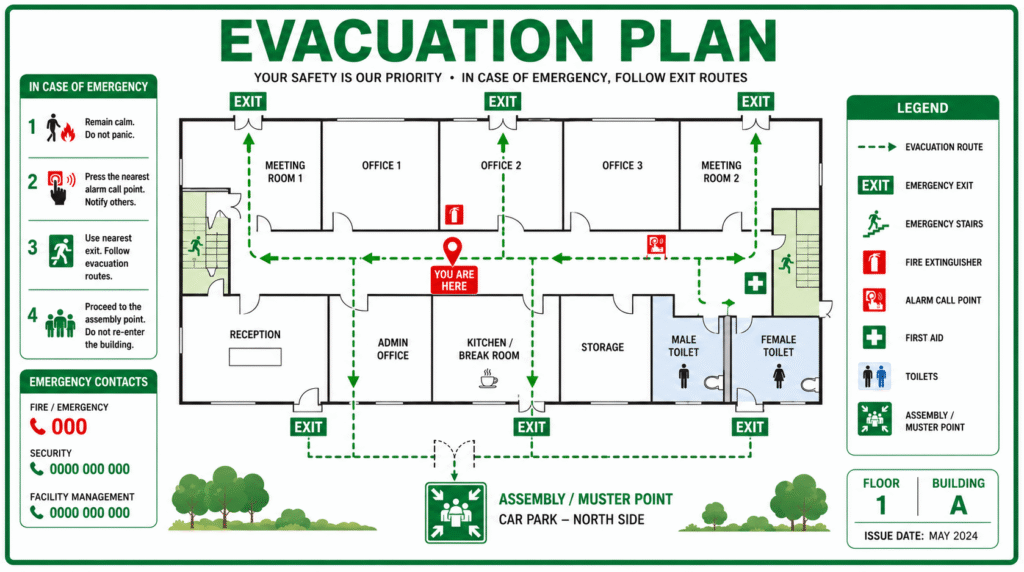
An Evacuation Plan is one of the most important components of any emergency preparedness program. It is a documented procedure that explains how employees, visitors, contractors, and members of the public can safely leave a building or workplace when an emergency occurs. Emergencies can happen at any time without warning, and when people do not know what actions to take, panic can quickly spread. A properly developed evacuation plan helps individuals respond quickly and safely, reducing the risk of injuries, fatalities, and property damage.
Every workplace, whether it is an office building, factory, warehouse, hospital, school, shopping mall, hotel, or construction site, should have a clearly defined evacuation plan. The plan must be communicated to all occupants, displayed on notice boards, and practiced regularly through emergency drills. An effective evacuation plan ensures that everyone understands where the emergency exits are located, which routes should be used, where to gather after evacuation, and who should be contacted during an emergency.
What is an Evacuation Plan?
An evacuation plan is a detailed map and written procedure designed to guide people safely from a dangerous area to a safe location. It identifies emergency escape routes, emergency exits, fire equipment locations, emergency assembly points, emergency contact information, and emergency response responsibilities. The purpose of an evacuation plan is not only to help people leave the building but also to ensure that everyone can be accounted for once they reach a safe location.
During a fire emergency, for example, smoke can reduce visibility and create panic among building occupants. Without a clear evacuation plan, people may attempt to use unsafe routes, become trapped, or delay evacuation. A properly designed evacuation plan eliminates confusion by providing clear directions and responsibilities before an emergency ever occurs.
Why is an Evacuation Plan Important?
The importance of an evacuation plan cannot be overstated. During an emergency, every second matters. People who know exactly where to go and what to do are more likely to evacuate safely than those who are unprepared. An evacuation plan provides guidance that helps prevent panic, reduces response time, and supports effective emergency management.
From a safety management perspective, evacuation plans demonstrate an organization’s commitment to protecting employees and visitors. Regulatory bodies and international standards such as OSHA, ILO, and various fire safety codes require organizations to establish emergency preparedness and evacuation procedures. A documented and tested evacuation plan helps organizations comply with these requirements while protecting lives and assets.
A good evacuation plan also improves coordination with emergency responders. When firefighters or rescue teams arrive, they can quickly understand building layouts, hazard locations, and occupancy information, allowing them to perform rescue operations more effectively.
Main Objectives of an Evacuation Plan
The primary objective of an evacuation plan is the safe and orderly evacuation of all occupants during an emergency. However, the plan serves several additional purposes. It helps ensure that emergency exits remain accessible, identifies safe escape routes, establishes assembly points, and provides accountability procedures to confirm that everyone has safely exited the building.
Another important objective is to protect vulnerable individuals, including persons with disabilities, elderly occupants, injured persons, and visitors who may be unfamiliar with the facility. The evacuation plan should include special arrangements to assist these individuals during emergencies.
The plan also supports emergency communication by identifying responsible personnel and emergency contact numbers. Effective communication can significantly improve emergency response and reduce the impact of an incident.
Information Included on an Evacuation Plan
A professional evacuation plan typically contains a building layout showing rooms, corridors, stairways, emergency exits, assembly points, and safety equipment. The plan also includes written instructions explaining evacuation procedures and emergency responsibilities.
Building occupants should be able to quickly identify their current location on the map through a “You Are Here” indicator. From that location, they should be able to determine the nearest emergency exit and alternative escape routes if the primary route becomes blocked.
The evacuation plan should be displayed in prominent locations where employees and visitors can easily access it. Common display locations include entrance areas, hallways, stairwells, cafeterias, reception areas, and near elevators.
Evacuation Plan Legend: Understanding Safety Symbols on an Evacuation Map
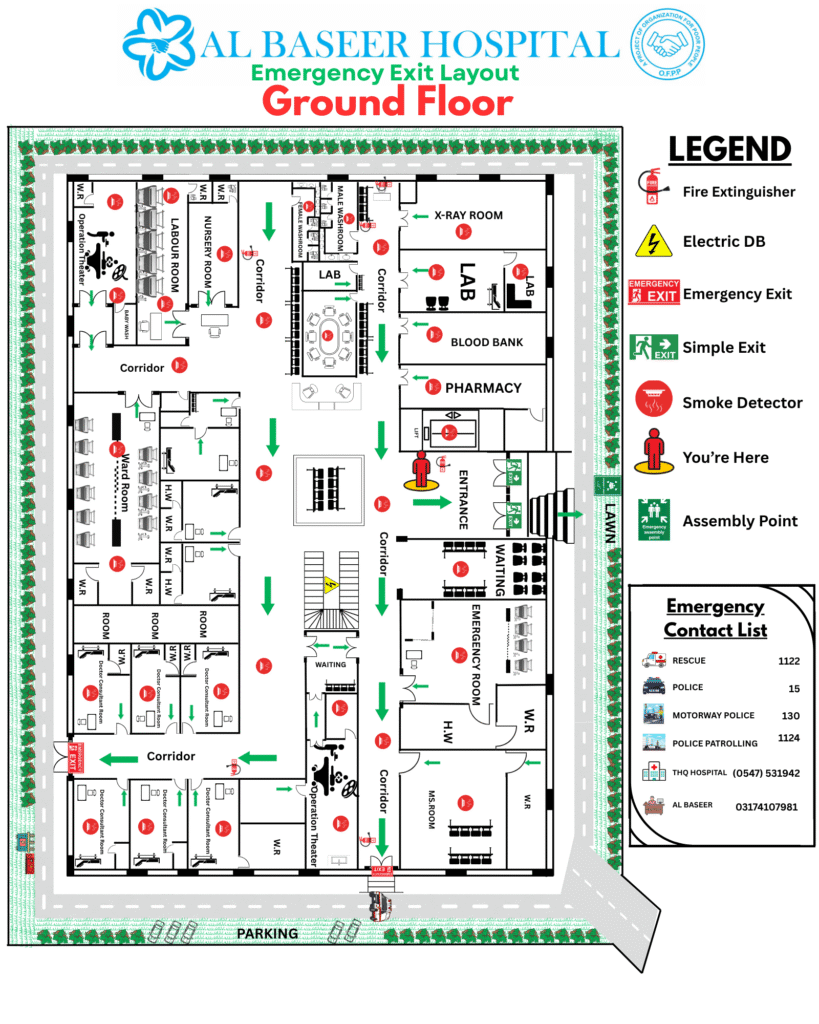
The Legend is a key section of an evacuation plan that explains the meaning of all symbols, colors, and markings used on the evacuation map. It acts as a guide that helps employees, visitors, contractors, and emergency responders quickly understand important safety information during an emergency.
In emergency situations such as fires, gas leaks, explosions, chemical spills, earthquakes, or other incidents, people may only have a few seconds to make decisions. If they do not understand the symbols displayed on the evacuation plan, valuable time can be lost. Therefore, every evacuation map should contain a clear and easy-to-read legend.
Common Symbols Found in an Evacuation Plan Legend
1. You Are Here
The “You Are Here” symbol identifies the current location of the person viewing the evacuation plan. This symbol helps occupants determine the quickest route to the nearest emergency exit.
2. Emergency Exit
Emergency exits are usually marked with a green running-man symbol. These exits are specifically designed to allow safe evacuation during emergencies and should always remain unobstructed.
3. Primary Escape Route
The primary escape route is the main path occupants should follow when evacuating the building. It is commonly shown using green arrows directing people toward the nearest emergency exit.
4. Secondary Escape Route
A secondary or alternative escape route provides another evacuation path if the primary route becomes blocked by fire, smoke, debris, or another hazard.
5. Assembly Point
The assembly point symbol indicates the designated safe location where occupants must gather after evacuating the building. Headcounts and accountability checks are conducted at this location.
6. Fire Extinguisher
This symbol shows the location of fire extinguishers. Employees trained in extinguisher use may use them for small fires only if it is safe to do so.
7. Manual Call Point (Break Glass Unit)
This symbol identifies the location of manual fire alarm activation points. Occupants can activate the fire alarm by breaking the glass or pressing the emergency button.
8. Fire Alarm Control Panel
The Fire Alarm Control Panel monitors the building’s fire detection system and displays alarm information for emergency responders and facility management.
9. Fire Hose Reel
This symbol indicates the location of fire hose reels used by trained personnel or firefighters to control larger fires.
10. First Aid Kit
The first aid symbol identifies the location of first aid supplies used to provide immediate treatment for injuries before medical assistance arrives.
11. Emergency Telephone
This symbol indicates emergency communication devices that can be used to contact security personnel, emergency coordinators, or external emergency services.
12. Emergency Shower
Emergency showers are commonly found in laboratories and chemical processing facilities. They are used to wash hazardous substances from the body.
13. Eyewash Station
Eyewash stations provide immediate flushing of the eyes following chemical exposure or contamination incidents.
14. Staircase
The staircase symbol identifies emergency stairwells that should be used during evacuation. Elevators should generally not be used during fire emergencies.
15. Emergency Equipment
This symbol identifies locations containing emergency response equipment such as spill kits, rescue equipment, breathing apparatus, or emergency tools.
Importance of Understanding the Legend
Understanding evacuation plan legends is essential because emergency situations often create panic, confusion, and reduced visibility. Employees who are familiar with evacuation symbols can quickly locate exits, emergency equipment, assembly points, and safe routes without hesitation. Regular safety training and evacuation drills should include instruction on all symbols used within the facility’s evacuation plans.
A well-designed legend ensures that everyone, including visitors who are unfamiliar with the building, can understand the evacuation map and respond effectively during an emergency.
Emergency Contacts in an Evacuation Plan
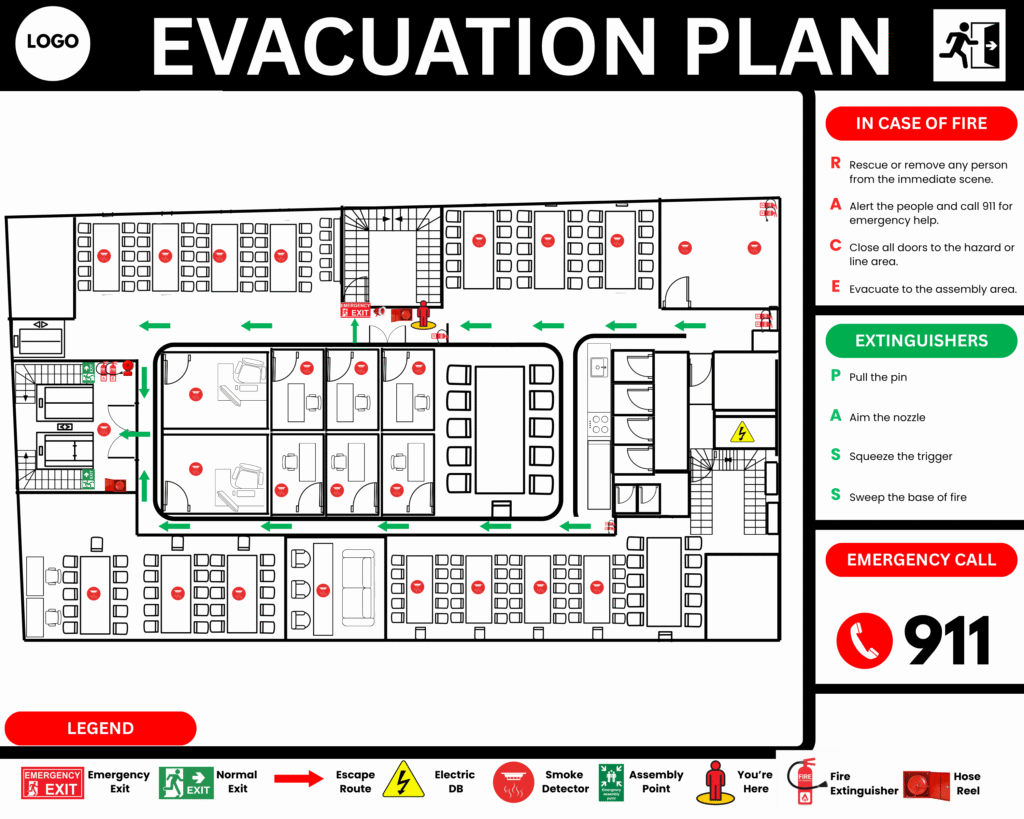
Emergency contact information is a critical part of any evacuation plan. During an emergency, occupants and emergency coordinators must be able to contact the appropriate authorities without delay.
Emergency contact information typically includes the local fire department, ambulance services, police department, hospital, facility emergency coordinator, security department, maintenance team, and senior management representatives. Contact numbers should be regularly reviewed and updated to ensure accuracy.
Many organizations also include external emergency contacts such as utility providers, gas suppliers, electrical authorities, and specialized rescue services. These contacts can provide essential support during specific emergency situations.
Emergency contact details should be clearly visible on evacuation maps, notice boards, emergency response plans, and employee safety handbooks.
Emergency Assembly Point
An emergency assembly point is a predetermined safe location where occupants gather after evacuating a building. The assembly point should be located at a safe distance from potential hazards while remaining accessible to all evacuees.
Once occupants arrive at the assembly point, supervisors or fire wardens conduct headcounts to verify that everyone has evacuated safely. Missing individuals can then be reported to emergency responders for potential rescue operations.
Employees should never leave the assembly point until authorized personnel confirm that it is safe to do so. Returning to a building without authorization can place individuals at serious risk.
Roles and Responsibilities During Evacuation
Successful evacuation depends on clearly defined responsibilities. Employees are responsible for immediately following evacuation instructions and proceeding to designated assembly points. Supervisors ensure that personnel under their control evacuate safely and participate in accountability checks.
Fire wardens or emergency marshals assist with directing occupants, checking designated areas, and reporting evacuation status. Security personnel help control access and support emergency responders. Management provides resources, training, and oversight to maintain an effective evacuation program.
Evacuation Drills and Training
An evacuation plan is only effective if people know how to use it. Regular evacuation drills provide practical experience and help identify weaknesses in emergency procedures. Drills allow employees to become familiar with escape routes, assembly points, alarm signals, and emergency responsibilities.
Organizations should conduct evacuation drills periodically and document the results. Lessons learned from drills should be used to improve evacuation procedures and emergency preparedness.
Conclusion
An evacuation plan is a life-saving document that plays a vital role in emergency preparedness. It provides clear guidance on how occupants can safely leave a building during emergencies, identifies emergency exits and escape routes, explains legends and safety symbols, lists emergency contacts, and establishes assembly point procedures. A well-designed evacuation plan, supported by training and regular drills, significantly reduces risks and improves emergency response effectiveness. Every organization should ensure that evacuation plans are current, accessible, and understood by all employees and visitors to maintain a safe working environment.