
1. Introduction to Fire Blanket (Fire Blanket: Uses, Hazards):
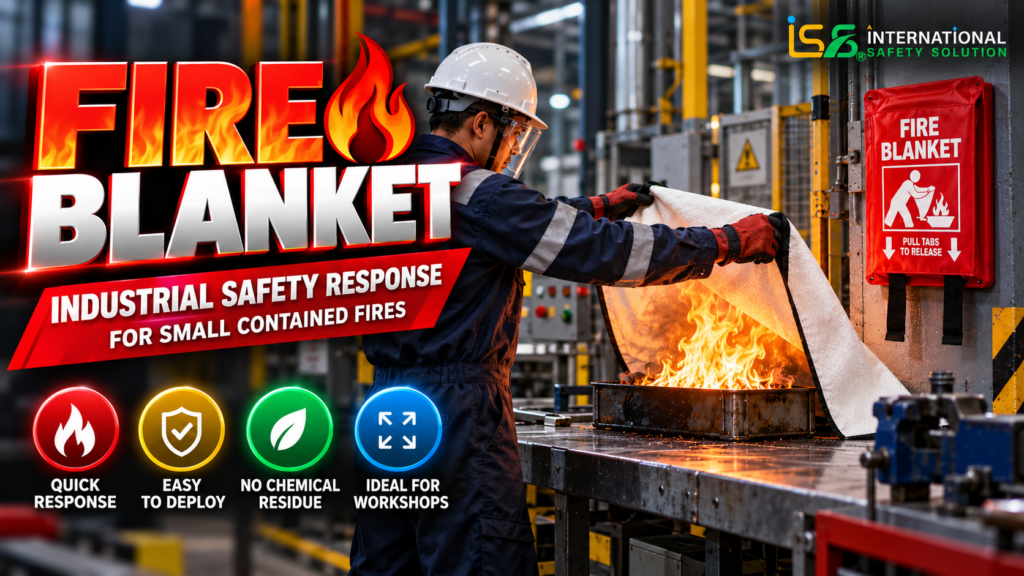
Fire Blanket: Uses, Hazards: A fire blanket is an essential fire safety device designed to control small fires during their initial stages. It is commonly used in kitchens, laboratories, workshops, workplaces, and other areas where fire hazards may occur.
Fire blankets provide a quick and effective way to control suitable small fires by cutting off the oxygen supply. When used correctly, they can help prevent fire spread, reduce property damage, and protect people from serious injuries.
2. What Is a Fire Blanket?
A fire blanket is a flexible sheet made from specially designed fire-resistant materials, commonly coated or treated fiberglass. It is used to smother small fires by covering the burning material and restricting oxygen.
Unlike fire extinguishers, fire blankets do not require spraying chemicals or powder onto the fire.
Practical Example: If a small cooking oil fire starts in a frying pan, a suitable fire blanket may be carefully placed over the pan to extinguish the flames, provided the fire is small and it is safe to approach.
🔥 Small Fire? Be Ready with a Fire Blanket!
🚨 Don’t let a small fire turn into a major emergency! Improve your workplace emergency readiness with a Fire Blanket — quick to deploy, easy to use, and an essential addition to your fire safety equipment.
🛒 Shop Fire Blankets at the International Safety Solution Store and invest in a safer workplace today!
Safety Today | Strong & Secure Tomorrow
International Safety Solution (ISS)
3. How Does a Fire Blanket Work?
A fire blanket works through the principle of oxygen removal, one of the three elements of the fire triangle.
The fire triangle consists of:
- Heat: The energy required to start and maintain a fire.
- Fuel: Combustible materials that support burning.
- Oxygen: The element required to sustain combustion.
When a fire blanket completely covers a small fire, it limits the oxygen supply and helps extinguish the flames.
4. Common Uses of Fire Blankets
Fire blankets are useful in different environments where small fire emergencies may occur.
| Location | Practical Application |
| Kitchens | Controlling suitable small cooking pan fires |
| Laboratories | Smothering certain small, contained fires |
| Workshops | Controlling small fires involving suitable materials |
| Industrial workplaces | Providing supplementary first-response fire protection |
| Homes | Controlling small, early-stage fires where safe |
| Clothing emergencies | Smothering burning clothing using a suitably sized blanket |
Important: Fire blankets are not suitable for every fire. Their use depends on the fire type, size, blanket rating, and manufacturer’s instructions.
5. Key Benefits of Fire Blankets
1. Quick Emergency Response
A fire blanket can be deployed quickly to control a small fire before it spreads, provided the user has been trained and conditions are safe.
2. Easy to Operate
Fire blankets generally have a simple pull-tab design, making them relatively easy to deploy.
3. No Chemical Residue
Unlike powder extinguishers, fire blankets do not leave chemical residue after use.
4. Suitable for Small Cooking Fires
A correctly rated fire blanket can help control small cooking oil fires without using water.
5. Compact and Convenient
Fire blankets require limited storage space and can be mounted near suitable fire-risk areas.
6. Additional Workplace Protection
Fire blankets complement other fire safety equipment, including fire extinguishers, alarms, and emergency evacuation systems.
6. How to Use a Fire Blanket Safely
A fire blanket should only be used when the fire is small, contained, and safe to approach.
- Pull the Tabs: Remove the fire blanket from its protective container.
- Protect Your Hands: Hold the upper edges folded over your hands.
- Approach Carefully: Keep the blanket between yourself and the flames.
- Cover the Fire: Gently place the blanket completely over the burning pan or object without disturbing it.
- Turn Off the Heat: Switch off the heat source if it is safe to do so.
- Allow Cooling: For a cooking pan fire, leave the blanket in place for at least 30 minutes, following manufacturer and fire-service guidance.
- Seek Assistance: Follow emergency procedures and arrange safe disposal or replacement of the blanket.
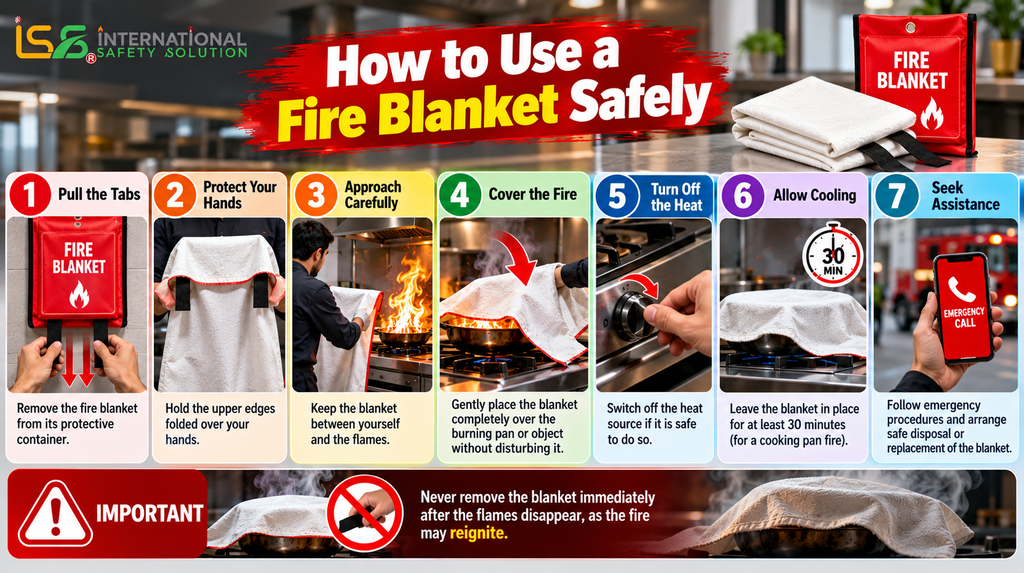
Never remove the blanket immediately after the flames disappear, as the fire may reignite.
7. Safety Hazards Associated with Fire Blankets
1. Burns from Improper Handling
Incorrectly holding or positioning the blanket may expose hands and arms to flames or hot surfaces.
2. Fire Reignition
Removing the blanket before the burning material has cooled sufficiently may allow oxygen to re-enter and reignite the fire.
3. Unsuitable Fire Applications
Using a fire blanket on large fires, pressurized gas fires, or burning reactive metals can be ineffective or dangerous.
4. Damaged Fire Blanket
A torn, contaminated, or deteriorated blanket may not provide the intended protection.
5. Delayed Emergency Response
Attempting to fight a spreading fire instead of evacuating can increase the risk of smoke inhalation, burns, and serious injury.

8. Safety Precautions for Fire Blankets
- Install fire blankets in clearly visible and easily accessible locations, away from direct fire hazards.
- Provide practical training on correct deployment and emergency response.
- Never use water on burning cooking oil.
- Avoid moving burning pans or containers.
- Keep escape routes clear before attempting to control a small fire.
- Regularly check the blanket’s container, instructions, accessibility, and visible condition.
- Replace single-use fire blankets after deployment.
- Evacuate immediately if the fire spreads or conditions become unsafe.
9. Fire Blanket Safety Standards
BS EN 1869:2019 is a recognized European and British standard specifying requirements for single-use fire blankets intended to control small fires.
It addresses important safety characteristics, including:
- Fire resistance and extinguishing performance
- Construction and dimensions
- Safe handling and deployment
- Packaging and product marking
- Performance testing
Under EN 1869:2019, a fire blanket intended for use on a person whose clothing is burning must be at least 1.2 m × 1.8 m.
10. Fire Blanket vs. Fire Extinguisher
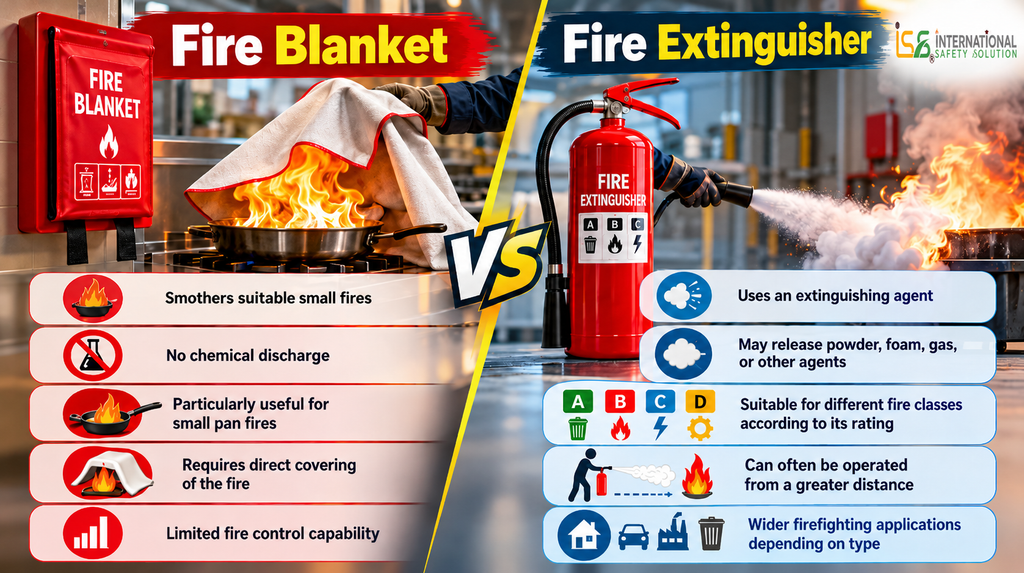
| Fire Blanket | Fire Extinguisher |
| Smothers suitable small fires | Uses an extinguishing agent |
| No chemical discharge | May release powder, foam, gas, or other agents |
| Particularly useful for small pan fires | Suitable for different fire classes according to its rating |
| Requires direct covering of the fire | Can often be operated from a greater distance |
| Limited fire control capability | Wider firefighting applications depending on type |
11. Fire Blanket Inspection and Maintenance
To ensure proper emergency readiness, workplaces should establish routine inspections.
Important inspection points:
- Check that the blanket is present in its container.
- Ensure the container is visible, accessible, and correctly positioned.
- Verify that operating instructions remain readable.
- Inspect for signs of damage or contamination where possible without compromising the packaging.
- Follow the manufacturer’s replacement and inspection recommendations.
A used or damaged single-use fire blanket must be replaced rather than returned to service.
12. Conclusion
Fire blankets are an important part of workplace and domestic fire safety. Their simple design, rapid deployment, and ability to control suitable small fires make them a valuable addition to emergency preparedness arrangements.
However, proper training, correct installation, regular inspection, and an understanding of their limitations are essential for safe and effective use.
International Safety Solution (ISS) promotes practical fire safety awareness, emergency preparedness, and appropriate fire protection equipment to help create safer workplaces.