

Introduction
A Self-Contained Breathing Apparatus, commonly known as SCBA, is one of the most critical life-saving devices used in firefighting, rescue operations, confined space entry, hazardous material response, marine safety, industrial emergency response, and oil and gas operations. In any environment where the atmosphere is unsafe to breathe, the SCBA provides the user with an independent supply of clean breathing air.
Firefighters, emergency responders, rescue teams, industrial safety personnel, confined space workers, ship crews, and oil and gas emergency teams often face dangerous atmospheres where normal breathing is impossible or life-threatening. These environments may contain smoke, toxic gases, oxygen deficiency, chemical vapors, hot gases, airborne contaminants, or unknown atmospheric hazards. In such conditions, relying on the surrounding air can lead to suffocation, poisoning, unconsciousness, or death. The SCBA eliminates this dependency by allowing the user to breathe from a compressed air cylinder carried on the back.
An SCBA is not ordinary respiratory protection. It is a high-performance emergency breathing system designed for trained users only. It supports safe entry into hazardous areas, assists in rescue operations, and allows emergency responders to work effectively where visibility is poor, oxygen levels are low, or toxic contaminants are present.
What Is a Self-Contained Breathing Apparatus?
A Self-Contained Breathing Apparatus is a respiratory protection system that supplies breathable compressed air from a cylinder worn by the user. The word “self-contained” means that the breathing air is carried by the user and does not depend on an external air line or the surrounding atmosphere.
The main purpose of SCBA is to protect the respiratory system of the wearer in an Immediately Dangerous to Life or Health environment. Such environments may include:
Fire and smoke-filled buildings
Confined spaces with low oxygen
Tanks, vessels, pits, tunnels, and manholes
Chemical spill areas
Toxic gas release zones
Industrial emergency locations
Oil and gas sites
Marine and shipboard emergencies
Rescue operations in unknown atmospheres
An SCBA allows the wearer to enter, work, rescue, evacuate, and survive in areas where breathing without protection would be unsafe.
Why SCBA Is Important
The respiratory system is one of the most vulnerable parts of the human body during emergencies. A person can survive for days without food and hours without water, but only a few minutes without oxygen. In fire and industrial emergencies, the atmosphere may become dangerous very quickly.
Smoke from fire contains carbon monoxide, carbon dioxide, hydrogen cyanide, unburned hydrocarbons, particulate matter, and other toxic products of combustion. In confined spaces, oxygen may be displaced by gases such as nitrogen, methane, carbon dioxide, or chemical vapors. In chemical emergencies, toxic gases can enter the body through inhalation and cause serious injury or death within minutes.
SCBA is important because it provides:
Independent breathing air
Protection against toxic gases and smoke
Protection in oxygen-deficient atmospheres
Support for firefighting and rescue operations
Safe entry into confined spaces
Emergency escape capability
Improved responder confidence and operational effectiveness
Without SCBA, firefighters and rescue workers would not be able to safely enter many dangerous environments.
Common Applications of SCBA
SCBA is widely used in high-risk industries and emergency operations. Its application is not limited to firefighting only.
Firefighting
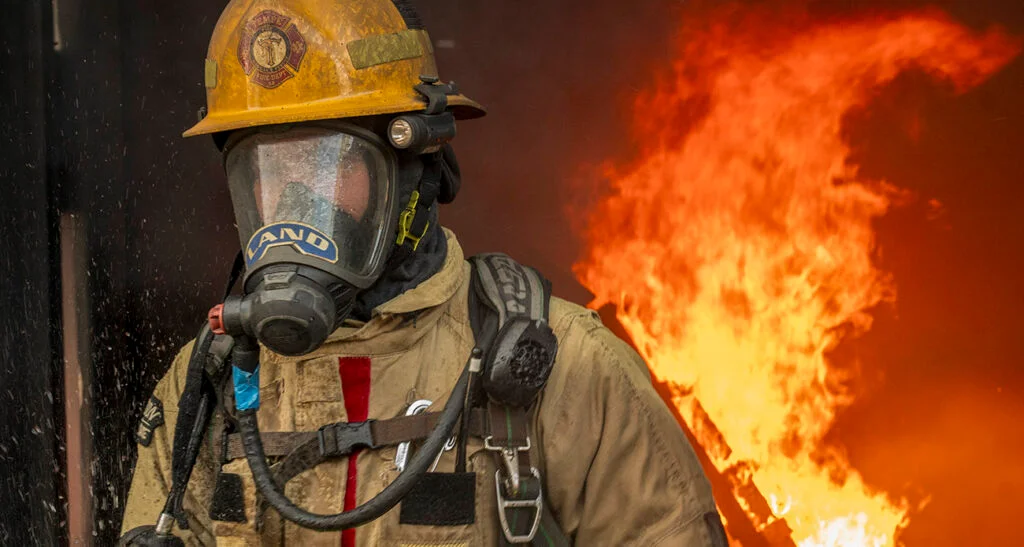
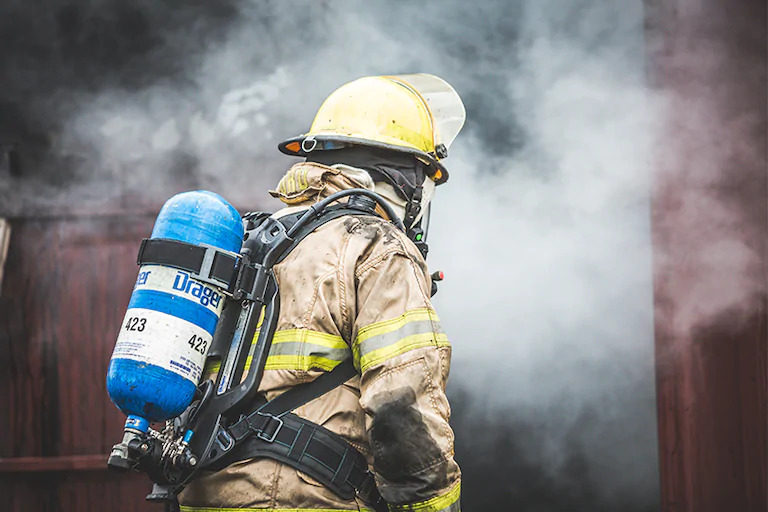
Firefighting is the most common use of SCBA. During structural fires, industrial fires, vehicle fires, warehouse fires, basement fires, and electrical fires, the atmosphere becomes filled with smoke and toxic gases. SCBA allows firefighters to enter smoke-filled areas, perform search and rescue, locate the fire source, control the fire, and evacuate trapped persons.
Rescue Operations
Rescue teams use SCBA during emergencies where victims may be trapped in hazardous atmospheres. This includes building fires, confined spaces, chemical incidents, industrial accidents, collapsed structures, and gas leakage situations. SCBA allows rescuers to enter dangerous zones safely and remove casualties.
Confined Space Entry
Confined spaces are among the most dangerous work environments. Examples include tanks, silos, pits, manholes, vessels, pipelines, chambers, and underground ducts. These spaces may contain low oxygen, toxic gases, flammable vapors, or trapped contaminants. SCBA is used when the atmosphere is unsafe, unknown, or cannot be made safe through ventilation.
Industrial Emergencies
Industries such as textiles, chemicals, manufacturing, power plants, fertilizer plants, refineries, and warehouses may face fire, gas leakage, chemical release, or oxygen-deficient incidents. SCBA is used by emergency response teams to control hazards and rescue affected workers.
Oil and Gas Sites
Oil and gas facilities have a high risk of toxic gas exposure, especially hydrogen sulfide, flammable vapors, and oxygen displacement. SCBA is essential during emergency response, gas release control, shutdown operations, and rescue activities.
Marine and Shipboard Use
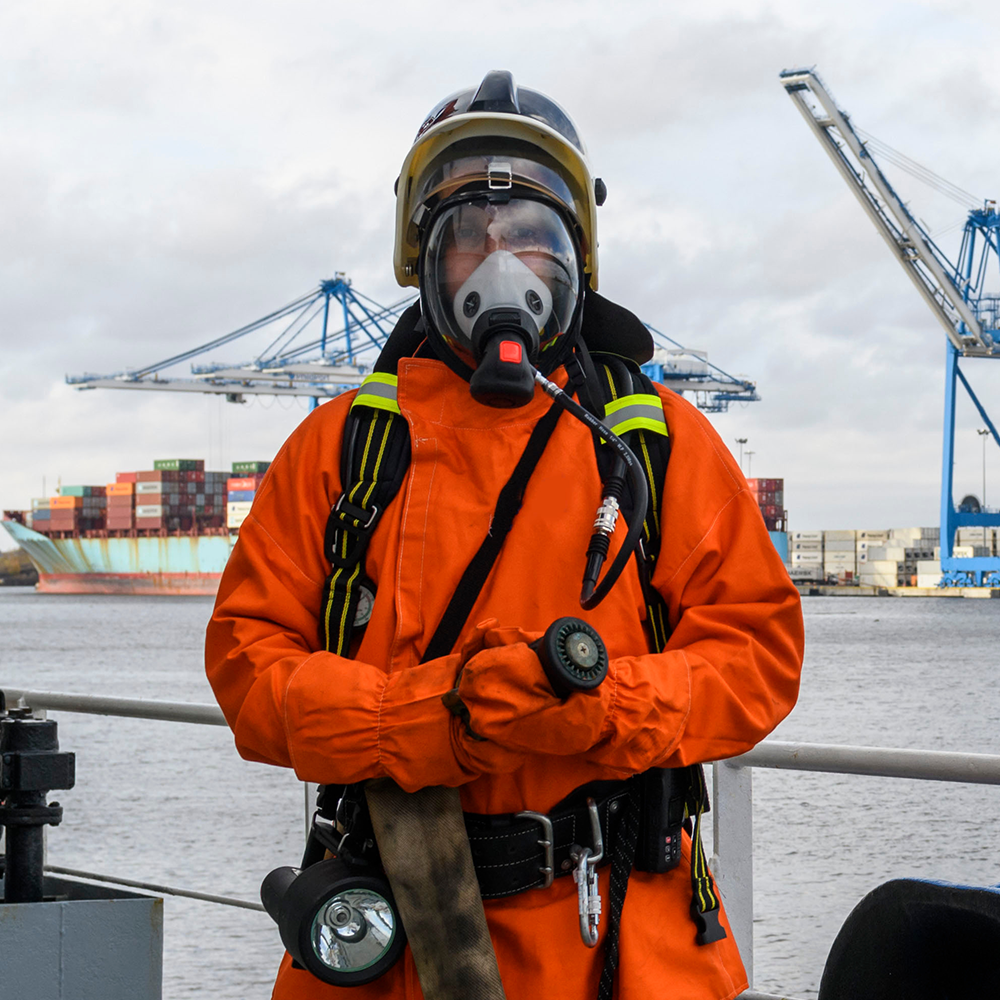
Ships, offshore platforms, engine rooms, cargo holds, and marine confined spaces may develop smoke, toxic gases, or oxygen-deficient atmospheres. SCBA is commonly used in marine firefighting and shipboard rescue operations. MED/SOLAS-approved SCBA units are particularly important for marine safety compliance.
Main Components of SCBA
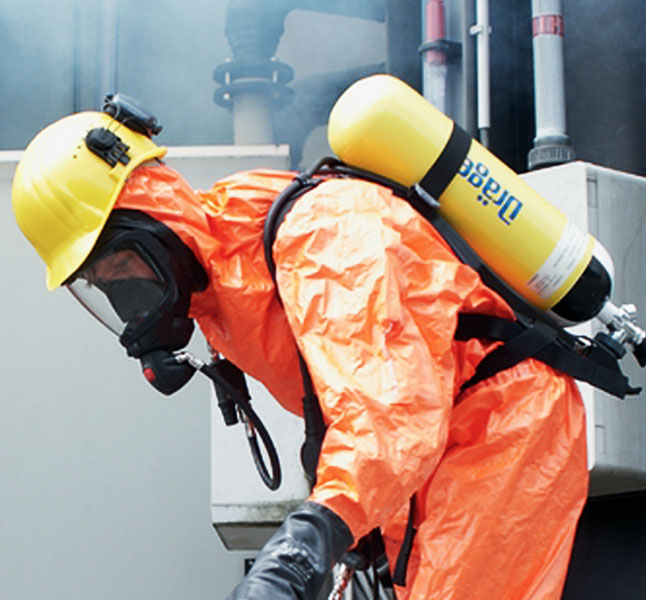
A complete SCBA system consists of several important components. Each component plays a specific role in providing safe breathing air to the user.
1. Air Cylinder
The air cylinder stores compressed breathable air. In the referenced SCBA unit, the cylinder volume is 6 liters and the air capacity is approximately 1800 liters. The cylinder is commonly made of steel or composite material depending on the design.
The air cylinder is the main source of breathing air. The duration of use depends on cylinder size, air pressure, user breathing rate, work intensity, physical fitness, stress level, and emergency conditions.
A 6L SCBA cylinder with 1800L air capacity may provide around 50 to 60 minutes of air supply under standard conditions. However, in real emergency operations, actual duration may be less because users breathe faster during heavy work, panic, heat exposure, climbing, rescue movement, or firefighting activities.
2. Cylinder Valve
The cylinder valve controls the release of compressed air from the cylinder. It allows the user to open or close the air supply. The valve must be fully opened before use and properly closed after operation.
A damaged, leaking, or partially opened cylinder valve can create serious risk. Therefore, cylinder valve inspection is an important part of pre-use checking.
3. Pressure Reducer or First Stage Regulator
The pressure reducer, also called the first stage regulator, reduces high-pressure air from the cylinder to a safer intermediate pressure. Compressed air inside the cylinder is stored at high pressure, which cannot be delivered directly to the face mask. The pressure reducer controls this pressure and makes it suitable for further regulation.
This component is critical because it maintains controlled air flow from the cylinder to the breathing system.
4. Demand Valve or Second Stage Regulator
The demand valve, also known as the second stage regulator, supplies air to the user according to breathing demand. When the user inhales, the valve delivers air into the face mask. When the user exhales, the exhaled air leaves through the exhalation valve.
An efficient demand valve helps reduce breathing resistance and ensures that the user receives adequate air during physical work.
5. Full Face Mask
The full face mask covers the eyes, nose, and mouth. It creates a sealed breathing zone around the face and protects the respiratory system from smoke, gases, and contaminants.
A good SCBA mask usually includes:
Anti-fog visor
Positive pressure design
Face seal
Head net or harness
Wide viewing area
Exhalation valve
Connection point for demand valve
The anti-fog visor improves visibility during operations. The positive pressure design helps prevent contaminants from entering the mask if a minor leakage occurs. The face seal must fit properly because even a small leak can compromise user safety.
6. Pressure Gauge
The pressure gauge shows the remaining cylinder pressure. It allows the user to monitor air supply during operation. Regular pressure checking is essential because running out of air in a hazardous atmosphere can be fatal.
Users must be trained to monitor the gauge before entry, during operation, and before exit. Air management is one of the most important principles of SCBA use.
7. Warning Whistle or Low-Pressure Alarm
The warning whistle activates when cylinder pressure drops to a preset level. In the referenced SCBA specification, the alarm pressure is 5.5 ± 0.5 MPa, and the warning alarm is approximately 90dB.
The purpose of the alarm is to warn the user that air supply is becoming low and that immediate exit is required. The alarm should never be ignored. Once the alarm activates, the user must leave the hazardous area immediately using the safest route.
8. High-Pressure Hose
The high-pressure hose carries compressed air from the cylinder to the pressure reducer and related components. It must be strong enough to handle high pressure safely.
Before use, the hose should be checked for cracks, cuts, leakage, abrasion, loose connections, or physical damage.
9. Medium-Pressure Hose
The medium-pressure hose carries regulated air from the pressure reducer to the demand valve. It must remain flexible, leak-free, and properly connected.
Damage to this hose may reduce air supply or cause leakage, which can create a serious hazard during emergency response.
10. Back Frame and Harness System
The back frame and harness system support the cylinder and allow the user to wear the SCBA on the back. A comfortable harness is important because firefighting and rescue activities require movement, bending, climbing, crawling, lifting, and carrying equipment.
An anatomic back frame improves weight distribution and reduces fatigue. Shoulder straps, waist belt, and buckles keep the SCBA secure during operation.
11. Waist Buckle and Adjustable Straps
The waist buckle and adjustable straps help secure the unit to the body. Proper adjustment is essential for comfort, balance, and safety. A loose SCBA can disturb movement, while an overly tight harness can restrict breathing and mobility.
12. Reflective Trims
Reflective trims improve visibility in dark, smoky, or low-light environments. They help team members locate each other during emergency operations.
Technical Specifications and Their Meaning
SCBA technical specifications are important because they define the performance, capacity, safety limits, and operational use of the equipment.
Cylinder Volume: 6L
Cylinder volume refers to the physical capacity of the air cylinder. A 6-liter cylinder is common for firefighting and industrial emergency use. It provides a balance between air supply and portability.
Air Capacity: 1800L
Air capacity means the total volume of breathable air stored in the cylinder when filled to its rated pressure. In this case, the cylinder provides approximately 1800 liters of compressed air.
Usage Time: 50–60 Minutes
The expected usage time indicates how long the cylinder may supply air under normal conditions. However, actual working duration depends on the user’s breathing rate and workload. Heavy firefighting may reduce the duration significantly.
Gas Flow Rate: Greater Than 300L/min
The gas flow rate shows the system’s ability to supply air during high breathing demand. A flow rate above 300 liters per minute indicates that the SCBA can support users during physically demanding emergency work.
Inhalation Resistance: ≤500Pa
Inhalation resistance refers to the effort required to breathe in through the system. Lower resistance means easier breathing. A value of 500Pa or less indicates that the system is designed to reduce breathing effort.
Exhalation Resistance: ≤700Pa
Exhalation resistance refers to the effort required to breathe out through the mask and valve system. Controlled resistance helps maintain positive pressure while still allowing comfortable breathing.
Weight: ≤21kg
SCBA weight includes the cylinder, back frame, harness, hoses, regulator, and mask. A weight of 21kg or less is manageable for trained users, but it still requires physical fitness and proper training.
Alarm Pressure: 5.5 ± 0.5 MPa
Alarm pressure is the pressure level at which the low-air warning activates. This gives the user time to exit before the cylinder becomes empty.
Export Pressure: 0.65 ± 0.2 MPa
Export pressure refers to the regulated pressure supplied from the reducer to the breathing system. Stable pressure is necessary for safe and consistent air delivery.
Relief Valve Pressure: 1.0–1.2 MPa
The relief valve prevents overpressure in the system. If pressure rises beyond the safe range, the relief valve helps release excess pressure to protect the equipment and user.
Packing Size: 710 × 430 × 290mm
Packing size is important for storage, transportation, inventory planning, and emergency vehicle placement.
Positive Pressure SCBA: Why It Matters
Many modern SCBA units use positive pressure technology. In a positive pressure face mask, the pressure inside the mask remains slightly higher than the surrounding atmosphere. This means that if a small gap occurs in the face seal, clean air tends to flow outward rather than allowing contaminated air to enter.
This feature is especially important in smoke, toxic gas, chemical vapor, and oxygen-deficient environments. Positive pressure provides an additional layer of respiratory protection, but it does not replace the need for proper mask fit, inspection, and training.
Air Duration and Air Management
One of the most important aspects of SCBA use is air management. The rated duration of an SCBA cylinder should never be treated as guaranteed working time. For example, a cylinder rated for 50 to 60 minutes may last much less during heavy work.
Air consumption increases due to:
Heavy physical activity
Stress and panic
High temperature
Climbing stairs
Dragging hoses
Carrying casualties
Wearing heavy PPE
Poor physical fitness
Rapid breathing
Emergency movement
A trained SCBA user must follow safe air management principles:
Check cylinder pressure before entry
Estimate work time and exit time
Monitor pressure gauge during operation
Work in teams
Exit before air becomes critically low
Never wait for the low-pressure alarm as the normal exit point
Treat the alarm as an emergency exit warning
SCBA Pre-Use Inspection
Before using SCBA, a complete inspection must be performed. Pre-use checks help ensure that the unit is safe, functional, and ready for emergency operation.
A standard pre-use inspection should include:
Check cylinder pressure
Inspect cylinder condition
Check cylinder valve operation
Inspect pressure gauge
Inspect hoses for cracks, cuts, and leaks
Check regulator connection
Inspect demand valve
Check face mask visor and seal
Check head harness or head net
Check back frame and straps
Check waist buckle
Test warning whistle or alarm
Check for physical damage
Confirm positive pressure function
Ensure all connections are tight
Verify that the unit is clean and ready
If any defect is found, the SCBA must be removed from service and inspected by a competent person.
Donning Procedure for SCBA
Proper donning means wearing the SCBA correctly before entering a hazardous area. Incorrect donning can cause air leakage, discomfort, poor mobility, or equipment failure during operation.
A general donning procedure includes:
Place the SCBA on the back
Adjust shoulder straps
Secure the waist belt
Open the cylinder valve fully
Check pressure gauge
Wear the full face mask
Tighten the head harness evenly
Check face seal
Connect the demand valve
Confirm positive pressure
Check breathing comfort
Confirm communication with team
Enter only after final safety confirmation
Training and repeated practice are necessary so users can don SCBA quickly and correctly during real emergencies.
Face Seal and Fit Testing
The face mask seal is one of the most important safety factors in SCBA use. If the mask does not seal properly, contaminated air may enter. Facial hair, wrong mask size, damaged seal, incorrect strap adjustment, or poor donning can affect the seal.
Users should be clean-shaven where the mask seal contacts the face. A seal check must be performed before entry. Organizations should ensure proper fit testing and mask selection for each user.
Safe Use During Firefighting and Rescue
SCBA users must follow strict safety procedures during emergency operations. Entering a hazardous area with SCBA does not eliminate all risks. It only protects breathing. Other hazards may still exist, including heat, collapse, electrical shock, explosion, falling objects, chemical exposure, poor visibility, and entanglement.
Safe use includes:
Work in teams
Maintain communication
Use entry control systems
Monitor air pressure
Maintain orientation
Follow command instructions
Use lifelines where required
Avoid unnecessary air consumption
Do not remove the mask inside the hazard area
Exit immediately when ordered
Exit when alarm activates
Report equipment defects after use
SCBA users should never enter dangerous atmospheres alone.
Confined Space Entry and SCBA
Confined spaces can be extremely dangerous because atmospheric hazards may not be visible. A space may look safe but still contain low oxygen or toxic gases. SCBA may be required when the atmosphere is unknown, oxygen-deficient, contaminated, or immediately dangerous.
Before confined space entry, the following controls should be considered:
Risk assessment
Permit-to-work system
Atmospheric testing
Ventilation
Rescue plan
Standby attendant
Communication system
Emergency equipment
SCBA readiness
Competent supervision
SCBA is often used by rescue teams during confined space emergencies because the atmosphere may change quickly or become unsafe without warning.
Maintenance of SCBA
SCBA must be maintained properly to ensure reliability. Emergency breathing equipment cannot be treated like ordinary tools. Any failure during use can be life-threatening.
Maintenance should include:
Cleaning after use
Disinfection of face mask
Cylinder pressure check
Leak test
Functional test
Alarm test
Hose inspection
Regulator inspection
Harness inspection
Replacement of damaged parts
Periodic servicing by competent technicians
Hydrostatic testing of cylinders as per applicable requirements
Proper storage in clean and dry conditions
SCBA records should be maintained for inspections, servicing, repairs, cylinder refilling, pressure testing, and user checks.
Cleaning and Storage
After every use, the SCBA should be cleaned and inspected. Face masks should be disinfected because they come in direct contact with the user’s face and respiratory zone. Moisture, dust, chemical residue, and smoke contaminants should be removed.
Storage should be:
Clean
Dry
Protected from direct sunlight
Away from chemicals
Away from sharp objects
At suitable temperature
Easily accessible for emergency use
Clearly identified
Ready for immediate deployment
The cylinder should be stored with adequate pressure and should not be left empty unless removed for service.
Training Requirements
SCBA must only be used by trained and competent persons. It is not enough to simply wear the equipment. Users must understand its limitations, inspection method, emergency procedures, air management, donning and doffing, communication, and rescue techniques.
SCBA training should include:
Basic respiratory hazards
SCBA components
Pre-use inspection
Donning and doffing
Face seal check
Air management
Emergency procedures
Low-air alarm response
Confined space use
Firefighting use
Rescue operations
Cleaning and maintenance
Practical exercises
Emergency evacuation drills
Training should be repeated periodically so users remain confident and competent.
Limitations of SCBA
Although SCBA is a powerful life-saving device, it has limitations. Users must understand these limitations before relying on it.
Common limitations include:
Limited air duration
Heavy equipment weight
Reduced mobility
Reduced visibility
Communication difficulty
Heat stress during firefighting
Need for proper fit
Need for physical fitness
Need for regular maintenance
Risk of panic in confined spaces
Dependence on correct cylinder pressure
SCBA does not protect against all hazards. It protects breathing, but users still need protective clothing, helmets, gloves, boots, eye protection, thermal protection, fall protection, gas monitoring, and safe operating procedures depending on the situation.
Common Mistakes in SCBA Use
Many incidents occur because of poor training, lack of inspection, or unsafe behavior. Common mistakes include:
Entering without checking cylinder pressure
Ignoring low-pressure alarm
Removing mask in hazardous atmosphere
Using damaged equipment
Poor face seal due to facial hair
Incorrect harness adjustment
Working alone
Failure to monitor air supply
No emergency rescue plan
Poor communication
Using SCBA without training
Not cleaning equipment after use
Skipping maintenance records
These mistakes can be prevented through proper training, supervision, inspection, and safety culture.
SCBA in Industrial Safety Management
For industries, SCBA should be part of a complete emergency preparedness system. Merely purchasing SCBA is not enough. Organizations must ensure that equipment is selected correctly, stored properly, inspected regularly, and used only by trained emergency response teams.
A strong SCBA management program should include:
Hazard identification
SCBA selection based on risk
User training
Inspection schedule
Maintenance schedule
Cylinder refilling arrangement
Emergency response plan
Confined space rescue plan
Fire emergency plan
Record keeping
Mock drills
Competency assessment
Periodic audits
Industries should also ensure that enough SCBA units are available for emergency teams, rescue teams, standby personnel, and backup responders.
SCBA and Emergency Preparedness
Emergency preparedness is incomplete without reliable respiratory protection. During fire, gas leakage, chemical release, or confined space rescue, the first few minutes are critical. A ready-to-use SCBA can make the difference between successful rescue and serious loss.
Organizations should place SCBA in strategic locations such as:
Fire stations
Emergency response rooms
Control rooms
Confined space entry points
Chemical storage areas
Oil and gas processing units
Ship emergency stations
Industrial rescue equipment rooms
Access should be controlled, but equipment must be available immediately during emergencies.
Conclusion
Self-Contained Breathing Apparatus is an essential life-saving system for firefighting, rescue, confined space entry, industrial emergencies, marine safety, and oil and gas operations. It provides clean breathing air in environments where the surrounding atmosphere is dangerous, toxic, smoky, oxygen-deficient, or unknown.
A complete SCBA system includes an air cylinder, cylinder valve, pressure reducer, demand valve, full face mask, pressure gauge, warning whistle, hoses, harness, and back frame. Each component has a critical role in protecting the user. Technical features such as 6L cylinder volume, 1800L air capacity, 50–60 minutes air supply, 90dB alarm, efficient demand valve, comfortable harness, and positive pressure mask make SCBA a reliable emergency breathing solution when properly maintained and used by trained personnel.
However, SCBA is not just equipment. It is a complete safety system that requires training, inspection, maintenance, air management, emergency planning, and competent supervision. Only trained users should operate SCBA, and every organization using SCBA must ensure that the equipment remains ready, tested, clean, and reliable at all times.
For firefighting teams, rescue workers, confined space entry teams, industrial emergency responders, ship crews, and oil and gas personnel, SCBA is not optional. It is a critical layer of protection that saves lives when the atmosphere becomes immediately dangerous to life and health.