
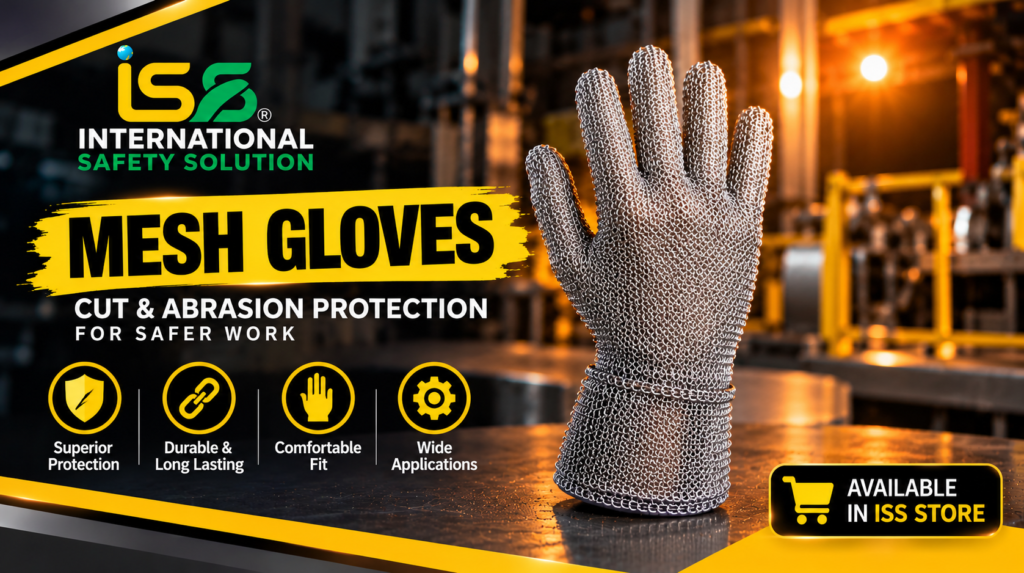
1. Introduction (Mesh Safety Gloves):
Mesh Safety Gloves: Hand injuries are among the common occupational hazards in industries involving sharp tools, cutting operations and material handling. Cuts and lacerations can lead to lost working time, reduced productivity and serious workplace injuries.
Mesh Safety Gloves are a type of Personal Protective Equipment (PPE) designed to help reduce cutting injuries during suitable operations. Their protective performance depends on their construction, specifications and correct application.
2. What Are Mesh Safety Gloves?
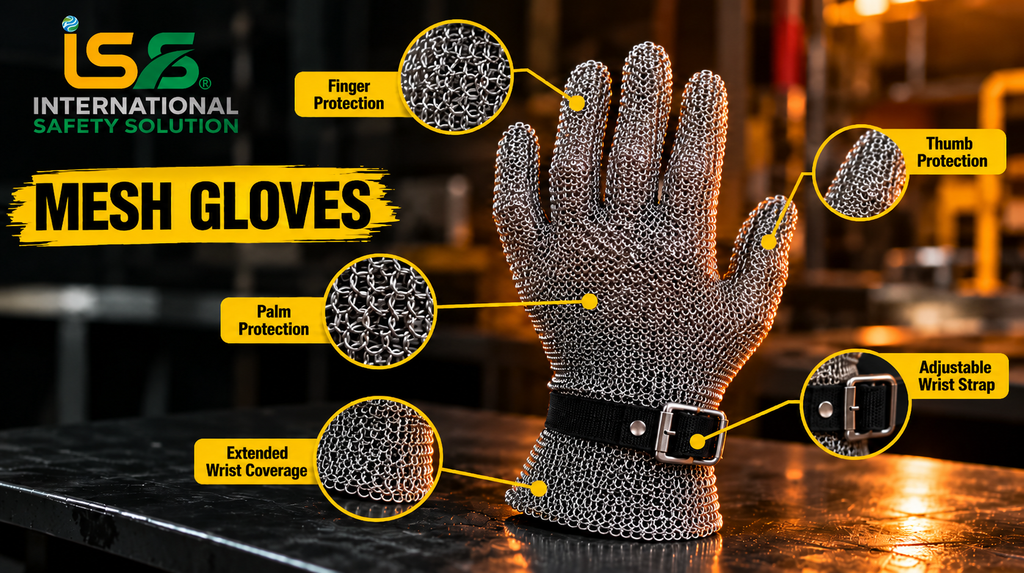
Mesh safety gloves are protective gloves constructed from interconnected metal rings or other specially designed mesh materials. Stainless Steel Mesh Gloves, also known as Chainmail Gloves, commonly consist of interlocking stainless-steel rings that form a flexible protective barrier.
Key Features
- Cut Resistance: Helps protect hands against cuts from sharp edges and manual knives in suitable applications.
- Durable Construction: Interlocking metal rings provide a robust protective structure.
- Corrosion Resistance: Stainless-steel construction offers resistance to corrosion, depending on material grade and conditions.
- Reusable Design: Suitable models can be cleaned and reused following manufacturer instructions.
- Different Designs: Available in various sizes, wrist lengths and extended protective styles.
Explore Mesh Safety Gloves at International Safety Solution (ISS)
Protect Your Hands. Strengthen Workplace Safety.
Selecting suitable hand protection is essential for reducing occupational cutting hazards.
International Safety Solution (ISS) supports organizations with workplace safety products and practical safety solutions for various industrial applications.
Explore suitable Mesh Safety Gloves and other protective equipment to meet your workplace requirements.
Workplace Hazards Associated with Hand Injuries:
Workers in textile, food-processing, metalworking and manufacturing industries may be exposed to various hand injury hazards. Appropriate mesh safety gloves can help reduce selected cutting risks when correctly chosen for the task.
Common Workplace Hazards
- Sharp Edges: Cuts from metal sheets, sharp components and exposed edges.
- Knife & Blade Hazards: Hand injuries during manual cutting, trimming, deboning and fish processing.
- Cuts & Lacerations: Injuries caused by accidental contact with sharp objects or cutting tools.
- Puncture & Stab Hazards: Injuries from pointed tools and sharp instruments; protection depends on the glove’s tested performance.
- Material Handling Hazards: Hand injuries while handling suitable sharp-edged industrial materials.

Important Safety Considerations:
Mesh gloves do not eliminate all hand hazards. They may be unsuitable for rotating machinery, powered blades, electrical hazards, chemical exposure and high-temperature operations. A task-specific risk assessment is essential before selecting PPE.
4. Industrial Applications of Mesh Safety Gloves:
A. Textile & Garment Manufacturing
Textile workers may face cutting hazards during manual fabric cutting, trimming and material preparation.
Practical Applications:
- Manual fabric cutting with sharp hand tools.
- Garment trimming operations involving exposed blades.
- Selected cutting and material preparation activities.
Safety Consideration: Gloves must not be used around moving cutting or sewing-machine parts where entanglement hazards exist unless specifically determined safe through equipment instructions and risk assessment.
B. Food Processing & Meat Industry
Stainless-steel mesh gloves are commonly used in selected manual knife operations within meat-processing and food-preparation environments.
Practical Applications:
- Meat cutting and deboning.
- Fish filleting and processing.
- Butchering and manual food preparation.
Food-contact suitability, hygiene requirements and cleaning procedures must be verified before use.
C. Metalworking & Manufacturing
Industrial operations may expose workers to sharp metal edges, sheet materials and fabricated components.
Practical Applications:
- Handling suitable sharp-edged metal sheets.
- Selected metal component inspection and handling.
- Manual operations involving identified cutting hazards.
The glove should be selected according to the sharpness of the material, handling requirements and specific workplace hazards.

5. Key Benefits of Mesh Safety Gloves:
| Benefits | Workplace Importance |
| Cut Protection | Helps reduce cuts and lacerations in compatible manual tasks |
| Durable Material | Provides robust construction for suitable industrial environments |
| Flexible Mesh Structure | Allows hand movement while providing a protective barrier |
| Reusable Construction | Supports repeated use when properly inspected and maintained |
| Corrosion Resistance | Stainless-steel models can resist corrosion under appropriate conditions |
| Workplace Safety | Supports effective hand-protection practices |
6. Safety Standards & Regulatory Requirements:
Selection of mesh safety gloves should be based on recognized standards, manufacturer test documentation and workplace risk assessment.
EN 1082-1:1996 – Protective Clothing
Specifies requirements for metal mesh gloves and arm guards designed to protect against cuts and stabs from hand knives.
ISO 13999-1 – Protective Clothing
Addresses protective gloves and arm guards made from chain-mail materials for protection against cuts and stabs from hand knives.
OSHA 29 CFR 1910.138 – Hand Protection
Requires employers to select appropriate hand protection based on the hazards involved, task conditions and protective performance.
Important: Compliance with a standard must be verified through manufacturer documentation. Not every mesh glove meets every standard.
7. Safe Use, Inspection & Maintenance:
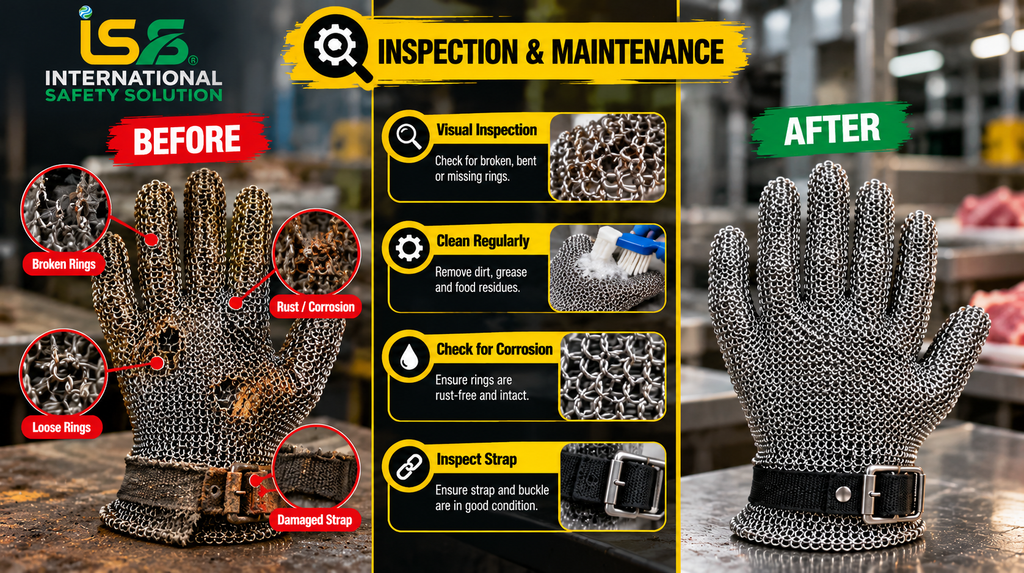
Proper usage and regular inspection are essential for maintaining glove performance.
Before Use
- Inspect for missing, broken or damaged mesh rings.
- Check wrist fasteners and overall glove condition.
- Confirm proper sizing and secure fitting.
- Verify that the glove is suitable for the assigned task.
After Use
- Clean and sanitize according to manufacturer instructions.
- Dry and store in a clean, designated area.
- Remove damaged gloves from service.
- Follow manufacturer guidance for replacement.
Important Safety Precautions
Mesh gloves must not be used where rotating or moving machinery creates an entanglement risk. They do not automatically provide protection against chemicals, high temperatures, electricity or all puncture hazards.
8. How to Select the Right Mesh Safety Gloves:
Before selecting gloves, employers should assess the following factors:
- Hazard Identification: Determine the type and severity of cutting hazards.
- Material Selection: Choose an appropriate stainless-steel or other verified protective construction.
- Protection Requirements: Review applicable standards and manufacturer test results.
- Comfort & Fit: Select the correct size and suitable wrist or arm coverage.
- Workplace Compatibility: Consider hygiene, cleaning, dexterity and equipment-related hazards.
Gloves should form part of a broader safety program that includes hazard controls, safe working procedures and employee training.
Conclusion:
Mesh Safety Gloves are an important protective option for selected cutting operations in food processing, garment manufacturing and industrial workplaces.
Their effectiveness depends on correct material selection, appropriate protection performance, worker training and regular inspection.
Protect Your Hands. Prevent Injuries. Choose the Right PPE.