A Comprehensive Guide to Proactive Workplace Safety Management
Introduction
Near miss reporting is one of the most powerful yet often underutilized tools in occupational health and safety management. A near miss is an unplanned event that did not result in injury, illness, environmental damage, or property loss but had the potential to do so. In many cases, the difference between a near miss and a serious accident is simply a matter of timing, luck, or circumstance. Because of this, near misses should be treated with the same level of importance as actual incidents.
Organizations that actively encourage near miss reporting gain valuable opportunities to identify hazards, correct unsafe conditions, improve safety systems, and prevent future accidents before they occur. Every near miss serves as a warning sign that something within the workplace has the potential to fail. When these warnings are ignored, the likelihood of serious incidents increases significantly. Therefore, a strong near miss reporting system forms the foundation of a proactive safety culture and supports continuous improvement in workplace health and safety performance.
What is a Near Miss?
A near miss is an event that could have resulted in injury, illness, property damage, environmental impact, equipment loss, or operational disruption but did not because of fortunate circumstances or timely intervention. The potential consequences may have been severe, yet no actual harm occurred.
For example, a tool falling from height and narrowly missing a worker, a forklift almost colliding with a pedestrian, a chemical spill that is quickly contained before exposure occurs, or an employee slipping but regaining balance before falling are all examples of near misses. Although these events do not result in immediate harm, they reveal weaknesses in workplace controls and highlight hazards that require attention.
Near misses should never be dismissed simply because no one was injured. In many cases, they provide the most valuable opportunities for preventing future accidents because they allow organizations to learn lessons without experiencing actual loss or injury.
Importance of Near Miss Reporting
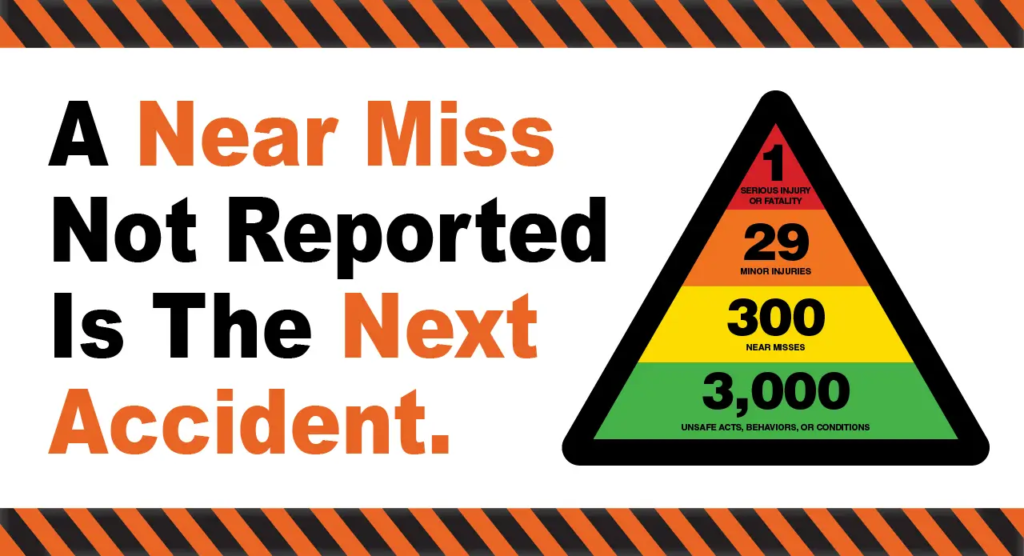
Near miss reporting plays a critical role in accident prevention. Every serious accident is usually preceded by numerous minor incidents, unsafe acts, unsafe conditions, and near misses. By identifying and addressing these warning signs early, organizations can prevent major incidents from occurring.
Effective near miss reporting helps organizations recognize hazards before they cause harm, improve risk assessments, strengthen control measures, and enhance employee awareness. It also contributes to legal compliance, operational efficiency, and overall safety performance.
Organizations that encourage near miss reporting often experience lower injury rates because they address problems proactively rather than reactively. Instead of waiting for accidents to occur, they identify weaknesses and implement improvements before harm takes place.
Difference Between Near Misses and Accidents
Although near misses and accidents may appear different because one results in harm and the other does not, they often share the same root causes. Unsafe conditions, inadequate procedures, poor supervision, equipment failures, lack of training, and human factors can contribute to both types of events.
The key difference is the outcome. An accident results in actual loss, injury, illness, or damage, whereas a near miss does not. However, the potential consequences may be identical. For this reason, near misses should be investigated with the same seriousness as accidents.
Treating near misses as valuable learning opportunities allows organizations to address risks before they escalate into more severe incidents.
The Safety Triangle and Near Miss Reporting
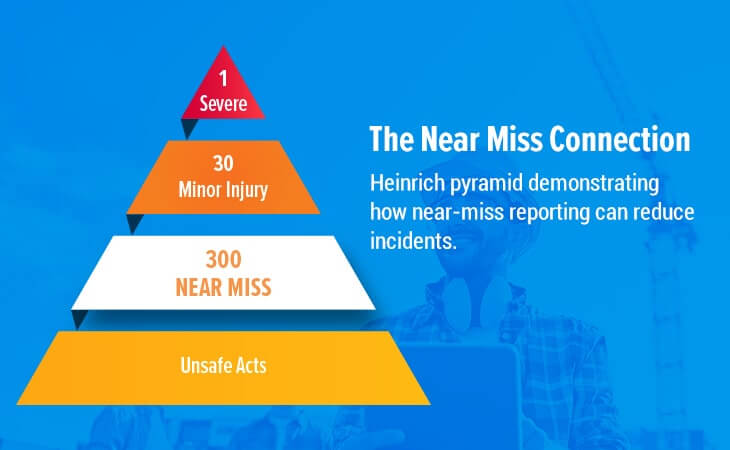
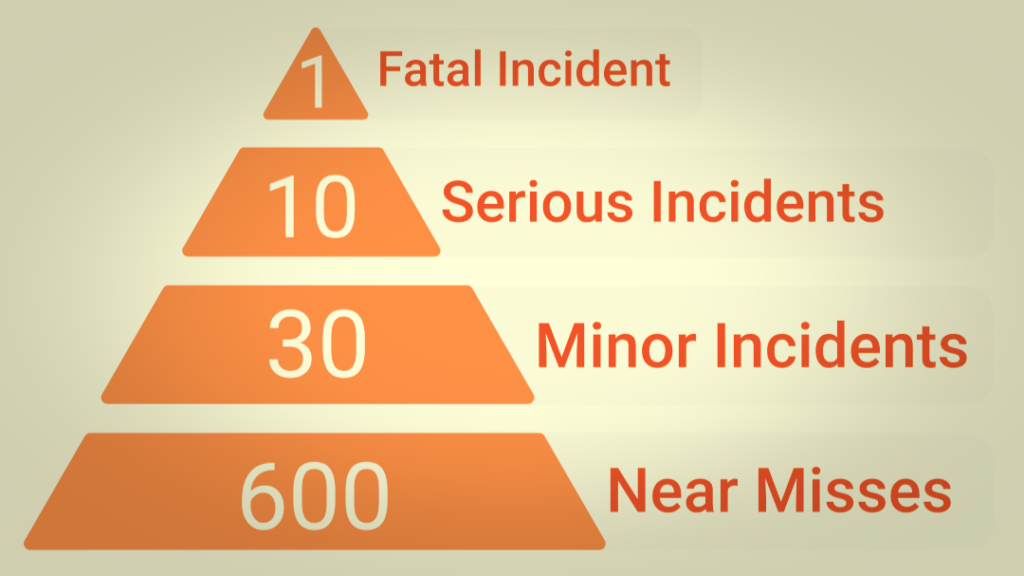
Safety professionals often refer to the safety triangle, sometimes known as Heinrich’s Triangle, to explain the importance of near miss reporting. The theory suggests that for every major accident, there are numerous minor incidents and hundreds of near misses that occur beforehand.
While the exact numbers may vary, the principle remains relevant. Serious accidents rarely occur without warning. Instead, they are often preceded by a series of smaller events that indicate underlying weaknesses within the safety management system.
Near miss reporting allows organizations to identify these warning signs and intervene before catastrophic incidents occur.
Benefits of Near Miss Reporting
Organizations that maintain effective near miss reporting systems gain significant advantages. They develop a better understanding of workplace hazards, improve employee engagement, strengthen safety culture, and reduce the likelihood of accidents.
Near miss reporting also supports continuous improvement by providing real-world information about how work is performed and where controls may be failing. It helps management allocate resources more effectively by focusing attention on areas of greatest risk.
Additionally, reporting systems encourage communication between workers and management, creating an environment where safety concerns can be raised openly and addressed promptly.
Creating a Positive Reporting Culture
One of the most important factors in successful near miss reporting is organizational culture. Employees must feel comfortable reporting hazards and near misses without fear of punishment, criticism, or blame.
A blame culture discourages reporting because workers may worry about disciplinary action or negative consequences. As a result, valuable information remains hidden and opportunities for improvement are lost.
A positive reporting culture emphasizes learning rather than blame. Employees are encouraged to report near misses because management recognizes that reporting contributes to safety improvement and accident prevention. Organizations with strong reporting cultures typically receive more reports, allowing them to identify trends and address risks proactively.
Near Miss Reporting Process
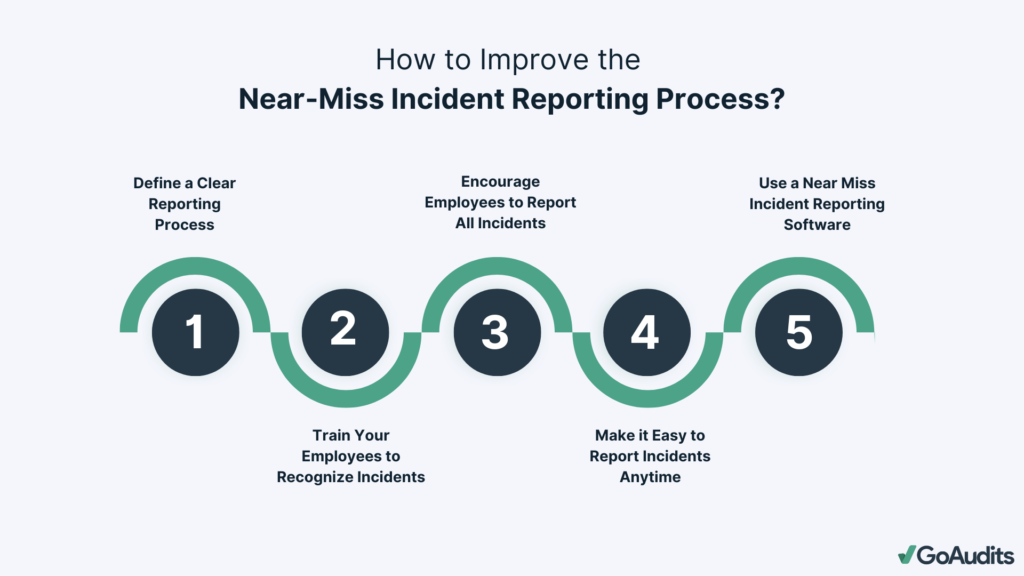
The reporting process begins when an employee observes or experiences a near miss. The employee should immediately report the event through established reporting channels, which may include paper forms, digital systems, mobile applications, or direct communication with supervisors.
The report should include accurate details regarding the date, time, location, individuals involved, description of the event, contributing factors, and any immediate corrective actions taken. The more detailed the information, the more effective the subsequent investigation and analysis will be.
Prompt reporting is essential because evidence may disappear and witness recollections may become less accurate over time.
Investigation of Near Miss Events
Although no injury occurred, near misses should still be investigated thoroughly. The investigation process seeks to determine what happened, why it happened, and how similar events can be prevented in the future.
Investigators collect evidence, interview witnesses, review procedures, examine equipment, and analyze environmental conditions. The goal is to identify both immediate causes and underlying root causes.
A thorough investigation ensures that corrective actions address the true sources of risk rather than simply treating symptoms.
Root Cause Analysis in Near Miss Reporting
Root cause analysis is a critical element of near miss investigations. Many organizations make the mistake of focusing only on immediate causes, such as worker behavior or equipment failure. However, these immediate causes are often symptoms of deeper organizational issues.
Root causes may include inadequate training programs, ineffective supervision, poor maintenance systems, unclear procedures, insufficient risk assessments, or weak safety leadership.
Identifying root causes allows organizations to implement meaningful improvements that reduce the likelihood of recurrence and strengthen overall safety performance.
Employee Involvement in Near Miss Reporting
Employees play a vital role in the success of near miss reporting systems because they are often the first individuals to observe hazards and unsafe conditions. Their involvement provides valuable insights into workplace operations and risk exposure.
Organizations should educate employees about the purpose of near miss reporting, explain reporting procedures, and emphasize the importance of sharing safety concerns. Employees should understand that reporting is a positive contribution to workplace safety rather than an admission of fault.
Active employee participation increases reporting rates and helps create a stronger safety culture.
Management Responsibilities
Management commitment is essential for an effective near miss reporting system. Leaders must demonstrate genuine interest in safety performance and respond promptly to reported concerns.
Management responsibilities include providing reporting systems, investigating reports, allocating resources for corrective actions, monitoring trends, and communicating lessons learned throughout the organization.
When employees see management taking reports seriously and implementing improvements, they become more likely to participate actively in the reporting process.
Corrective and Preventive Actions
The ultimate purpose of near miss reporting is to implement corrective and preventive actions that reduce risk. Once causes have been identified, organizations must develop practical solutions to eliminate hazards or improve controls.
Actions may involve equipment modifications, procedural revisions, additional training, improved supervision, engineering controls, or changes to workplace design.
Corrective actions address existing deficiencies, while preventive actions focus on avoiding future occurrences. Both are essential for effective risk management.
Monitoring and Continuous Improvement
Near miss reporting should be viewed as an ongoing process rather than a one-time activity. Organizations should regularly analyze reporting data to identify trends, recurring hazards, and areas requiring additional attention.
Monitoring helps determine whether corrective actions are effective and whether further improvements are necessary. Lessons learned from near misses should be shared throughout the organization to enhance awareness and prevent similar events elsewhere.
Continuous improvement ensures that safety management systems remain effective and responsive to changing workplace conditions.
Challenges in Near Miss Reporting
Many organizations face challenges in establishing effective reporting systems. Common obstacles include fear of blame, lack of awareness, insufficient management support, complex reporting procedures, and failure to act on reported concerns.
When employees believe that reports will be ignored, they become less likely to participate. Therefore, organizations must demonstrate that reported information leads to meaningful improvements and positive outcomes.
Overcoming these challenges requires strong leadership, open communication, employee engagement, and a commitment to learning from every event.
Conclusion
Near miss reporting is one of the most effective tools available for preventing workplace accidents and strengthening safety performance. Every near miss provides a valuable opportunity to identify hazards, understand weaknesses, and implement improvements before injuries or losses occur. Organizations that actively encourage reporting, investigate events thoroughly, identify root causes, and implement corrective actions create safer workplaces and stronger safety cultures.
A successful near miss reporting system transforms workplace safety from a reactive approach into a proactive strategy focused on prevention, learning, and continuous improvement. By treating every near miss as an opportunity to learn, organizations can significantly reduce risks, protect employees, and achieve long-term safety excellence.