
Introduction (Negative Impacts of H & S Culture):
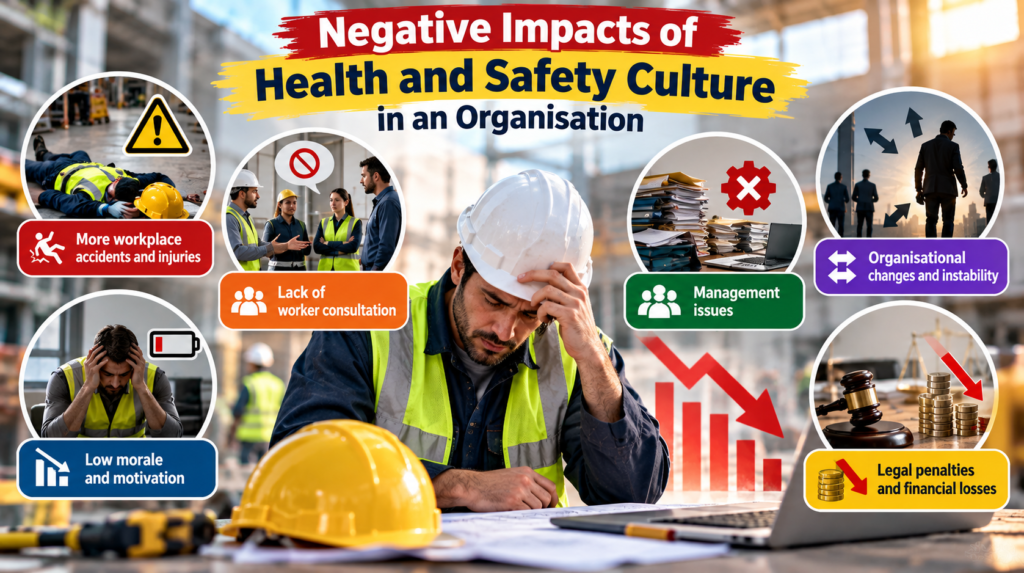
Negative Impacts of H & S Culture means that an organization does not give proper importance to employee safety and well-being. It can lead to workplace accidents, injuries, stress, and reduced productivity.
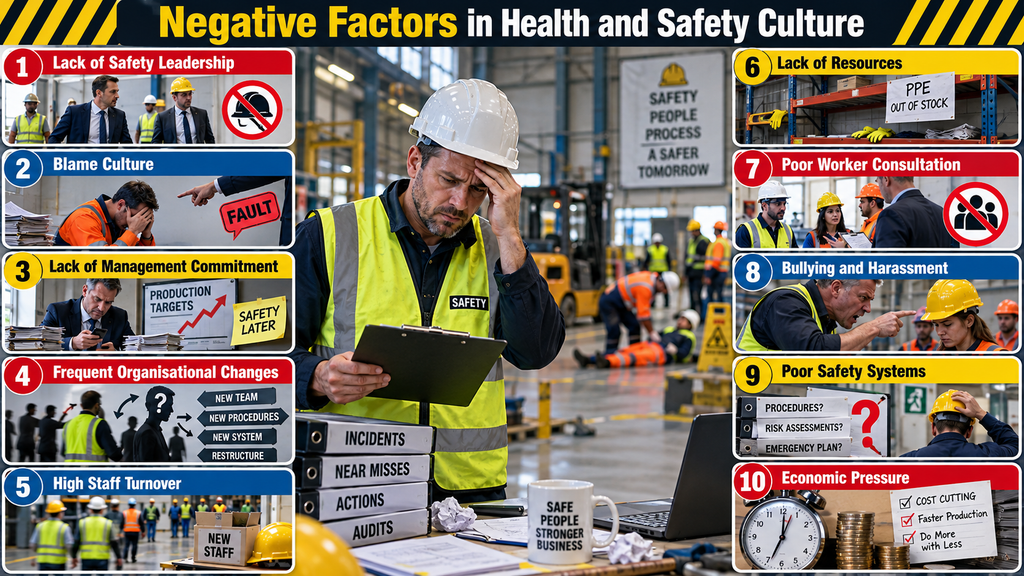
1. Lack of Safety Leadership:
- Management does not give proper importance to workplace safety.
- Employees may ignore safety rules when managers do not follow them.
- Poor leadership increases unsafe practices and workplace accidents.
2. Blame Culture:
- Workers are blamed or punished for accidents and mistakes.
- Employees become afraid to report hazards and near misses.
- The actual causes of accidents remain unidentified, increasing future risks.
3. Lack of Management Commitment:
- Management focuses more on production and profit than safety.
- Safety inspections, training, and maintenance may be ignored.
- This creates unsafe working conditions and increases accident risks.
4. Frequent Organizational Changes:
- Frequent changes in staff, equipment, or procedures can create confusion.
- Employees may not clearly understand their new responsibilities.
- Poorly managed changes increase mistakes and workplace hazards.
5. High Staff Turnover:
- Employees frequently leave and are replaced by new workers.
- New employees may lack experience and proper safety training.
- This increases accident risks and reduces work efficiency.
6. Lack of Resources:
- Shortage of safety equipment, proper tools, and trained workers.
- Employees may work without suitable Personal Protective Equipment (PPE).
- Insufficient resources increase exposure to workplace hazards.
7. Poor Worker Consultation:
- Employees are not involved in health and safety decisions.
- Important hazards may remain unidentified or unreported.
- Lack of worker participation reduces the effectiveness of safety measures.
8. Workplace Bullying and Harassment:
- Bullying and harassment create stress, fear, and anxiety.
- Employees may lose confidence and concentration during work.
- This affects mental health, job satisfaction, and overall performance.
9. Poor Safety Systems and Procedures:
- Safety instructions may be unclear, outdated, or poorly implemented.
- Workers may not follow safe working methods.
- Poor emergency planning and safety procedures increase accident risks.
10. Economic Pressure:
- Financial difficulties may reduce spending on safety equipment and training.
- Employees may be pressured to complete tasks quickly.
- This can encourage unsafe shortcuts and increase workplace accidents.
How Poor Safety Culture Affects an Organization:
A poor safety culture affects both employees and the organization. It creates an unsafe working environment, reduces employee confidence, and affects overall business performance.
- Reduced Productivity: Accidents and injuries can delay daily operations.
- Increased Costs: Organizations may face medical expenses, compensation claims, and equipment repair costs.
- Poor Work Quality: Stress and unsafe conditions can increase human errors.
- Loss of Reputation: Frequent accidents can damage the organization’s public image.
How to Improve Health and Safety Culture:
Organizations can improve their safety culture by taking the following steps:
- Strong Leadership: Management should actively support workplace safety.
- Safety Training: Provide regular training to improve hazard awareness.
- Worker Participation: Encourage employees to report hazards and suggest improvements.
- Proper Resources: Provide suitable PPE, equipment, and safe working conditions.
- Regular Inspections: Identify and control hazards before accidents happen.
- Open Communication: Create an environment where employees can discuss safety concerns without fear.
Practical Example of Poor Safety Culture
Example: A Manufacturing Factory
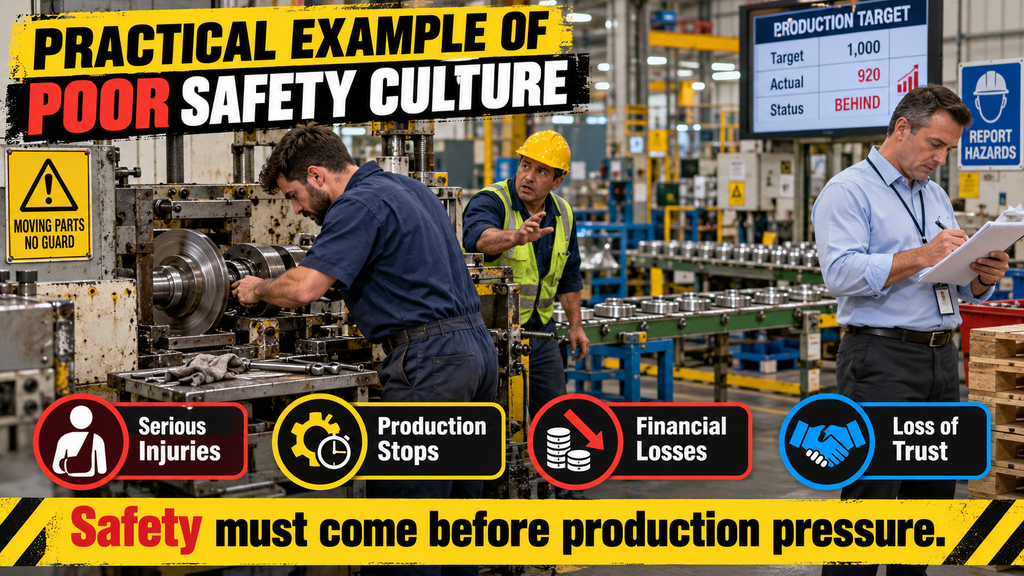
In a factory, workers are operating machines without proper safety guards and PPE. Management focuses only on completing production targets and ignores safety complaints.
Possible Consequences:
Workers may suffer serious injuries.
Production may stop because of accidents.
The organization may face financial losses.
Employees may lose trust in management.
Conclusion:
A poor health and safety culture negatively affects both employees and organizations. It can lead to:
Increased workplace accidents and injuries, Poor employee health and low motivation, Reduced productivity and work quality, Financial losses and legal consequences. To prevent these problems, organizations should promote strong safety leadership, provide proper training, encourage worker participation, and make health and safety a priority.