
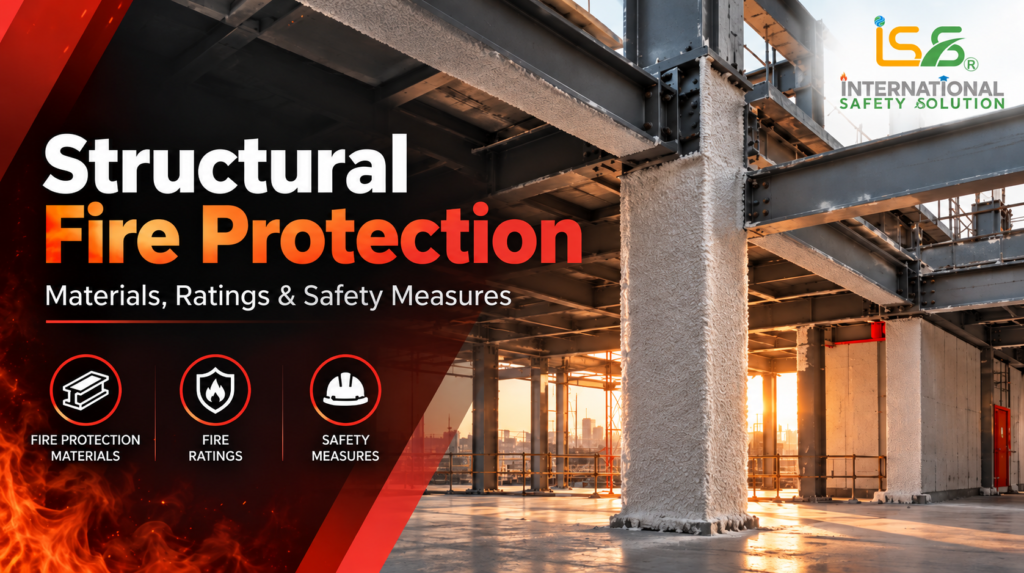
1. Introduction (Structural Fire Protection):
Structural fire protection is an essential part of building and industrial safety. It helps maintain structural stability, prevent rapid fire spread and reduce the risk of building collapse during a fire.
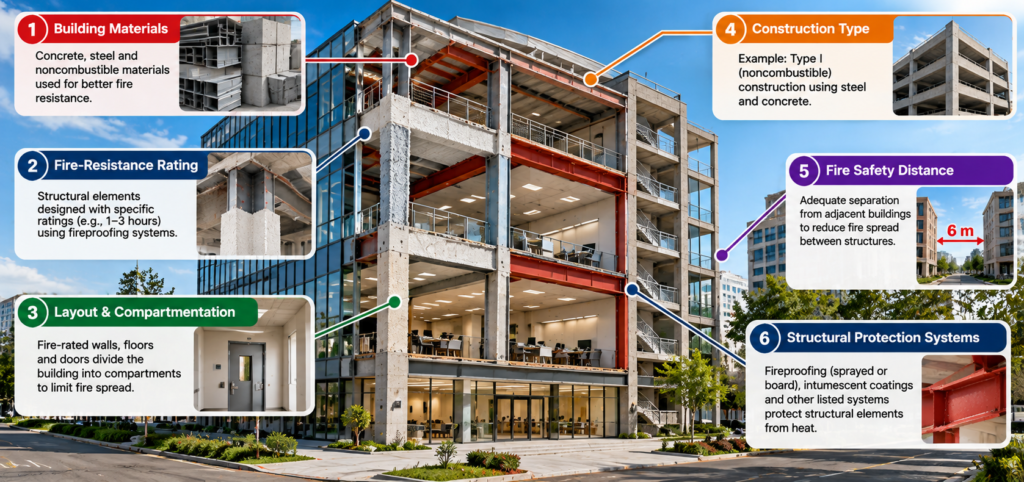
Effective protection depends on building materials, fire-resistance ratings, construction types, building layout and fire separation distances.
2. What Is Structural Fire Protection?
Structural fire protection involves using fire-resistant construction materials, protective systems and engineering designs to maintain building stability during fire exposure.
Key Objectives:
- Maintain structural strength and stability.
- Reduce fire and smoke spread.
- Protect occupants and property.
- Support safe emergency evacuation.
3. Fire Resistance Rating (FRR)
Fire Resistance Rating indicates how long a building element or assembly can meet specified performance requirements under standard fire-test conditions.
| Rating | Duration |
|---|---|
| 30 Minutes | 0.5 Hour |
| 60 Minutes | 1 Hour |
| 120 Minutes | 2 Hours |
| 180 Minutes | 3 Hours |
Example: A steel column protected with an approved 2-hour fireproofing system is designed to meet specified fire-resistance criteria under standard test conditions.

4. Building Materials and Fire Performance
| Material | Fire Behaviour |
|---|---|
| Concrete | Noncombustible; may crack or spall under intense heat |
| Steel | Noncombustible but loses strength at high temperatures |
| Brick | Generally offers good fire resistance |
| Timber | Combustible; chars during fire exposure |
| Glass | Ordinary glass may break under heat |
| Sandwich Panels | Fire performance depends on the insulation core and assembly |
Example: Industrial steel structures may require fireproofing coatings to delay structural weakening during a fire.
5. Types of Building Construction
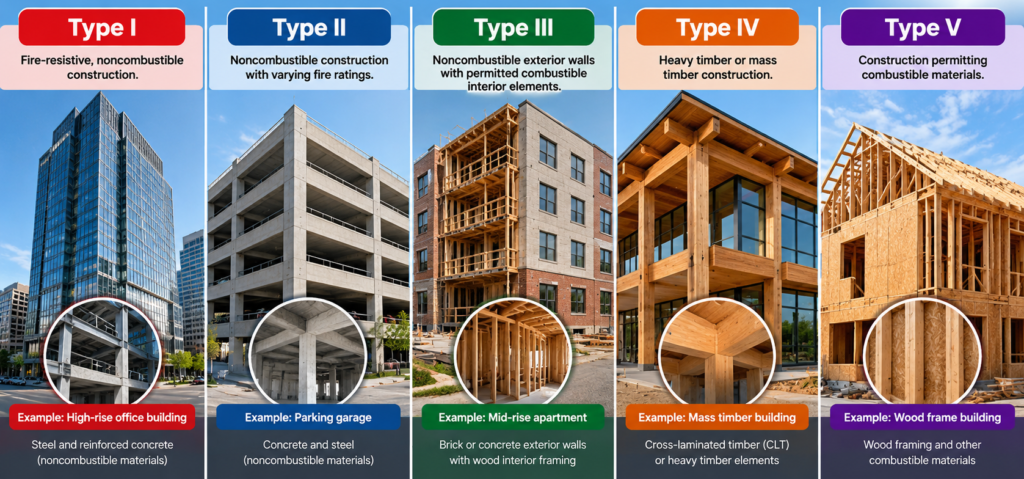
The International Building Code (IBC) classifies buildings into five main construction types:
- Type I: Fire-resistive, noncombustible construction.
- Type II: Noncombustible construction with varying fire ratings.
- Type III: Noncombustible exterior walls with permitted combustible interior elements.
- Type IV: Heavy timber or mass timber construction.
- Type V: Construction permitting combustible materials.
Specific fire-resistance requirements depend on the construction subtype and applicable code.
6. Building Layout and Fire Separation Distance
Building layout affects evacuation, emergency access and the spread of fire.
Important Considerations:
- Adequate emergency exits and evacuation routes.
- Fire-rated walls, doors and compartments.
- Separation of hazardous storage areas.
- Firefighting access and protected staircases.
- Appropriate separation between adjacent buildings.
Example: Two warehouses constructed close together may require fire-rated exterior walls and protected openings to limit fire spread.
Fire separation requirements depend on building occupancy, construction type and applicable regulations.
7. Passive Structural Fire Protection Methods
| Protection Method | Application |
|---|---|
| Intumescent Coatings | Steel columns and beams |
| Fireproofing Materials | Structural steel protection |
| Fire-Rated Walls | Fire compartmentation |
| Fire Doors | Protecting compartment openings |
| Firestopping | Sealing cable and pipe penetrations |
8. Building Fire Safety Assessment
During a structural fire safety assessment, the following five factors should be evaluated:
- Construction Type: Identify concrete, steel, masonry or timber construction.
- Building Materials: Assess combustibility and fire performance.
- Fire Resistance: Verify required structural fire ratings and protection.
- Building Layout: Inspect emergency exits, escape routes and fire compartments.
- Fire Separation: Assess distances between buildings and exterior wall protection.
Practical Example: In a steel-framed warehouse, damaged fireproofing, blocked emergency exits and combustible roof panels may create significant fire safety concerns.

9. Inspection and Preventive Measures
- Inspect structural beams, columns and protective coatings.
- Check fire-rated walls, doors and firestopping.
- Keep emergency exits and access routes clear.
- Repair damaged fire protection systems.
- Conduct periodic fire safety assessments.
10. Conclusion
Structural fire protection plays a vital role in protecting buildings, workers and industrial assets. Proper construction materials, fire-resistance ratings, safe building layouts, fire separation and regular inspections help reduce structural fire risks.
International Safety Solution (ISS) promotes effective fire prevention, structural safety awareness and proactive fire risk management to support safer workplaces.Structural Fire Protection: Fire Resistance, Building Materials & Safety Measures.