
Maintaining Cleanliness, Color Coding, Standards & Safe Placement
1. Introduction
A clean and organized workplace is a fundamental requirement of Occupational Health & Safety (HSE). Proper waste management—especially through the use of suitable waste containers—plays a critical role in preventing hazards, improving productivity, and ensuring regulatory compliance. Organizations following guidelines from the Occupational Safety and Health Administration and National Fire Protection Association prioritize structured waste handling systems to maintain workplace hygiene and safety.
2. Importance of Waste Containers in Workplace
✅ Key Benefits
• Improves Housekeeping – Reduces clutter and maintains a tidy work environment
• Prevents Accidents – Eliminates slip, trip, and fall hazards caused by scattered waste
• Controls Fire Risk – Proper disposal of combustible waste reduces fire load
• Enhances Hygiene – Prevents contamination, odors, and pest infestation
• Boosts Productivity – Organized workplaces improve employee efficiency
• Supports Compliance – Meets OSHA and environmental regulations
3. Types of Waste Containers
Common Types:
• General waste bins
• Recycling containers
• Hazardous waste containers
• Biohazard bins
• Fire-resistant metal bins
• Wheeled industrial containers
4. Waste Container Color Coding System
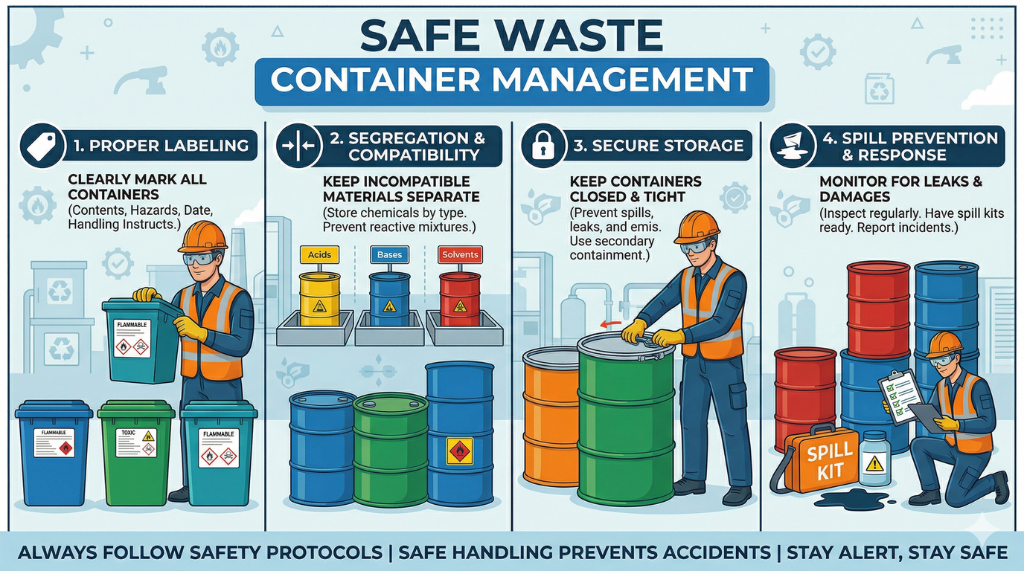
Color coding ensures quick identification and proper segregation of waste.
🎨 Standard Color Codes (Common Practice)
🟢 Green – Organic / biodegradable waste
🔵 Blue – Recyclable (paper, plastic)
🔴 Red – Hazardous waste
🟡 Yellow – Medical / infectious waste
⚫ Black – General waste
🟠 Orange – Chemical waste
📌 Note: Color codes may vary by country, but labeling is mandatory.
5. OSHA & International Standards for Waste Containers
📜 OSHA Requirements (29 CFR 1910 – General Industry)
• Containers must be durable, leak-proof, and corrosion-resistant
• Clearly labeled
• Equipped with lids (where required)
• Waste must not overflow or create health hazards
• Regular emptying schedule must be maintained
🔥 NFPA Guidelines
• Metal containers required for flammable waste
• Self-closing lids for oily/combustible waste
• Placement away from ignition sources
🌍 Other Standards
• ISO (ISO 14001 – Environmental Management)
• World Health Organization (for medical waste)
6. Waste Container Filling Standards
⚠️ Best Practice Rules:
• Do not fill beyond 75–80% capacity
• Always keep lids closed
• Avoid compaction of hazardous waste
• Immediate disposal of sharp or infectious materials
• Daily or scheduled emptying
📌 Overfilled bins lead to:
• Spillage
• Contamination
• Fire hazards
7. Safe Distance & Placement of Waste Containers
📏 Recommended Distances:
• Near Workstations – Within 5–10 meters for easy access
• From Emergency Exits – Minimum 1 meter away (must not block exits)
• From Ignition Sources – At least 3 meters (for flammable waste)
• Electrical Panels – Maintain clearance of 1 meter minimum
• Walkways – Must not obstruct pathways
8. Common Hazards of Poor Waste Management
• Fire outbreaks
• Chemical exposure
• Biological contamination
• Slip and trip accidents
• Environmental pollution
9. Control Measures
• Implement color-coded segregation system
• Provide training to employees
• Conduct regular inspections
• Maintain waste disposal records
• Use proper PPE during handling
• Appoint responsible waste management personnel
10. Conclusion
Waste containers are more than just bins—they are a critical safety control measure in any workplace. By following OSHA, NFPA, and international standards, organizations can ensure a clean, safe, and compliant working environment. A well-managed waste system reflects a strong safety culture, reduces risks, and enhances overall operational efficiency.