
1. Introduction (Windows & Transparent Doors):
Windows and transparent doors are widely used in offices, factories, hospitals, shopping malls, schools, and other workplaces. They provide natural light, improve visibility, and support convenient movement throughout buildings.
However, poorly designed or maintained glass surfaces can create hazards such as accidental collisions, broken glass injuries, falls, and restricted emergency access.
Proper safety glazing, visible markings, routine inspections, and safe installation practices help protect employees and visitors.
2. What Are Windows and Transparent Doors?
Windows are glazed openings designed to provide daylight, ventilation, and visibility.
Transparent doors are made entirely or partially from glass or other transparent materials, allowing visibility between spaces.
Common applications include office glass partitions, entrance doors, factory observation windows, laboratory windows, and hospital corridors.
The main safety objective is to prevent accidental impact, maintain safe access, and ensure unobstructed evacuation routes.
3. Technical Requirements: Thickness, Size and Materials
Glass safety depends on material type, thickness, panel size, installation, and impact exposure.
A.Glass Thickness and Maximum Dimensions
Glass thickness plays an important role in determining the strength, durability, and safety of windows and transparent doors. Larger glass panels generally require greater thickness or suitable safety glazing to reduce the risk of breakage.
| Glass Thickness | Maximum Dimensions | Explanation |
| 8 mm | 1.10 × 1.10 m | Suitable for smaller glass panels within the cited guidance limits. |
| 10 mm | 2.25 × 2.25 m | Provides greater thickness for medium-sized glass panels. |
| 12 mm | 3.00 × 4.50 m | Used for larger panels where appropriate structural support is provided. |
| 15 mm | Any size within the referenced chart | Thicker glass, but actual dimensions still require structural and safety assessment. |
Important Note: These figures are based on specific UK HSE guidance for ordinary annealed glass and are not universal installation limits. Actual glass thickness and dimensions must be selected according to panel size, impact risk, structural support, and applicable safety standards.
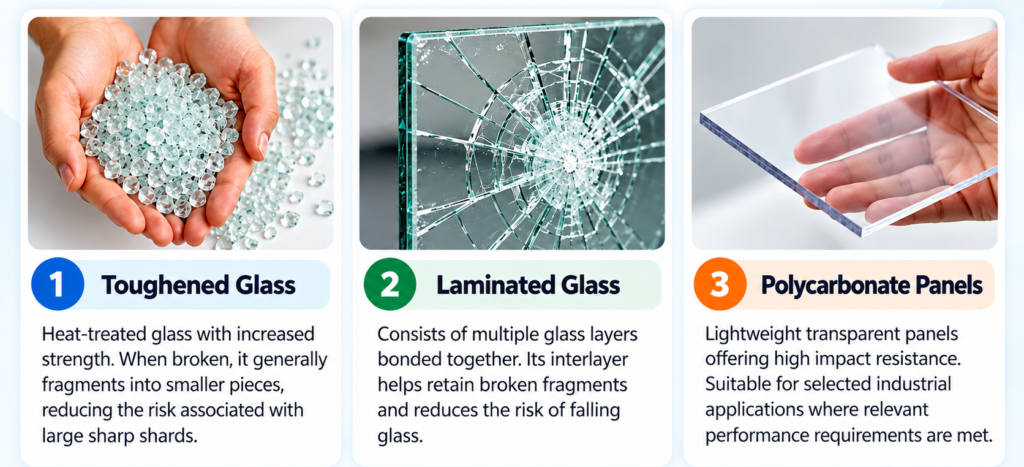
B. Types of Safety Glass:
Following are the types of Safety glass:
C. Visibility and safety markings
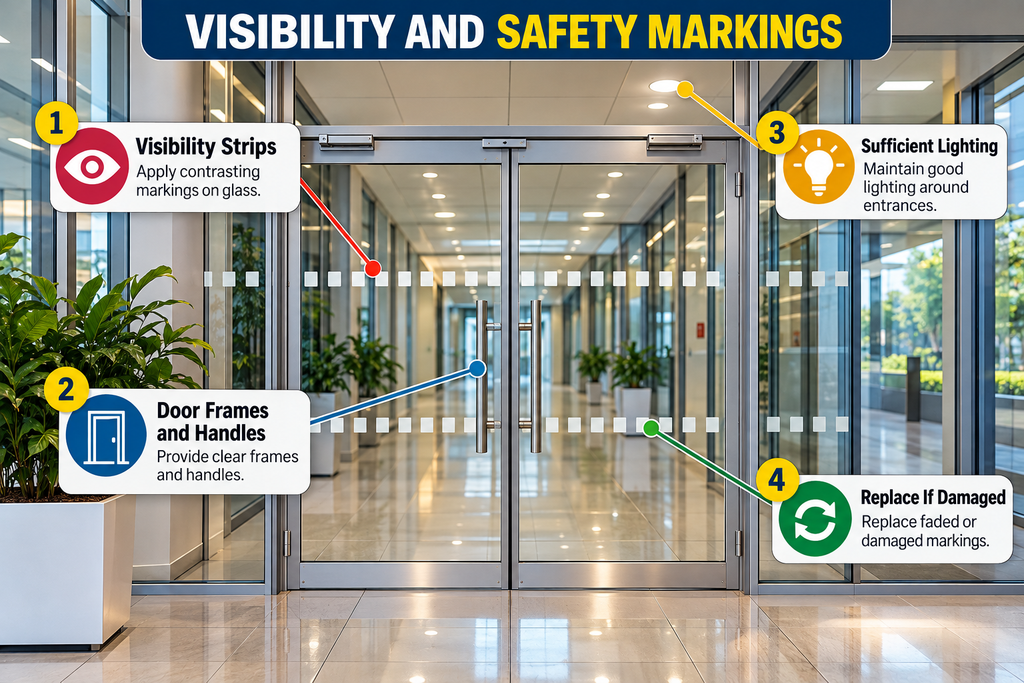
Transparent doors and glass panels should be clearly identifiable to prevent accidental collisions.
- Apply contrasting visibility strips or markings.
- Provide recognizable door frames and handles.
- Maintain sufficient lighting around entrances.
- Replace damaged or faded safety markings.
4. Importance and Benefits of Safe Glass Installations
Accident Prevention: Visible markings help prevent people from walking into transparent surfaces.
Injury Reduction: Suitable safety glazing reduces risks associated with glass breakage.
Fall Protection: Proper barriers, restrictors, and glazing help control falling hazards.
Safe Movement: Well-maintained doors support smooth pedestrian access and evacuation.
Reduced Property Damage: Appropriate protection helps prevent glass damage from trolleys and workplace equipment.
5. Safe Use of Windows
Windows must be designed and maintained to protect occupants during normal use and maintenance.
Opening and closing
- Provide functional handles, hinges, and locking arrangements.
- Prevent open windows from projecting dangerously into walkways.
- Install suitable opening restrictors where falling is a concern.
Cleaning and maintenance
- Use safe access methods for window cleaning.
- Avoid unsafe leaning or working at height without protection.
- Repair cracked glazing, loose frames, and defective fittings promptly.
Protection against falls
Elevated windows may require opening restrictors, protective barriers, suitable safety glazing, or other controls identified by a risk assessment.
6. Safety Requirements for Transparent Doors
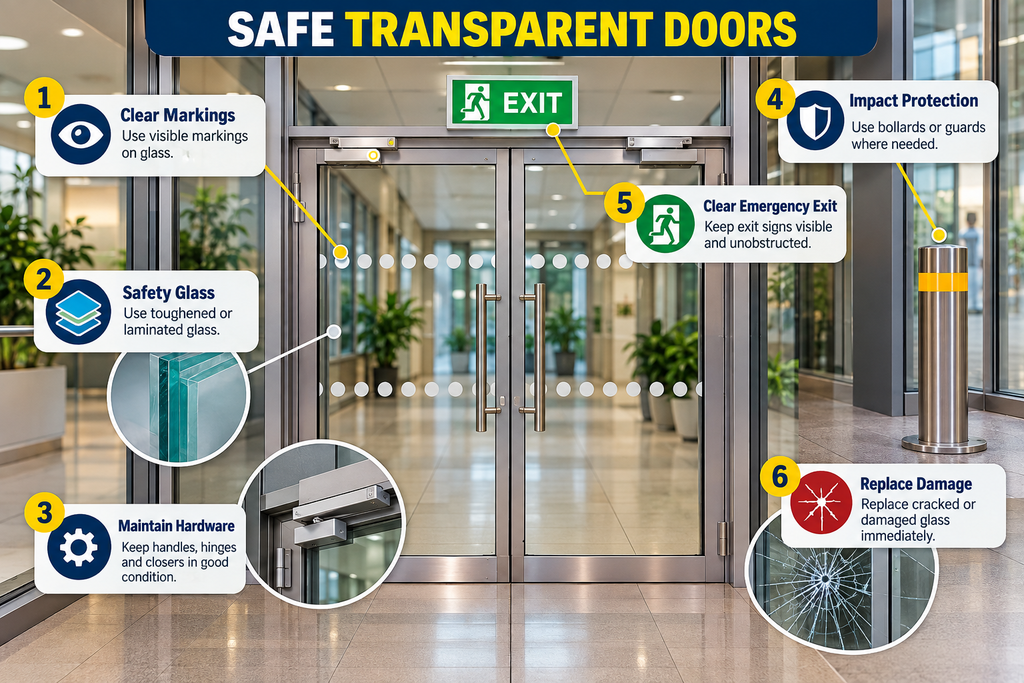
Transparent doors require appropriate marking, safe glazing, and reliable operating mechanisms.
- Install clearly visible markings on glass surfaces.
- Use suitable safety glass in impact-prone locations.
- Maintain handles, hinges, and door closers.
- Protect doors from vehicle and trolley impacts where necessary.
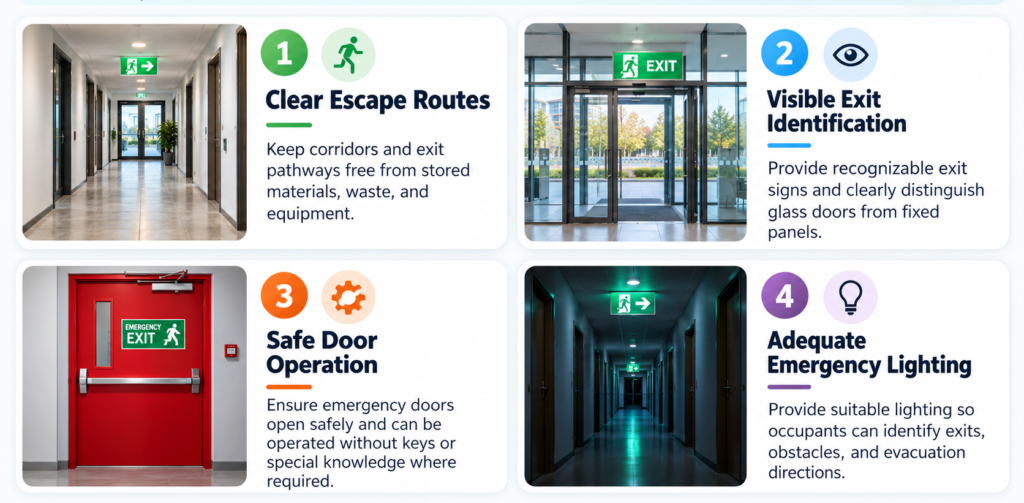
- Ensure emergency exit doors remain clearly identifiable.
- Replace damaged glass immediately or isolate the hazard until repaired.
7. Safe Means of Access and Egress
Access refers to safe entry into a workplace or work area.
Egress refers to safe movement out of a building, particularly during emergencies.
Safe access and egress depend on the following arrangements.
8. Common Hazards Associated with Windows and Transparent Doors:
| Hazard | Possible Consequence |
| Unmarked transparent glass | Accidental collision |
| Cracked or broken glass | Cuts and serious injuries |
| Unrestricted elevated windows | Falls from height |
| Faulty door mechanisms | Entrapment or delayed evacuation |
| Blocked emergency exits | Restricted escape |
| Unsafe window cleaning | Falls and other injuries |
These risks can be reduced through proper design, effective safety controls, and regular workplace inspections.
9. Important Technical Facts
The supplied HSE and OSHA references provide useful examples of workplace safety requirements.
- 250 mm: Narrow-pane width identified in certain HSE glazing guidance exceptions.
- 100 mm: Example of a restricted window opening used in certain higher-risk health and social care environments.
- 28 inches (71.1 cm): Minimum exit-access width specified under applicable US OSHA workplace requirements.
These are jurisdiction- and application-specific figures, not universal requirements. Local building codes and relevant technical standards must always be checked.
11. Conclusion
Windows and transparent doors improve building visibility, appearance, and functionality, but they must be appropriately designed, installed, marked, and maintained to prevent workplace accidents.
Suitable safety glazing, visible markings, fall prevention, routine inspections, and clear emergency access routes are essential measures for protecting workers and visitors.
Safety Today | Strong & Secure Tomorrow