
Introduction
Corporate Social Responsibility (CSR) is an essential part of modern organisational management, focusing on how businesses contribute positively to society, protect the environment and promote responsible business practices. Corporate Social Responsibility goes beyond generating profits; it encourages organisations to consider the social, environmental and ethical consequences of their activities. Through effective Corporate Social Responsibility initiatives, businesses can support communities, protect natural resources, promote organisational diversity and encourage employee volunteering.
Today, Corporate Social Responsibility plays an increasingly important role in shaping organisational policies, business strategies and stakeholder relationships. Customers, employees, investors and communities expect organisations to demonstrate accountability and contribute to sustainable development. As a result, Corporate Social Responsibility is no longer viewed simply as an optional charitable activity but as an important element of responsible and sustainable business management.
Organisations that integrate Corporate Social Responsibility into their operations can strengthen their reputation, improve employee engagement, develop stakeholder trust and contribute to long-term social and environmental well-being.
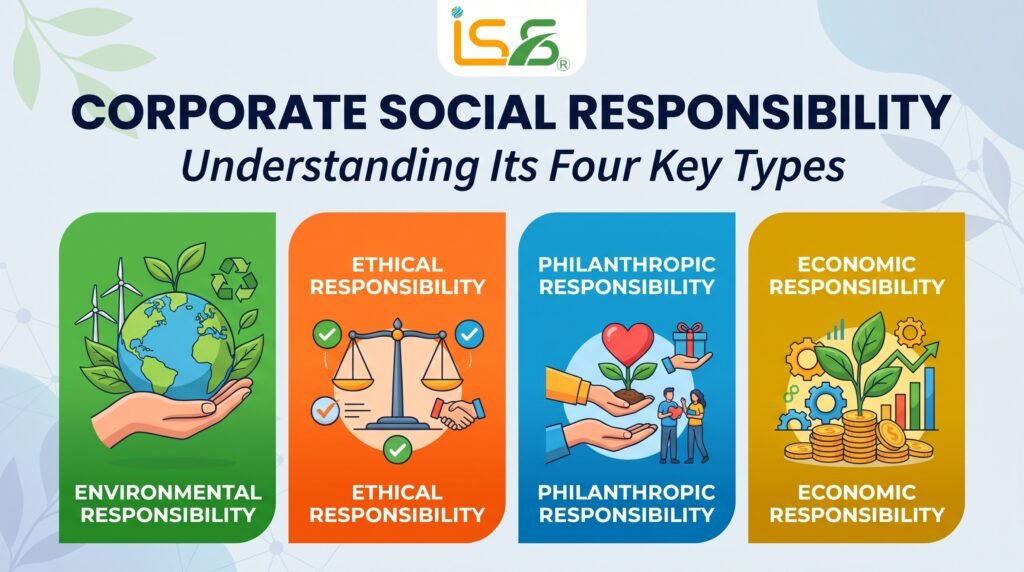
This blog explores the meaning of Corporate Social Responsibility, its importance and four major types: Philanthropic Responsibility, Environmental Protection, Organisational Diversity and Volunteering Commitments.
1. What Is Corporate Social Responsibility?
Corporate Social Responsibility refers to the responsibility of an organisation to operate ethically while considering its impact on society, the environment and different stakeholder groups.
It involves integrating responsible practices into business operations, decision-making processes and organisational culture.
Corporate Social Responsibility encourages businesses to recognise that their responsibilities extend beyond shareholders and financial performance. Organisations also influence employees, customers, suppliers, local communities and the wider environment.
Examples of CSR activities include:
- Supporting charitable organisations and community development programmes.
- Reducing pollution and improving environmental performance.
- Promoting equal opportunities and workplace inclusion.
- Encouraging employees to participate in voluntary community activities.
- Supporting education, health and social welfare initiatives.
- Adopting ethical and transparent business practices.
An effective Corporate Social Responsibility strategy should be integrated into organisational objectives rather than treated as an occasional promotional activity.
2. Four Key Types of Corporate Social Responsibility
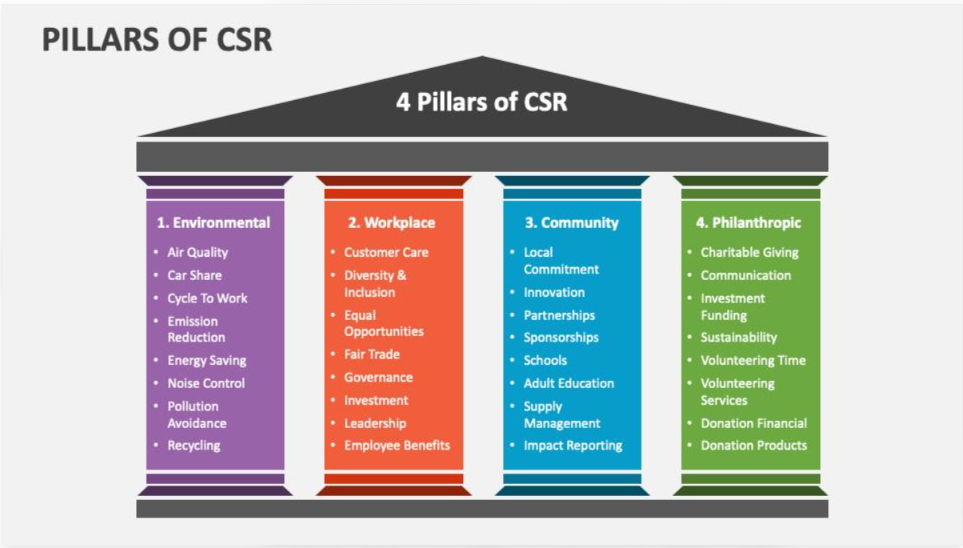
Corporate Social Responsibility can take different forms depending on an organisation’s industry, size, resources and social responsibilities. Four important areas are Philanthropic Responsibility, Environmental Protection, Organisational Diversity and Volunteering Commitments.
2.1 Philanthropic Responsibility
Philanthropic Responsibility involves organisations voluntarily contributing resources, financial assistance, services and other forms of support to improve the well-being of society.
It focuses on giving back to communities and supporting individuals or groups who need assistance.
Businesses can demonstrate philanthropic responsibility through charitable donations, educational support, healthcare initiatives and community development projects.
Examples of Philanthropic Responsibility:
- Donating funds to charitable organisations.
- Providing scholarships and educational assistance to disadvantaged students.
- Supporting hospitals, healthcare centres and medical campaigns.
- Contributing food, clothing and essential supplies to vulnerable communities.
- Providing financial assistance following natural disasters.
- Supporting local community development programmes.
For example, a manufacturing organisation may establish a scholarship programme for students from low-income families living near its operational facilities. Similarly, a business may provide financial assistance and essential supplies to communities affected by floods or other natural disasters.
Benefits of Philanthropic Responsibility
- Improves the quality of life within communities.
- Strengthens relationships between organisations and society.
- Builds a positive corporate reputation.
- Demonstrates organisational commitment to social welfare.
- Develops trust among customers and other stakeholders.
Philanthropic activities allow businesses to use their resources to create meaningful social benefits beyond their commercial operations.
2.2 Environmental Protection
Environmental Protection is an important component of Corporate Social Responsibility that focuses on minimising the environmental impact of organisational activities.
Businesses operate in environments where their activities may consume natural resources, generate waste, produce emissions and contribute to pollution. Environmental responsibility encourages organisations to identify these impacts and implement measures to reduce environmental harm.
Organisations should consider environmental protection throughout their operations, from purchasing raw materials to manufacturing, transportation, packaging and waste disposal.
Examples of Environmental Protection Initiatives:
- Reducing energy and water consumption.
- Minimising waste generation and promoting recycling.
- Using renewable energy sources where practical.
- Reducing greenhouse gas emissions.
- Preventing air, water and soil pollution.
- Adopting environmentally responsible procurement practices.
- Protecting biodiversity and supporting tree plantation programmes.
- Promoting sustainable production and consumption.
For example, a manufacturing company may introduce energy-efficient machinery, establish waste segregation systems and implement wastewater treatment facilities to reduce its environmental footprint.
Organisations can also encourage employees to adopt environmentally responsible practices, such as reducing paper consumption, switching off unused electrical equipment and avoiding unnecessary waste.
Benefits of Environmental Protection
- Reduces environmental pollution and resource depletion.
- Supports sustainable development.
- Improves resource efficiency.
- Helps organisations manage environmental risks.
- Strengthens relationships with environmentally conscious stakeholders.
- Encourages compliance with applicable environmental legislation.
Environmental protection demonstrates that organisational success should not come at the expense of the natural environment.
2.3 Organisational Diversity
Organisational Diversity refers to recognising, respecting and valuing the differences among individuals within the workplace.
A diverse organisation brings together employees with different backgrounds, experiences, skills, perspectives and abilities. Corporate Social Responsibility encourages businesses to create inclusive working environments where individuals receive fair treatment and equal opportunities.
Diversity should not only be reflected in recruitment practices but also in workplace policies, leadership opportunities, career development and organisational decision-making.
Examples of Organisational Diversity Initiatives:
- Providing equal employment opportunities.
- Promoting gender equality in recruitment and leadership.
- Ensuring fair treatment regardless of age or disability.
- Creating inclusive workplace policies.
- Supporting employees from different cultural and social backgrounds.
- Providing reasonable workplace adjustments for employees with disabilities.
- Preventing discrimination, harassment and workplace bullying.
- Encouraging diverse representation in management positions.
For example, an organisation may introduce an inclusive recruitment policy that ensures candidates are assessed according to their qualifications, competencies and experience rather than irrelevant personal characteristics.
Similarly, businesses can provide accessible workplace facilities and appropriate adjustments to enable employees with disabilities to participate effectively in organisational activities.
Benefits of Organisational Diversity
- Encourages equal opportunities and fairness.
- Creates a more inclusive workplace culture.
- Improves employee engagement and morale.
- Brings different perspectives into problem-solving.
- Supports innovation and creativity.
- Strengthens organisational relationships.
- Helps attract and retain talented employees.
Organisational diversity is not simply about employing people from different backgrounds; it is about ensuring that everyone is respected, included and provided with opportunities to contribute.
2.4 Volunteering Commitments
Volunteering Commitments involve encouraging and supporting employees to contribute their time, knowledge and skills to activities that benefit society and local communities.
Under this approach to Corporate Social Responsibility, organisations provide opportunities for employees to participate in community service and social development initiatives.
Volunteering can be organised by the organisation itself or undertaken through partnerships with charitable institutions, educational organisations and community groups.
Examples of Volunteering Commitments:
- Organising community clean-up campaigns.
- Participating in tree plantation activities.
- Supporting educational programmes and mentoring students.
- Conducting health awareness and safety awareness campaigns.
- Helping communities affected by natural disasters.
- Participating in food distribution programmes.
- Providing professional skills and technical assistance to charitable organisations.
- Supporting local environmental conservation projects.
For example, a company may organise a volunteering day during which employees visit a local school to deliver basic health and safety awareness sessions. Employees can share their professional knowledge while contributing positively to the community.
Another example is encouraging employees to participate in environmental campaigns, such as cleaning public spaces or planting trees.
Benefits of Volunteering Commitments
- Strengthens community relationships.
- Encourages teamwork and collaboration.
- Develops employees’ interpersonal and leadership skills.
- Improves employee morale and job satisfaction.
- Promotes a positive organisational culture.
- Demonstrates commitment to social development.
Volunteering allows employees to become active contributors to society while strengthening their connection with their organisation.
3. Why Is Corporate Social Responsibility Important?
Corporate Social Responsibility provides benefits to organisations, employees, communities and the environment.
Its importance extends beyond charitable activities because it influences how businesses manage their responsibilities and interact with stakeholders.
3.1 Improved Corporate Reputation
Organisations that demonstrate genuine social and environmental responsibility can develop stronger relationships with customers, suppliers, investors and communities.
A positive reputation can help businesses build trust and distinguish themselves from competitors.
3.2 Employee Engagement and Retention
Employees increasingly value organisations that demonstrate ethical behaviour and social responsibility.
CSR activities can create a sense of purpose, improve workplace morale and encourage employees to become more involved in organisational objectives.
3.3 Sustainable Business Practices
Corporate Social Responsibility encourages businesses to consider the long-term consequences of their operations.
By reducing waste, conserving resources and improving environmental performance, organisations can contribute to sustainable development.
3.4 Stronger Stakeholder Relationships
CSR initiatives demonstrate that an organisation recognises the interests of different stakeholder groups.
Community support, environmental initiatives and inclusive employment practices can strengthen relationships with employees, customers, suppliers and local communities.
3.5 Better Risk Management
Responsible business practices can help organisations identify and manage social, ethical and environmental risks.
For example, environmental protection initiatives can reduce pollution risks, while diversity and inclusion policies can help address workplace discrimination and unfair treatment.
4. How Can Organisations Implement an Effective CSR Strategy?
Corporate Social Responsibility should be supported by a structured approach that connects social and environmental commitments with organisational objectives.
The following steps can help businesses develop and implement effective CSR programmes.
1. Identify Social and Environmental Responsibilities
Organisations should identify how their activities affect employees, communities, customers and the environment.
2. Establish Clear CSR Objectives
Businesses should develop measurable objectives covering philanthropy, environmental protection, diversity and volunteering.
3. Engage Employees and Stakeholders
Employees, customers, suppliers and community representatives should be encouraged to participate in relevant CSR initiatives.
4. Allocate Resources
Organisations should provide suitable financial, human and operational resources to support their commitments.
5. Develop Policies and Programmes
CSR activities should be supported by organisational policies, action plans and clearly assigned responsibilities.
6. Monitor and Evaluate Performance
Organisations should assess whether their CSR initiatives are achieving their intended objectives.
7. Communicate Progress Transparently
Businesses should communicate their CSR activities and achievements honestly, avoiding exaggerated or misleading environmental and social claims.
5. Corporate Social Responsibility and Sustainable Development
Corporate Social Responsibility has an important relationship with sustainable development.
Sustainable development involves meeting present needs without compromising the ability of future generations to meet their own needs.
Businesses can contribute to sustainable development by integrating social, environmental and ethical considerations into their strategies.
The four types of CSR discussed in this blog support different aspects of sustainability:
| CSR Type | Contribution to Sustainable Development |
| Philanthropic Responsibility | Supports education, healthcare and community welfare. |
| Environmental Protection | Conserves natural resources and reduces environmental damage. |
| Organisational Diversity | Promotes inclusion, equality and fair opportunities. |
| Volunteering Commitments | Encourages community participation and social development. |
When these responsibilities are incorporated into everyday business practices, organisations can contribute to a more sustainable and inclusive society.
Conclusion
Corporate Social Responsibility is an important element of responsible organisational management. It encourages businesses to recognise their wider responsibilities towards society, employees, communities and the environment.
The four key types of Corporate Social Responsibility—Philanthropic Responsibility, Environmental Protection, Organisational Diversity and Volunteering Commitments—provide practical ways for organisations to make a positive contribution beyond their financial objectives.
By supporting communities, protecting natural resources, promoting workplace inclusion and encouraging employee volunteering, businesses can build stronger stakeholder relationships and contribute to sustainable development.
Ultimately, effective Corporate Social Responsibility is not just about what an organisation gives back to society; it is about how responsibly it operates, makes decisions and creates value for all stakeholders.
Reference Reading: https://www.unesco.org/en/dtc-finance-toolkit-factsheets/corporate-social-responsibility-csr