
Fault Tree Analysis (FTA)

1. Introduction to Fault Tree Analysis (FTA) Fault Tree Analysis (FTA) is a highly advanced, structured, and systematic risk assessment technique used in modern safety engineering, reliability analysis, accident investigation, and process safety management. It is a deductive methodology that begins with a clearly defined undesired event, known as the “Top Event,” and then works […]
Risk Matrix

A Complete Guide to Risk Assessment and Risk Management Introduction A Risk Matrix is one of the most widely used tools in occupational health and safety, risk management, project management, construction, manufacturing, oil and gas, and many other industries. It helps organizations identify, evaluate, and prioritize workplace risks by considering two key factors: the likelihood […]
Swiss Cheese Model in Safety Management: Invention, Purpose, and Role in Audit Gap Analysis
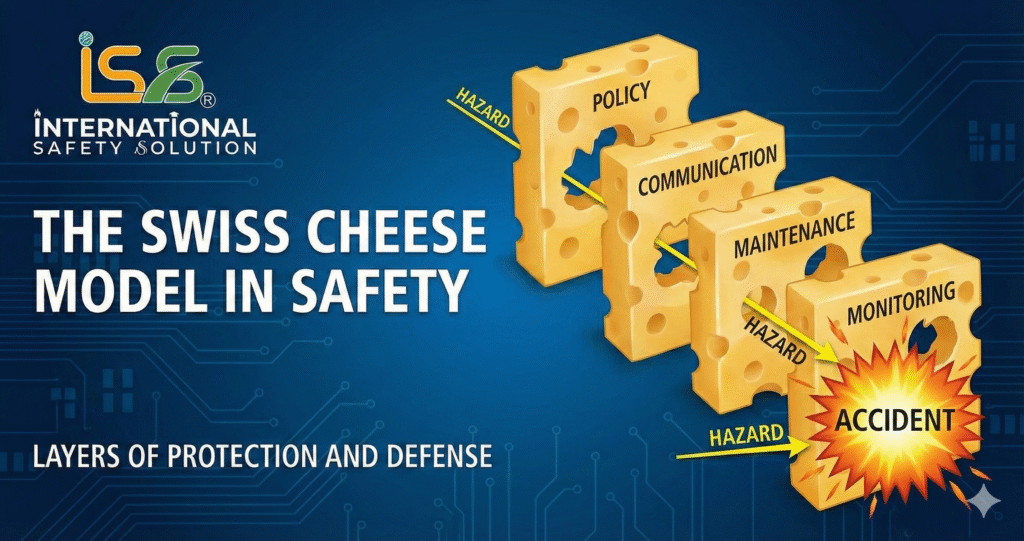
In high-risk industries such as oil and gas, construction, aviation, healthcare, and manufacturing, accidents rarely occur due to a single mistake. Most major incidents are the result of multiple system failures occurring simultaneously. The Swiss Cheese Model is one of the most widely accepted safety management models used globally to explain this reality and support […]
HSE Safety Culture Maturity Model: Levels, Meaning, and Industry Implementation
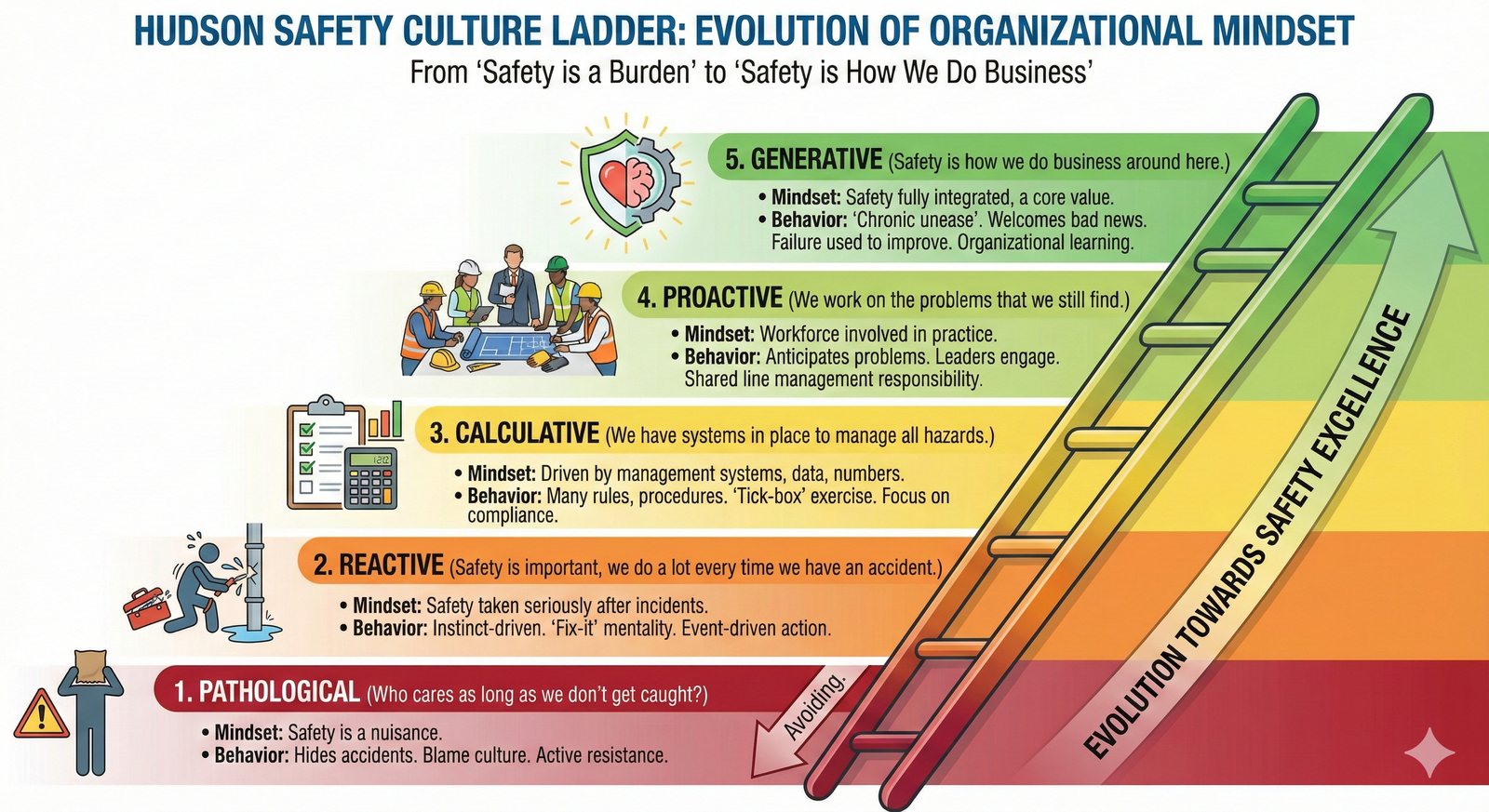
Introduction Safety Culture Maturity describes how deeply health, safety, and environmental (HSE) values are embedded into an organization’s daily operations, leadership decisions, and workforce behavior. HSE Safety Culture Maturity Models provide a structured roadmap that helps organizations move from basic legal compliance to a proactive and continuously improving safety culture. These models are widely used […]
Flash Point Explained: Meaning, Examples, and Why It Matters in Fire Safety
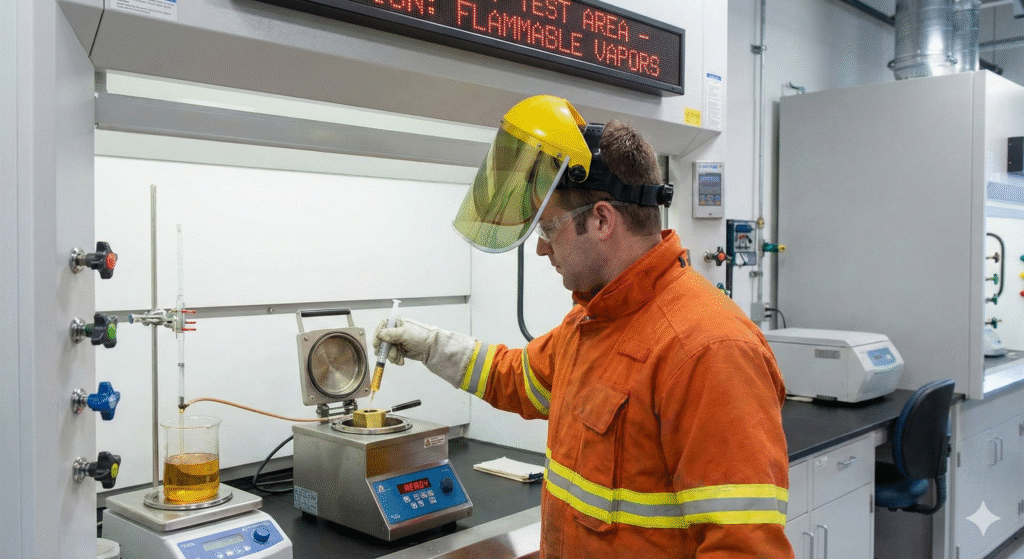
What Is Flash Point? Flash point is the lowest temperature at which a liquid produces enough vapor to ignite briefly when an external flame or spark is applied. In simple terms, it is the temperature at which a liquid becomes “fire-ready” for a moment. At the flash point: This is why flash point is different […]
Dust Pentagon Explained: Causes, Hazards, and Prevention of Combustible Dust Explosions
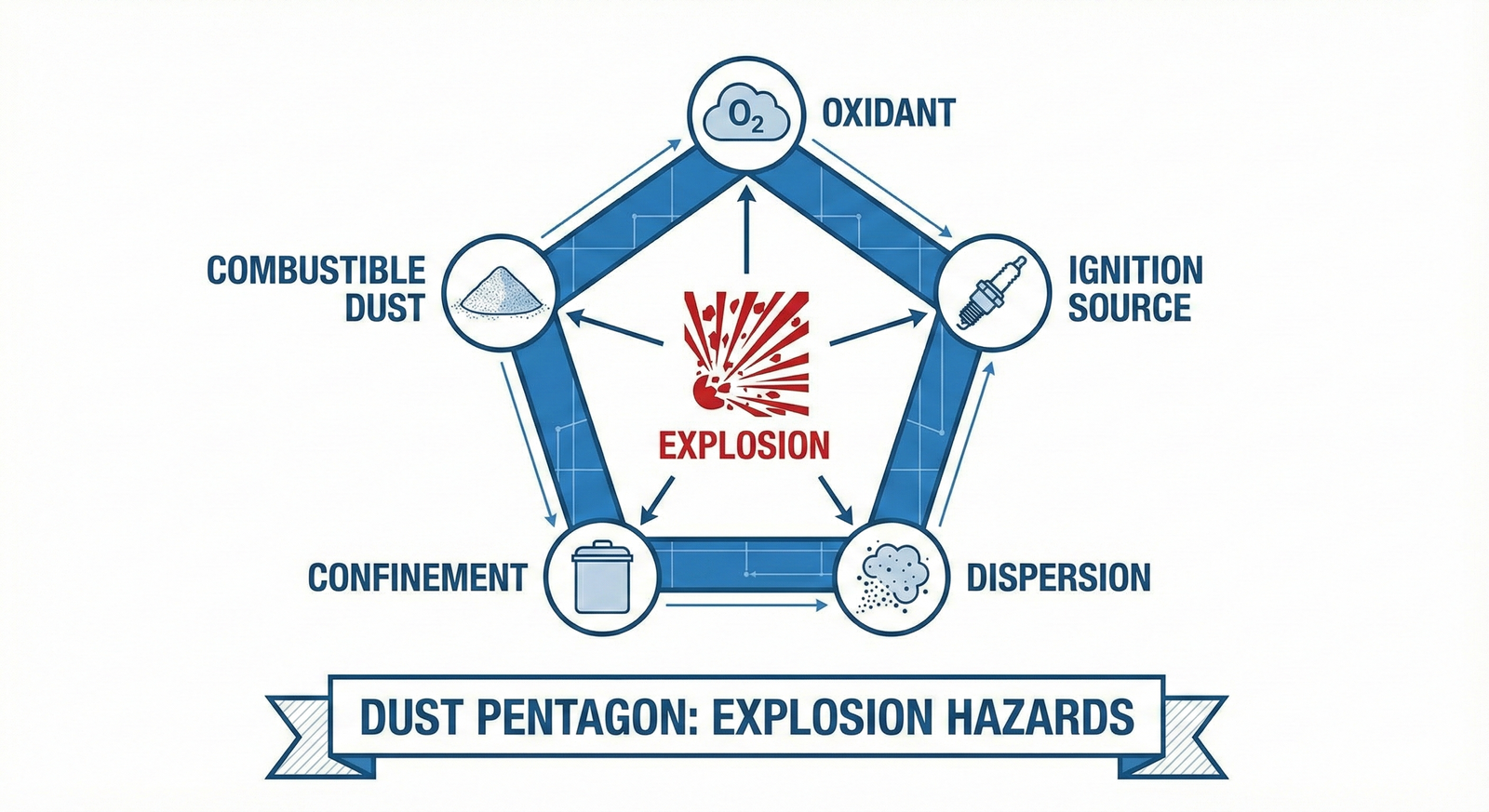
The Dust Pentagon is a recognized safety model used in process safety and fire protection engineering to explain the conditions required for a combustible dust explosion. It expands upon the traditional fire triangle by identifying two additional elements—dispersion and confinement—which are critical in transforming a dust fire into a violent explosion. This model is widely […]
Bunding in Safety: A Simple but Powerful Safety Control You Should Know
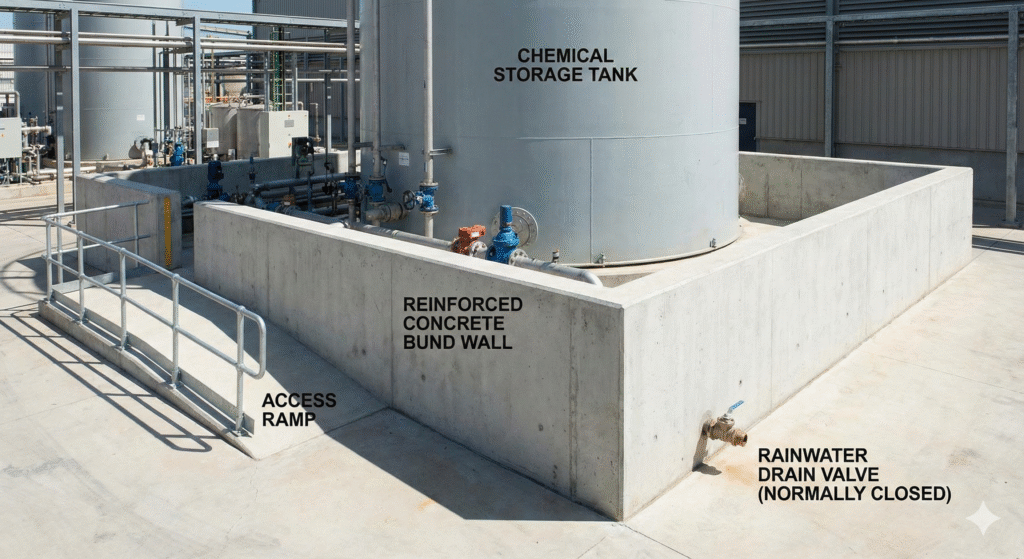
Bunding in Safety: In safety and environmental management, some controls look simple but save millions in losses. Bunding is one of those controls.It is not complex, not expensive, yet it plays a critical role in preventing disasters. This article explains what bunding is, why it is important, where it is used, and how it controls […]