
Evacuation Plan: Complete Guide to Emergency Evacuation, Legends, Emergency Contacts, and Workplace Safety
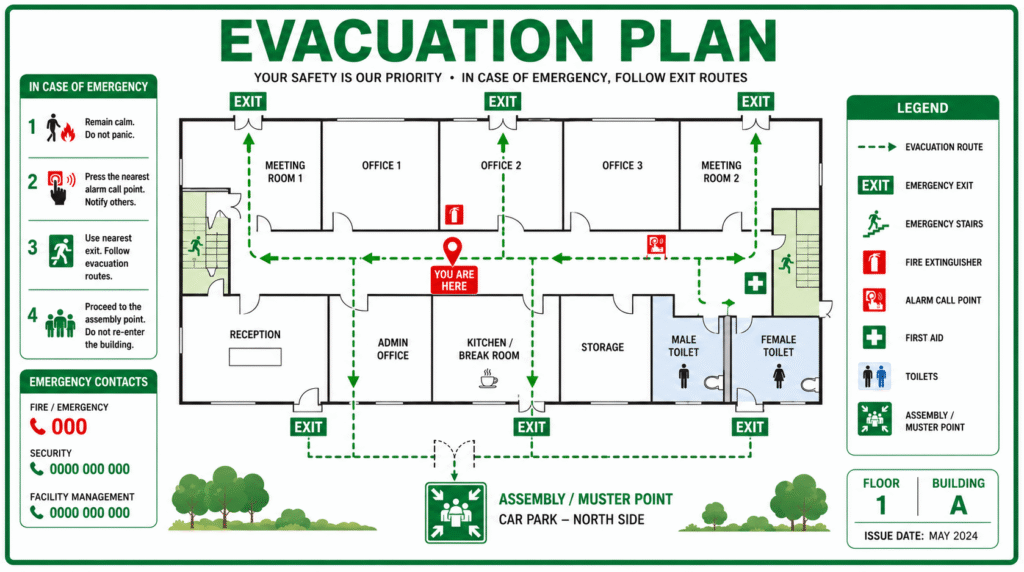
Introduction to Evacuation Plan An Evacuation Plan is one of the most important components of any emergency preparedness program. It is a documented procedure that explains how employees, visitors, contractors, and members of the public can safely leave a building or workplace when an emergency occurs. Emergencies can happen at any time without warning, and […]
Fishbone Model for RCA – Case Application on Rana Plaza Collapse
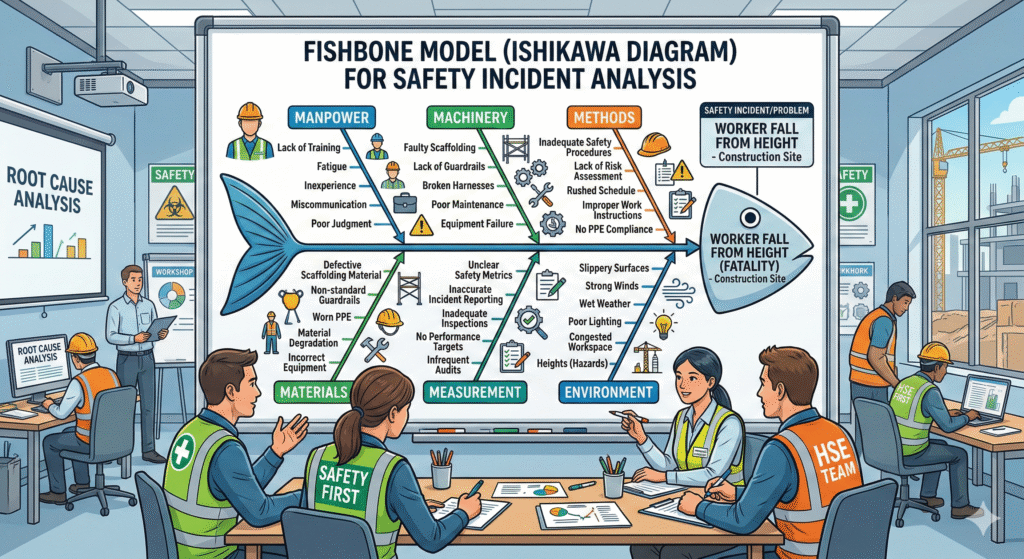
The Fishbone Diagram (also called Ishikawa Diagram or Cause-and-Effect Diagram) is a structured Root Cause Analysis (RCA) tool used to systematically identify, categorize, and analyze contributing factors of a failure event. In high-risk industries such as construction, manufacturing, and occupational safety, the Fishbone model prevents superficial conclusions and forces investigation into systemic weaknesses. The collapse […]
Hazard Identification, Risk Assessment and Control (HIRAC) – Simple Guide to Workplace Safety
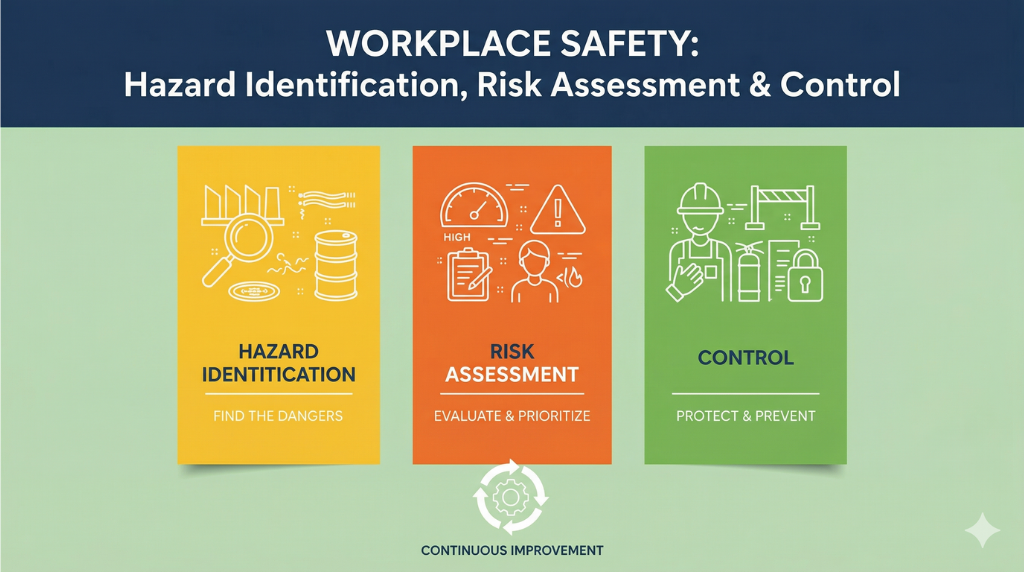
In Occupational Health, Safety, and Environment (HSE) practice, HIRAC is the backbone of workplace safety. It helps prevent incidents, near misses, and accidents by identifying hazards, assessing risks, and applying control measures systematically.This guide explains HIRAC in simple terms with practical examples, including the Hierarchy of Controls. 1️⃣ Hazard Identification (H)✅ Simple DefinitionHazard Identification is […]
Accidents, Incidents & Near Misses – What Every HSE Professional Must Know
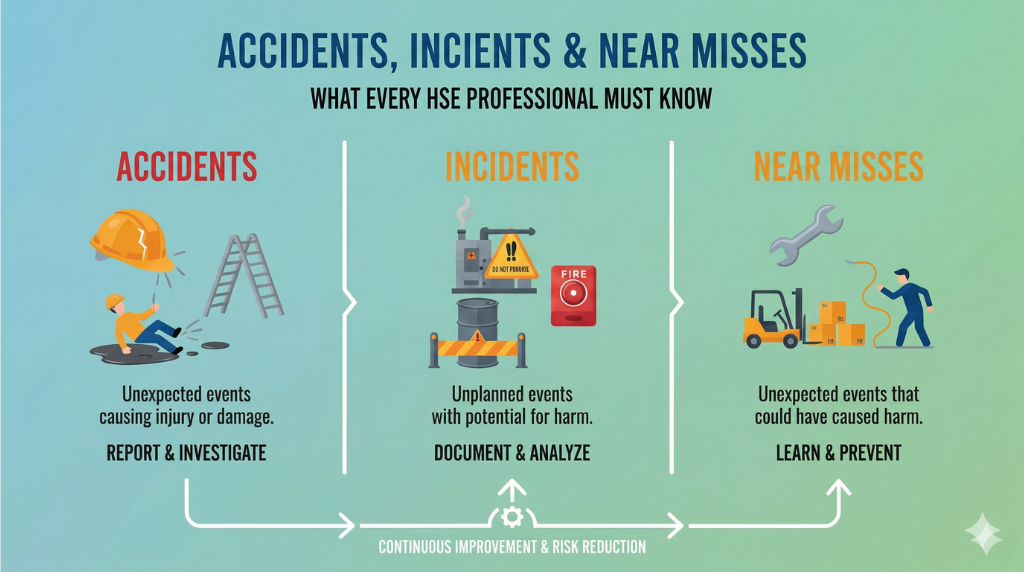
In Occupational Health, Safety and Environment (HSE) management, the terms incident, near miss, and accident are frequently used. Although they are related, they have distinct meanings in professional safety practice. Misunderstanding these terms can affect reporting, investigation, and preventive controls.This article explains each concept clearly, using technical terminology and practical examples. 1️⃣ What is an […]
Why Six-Side (360°) Observation Is Critical in Safety
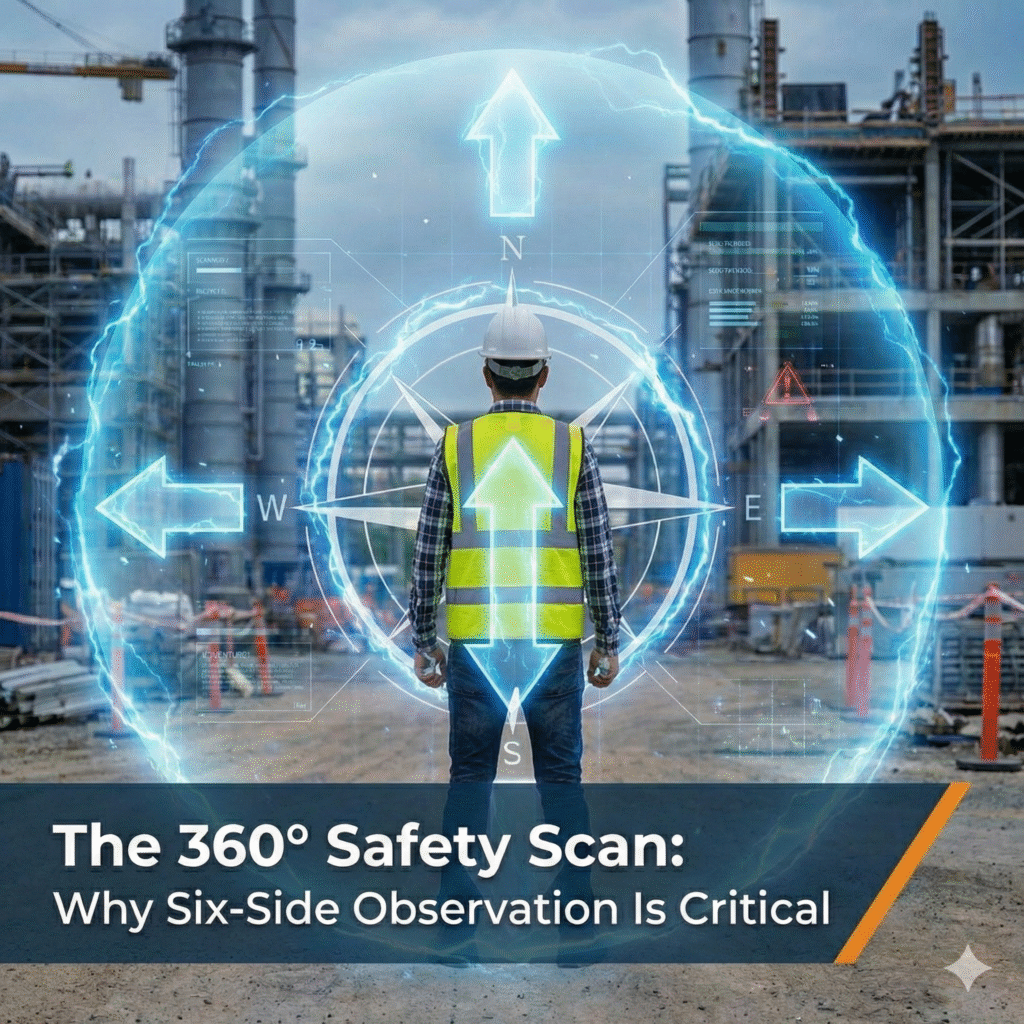
Many incidents happen because a worker or inspector focuses only on what is in front. Experienced HSE professionals are trained to scan all directions before declaring an area safe. 1️⃣ Front – Immediate Task Hazard This includes: Moving machinery Rotating parts Hot surfaces Chemical handling Vehicle movement Most people focus only here — which is […]
Why Leaders and Experienced Professionals Rely on Common Sense for Hazard Identification

In workplace audits and inspections, experienced leaders often refer to something simple yet powerful — common sense.But common sense in safety is not casual thinking. It is developed situational awareness built through experience, observation, and risk perception.Senior professionals use their five senses effectively because they have trained their minds to recognize patterns, deviations, and unsafe […]
Workplace Lighting Standards: Ensuring Safety and Productivity
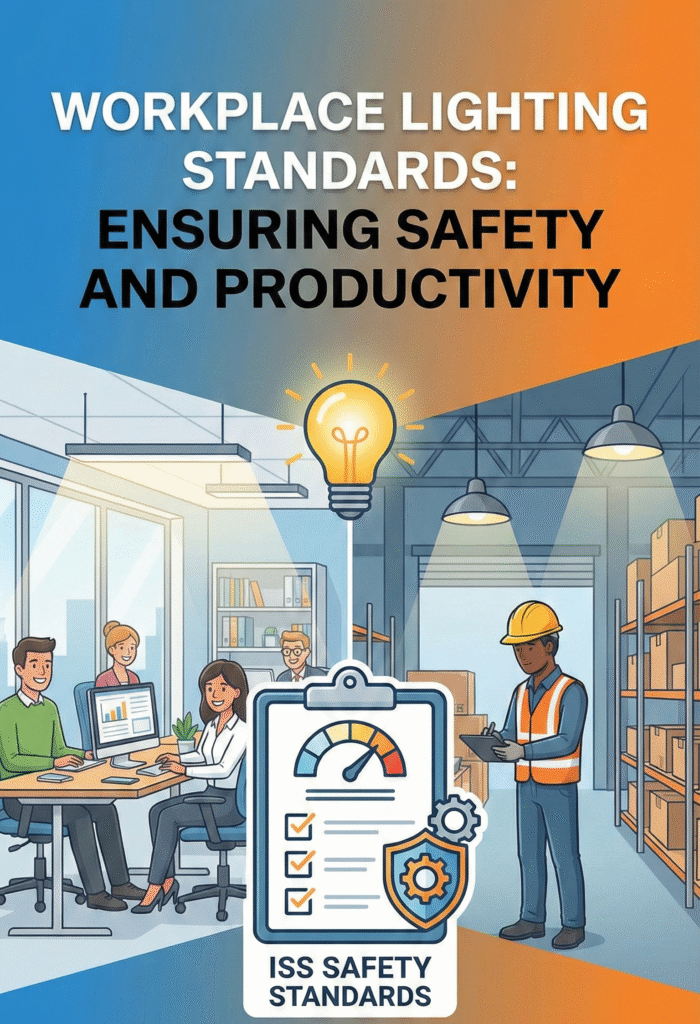
Proper lighting is a crucial yet often overlooked aspect of workplace health, safety, and productivity. Poor lighting can lead to accidents, visual fatigue, decreased efficiency, and long-term eye strain. NEBOSH IDIP Level 6 emphasizes lighting as part of the broader work environment management for occupational safety. Here’s what you need to know. 1️⃣ Importance of […]
NEBOSH IGC Success Guide:

Scenario-Based Exam Total Marks: 100Passing Marks: 45Exam Type: 100% scenario-based NEBOSH IGC Success Guide: Step 1: Reading & Understanding the Scenario NEBOSH IGC Success Guide: Step 2: Writing Your Tasks (Answering Questions) Step 3: Task-Wise Tips & Techniques 1. Employer Obligations (Article 10 & 16, ILO R164) 2. Managing the Impact of Change 3. Safety […]
Concrete Batching plant
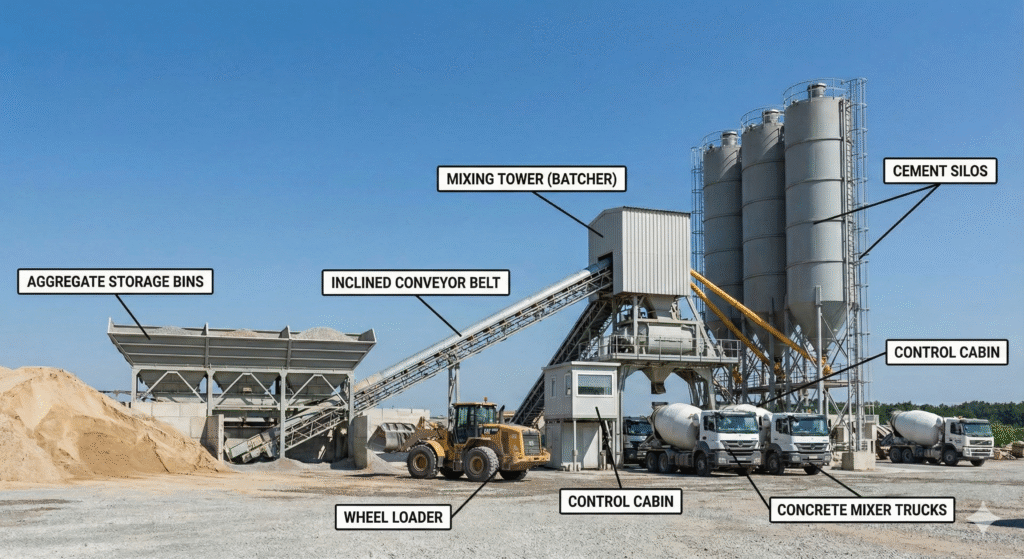
Batching Plant on a Construction Site: 1. Introduction A batching plant (often called a concrete batching plant) is a facility on or near a construction site where raw materials — cement, water, aggregates (sand, gravel), and additives — are measured, combined, and mixed to produce fresh concrete for building structures, pavements, bridges, and infrastructure work. […]
SLAM Technique: A Simple Habit That Prevents Serious Incidents
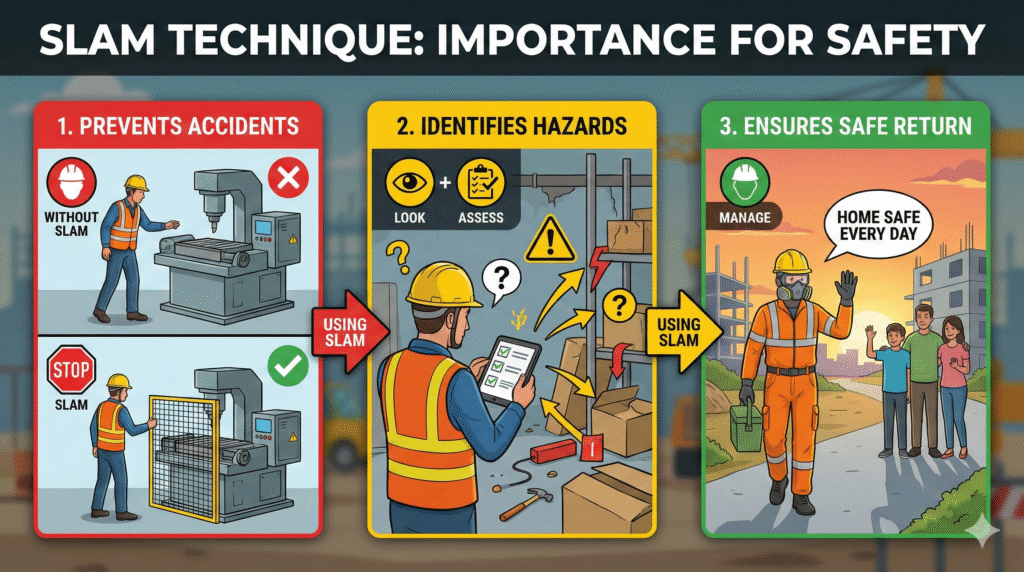
SLAM Technique: Many people believe safety is only the responsibility of the safety department.This thinking is one of the main reasons accidents still happen. Safety does not belong to a title or department.Safety belongs to the person doing the job. SLAM Technique: Safety Works in Every Job Safety is not only for safety officers.It applies […]