
Spill Kit: The Complete Guide to Spill Control, Hazard Management, Environmental Protection, and Workplace Safety

Introduction to Spill Kit Spill kit in modern industries, workplaces frequently handle various liquids such as oils, fuels, lubricants, chemicals, solvents, paints, acids, alkalis, and other hazardous substances. These materials are essential for production, maintenance, transportation, and operational activities; however, they also present significant risks when accidentally released into the workplace. A leak from a […]
Evacuation Plan: Complete Guide to Emergency Evacuation, Legends, Emergency Contacts, and Workplace Safety
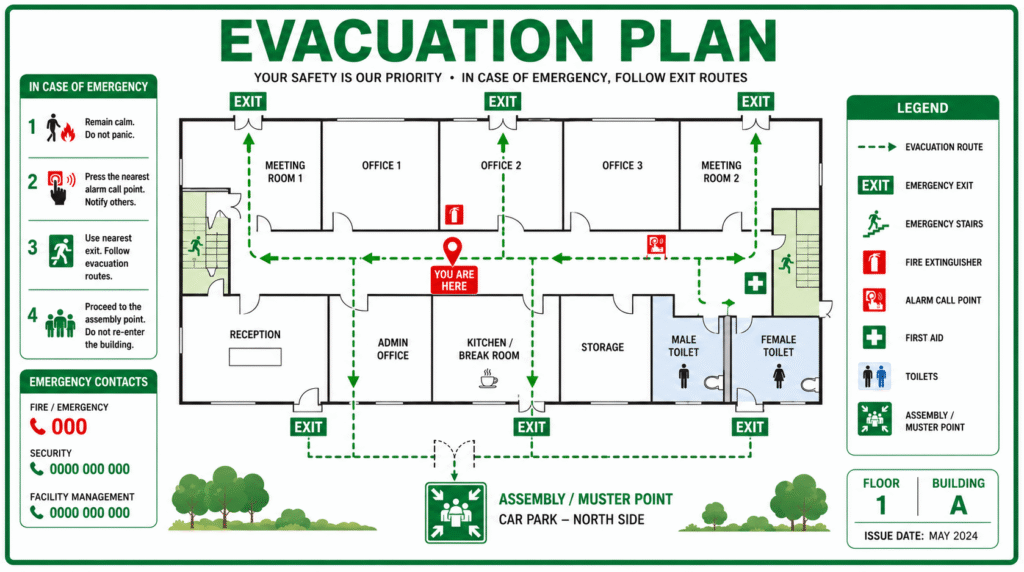
Introduction to Evacuation Plan An Evacuation Plan is one of the most important components of any emergency preparedness program. It is a documented procedure that explains how employees, visitors, contractors, and members of the public can safely leave a building or workplace when an emergency occurs. Emergencies can happen at any time without warning, and […]
Self-Contained Breathing Apparatus (SCBA): A Complete Guide for Firefighting, Rescue, Confined Space Entry, and Industrial Emergency Response

Introduction A Self-Contained Breathing Apparatus, commonly known as SCBA, is one of the most critical life-saving devices used in firefighting, rescue operations, confined space entry, hazardous material response, marine safety, industrial emergency response, and oil and gas operations. In any environment where the atmosphere is unsafe to breathe, the SCBA provides the user with an […]
NFPA 101 Life Safety Code – Complete Guide for Fire Safety & HSE Professionals
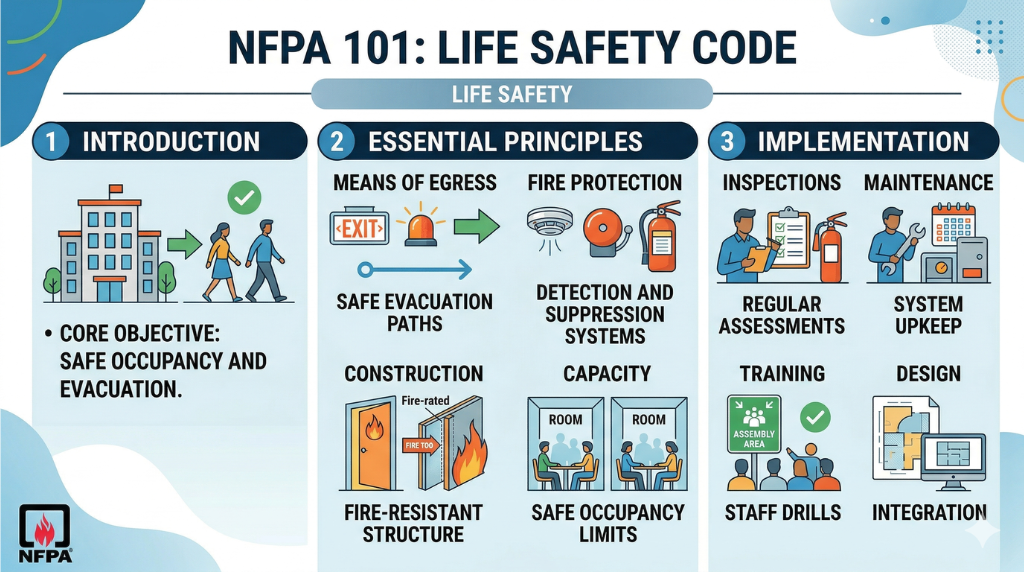
Introduction The NFPA 101 – Life Safety Code is one of the most important fire safety standards developed by the National Fire Protection Association (NFPA). It focuses on protecting human life from fire, smoke, and toxic gases through proper building design, construction, and operation. Unlike other fire codes that mainly focus on systems like sprinklers, […]
NFPA 704 Diamond – Complete Guide for Workplace Safety
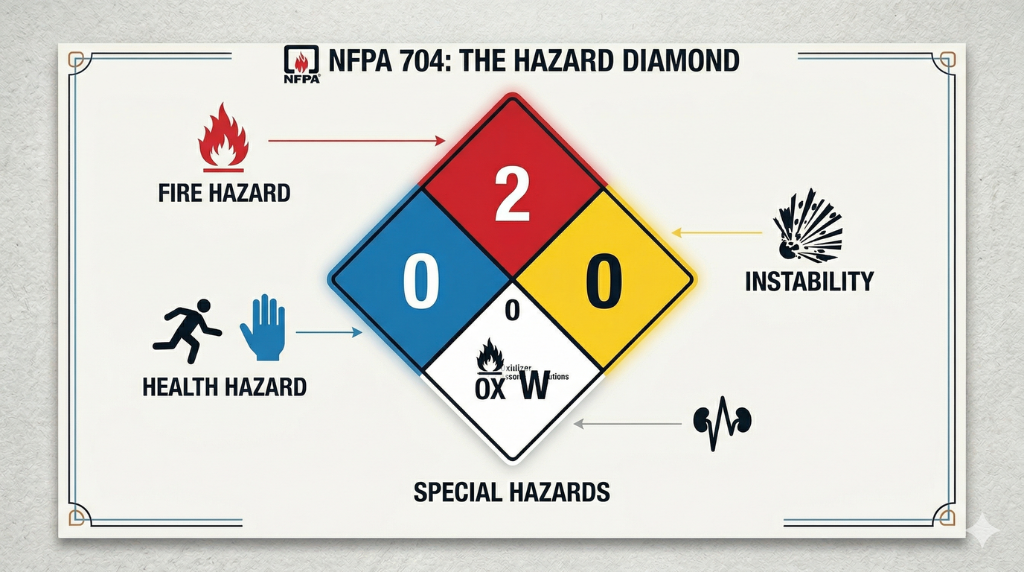
IntroductionSafety is the first priority in any workplace, especially where chemicals are used or stored. The NFPA 704 Diamond is an important system that helps workers, emergency responders, and safety officers quickly understand chemical hazards. This system uses a color-coded diamond shape to show different types of risks and is widely used in industries, laboratories, […]
Overhead Power Line Safety: Minimum Clearance Distance Chart for Worksites
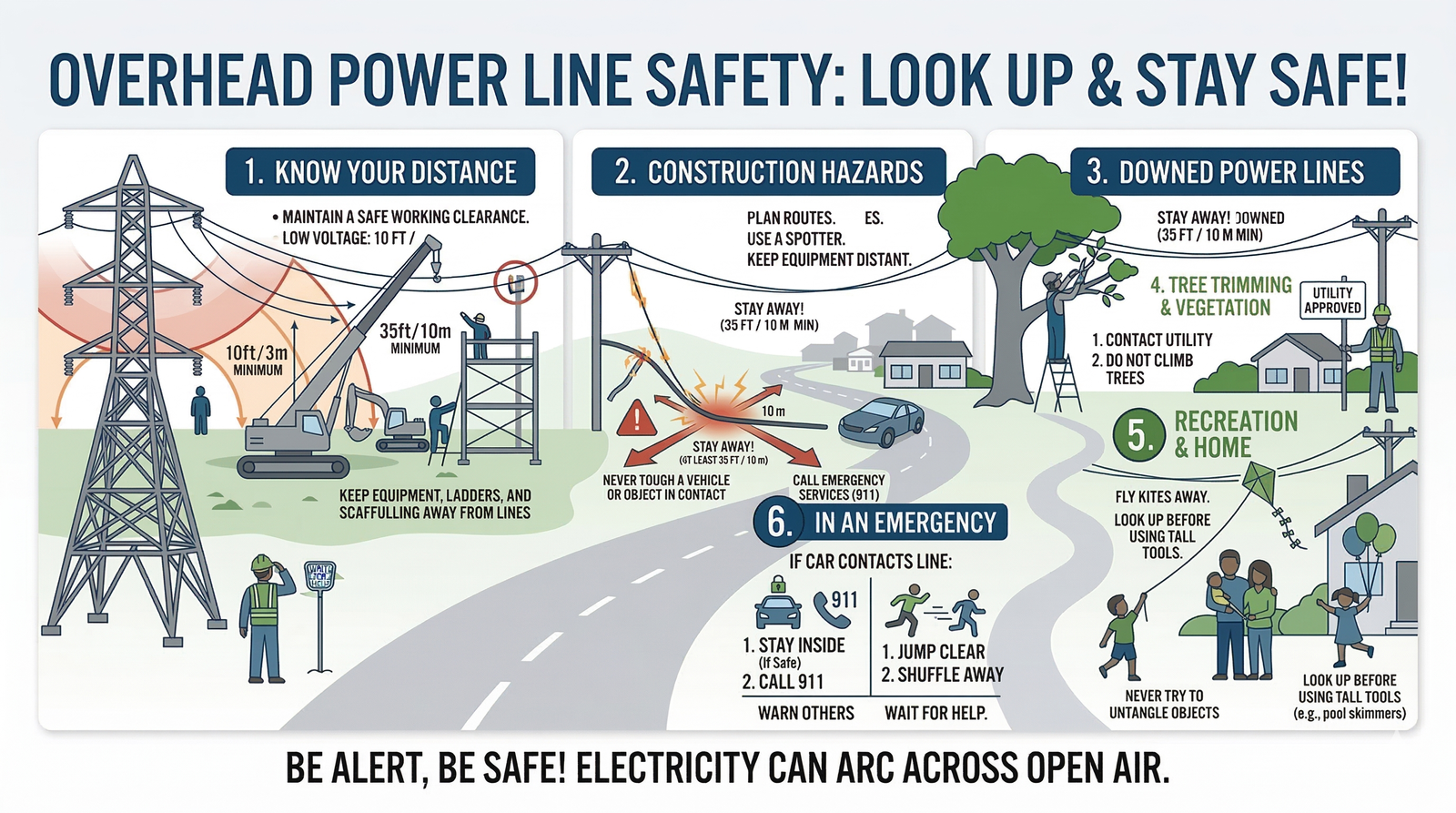
Essential Guidance for Construction & Industrial Worksites Overhead power lines are one of the most dangerous hazards on construction sites, warehouses, factories, and maintenance areas. Contact with energized lines can cause electrocution, severe burns, fires, equipment damage, or fatalities. Many serious incidents occur when workers operate cranes, dump trucks, scaffolding, ladders, or excavators near power […]
Why Six-Side (360°) Observation Is Critical in Safety
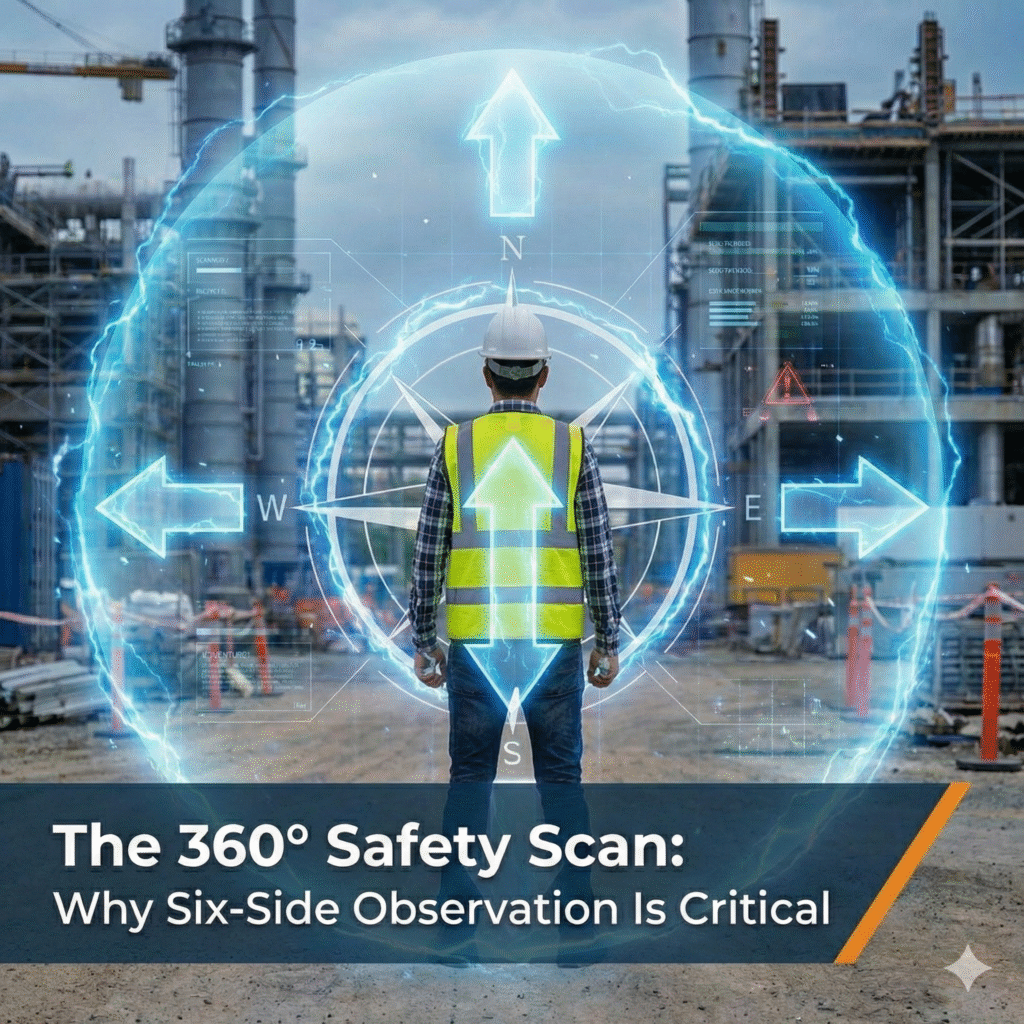
Many incidents happen because a worker or inspector focuses only on what is in front. Experienced HSE professionals are trained to scan all directions before declaring an area safe. 1️⃣ Front – Immediate Task Hazard This includes: Moving machinery Rotating parts Hot surfaces Chemical handling Vehicle movement Most people focus only here — which is […]
Safety Triangle (Heinrich’s Theory): How Unsafe Acts Lead to Serious Workplace Accidents
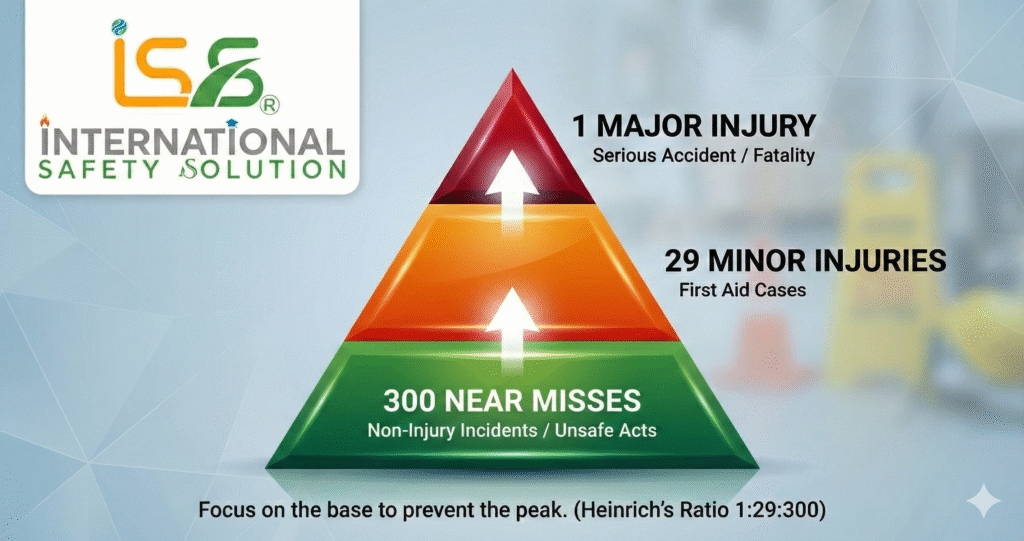
The Safety Triangle, also known as the Safety Pyramid, remains one of the most influential theories in occupational health and safety. Developed by American industrial safety pioneer Herbert William Heinrich, the model explains how serious workplace accidents are rarely sudden events. Instead, they are the final outcome of repeated unsafe acts, unsafe conditions, and ignored […]
HSE Safety Culture Maturity Model: Levels, Meaning, and Industry Implementation
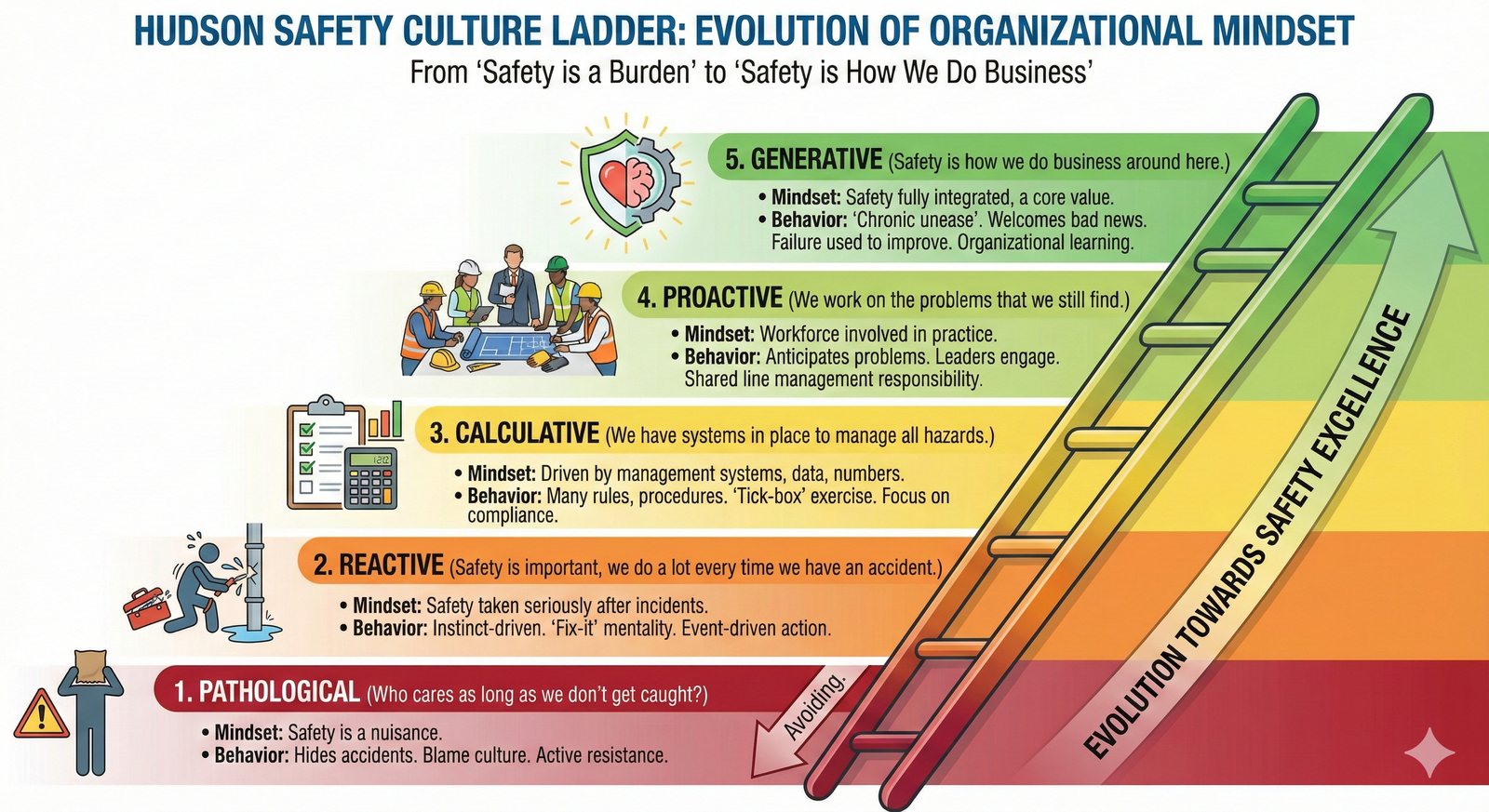
Introduction Safety Culture Maturity describes how deeply health, safety, and environmental (HSE) values are embedded into an organization’s daily operations, leadership decisions, and workforce behavior. HSE Safety Culture Maturity Models provide a structured roadmap that helps organizations move from basic legal compliance to a proactive and continuously improving safety culture. These models are widely used […]
Flash Point Explained: Meaning, Examples, and Why It Matters in Fire Safety
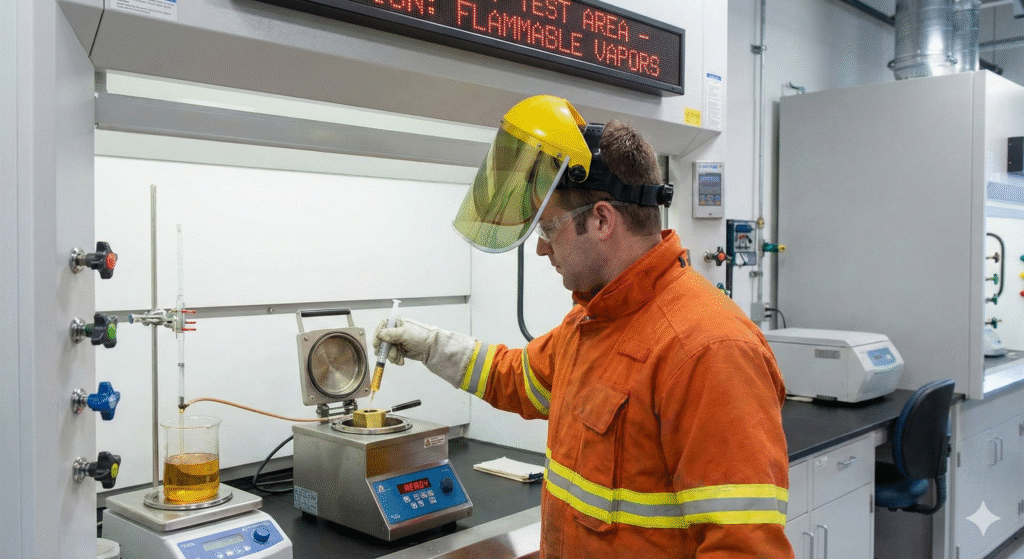
What Is Flash Point? Flash point is the lowest temperature at which a liquid produces enough vapor to ignite briefly when an external flame or spark is applied. In simple terms, it is the temperature at which a liquid becomes “fire-ready” for a moment. At the flash point: This is why flash point is different […]