
Fishbone Diagram Analysis

(Ishikawa Diagram): A Complete Guide to Root Cause Analysis Introduction The Fishbone Diagram Analysis, also known as the Ishikawa Diagram or Cause-and-Effect Diagram, is one of the most powerful Root Cause Analysis (RCA) tools used in occupational health and safety, quality management, manufacturing, construction, engineering, healthcare, and business management. The technique was developed by Kaoru […]
5 Whys Technique

A Complete Guide to Root Cause Analysis and Problem Solving Introduction The 5 Whys Technique is one of the simplest, most effective, and widely used Root Cause Analysis (RCA) methods in safety management, quality management, manufacturing, construction, healthcare, engineering, and business operations. The technique was originally developed by the Toyota Motor Corporation as part of […]
Near Miss Reporting

A Comprehensive Guide to Proactive Workplace Safety Management Introduction Near miss reporting is one of the most powerful yet often underutilized tools in occupational health and safety management. A near miss is an unplanned event that did not result in injury, illness, environmental damage, or property loss but had the potential to do so. In […]
Incident Investigation Process
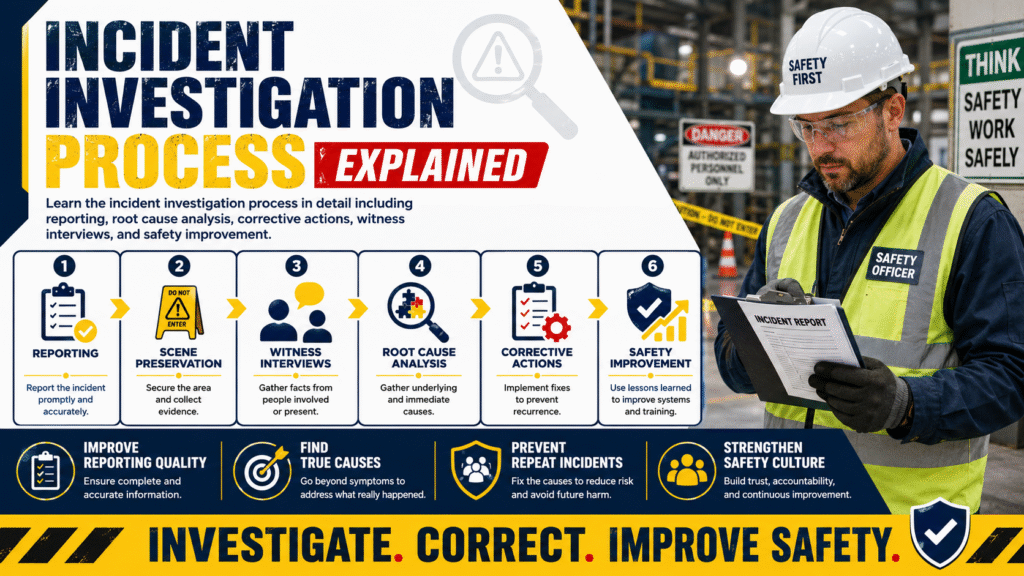
Incident Investigation Process A Complete Guide to Workplace Safety Analysis Introduction Incident investigation is a structured and systematic process used to determine the root causes of workplace accidents, near misses, injuries, illnesses, environmental incidents, and property damage events. The primary purpose of incident investigation is not to assign blame, but to identify underlying causes and […]
Risk Matrix

A Complete Guide to Risk Assessment and Risk Management Introduction A Risk Matrix is one of the most widely used tools in occupational health and safety, risk management, project management, construction, manufacturing, oil and gas, and many other industries. It helps organizations identify, evaluate, and prioritize workplace risks by considering two key factors: the likelihood […]
NFPA FIRE SAFETY CODES
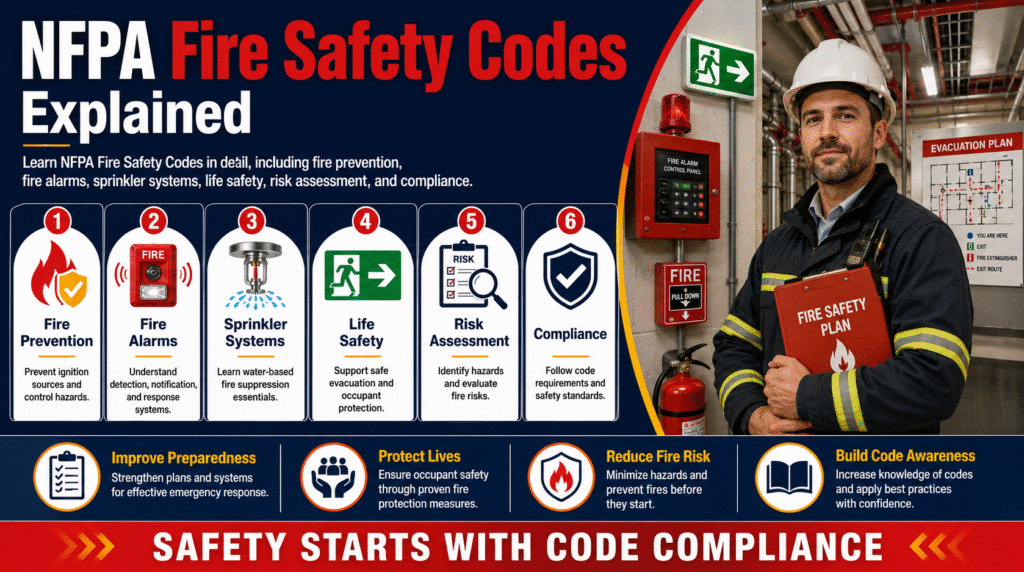
NFPA Fire Safety Codes: A Complete Guide to Fire Prevention and Life Safety Introduction Fire is one of the most dangerous hazards that can affect people, businesses, industries, and communities. Every year, thousands of fire incidents result in fatalities, severe injuries, property damage, environmental impacts, and financial losses. While many fires are preventable, they often […]
NFPA 704 Diamond – Complete Guide for Workplace Safety
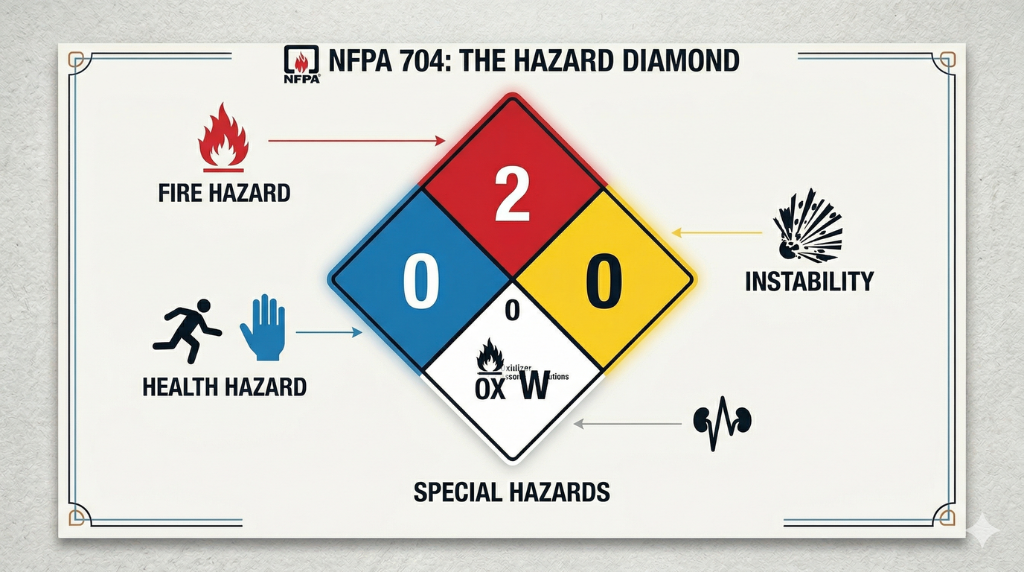
IntroductionSafety is the first priority in any workplace, especially where chemicals are used or stored. The NFPA 704 Diamond is an important system that helps workers, emergency responders, and safety officers quickly understand chemical hazards. This system uses a color-coded diamond shape to show different types of risks and is widely used in industries, laboratories, […]
Hazard Identification, Risk Assessment and Control (HIRAC) – Simple Guide to Workplace Safety
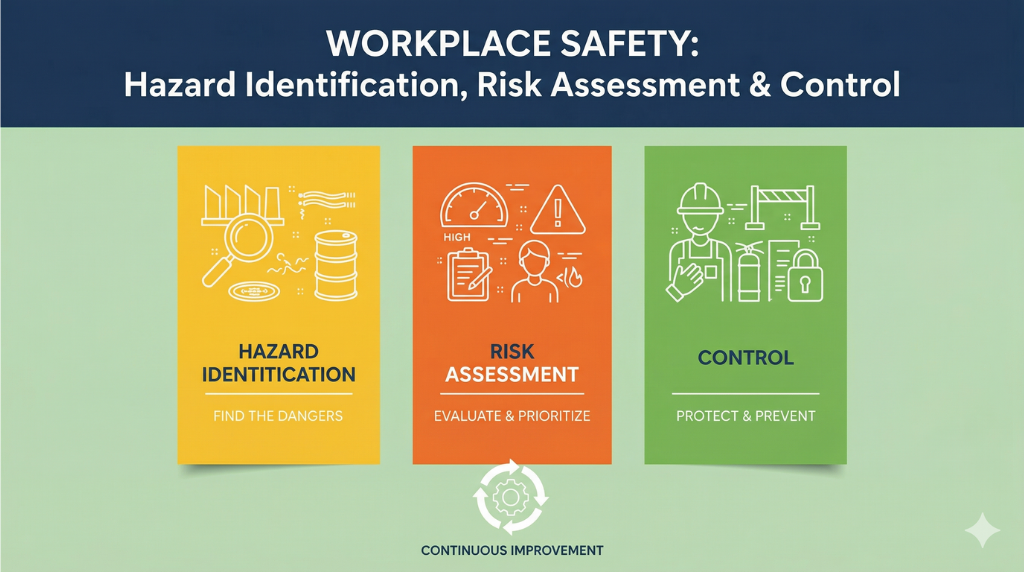
In Occupational Health, Safety, and Environment (HSE) practice, HIRAC is the backbone of workplace safety. It helps prevent incidents, near misses, and accidents by identifying hazards, assessing risks, and applying control measures systematically.This guide explains HIRAC in simple terms with practical examples, including the Hierarchy of Controls. 1️⃣ Hazard Identification (H)✅ Simple DefinitionHazard Identification is […]
Why Six-Side (360°) Observation Is Critical in Safety
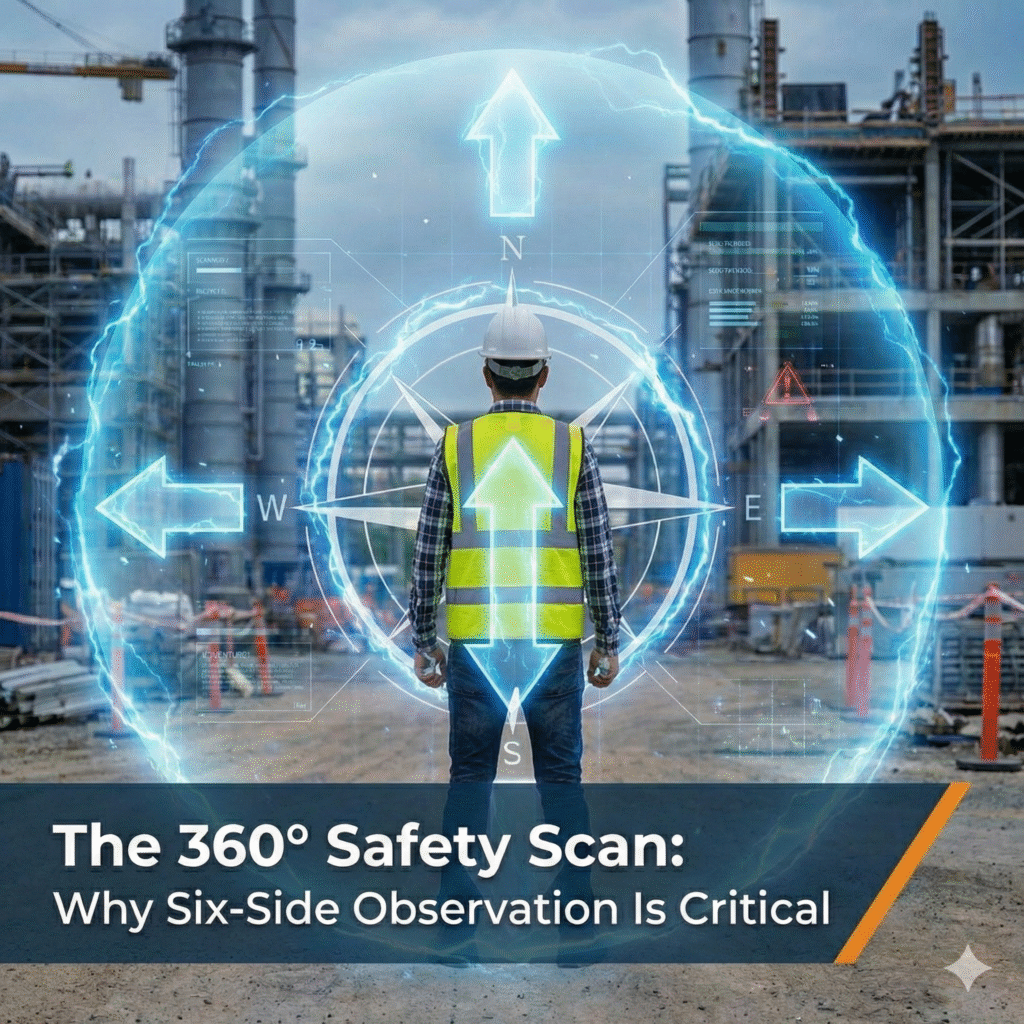
Many incidents happen because a worker or inspector focuses only on what is in front. Experienced HSE professionals are trained to scan all directions before declaring an area safe. 1️⃣ Front – Immediate Task Hazard This includes: Moving machinery Rotating parts Hot surfaces Chemical handling Vehicle movement Most people focus only here — which is […]
Why Leaders and Experienced Professionals Rely on Common Sense for Hazard Identification
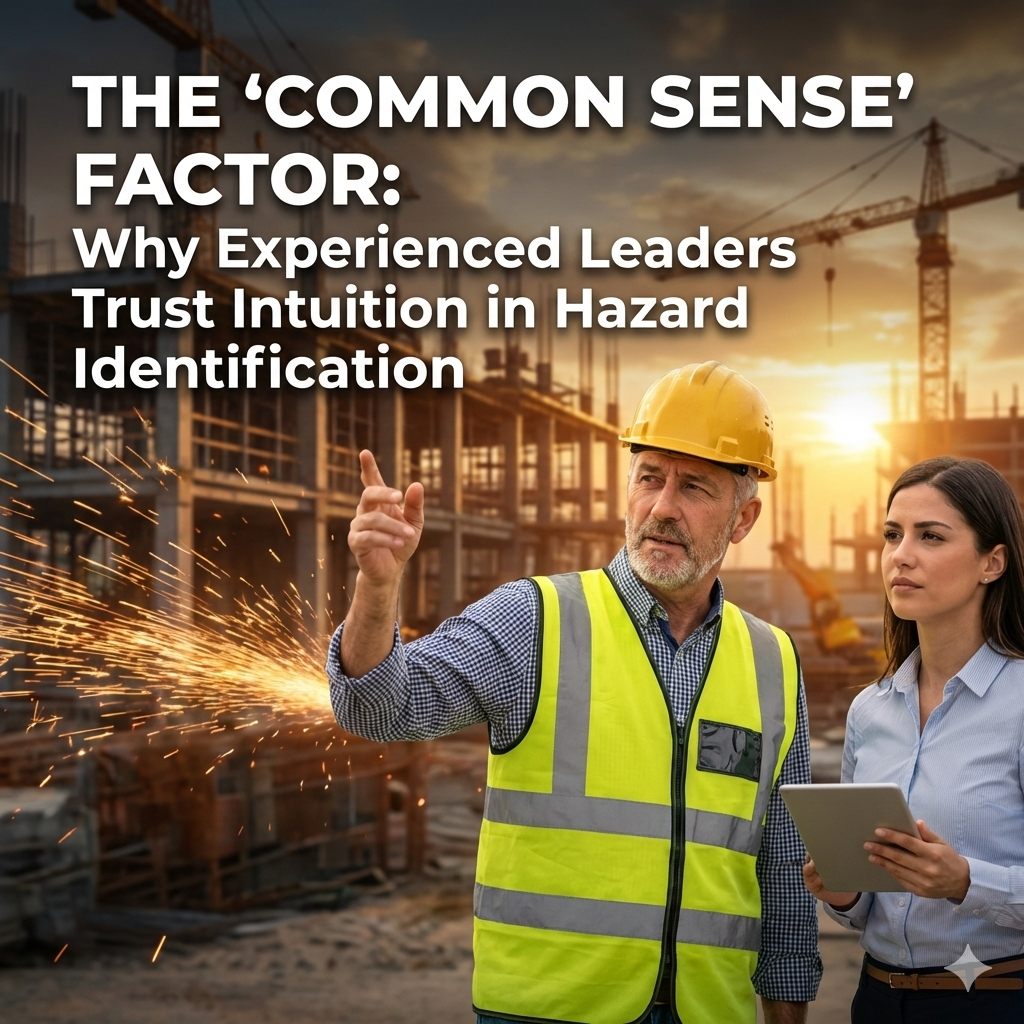
In workplace audits and inspections, experienced leaders often refer to something simple yet powerful — common sense.But common sense in safety is not casual thinking. It is developed situational awareness built through experience, observation, and risk perception.Senior professionals use their five senses effectively because they have trained their minds to recognize patterns, deviations, and unsafe […]