
Fault Tree Analysis (FTA)

1. Introduction to Fault Tree Analysis (FTA) Fault Tree Analysis (FTA) is a highly advanced, structured, and systematic risk assessment technique used in modern safety engineering, reliability analysis, accident investigation, and process safety management. It is a deductive methodology that begins with a clearly defined undesired event, known as the “Top Event,” and then works […]
Fishbone Diagram Analysis

(Ishikawa Diagram): A Complete Guide to Root Cause Analysis Introduction The Fishbone Diagram Analysis, also known as the Ishikawa Diagram or Cause-and-Effect Diagram, is one of the most powerful Root Cause Analysis (RCA) tools used in occupational health and safety, quality management, manufacturing, construction, engineering, healthcare, and business management. The technique was developed by Kaoru […]
Near Miss Reporting

A Comprehensive Guide to Proactive Workplace Safety Management Introduction Near miss reporting is one of the most powerful yet often underutilized tools in occupational health and safety management. A near miss is an unplanned event that did not result in injury, illness, environmental damage, or property loss but had the potential to do so. In […]
Incident Investigation Process
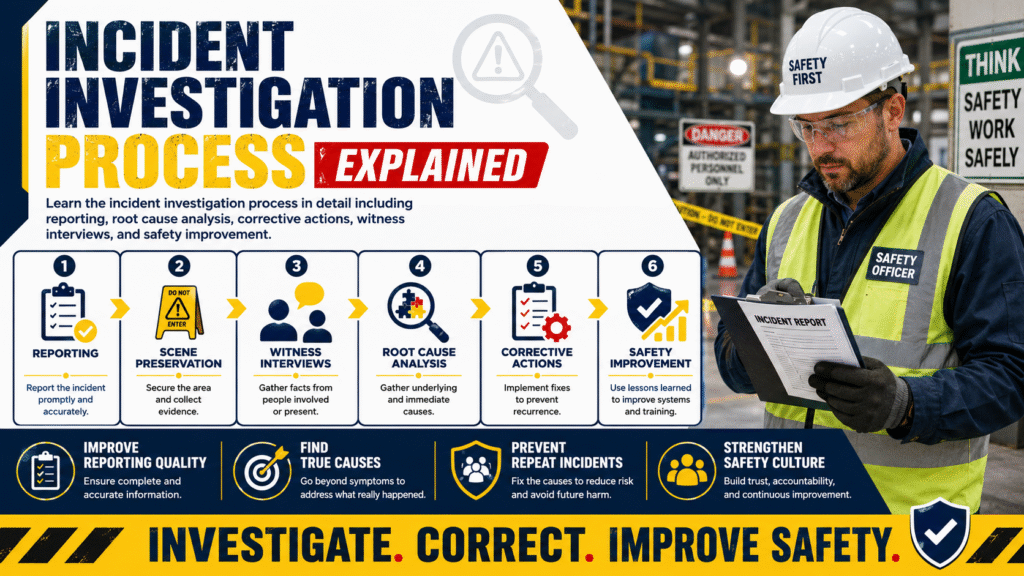
Incident Investigation Process A Complete Guide to Workplace Safety Analysis Introduction Incident investigation is a structured and systematic process used to determine the root causes of workplace accidents, near misses, injuries, illnesses, environmental incidents, and property damage events. The primary purpose of incident investigation is not to assign blame, but to identify underlying causes and […]
Blame, No-Blame, and Just Culture
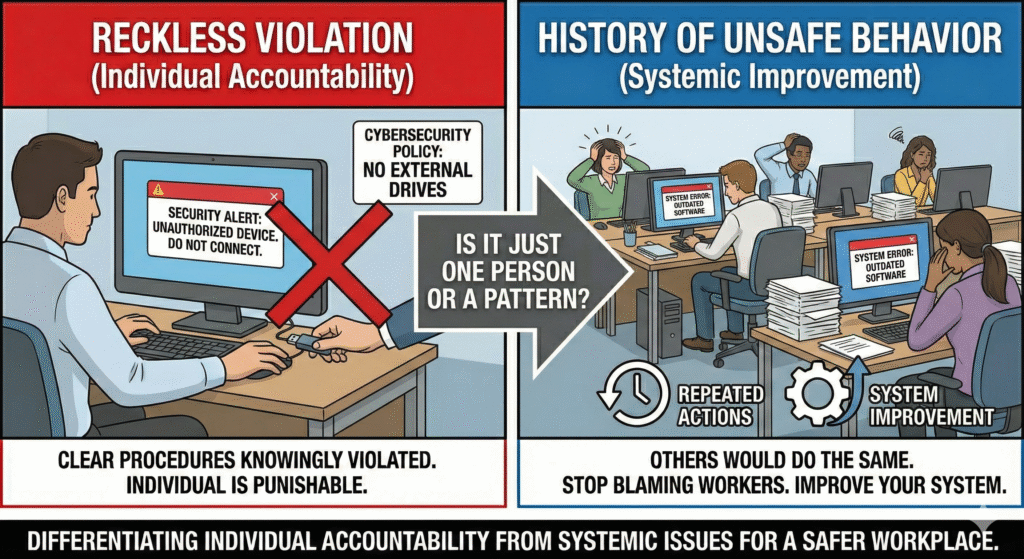
Understanding Accountability the Right Way (Following Sidney Dekker) Who is Sidney Dekker? No-Blame: Sidney Dekker is a globally respected safety thinker, author, and researcher.His work focuses on why incidents make sense to people at the time, instead of blaming them afterward. Dekker’s core belief is very clear: People do not come to work to break […]