
Near Miss Reporting

A Comprehensive Guide to Proactive Workplace Safety Management Introduction Near miss reporting is one of the most powerful yet often underutilized tools in occupational health and safety management. A near miss is an unplanned event that did not result in injury, illness, environmental damage, or property loss but had the potential to do so. In […]
Spill Kit: The Complete Guide to Spill Control, Hazard Management, Environmental Protection, and Workplace Safety

Introduction to Spill Kit Spill kit in modern industries, workplaces frequently handle various liquids such as oils, fuels, lubricants, chemicals, solvents, paints, acids, alkalis, and other hazardous substances. These materials are essential for production, maintenance, transportation, and operational activities; however, they also present significant risks when accidentally released into the workplace. A leak from a […]
Evacuation Plan: Complete Guide to Emergency Evacuation, Legends, Emergency Contacts, and Workplace Safety
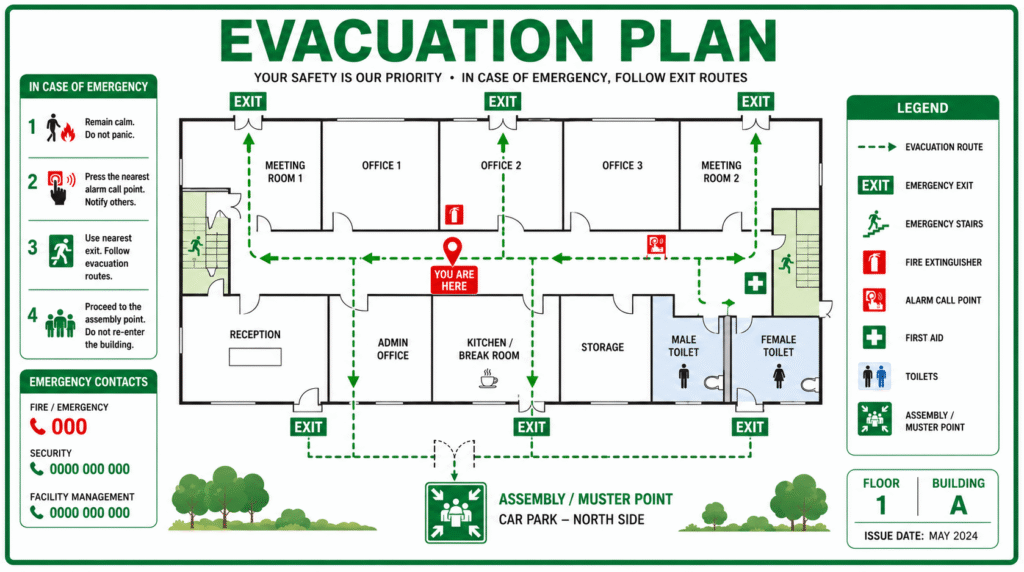
Introduction to Evacuation Plan An Evacuation Plan is one of the most important components of any emergency preparedness program. It is a documented procedure that explains how employees, visitors, contractors, and members of the public can safely leave a building or workplace when an emergency occurs. Emergencies can happen at any time without warning, and […]
Self-Contained Breathing Apparatus (SCBA): A Complete Guide for Firefighting, Rescue, Confined Space Entry, and Industrial Emergency Response

Introduction A Self-Contained Breathing Apparatus, commonly known as SCBA, is one of the most critical life-saving devices used in firefighting, rescue operations, confined space entry, hazardous material response, marine safety, industrial emergency response, and oil and gas operations. In any environment where the atmosphere is unsafe to breathe, the SCBA provides the user with an […]
Auto Fire Off Ball vs Automatic Fire Extinguishers: Complete Fire Safety Comparison Guide for 2026
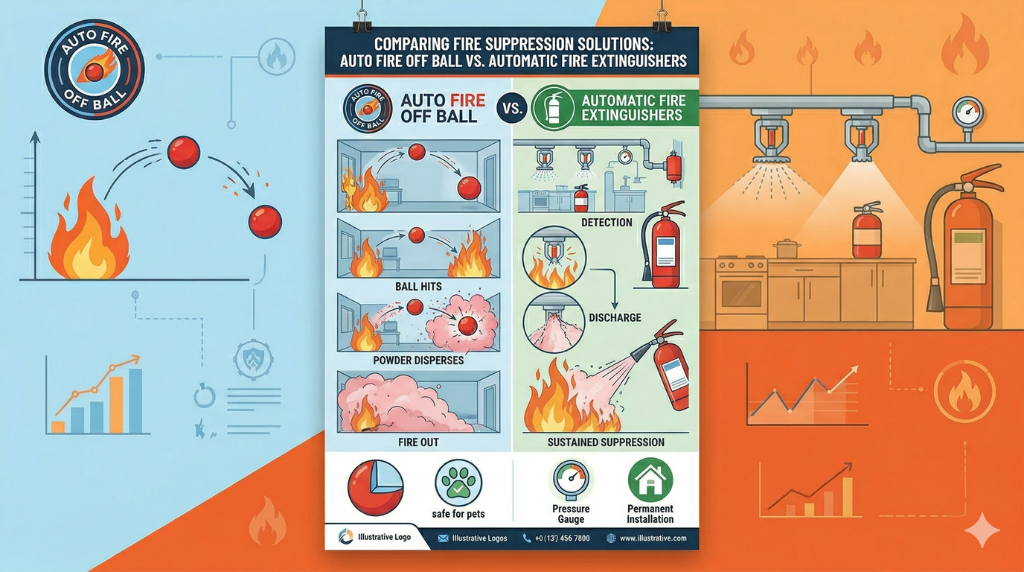
Fire protection systems are critical in minimizing damage, saving lives, and ensuring compliance with safety standards. Among modern solutions, Auto Fire Off Balls and Automatic Fire Extinguishers are widely used—but often misunderstood. This guide provides a clear, technical comparison to help safety professionals, facility managers, and students make informed decisions. Fire suppression systems are designed […]
NFPA 704 Diamond – Complete Guide for Workplace Safety
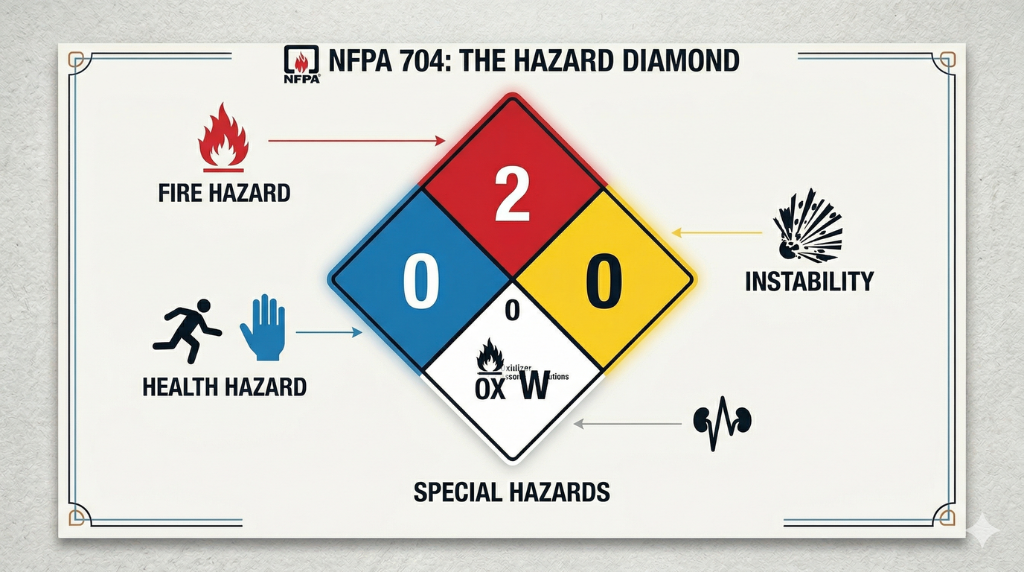
IntroductionSafety is the first priority in any workplace, especially where chemicals are used or stored. The NFPA 704 Diamond is an important system that helps workers, emergency responders, and safety officers quickly understand chemical hazards. This system uses a color-coded diamond shape to show different types of risks and is widely used in industries, laboratories, […]
Importance of First Aid Box: Life-Saving Benefits at Work and Home (AHA Approved)
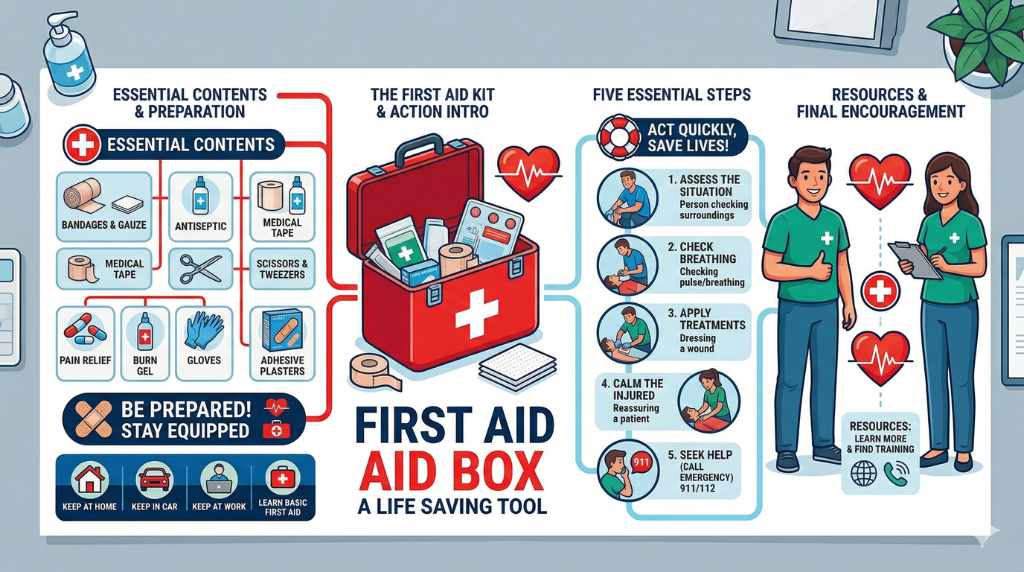
A first aid box is not just a collection of medical items—it is a life-saving emergency system that bridges the critical time between an injury and professional medical help. In both workplaces and homes, quick first response can significantly reduce the severity of injuries and even prevent death. In simple terms, it is the first […]
Waste Containers in Workplace Safety
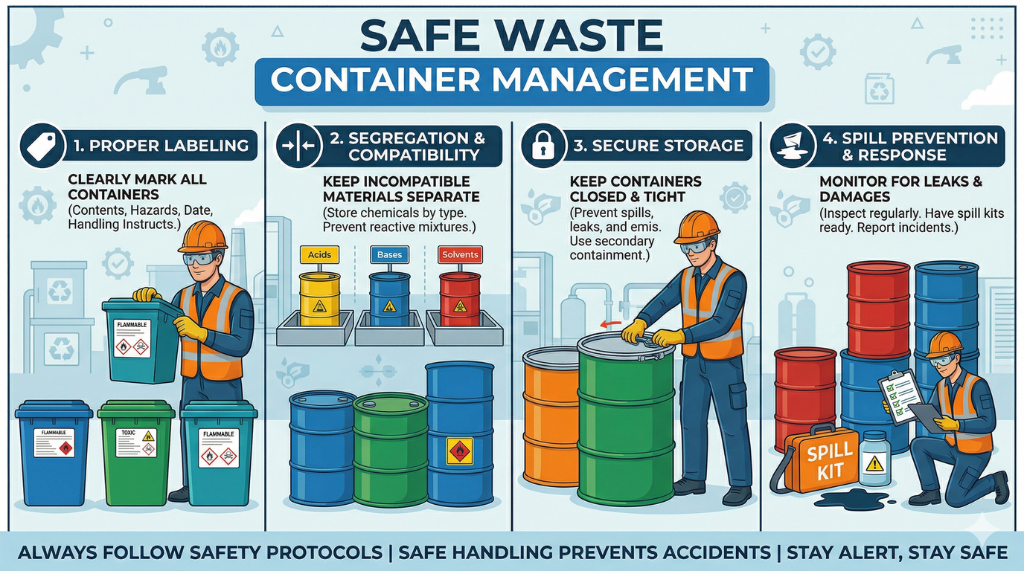
Maintaining Cleanliness, Color Coding, Standards & Safe Placement 1. Introduction A clean and organized workplace is a fundamental requirement of Occupational Health & Safety (HSE). Proper waste management—especially through the use of suitable waste containers—plays a critical role in preventing hazards, improving productivity, and ensuring regulatory compliance. Organizations following guidelines from the Occupational Safety and […]
Overhead Power Line Safety: Minimum Clearance Distance Chart for Worksites
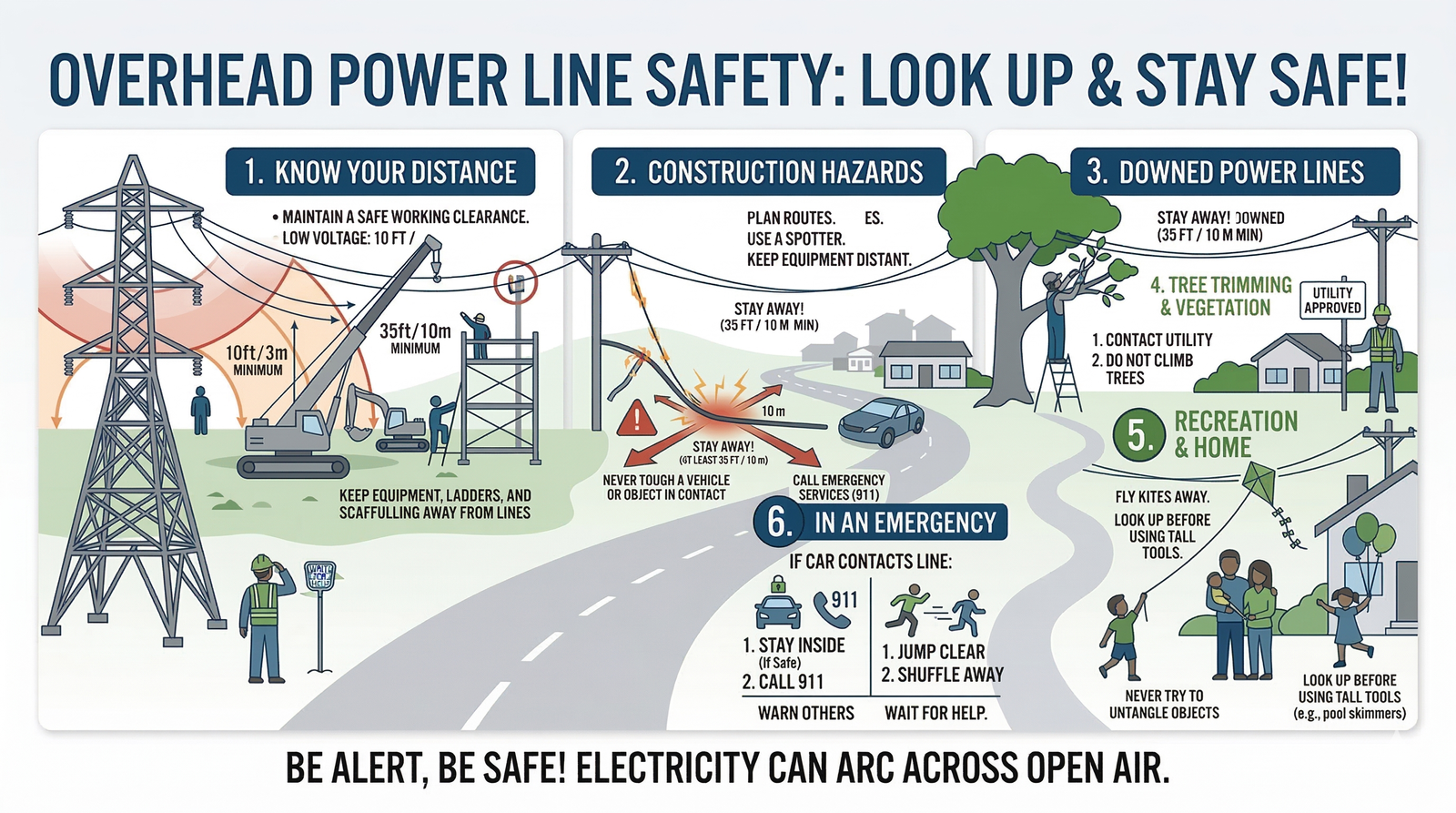
Essential Guidance for Construction & Industrial Worksites Overhead power lines are one of the most dangerous hazards on construction sites, warehouses, factories, and maintenance areas. Contact with energized lines can cause electrocution, severe burns, fires, equipment damage, or fatalities. Many serious incidents occur when workers operate cranes, dump trucks, scaffolding, ladders, or excavators near power […]
Why Six-Side (360°) Observation Is Critical in Safety
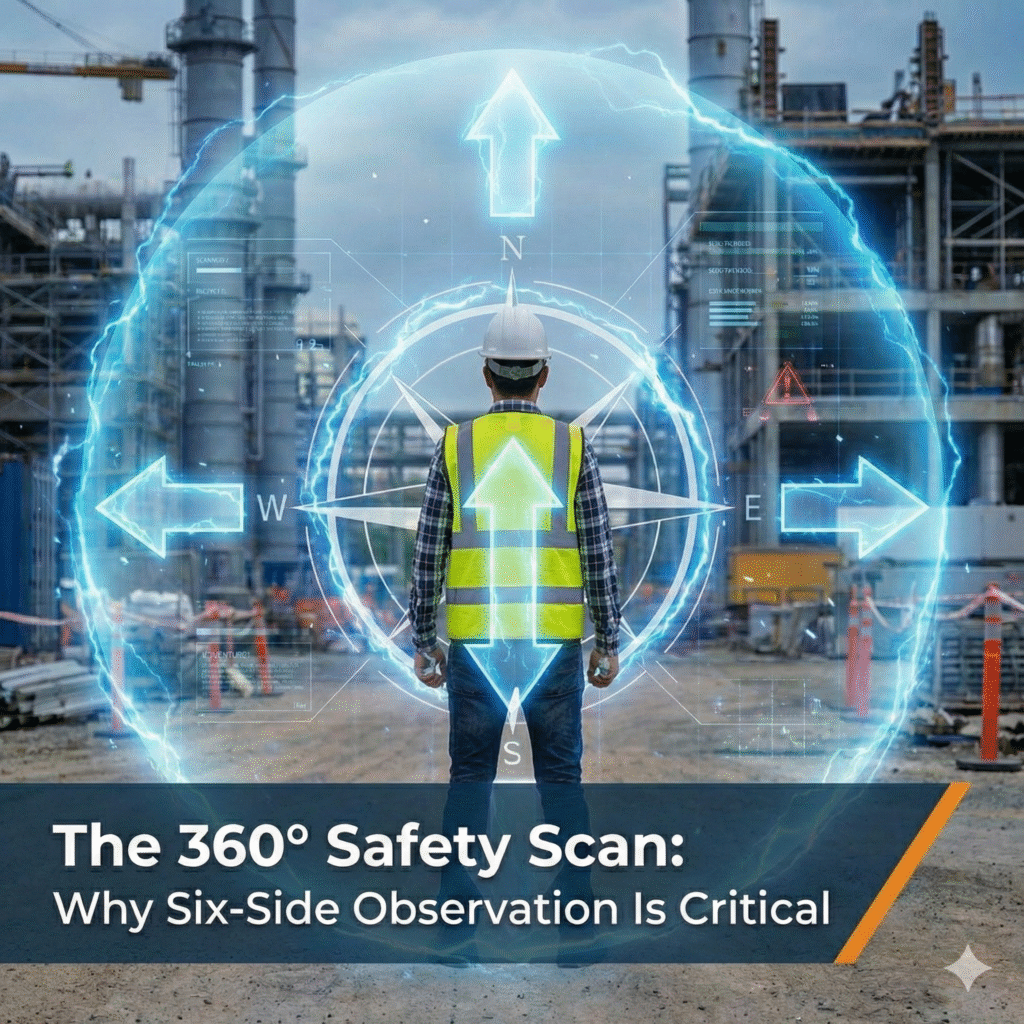
Many incidents happen because a worker or inspector focuses only on what is in front. Experienced HSE professionals are trained to scan all directions before declaring an area safe. 1️⃣ Front – Immediate Task Hazard This includes: Moving machinery Rotating parts Hot surfaces Chemical handling Vehicle movement Most people focus only here — which is […]