
Fault Tree Analysis (FTA)

1. Introduction to Fault Tree Analysis (FTA) Fault Tree Analysis (FTA) is a highly advanced, structured, and systematic risk assessment technique used in modern safety engineering, reliability analysis, accident investigation, and process safety management. It is a deductive methodology that begins with a clearly defined undesired event, known as the “Top Event,” and then works […]
Fishbone Diagram Analysis

(Ishikawa Diagram): A Complete Guide to Root Cause Analysis Introduction The Fishbone Diagram Analysis, also known as the Ishikawa Diagram or Cause-and-Effect Diagram, is one of the most powerful Root Cause Analysis (RCA) tools used in occupational health and safety, quality management, manufacturing, construction, engineering, healthcare, and business management. The technique was developed by Kaoru […]
Root Cause Analysis (RCA)
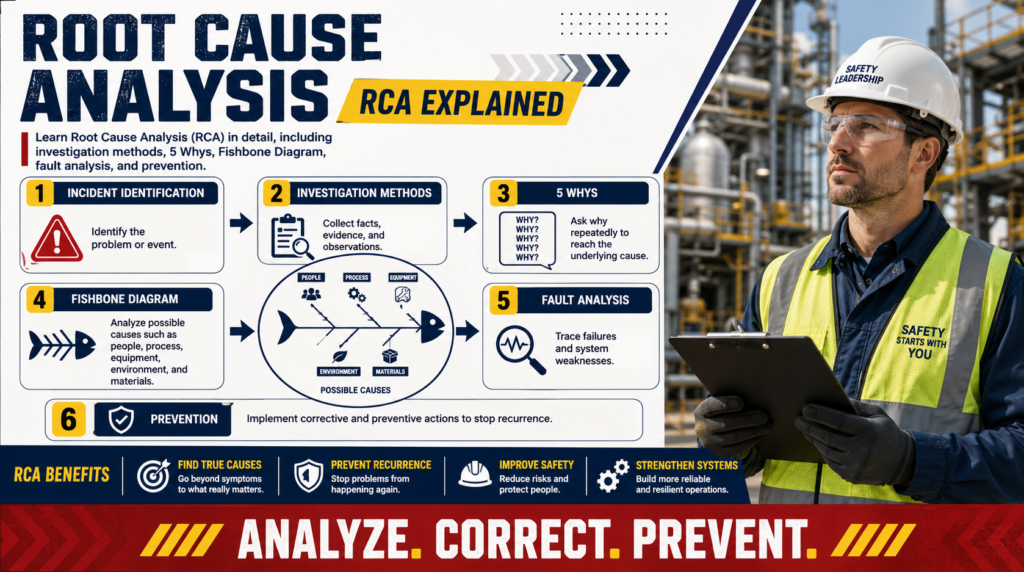
A Complete Guide to Identifying and Eliminating Workplace Problems Introduction Root Cause Analysis (RCA) is one of the most important problem-solving and incident investigation methodologies used in modern organizations. It is a systematic process designed to identify the fundamental causes of incidents, accidents, failures, defects, near misses, operational disruptions, quality issues, and safety concerns. Rather […]
Near Miss Reporting

A Comprehensive Guide to Proactive Workplace Safety Management Introduction Near miss reporting is one of the most powerful yet often underutilized tools in occupational health and safety management. A near miss is an unplanned event that did not result in injury, illness, environmental damage, or property loss but had the potential to do so. In […]
Incident Investigation Process
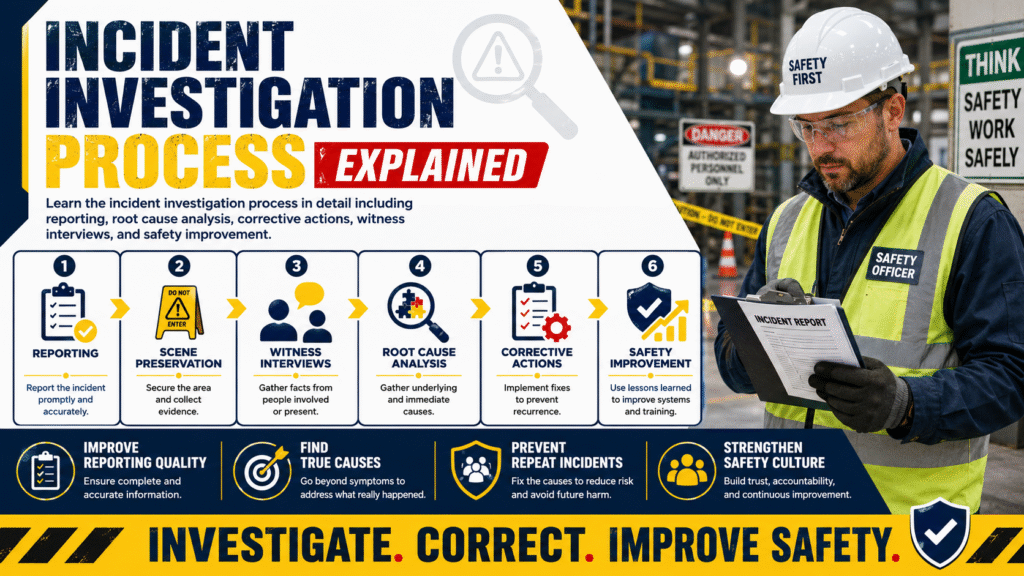
Incident Investigation Process A Complete Guide to Workplace Safety Analysis Introduction Incident investigation is a structured and systematic process used to determine the root causes of workplace accidents, near misses, injuries, illnesses, environmental incidents, and property damage events. The primary purpose of incident investigation is not to assign blame, but to identify underlying causes and […]
Risk Matrix

A Complete Guide to Risk Assessment and Risk Management Introduction A Risk Matrix is one of the most widely used tools in occupational health and safety, risk management, project management, construction, manufacturing, oil and gas, and many other industries. It helps organizations identify, evaluate, and prioritize workplace risks by considering two key factors: the likelihood […]
Self-Contained Breathing Apparatus (SCBA): A Complete Guide for Firefighting, Rescue, Confined Space Entry, and Industrial Emergency Response

Introduction A Self-Contained Breathing Apparatus, commonly known as SCBA, is one of the most critical life-saving devices used in firefighting, rescue operations, confined space entry, hazardous material response, marine safety, industrial emergency response, and oil and gas operations. In any environment where the atmosphere is unsafe to breathe, the SCBA provides the user with an […]
The Critical Importance of Follow-Up in Safety Management for HSE Professionals
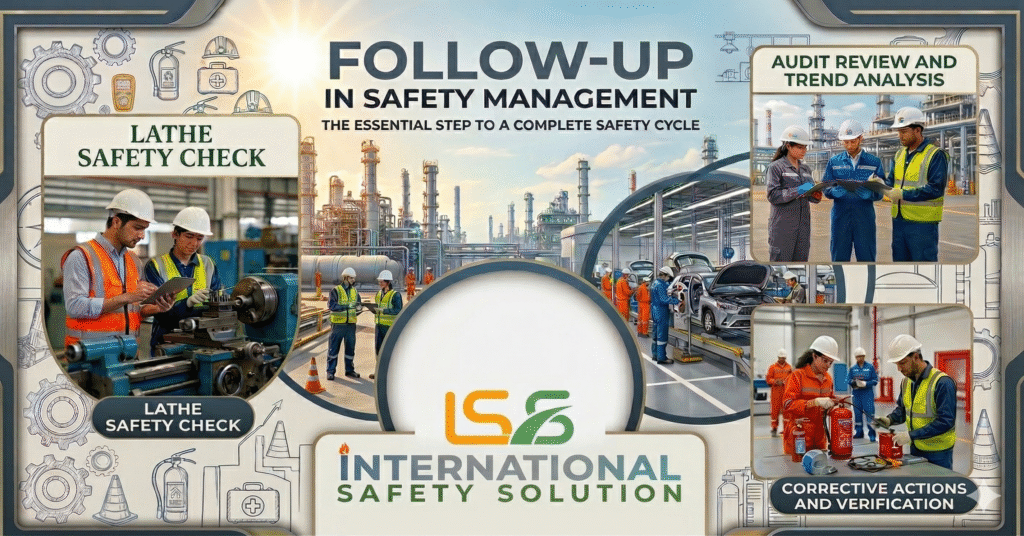
IntroductionIn occupational health and safety, identifying hazards and implementing controls is only half the job. The real effectiveness of any safety system lies in consistent and structured follow-up. Without follow-up, even the best safety plans become ineffective, leading to recurring incidents, non-compliance, and operational risks. For safety officers and professionals across industries, follow-up is not […]
Why Leaders and Experienced Professionals Rely on Common Sense for Hazard Identification
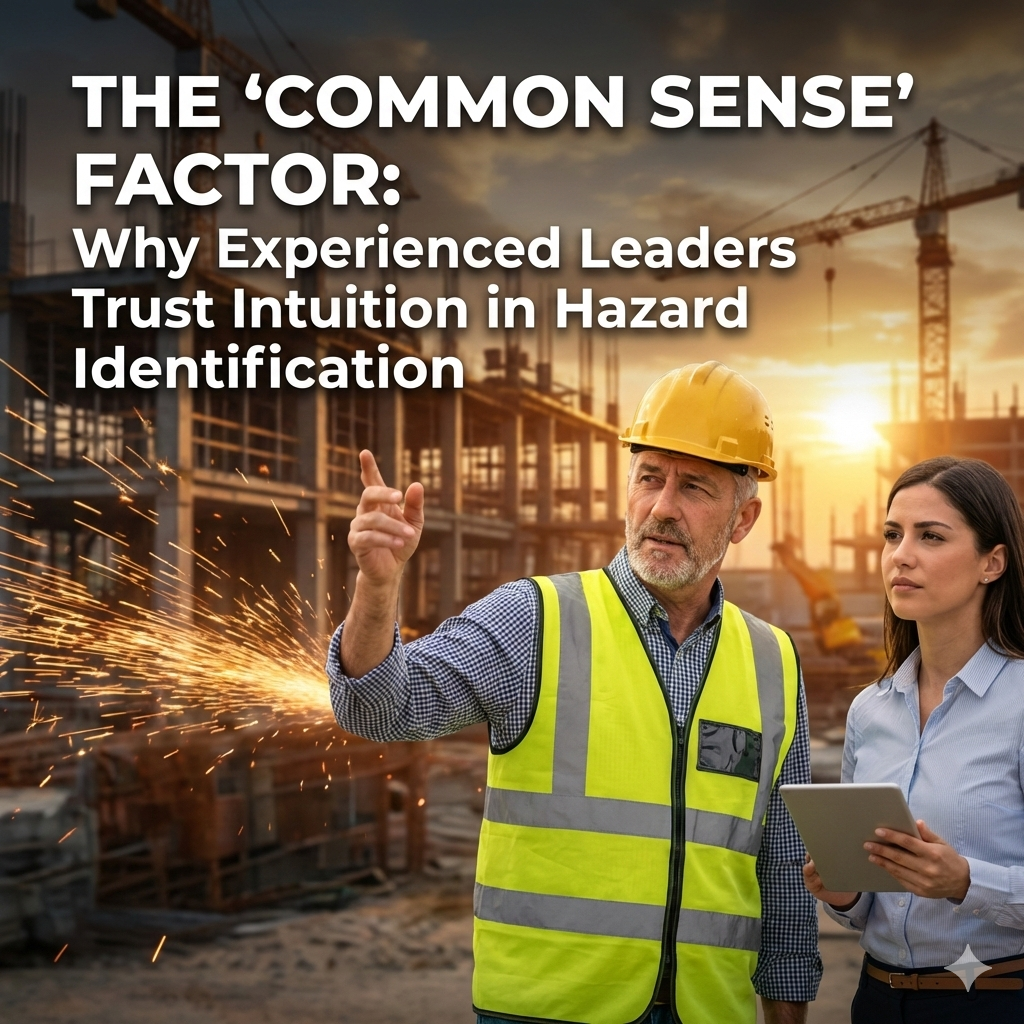
In workplace audits and inspections, experienced leaders often refer to something simple yet powerful — common sense.But common sense in safety is not casual thinking. It is developed situational awareness built through experience, observation, and risk perception.Senior professionals use their five senses effectively because they have trained their minds to recognize patterns, deviations, and unsafe […]
HSE Safety Culture Maturity Model: Levels, Meaning, and Industry Implementation
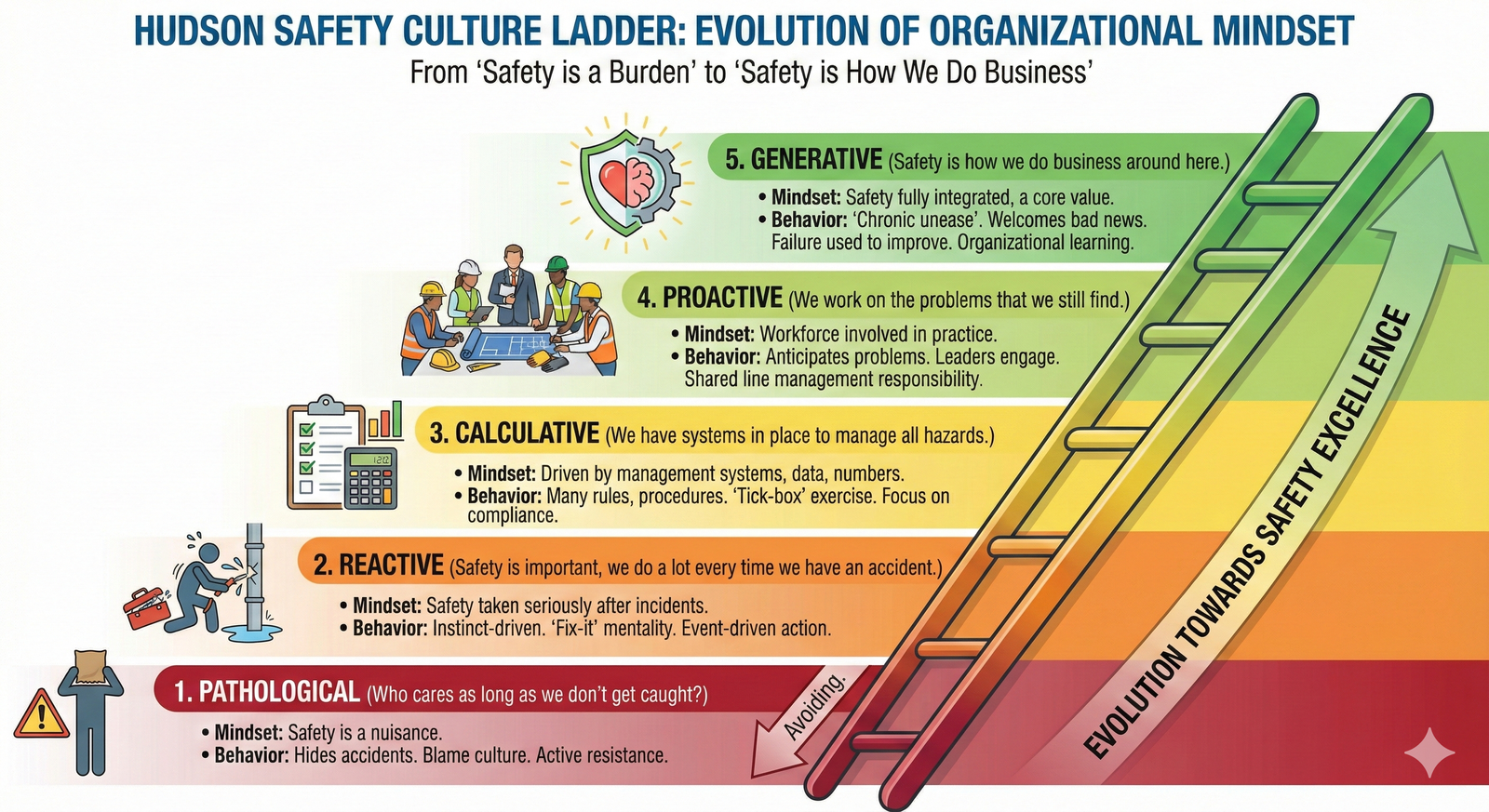
Introduction Safety Culture Maturity describes how deeply health, safety, and environmental (HSE) values are embedded into an organization’s daily operations, leadership decisions, and workforce behavior. HSE Safety Culture Maturity Models provide a structured roadmap that helps organizations move from basic legal compliance to a proactive and continuously improving safety culture. These models are widely used […]