
Workplace Safety Fundamentals: A Comprehensive Guide

Introduction to Workplace Safety Workplace safety is the structured approach of protecting employees, equipment, and the working environment from harm, injury, and damage. It is not limited to avoiding accidents only but also includes creating a healthy, controlled, and productive environment where risks are managed before they turn into incidents. In modern industries, workplace safety […]
Spill Kit: The Complete Guide to Spill Control, Hazard Management, Environmental Protection, and Workplace Safety

Introduction to Spill Kit Spill kit in modern industries, workplaces frequently handle various liquids such as oils, fuels, lubricants, chemicals, solvents, paints, acids, alkalis, and other hazardous substances. These materials are essential for production, maintenance, transportation, and operational activities; however, they also present significant risks when accidentally released into the workplace. A leak from a […]
Evacuation Plan: Complete Guide to Emergency Evacuation, Legends, Emergency Contacts, and Workplace Safety
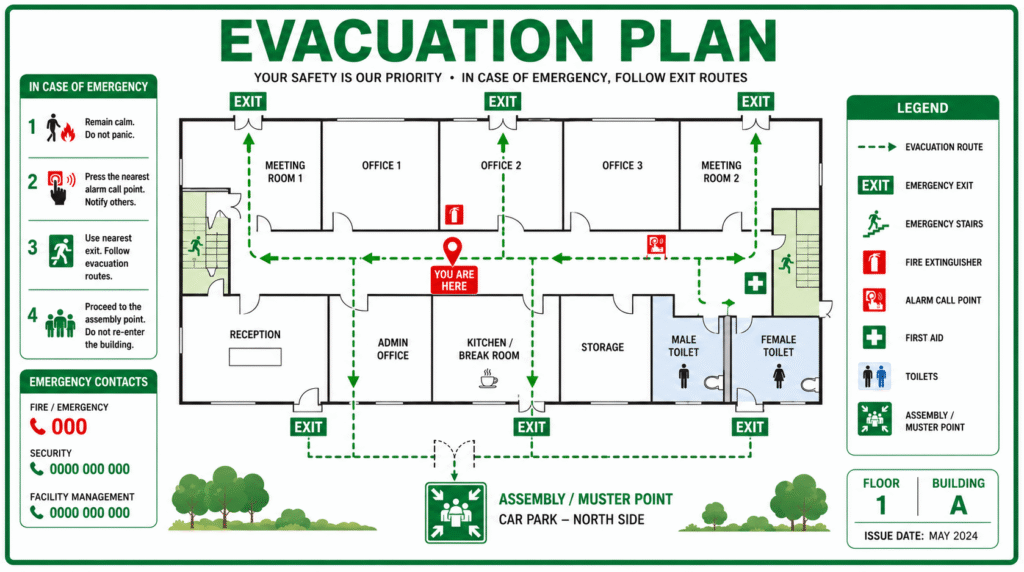
Introduction to Evacuation Plan An Evacuation Plan is one of the most important components of any emergency preparedness program. It is a documented procedure that explains how employees, visitors, contractors, and members of the public can safely leave a building or workplace when an emergency occurs. Emergencies can happen at any time without warning, and […]
Self-Contained Breathing Apparatus (SCBA): A Complete Guide for Firefighting, Rescue, Confined Space Entry, and Industrial Emergency Response

Introduction A Self-Contained Breathing Apparatus, commonly known as SCBA, is one of the most critical life-saving devices used in firefighting, rescue operations, confined space entry, hazardous material response, marine safety, industrial emergency response, and oil and gas operations. In any environment where the atmosphere is unsafe to breathe, the SCBA provides the user with an […]
NFPA 101 Life Safety Code – Complete Guide for Fire Safety & HSE Professionals
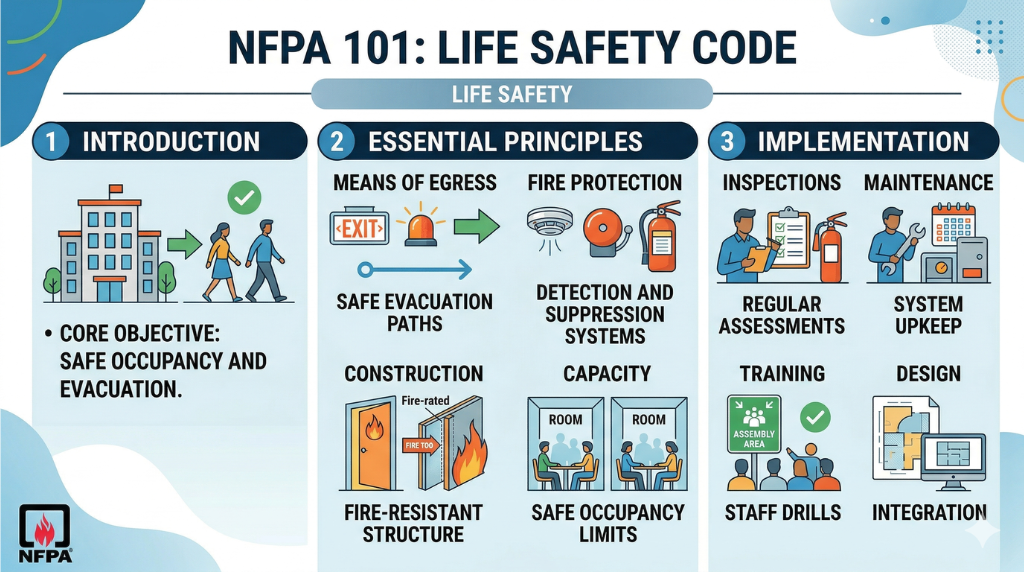
Introduction The NFPA 101 – Life Safety Code is one of the most important fire safety standards developed by the National Fire Protection Association (NFPA). It focuses on protecting human life from fire, smoke, and toxic gases through proper building design, construction, and operation. Unlike other fire codes that mainly focus on systems like sprinklers, […]
Auto Fire Off Ball vs Automatic Fire Extinguishers: Complete Fire Safety Comparison Guide for 2026
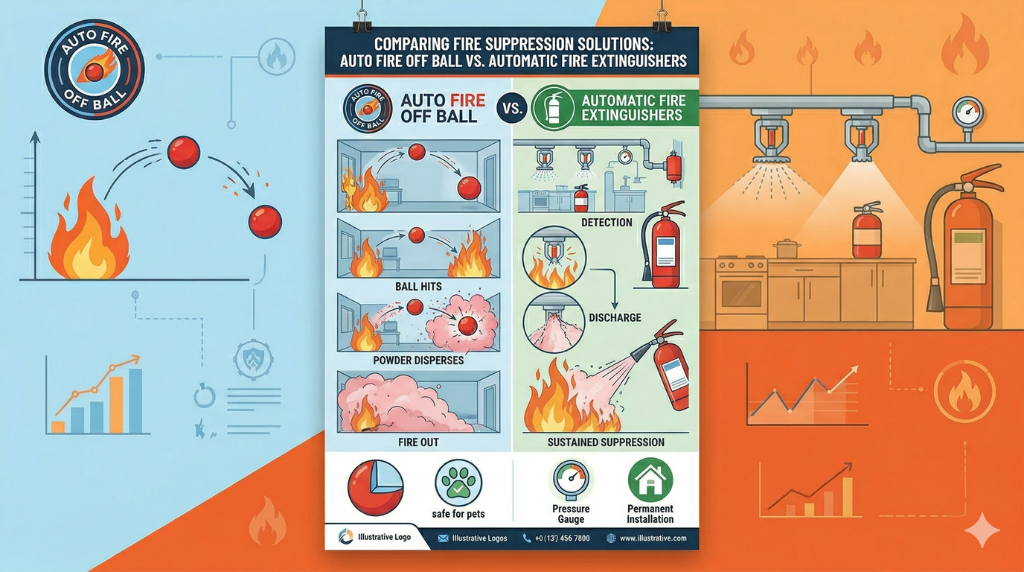
Fire protection systems are critical in minimizing damage, saving lives, and ensuring compliance with safety standards. Among modern solutions, Auto Fire Off Balls and Automatic Fire Extinguishers are widely used—but often misunderstood. This guide provides a clear, technical comparison to help safety professionals, facility managers, and students make informed decisions. Fire suppression systems are designed […]
The Critical Importance of Follow-Up in Safety Management for HSE Professionals
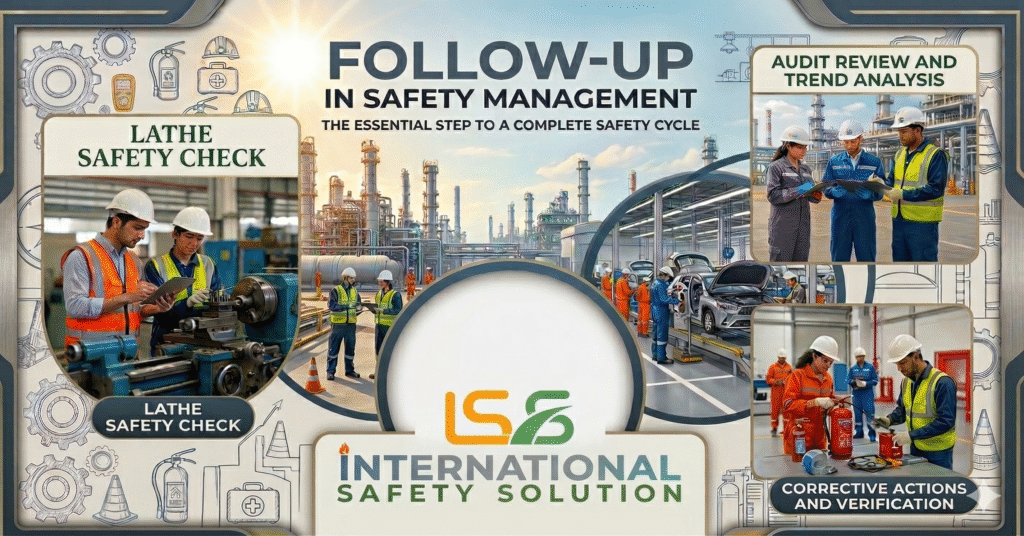
IntroductionIn occupational health and safety, identifying hazards and implementing controls is only half the job. The real effectiveness of any safety system lies in consistent and structured follow-up. Without follow-up, even the best safety plans become ineffective, leading to recurring incidents, non-compliance, and operational risks. For safety officers and professionals across industries, follow-up is not […]
NFPA 704 Diamond – Complete Guide for Workplace Safety
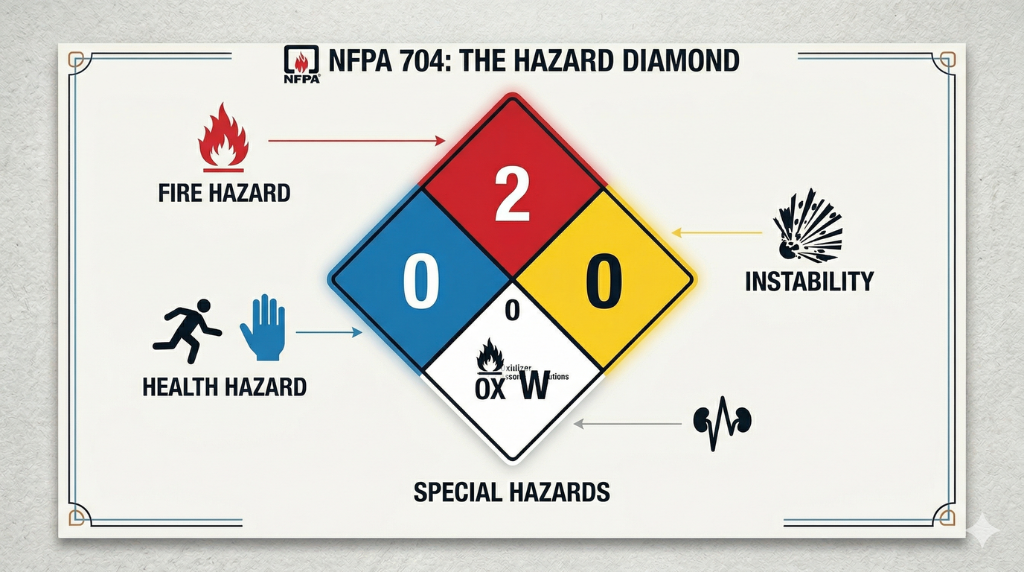
IntroductionSafety is the first priority in any workplace, especially where chemicals are used or stored. The NFPA 704 Diamond is an important system that helps workers, emergency responders, and safety officers quickly understand chemical hazards. This system uses a color-coded diamond shape to show different types of risks and is widely used in industries, laboratories, […]
Emergency Lighting System in the Workplace: Importance, Standards & Safety Compliance Guide
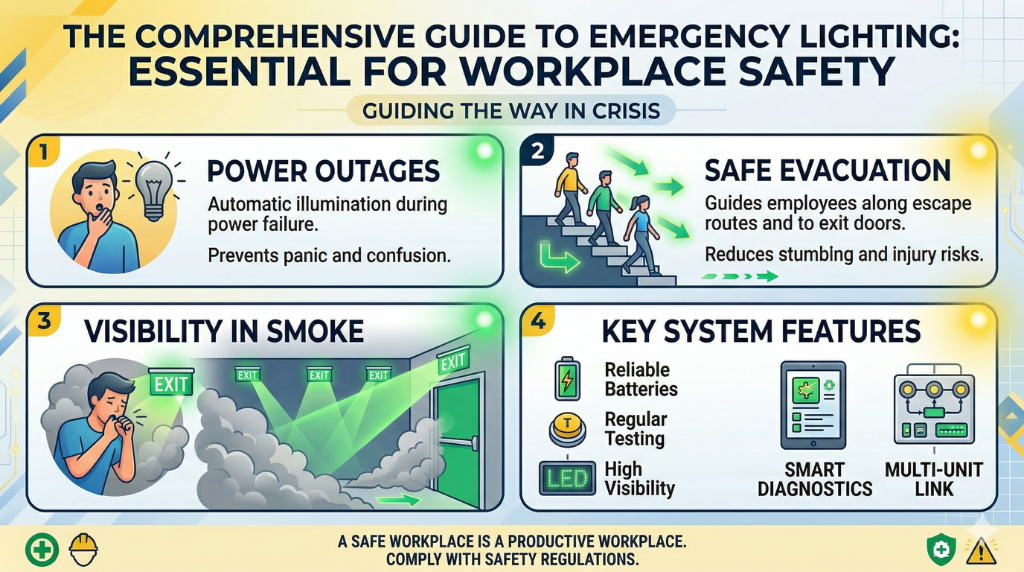
An emergency lighting system is a critical life safety component in any workplace. It ensures visibility during power failures, fires, or any emergency where normal lighting fails. Without proper illumination, evacuation becomes disorganized, increasing the risk of injuries and fatalities. What is an Emergency Lighting System? Emergency lighting is a backup lighting arrangement that automatically […]
Waste Containers in Workplace Safety
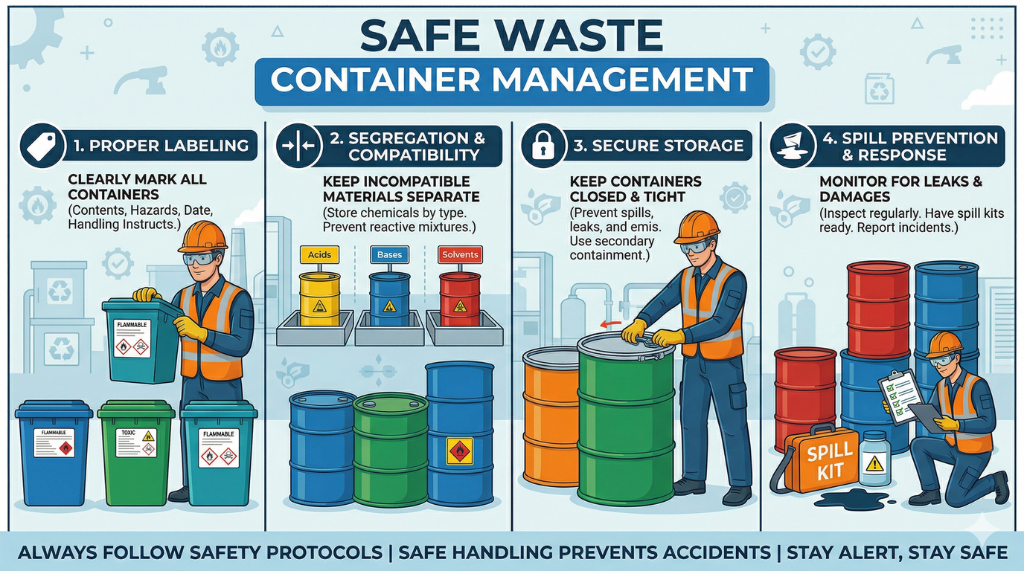
Maintaining Cleanliness, Color Coding, Standards & Safe Placement 1. Introduction A clean and organized workplace is a fundamental requirement of Occupational Health & Safety (HSE). Proper waste management—especially through the use of suitable waste containers—plays a critical role in preventing hazards, improving productivity, and ensuring regulatory compliance. Organizations following guidelines from the Occupational Safety and […]